Yes, you can grow a plant from a sweet potato. The tuber sends up green sprouts called slips, and once those slips have roots you either pot them for a windowsill vine or plant them outside for a fall harvest. It takes three to eight weeks to see the first sprout, and the whole setup costs about one grocery-store potato.
I do this on the kitchen counter with my kids every year. The jar goes by the window, we tape a date on it, and the growth is slow enough that nobody gets bored.
Table of Contents
- What You Need
- Step-by-Step: How to Grow a Plant from a Sweet Potato
- Step 1: Choose and Prepare the Sweet Potato
- Step 2: Start the Sweet Potato in Water
- Step 3: Transfer Rooted Slips into Soil
- Step 4: Give the Plant the Right Water and Light
- Step 5: Move the Plant Outdoors
- Common Mistakes
- Frequently Asked Questions
- What part of a sweet potato should I put in water?
- How long does it take to grow a sweet potato in water?
- Are sweet potato leaves and roots safe to eat?
- Do I keep the sweet potato in the soil after it sprouts?
- Why is my sweet potato not growing?
- Start With the Water-Rooting Method
What You Need
The supply list is short, and most of it you already own.
- One sweet potato, firm with no soft spots
- A glass jar, drinking glass, or shallow dish
- Four toothpicks
- Water
- A pot with drainage holes and light potting soil
- A bright window
For the container, a wide-mouthed glass jar works best because the jar rim holds the potato while the bottom half stays in water. A shallow dish and a couple of pebbles works the same way. A clear cup is fine too, just less stable.
Pick the sweet potato last, and pick it carefully. It should feel heavy for its size, with firm skin and no mold, soft spots, or a sour smell. Organic ones sprout more reliably because conventionally grown sweet potatoes are often treated to discourage sprouting, which is exactly what you are asking them to do.
Step-by-Step: How to Grow a Plant from a Sweet Potato
Step 1: Choose and Prepare the Sweet Potato
Rinse the sweet potato under cool water and scrub off any dirt. You do not need to peel it.
If you cut it in half to speed things up, let the cut face dry overnight before it goes anywhere near water. That dry skin is a seal against rot. Skip any potato with extensive mold or decay, because it will just turn the water into a swamp and smell up the counter.
Step 2: Start the Sweet Potato in Water
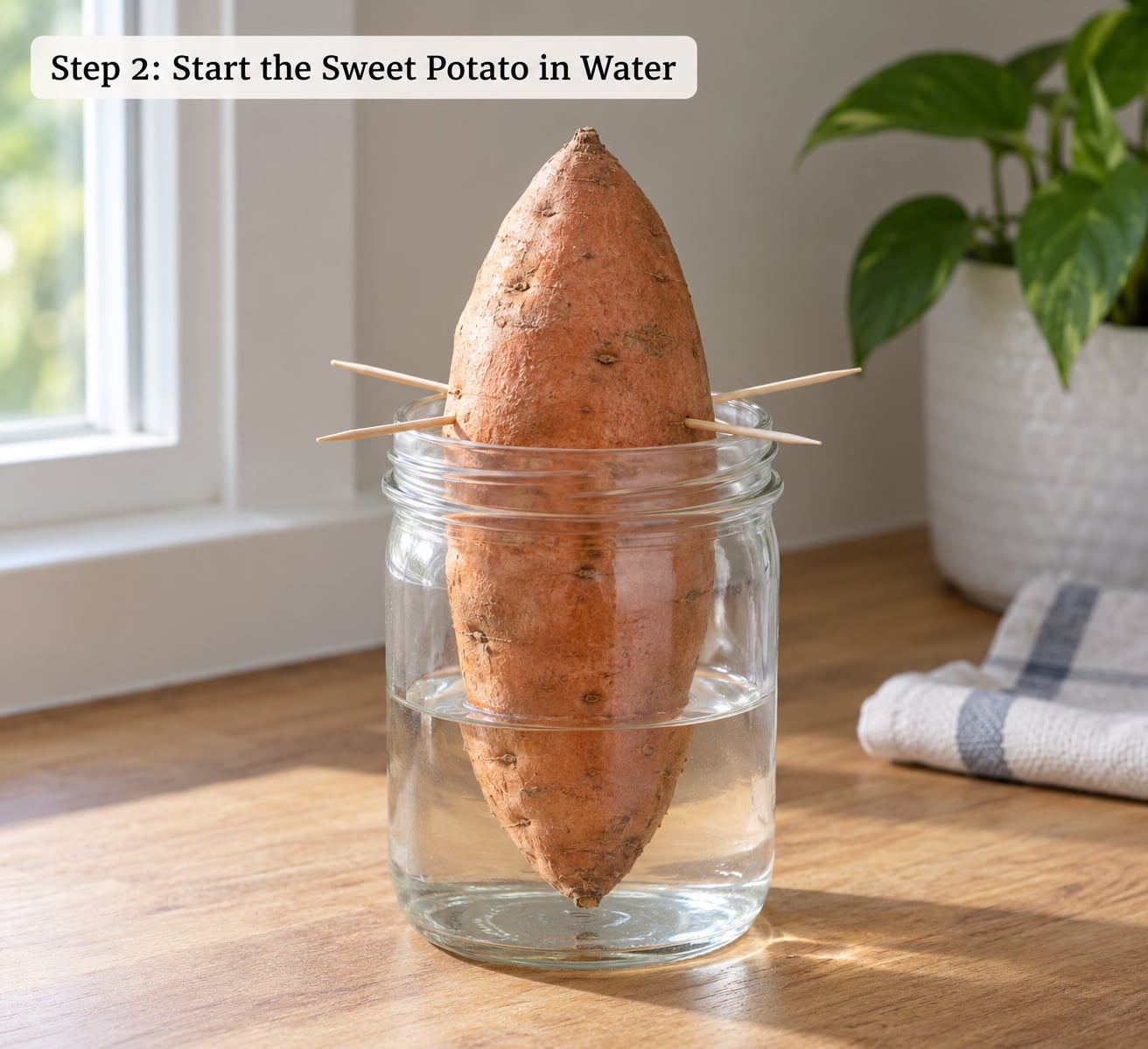
Push four toothpicks into the potato at roughly even points, then slide them over the jar rim so the bottom third of the potato sits in water and the rest stays dry and exposed to air.
Set the jar in a warm spot with bright indirect light. Change the water every two or three days, and rinse the potato under the tap while you are there. Fresh water and airflow are what keep the mother potato from rotting.
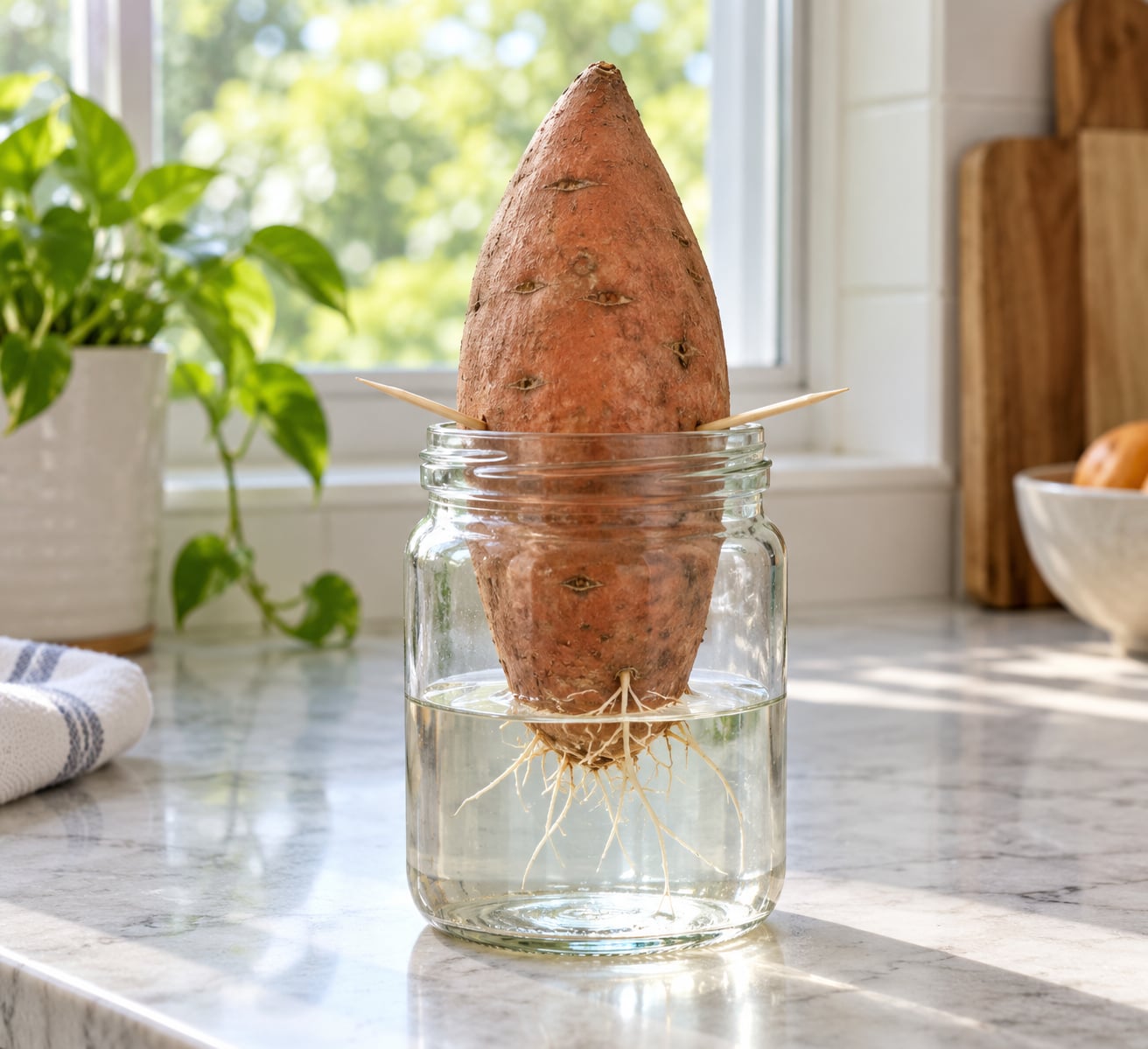
You will know it is working when thin white roots appear at the submerged end and green or purple shoots push up from the top. Roots usually show first, a few days to a couple of weeks before the shoots. Any white fuzzy growth on the water line that smears off is mold, not roots.
Step 3: Transfer Rooted Slips into Soil
Wait until the roots are one to two inches long. Roots that are barely started will snap when you move them, and slips that sit in water for months get soft stems and rot at the base.
Either keep the whole potato planted as-is or twist the mature slips off at the base and root them separately in a glass of water for three to five days. Rooted slips transplant better because they go into soil with a root system already attached.
Fill the pot about halfway, lift the slip in by its stem, and firm the soil around the roots. Bury the roots and the lower stem, and leave every leaf above the soil line. Sweet potatoes root from the buried stem, so the deeper that stem sits, the more tubers you get.
Step 4: Give the Plant the Right Water and Light
Water when the top inch of soil feels dry to a finger. Sweet potato vines want evenly moist soil, not soggy soil, so let the surface dry slightly between drinks instead of running a daily schedule.
Give it the brightest window you have and turn the pot a quarter turn each week so the vine grows evenly rather than leaning into the glass. Out of direct midday sun is better than a dim shelf.
Once the vines start running, they will throw out leaves at every node, and a node that touches soil sets roots and eventually a small tuber. Long vines in a pot look good trailing off a shelf, and you can trim them without hurting the plant.
Step 5: Move the Plant Outdoors
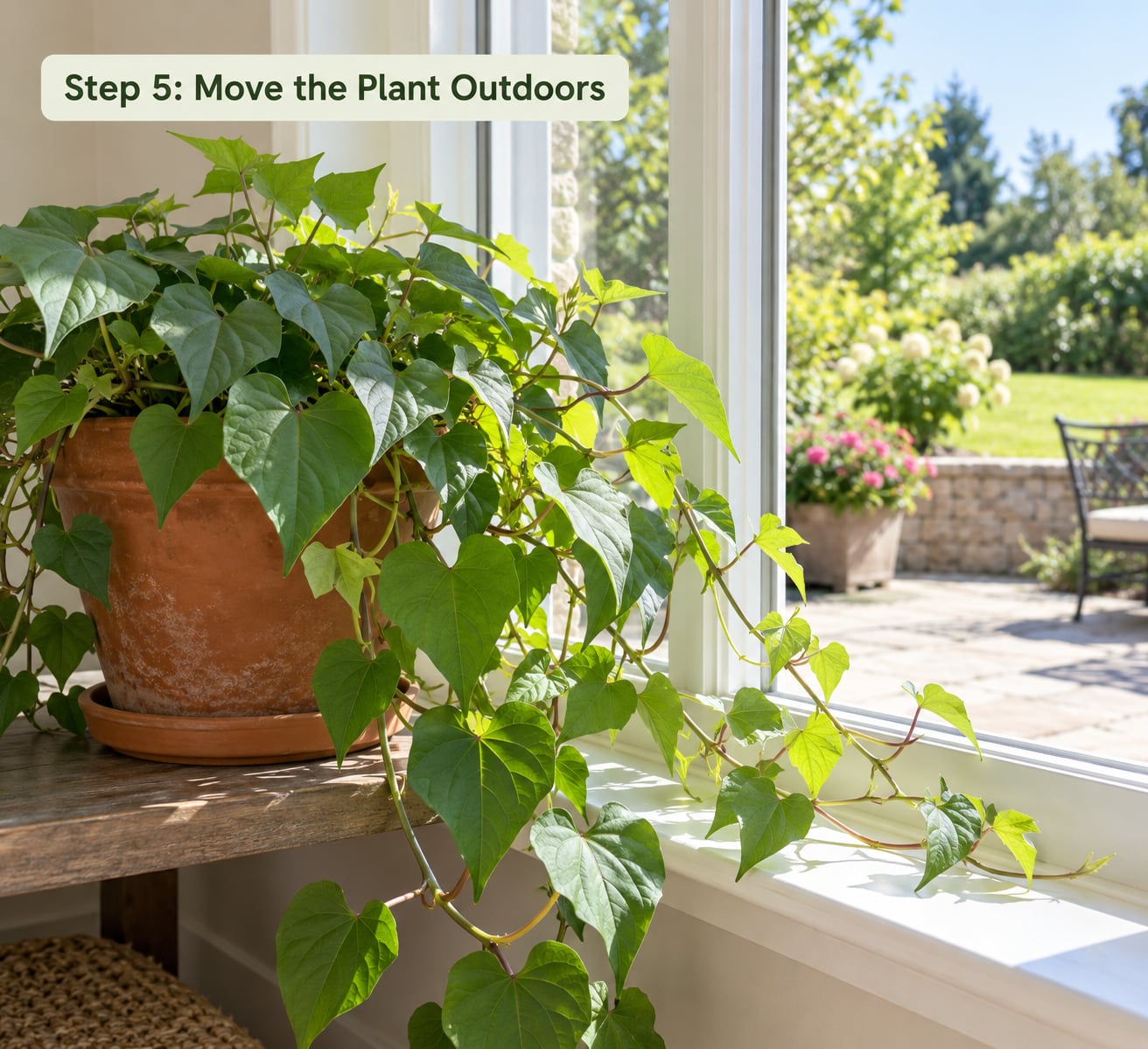
Wait until frost is out of the forecast and nights sit reliably above about 55°F. Sweet potatoes are a warm season crop, and cold soil will stall them for weeks.
Harden the plant off over a week and a half. Put it outside for an hour on day one, and add an hour or two a day from there. A plant that goes straight from a warm window to full sun usually wilts for a week while it adjusts.
In the ground, plant rooted slips 12 inches apart in full sun with well-drained soil. Water them daily for the first two weeks while the roots establish. Expect small potatoes in 90 to 120 days, before the first fall frost, and dig them up before the ground gets cold.
Common Mistakes
Most failures come down to four things, and each one has an easy fix.
- The potato rotted in the water. Change the water every two or three days, keep the submerged portion small, and make sure air can reach the wet end. If it smells sour, start over.
- Nothing ever sprouted. Give it six to eight weeks in a warm spot before you give up, and switch to an untreated organic potato if you used a conventionally grown one.
- The shoots got buried. Leaves pushed under soil turn yellow and die. Lift them up gently and mound soil up around the stem instead.
- Overwatering in the pot. Saturated soil starves the roots of air. Let the top inch dry out and make sure the pot drains.
- The plant stretched and went pale. That is light starvation, not growth. Move it to a brighter window or add a grow light.
- Roots broke during transplanting. Handle slips by the stem only, and wait for one to two inch roots before planting.
- Impatience. Most of the visible action happens between week three and week six. Check the jar weekly rather than daily.
If you want more plants from the same tuber, cut single-node cuttings where each piece carries one leaf and a small piece of stem. Root them the same way. You get more plants, but each tends to set fewer and smaller tubers than a full slip.
Frequently Asked Questions
What part of a sweet potato should I put in water?
Suspend the whole unpeeled sweet potato on toothpicks so only the narrow bottom third sits in water. The top two thirds stays dry in the air, which is where the green shoots emerge. Roots form at the wet end and shoots grow at the dry end, so never submerge more than a third of the tuber.
How long does it take to grow a sweet potato in water?
Expect roots in a few days to two weeks and the first green shoots between three and eight weeks, depending on temperature. Slips reach four to six inches after roughly six to eight weeks total. Warmth speeds everything up, so a jar on a warm windowsill outruns one in a cool room by a week or more.
Are sweet potato leaves and roots safe to eat?
Sweet potato leaves are edible raw or cooked, with a mildly peppery taste, and they are packed with nutrients. Roots and small tubers that formed above ground are fine to eat if they are firm and clean. Skip any part that is green, soft, or has been sitting in water for days.
Do I keep the sweet potato in the soil after it sprouts?
You have two options. Plant the mother potato whole with the shoots above the soil and let it produce tubers directly, or pull the slips off once they reach four to six inches and root them separately. Growing the slips separately usually gives you sturdier plants you can space out properly.
Why is my sweet potato not growing?
The usual causes are a potato treated to prevent sprouting, a jar sitting somewhere too cool or too dark, water changed too rarely, or simply not enough time. Sweet potatoes are slow, and three weeks of nothing still counts as normal. If the flesh smells off or the jar is cloudy, throw it out and restart.
Start With the Water-Rooting Method
Pick one firm, untreated sweet potato and set it in a jar by a bright window this week. Change the water every couple of days, wait for one to two inch roots, and move the slip into soil only when it is ready. If you would rather skip the garden entirely, stop after Step 3 and let the vine live on the windowsill. In 2026, that is still the easiest plant on the counter to show a kid that roots and shoots come from the same lump.