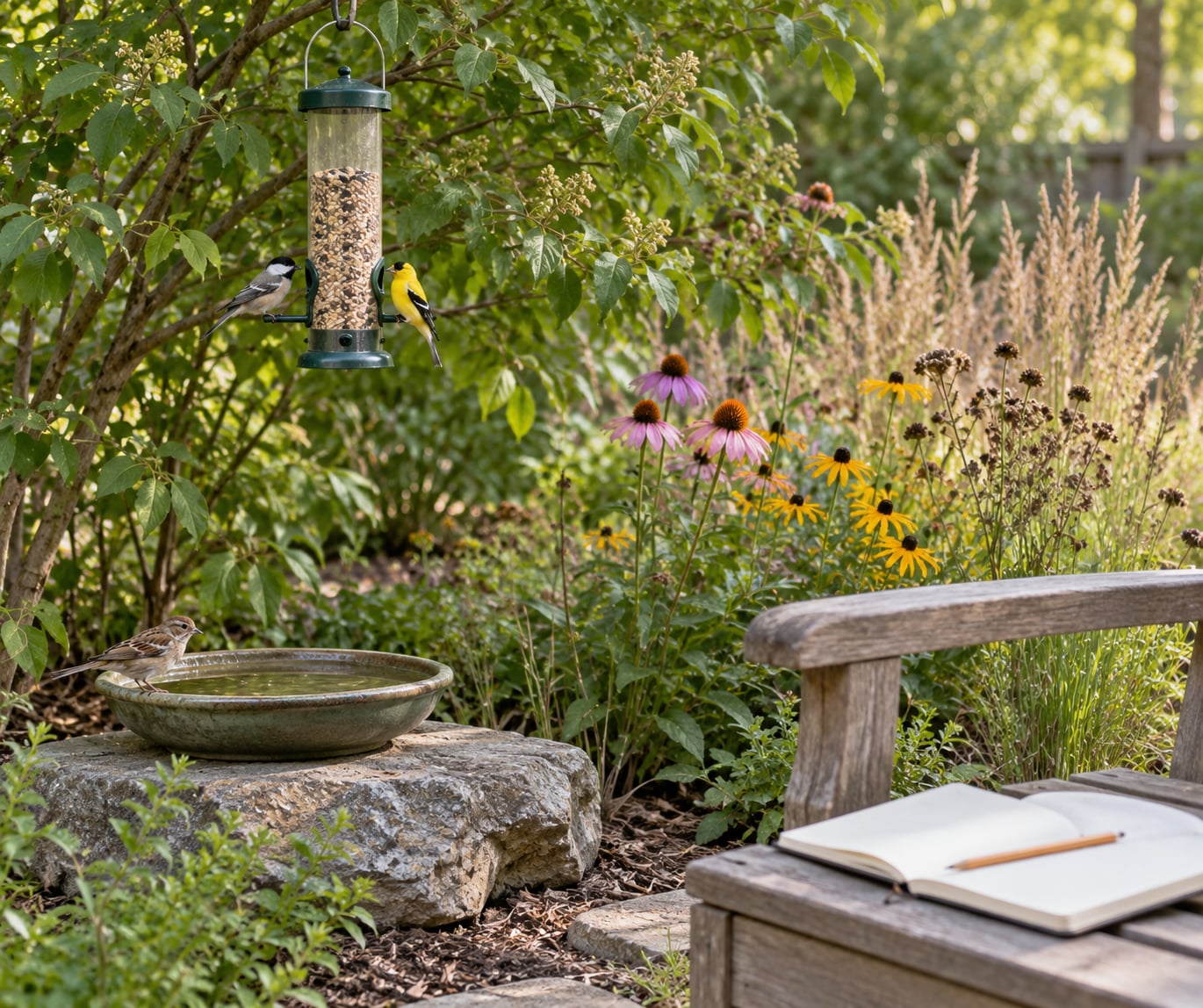
To attract birds to your yard with kids, set up three things before you buy anything else: a shallow dish of fresh water, one easy-to-clean feeder stocked with fresh seed, and a shrub or small tree within about 10 feet that birds can duck into. Add native seed-bearing plants over the next season and the yard does the rest of the work. Expect birds to find a new feeder over several days, sometimes a couple of weeks, not overnight.
The mistake most families make is starting with five feeders and a big bag of seed, then losing interest when the yard stays quiet for the first week. One station, kept clean, teaches you far more. Your kids can log what arrives, and that log is where the actual fun lives.
Here is the order I would use, whether you have a suburban lot, a city courtyard or a balcony.
Table of Contents
- What You Need to Attract Birds to Your Yard with Kids
- Step-by-Step
- Choose a Safe, Shaded Viewing Area
- Provide Clean Water and Safe Perches
- Choose and Fill the Right Feeder
- Hang Feeders Where Birds Can Land Safely
- Add Native Plants, Shrubs and Ground Cover
- Make a Simple Bird Scavenger Hunt
- Watch, Adjust and Keep the Habitat Healthy
- Common Mistakes
- Frequently Asked Questions
- What food is best for backyard birds?
- How long does it take for birds to use a new feeder?
- Where should I place a bird feeder in my yard?
- How do I keep feeders and water dishes clean?
- Is it safe for children to feed wild birds?
- Start With Water, One Feeder and Native Cover
What You Need to Attract Birds to Your Yard with Kids
Most of this list costs nothing or close to it. The essentials are the four things birds need every day: food, water, shelter and a place to hide from weather and predators.
Essentials
- A bird-safe feeder. For a first attempt, a tube feeder is the least messy and the easiest to fill; a platform feeder shows off more birds but collects rain.
- Plain seed, bought in a small quantity so it stays fresh. Black-oil sunflower seed is the broadest choice, and nyjer and safflower draw finches, nuthatches and jays.
- A shallow water dish with a flat or gently sloped rim, plus a small branch or stone so small birds have a foothold.
- Nearby cover: a shrub, a hedge or a small tree within about 10 feet of the feeder.
- Native seed-bearing plants, grasses and at least one berry-producing shrub for later in the year.
- A scrub brush or your kitchen brush, plus a bucket you are willing to get dirty.
- A notebook, pencil and either a regional bird field guide or a free identification app.
Nice to have, not required
- Binoculars. A pair for adults is enough; children usually do better standing at the dish with a guide open than squinting through glass.
- A squirrel baffle, once raccoons or squirrels become a problem rather than before.
- A platform feeder for photographing and for watching birds that refuse tube feeders.
- A dusty bowl of sand or fine grit as a bathing option in hot weather.
Cheap substitutes work well. A terra-cotta saucer, a pie tin on a level paver or a shallow baking dish all make serviceable water dishes. A single hung suet cage in cold months beats a feeder loaded with seed that has gone stale.
Step-by-Step
Choose a Safe, Shaded Viewing Area
Pick a spot your family can see from a window or patio, ideally with partial shade and cover within 10 feet. The distance from a bird feeder to the nearest shrub or branch is the single placement rule birders repeat most often: birds will not use an exposed feeder if they have to fly into the open to reach it.
Set the viewing spot away from swing sets and other busy play areas so nobody is chasing a bird through the shrubbery. Sit down at the spot first and watch for a few minutes. If you cannot see into the feeder without standing up, you will not enjoy watching it, and neither will a kid who gets bored quickly.
Provide Clean Water and Safe Perches
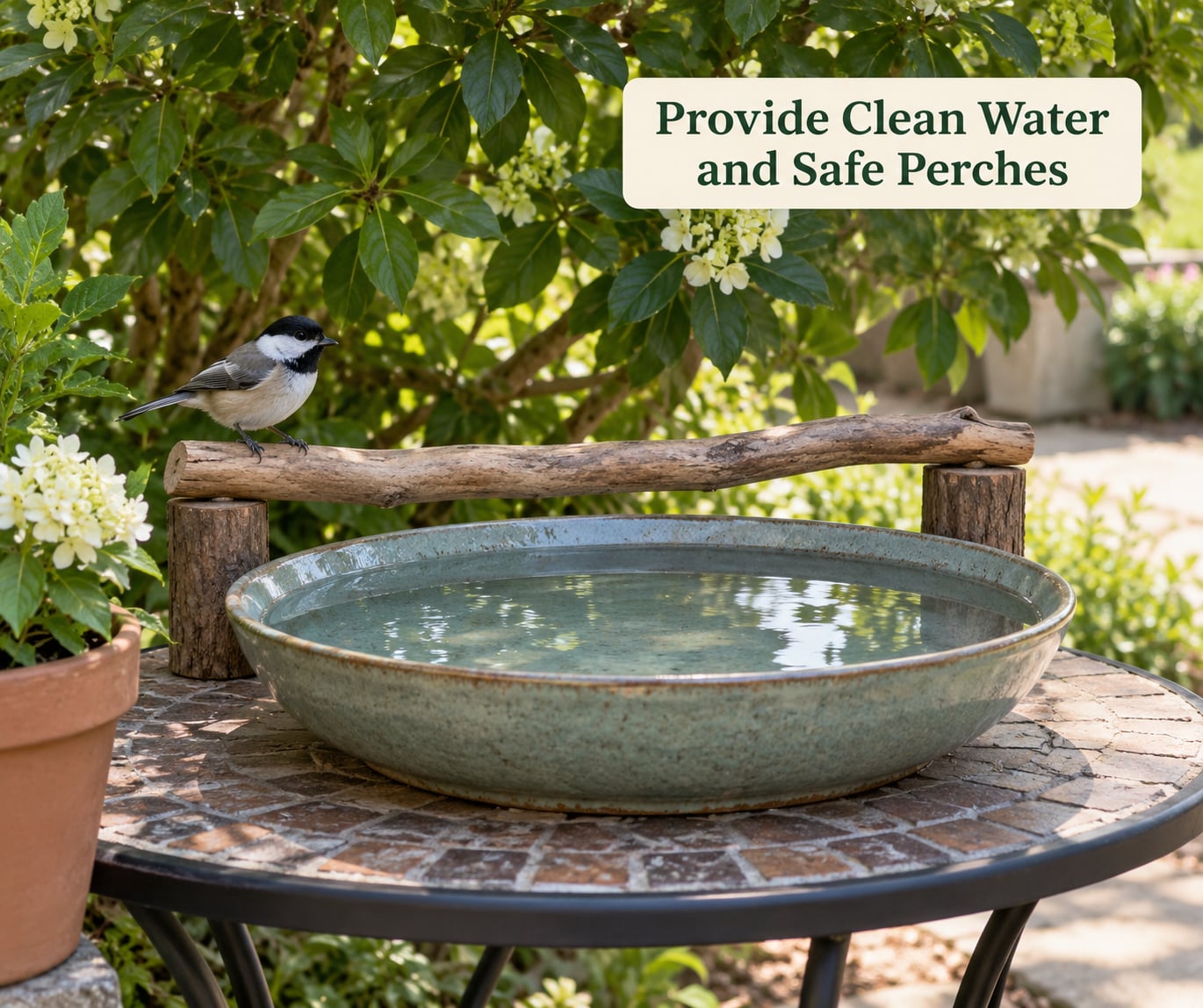
Water matters more than most people expect. Replace the water every other day in mild weather and daily when it is hot, and scrub the dish with a brush and water between changes. Algae film, feathers and droppings turn a dish into something birds will avoid, and that quietly undoes all your feeder work.
Keep the dish low and stable, a few feet from cover, where cats cannot reach it in a single leap. In freezing weather use a shallow dish with a plain surface rather than a heater that lets birds land on ice, and never add chemicals, dye or algae tablets.
A flat stone or a short branch laid across the rim gives small birds a place to stand. A bird struggling in water is usually a bird that cannot grip, and it will not return.
Choose and Fill the Right Feeder
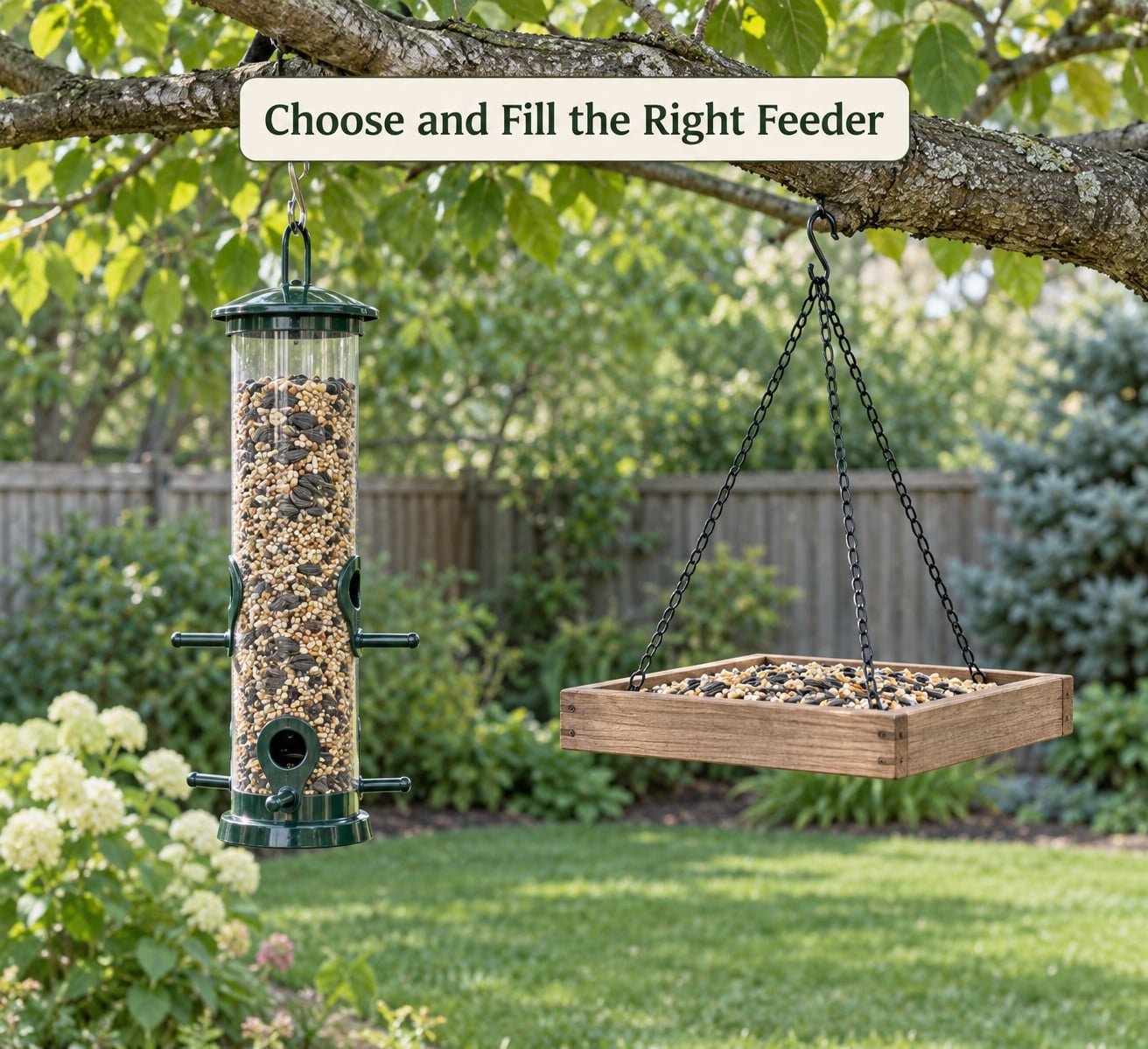
Tube feeders suit small clinging birds and keep seed dry. Platform feeders are open trays that let you see more species, including jays and doves, at the cost of rain getting into the seed. Hopper feeders hold a lot of food and shed weather well but are harder for a child to fill and refill. Start with a tube feeder, add a platform later if you want a wider cast.
On food, buy less than you think you need. Small birds such as chickadees and nuthatches eat a great deal, so keep one feeder topped up rather than several running dry. Black-oil sunflower seed covers the widest range, sunflower hearts draw cardinals and grosbeaks, and suet in cold months is the fastest way to bring insect-eating birds in.
Skip bread, crackers and salted or seasoned mixes. They fill a bird up without feeding it, and salty food is genuinely harmful. Skip moldy or damp seed too, and refill with a small amount of fresh food rather than topping old seed back up.
Hang Feeders Where Birds Can Land Safely
Hang the feeder so birds can perch on it, roughly 5 feet off the ground for a tube feeder, and keep it near cover without any cat able to sit above it. Outdoors cats are the single biggest cause of sudden, silent losses at a feeder, so check the nearest fence and railing before you hang anything.
Give birds room to escape and keep the feeder out in the open rather than wedged against a wall. You will know it is working when seed disappears steadily, droppings collect below, and birds start calling from the shrub before they fly in.
Add Native Plants, Shrubs and Ground Cover
Native plants are what keep birds in your yard in July and February. Seed heads feed goldfinches and sparrows, berries carry thrushes and waxwings through winter, and deep-rooted perennials and grasses pull up the insects chicks need. Layer them: tall grass, mid-height flowers, low shrubs, and a corner you leave alone.
Leave part of the yard untidy. Leaf litter and a small brush pile are where ground-foraging birds such as towhees and thrushes find worms and insects, and tidying every stem out of the bed removes that food entirely.
Ask your county extension office or your state native plant society for a species list matched to your soil and hardiness zone. A plant that is native in one region can behave like an invasive in another, so region-aware choices beat a generic list.
Make a Simple Bird Scavenger Hunt
Give each child a page with five boxes: something yellow, something with a long tail, something heard but not seen, something at the water dish, and something new today. Add columns for a quick pencil sketch, a one-line note on movement and where it was found. No identification required, which is exactly why it works.
Watch from about 20 feet away or from a window, keep voices low, and never handle a bird or an injured animal without calling a wildlife rehabilitator. Finish at the sink; birds carry organisms you would rather your kids did not track through the house.
Watch, Adjust and Keep the Habitat Healthy
Spend a week logging date, time, species and count before changing anything. A quiet first three days usually means birds are still scouting the yard, and moving the feeder on day two resets that process.
Relocate if seed vanishes fast and returns fast, if squirrels control the feeder, or if birds linger nervously without eating. Freshen water and scrub feeders at least once a week, more often in warm weather, and skip the insecticide entirely, since it kills the insects birds are eating. Leave it up year-round, and accept that your list will grow slowly, which is the honest version of this hobby.
Common Mistakes
Almost every disappointing feeder yard traces back to one of these seven.
- Putting out too much food. Large piles spoil faster and draw rodents and flocking species that bully the birds you want. Fix: refill a small amount often.
- Feeding bread or salty mixes. Fix: seed, hearts, suet and clean water only.
- Hanging feeders against or near a window. Birds do not see glass well and many hit it. Fix: move feeders away, or hang decals or reflectors on the glass, and keep feeders more than 30 feet apart.
- Letting water go stale. Fix: scrub and refill on a schedule you write down, ideally daily in summer.
- Crowding the yard. Too many feeders in one small area creates territorial fights and lets disease spread through droppings. Fix: space them out and keep one feeding point per area.
- Cutting back every stem. A yard stripped of leaf litter and seed heads loses its insects and its winter food. Fix: leave one messy corner.
- Letting birds linger near cats. Fix: move feeders and water away from places a cat can reach, and keep cats indoors.
Two year-round habits cover most of this. Clean on a fixed day, the same day each week, and keep the notebook going so children can see which birds arrive after the shrubs leaf out.
Frequently Asked Questions
What food is best for backyard birds?
Black-oil sunflower seed is the broadest choice for most yards, drawing sparrows, jays, chickadees and cardinals. Nyjer seed suits finches, and safflower brings nuthatches and some jays while discouraging larger bully birds. Suet works well in cold months for woodpeckers and wrens. Buy small amounts so it stays fresh, and skip bread, crackers and anything salted or seasoned.
How long does it take for birds to use a new feeder?
Most yards see the first regular visitors within two or three days, but a full week is a fair expectation, and sometimes it takes longer in early spring when birds are moving through. Keep the feeder stocked continuously through that period, since a feeder that runs empty teaches birds it is unreliable. If nothing has arrived after two weeks, check shade, cover and cleanliness before moving anything.
Where should I place a bird feeder in my yard?
Choose a spot with cover within about 10 feet, so birds can retreat instantly, and hang it around 5 feet up where small birds can perch. Keep feeders more than 30 feet from windows to reduce collision risk, and away from any ledge where a cat can wait. A shaded spot keeps seed and water fresher, and an open approach without a wall behind the feeder gives birds room to escape.
How do I keep feeders and water dishes clean?
Scrub feeders and dishes with hot water and a stiff brush at least weekly, more often in warm weather, and always before refilling with fresh seed. Rinse well and let them dry fully in the sun. Replace seed that looks damp, dusty or clumped rather than pouring new food on top of it. Skip bleach and insecticides, and never leave soiled water standing for more than a day or two.
Is it safe for children to feed wild birds?
Feeding wild birds is generally fine for children as long as adults handle the food and equipment. Children should never touch wild birds, nests or eggs, and should wash their hands after any yard activity or after refilling a feeder. Avoid the feeder area during mowing and spraying, keep cats indoors, and check with a pediatrician before letting young children handle the seed itself.
Start With Water, One Feeder and Native Cover
The smallest version of this works: a stable dish of fresh water within a few feet of cover, one easy-to-clean tube feeder, and the shrub or tree already in your yard left in place. Give it a week and let the kids fill in the log. Plant seed-bearing natives when the season allows, and the yard does the rest on its own.
To attract birds to your yard with kids, patience and a notebook do more than another feeder would. Birds are already using your yard as a stopover or a nest site more often than you notice, and the log is how your family finds out.