When it is too hot for the playground, keep everyone inside, close the sun-facing curtains, offer water often, and rotate between one active game and one calm activity rather than trying to fill every hour. These indoor activities for kids when its too hot use paper, boxes, cushions and pantry staples, and most clean up in minutes. Reviewed for 2026.
Children regulate heat differently than adults, and pent-up energy with nowhere to go turns into fussing by mid-afternoon. A short plan beats a long list. Pick two ideas for the hottest part of the day, and let the rest happen when it happens.
Table of Contents
- Indoor Activities for Kids When Its Too Hot at a Glance
- 1. Make a Cooperative Floor Mural
- Indoor Activities for Kids When Its Too Hot: Choose a Washable Surface
- Indoor Activities for Kids When Its Too Hot: Keep Water Nearby and Curtains Closed
- 2. Build a Blanket Fort
- 3. Set Up a Home Obstacle Course
- 4. Start a Cardboard Box City
- 5. Have a Living Room Scavenger Hunt
- 6. Mix Edible Play Dough
- 7. Dance to a DIY Movement Playlist
- 8. Create a Stop-Motion Story
- 9. Play a No-Materials Storytelling Game
- 10. Cook a No-Oven Family Snack
- 11. Hide a Heat-Smart Treasure Hunt
- 12. Make a Quiet Cinema for the Whole Family
- Frequently Asked Questions
- What are the best indoor activities for kids when it is too hot to go outside?
- How can I keep kids busy indoors without buying new supplies?
- What indoor games help children get exercise without much space?
- How can I limit screen time during an extremely hot day?
- What should I do if my child says they are bored or tired of staying indoors?
- Where to Start on a Too-Hot Day
Indoor Activities for Kids When Its Too Hot at a Glance
| Activity | Best age | Type | Prep time | Mess level | Energy needed | Space or key material |
|---|---|---|---|---|---|---|
| Cooperative floor mural | 3 and up | Art | 5 minutes | Low | Calm | Paper, washable crayons |
| Blanket fort | 3 and up | Make-believe | 15 minutes | None | Calm | Chairs, sheets, cushions |
| Home obstacle course | 4 and up | Gross motor | 10 minutes | None | High | Painter’s tape, pillows |
| Cardboard box city | 4 and up | Build and pretend | 20 minutes | Medium | Medium | Delivery boxes, paint |
| Scavenger hunt | 3 and up | Search | 5 minutes | None | Medium | Paper clues, household objects |
| Edible play dough | 2 and up | Sensory | 10 minutes | Low | Calm | Flour, salt, water |
| Movement playlist | 3 and up | Active | 0 minutes | None | High | Speaker, open floor |
| Stop-motion story | 7 and up | Filming | 10 minutes | None | Calm | Phone camera, clay or toys |
| Storytelling games | 5 and up | Language | 0 minutes | None | Calm | Household objects |
| No-oven snack project | 4 and up | Cooking | 10 minutes | Medium | Calm | Yogurt, fruit, oats |
| Heat-smart treasure hunt | 4 and up | Search and learn | 10 minutes | None | Medium | Paper clues, two rooms |
| Quiet cinema | 2 and up | Cozy group | 10 minutes | Medium | Calm | Blankets, paper tickets |
One note before you start. Adult supervision and age-appropriate precautions always come before keeping a child busy. Tape on the floor, small prizes and moving bodies are all fine with the right watching, and none of these are worth a trip to the emergency room.
1. Make a Cooperative Floor Mural
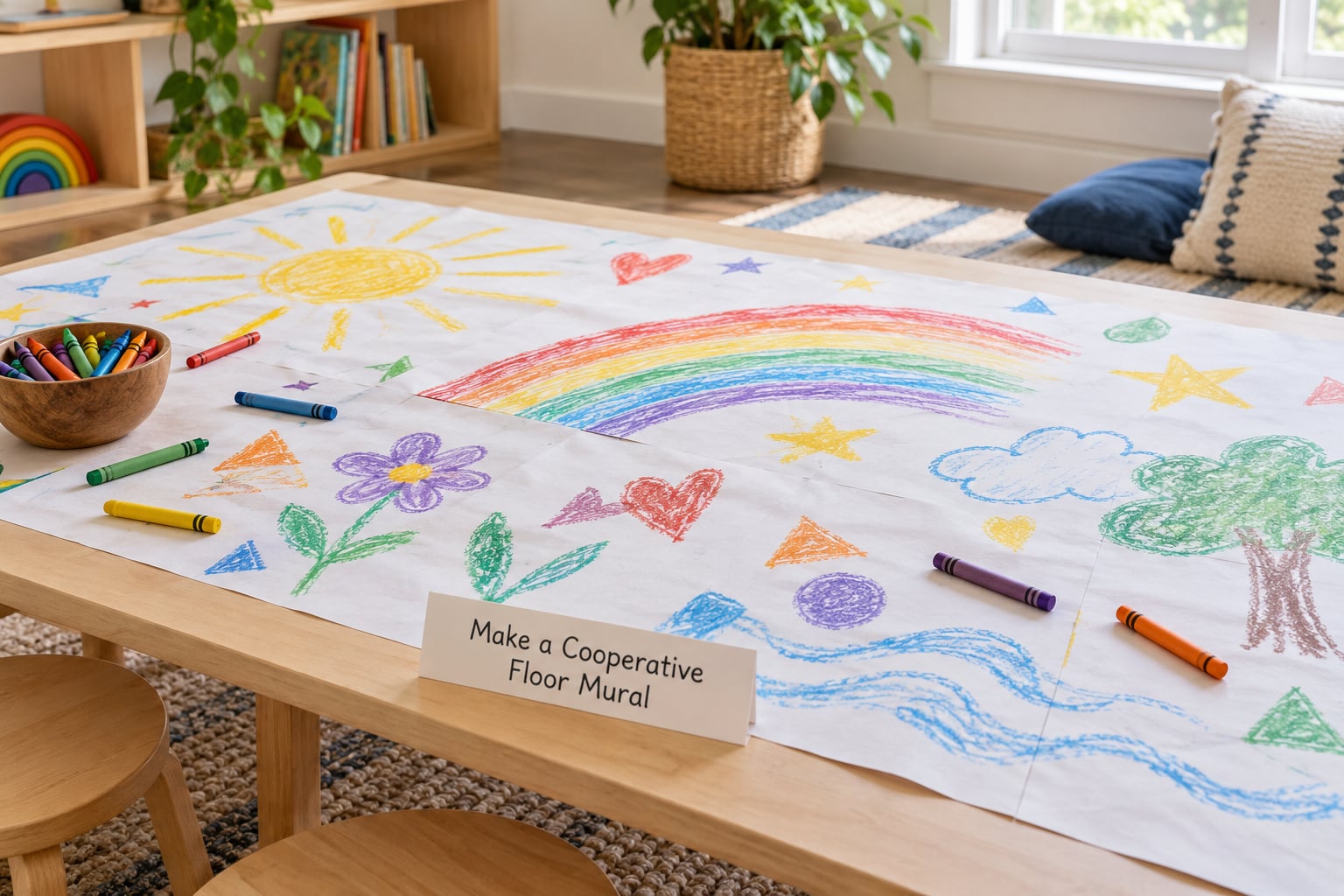
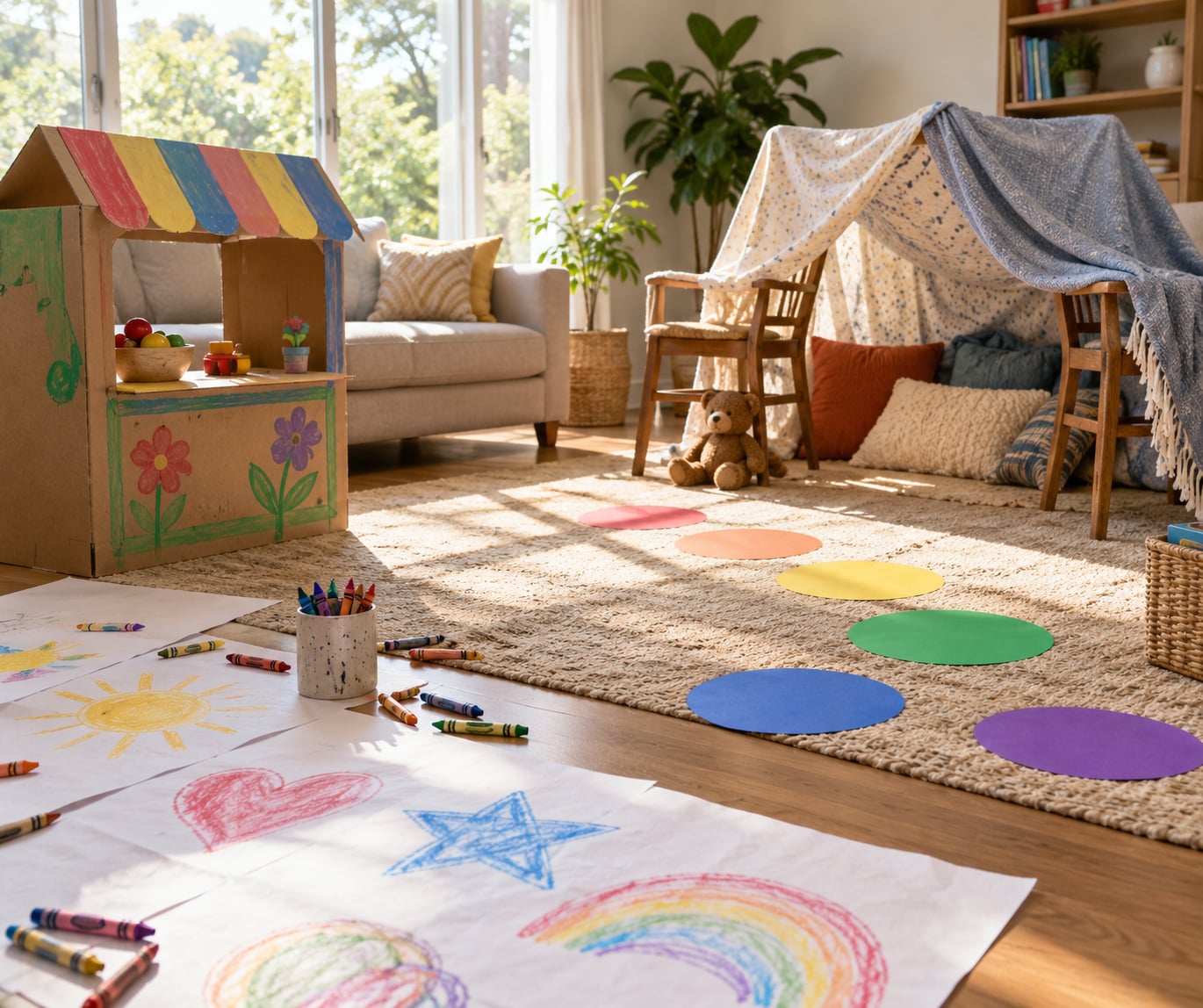
A shared mural solves the hardest problem on a hot day: two children who want to do the same thing at the same time. Tape two or three sheets of paper into one long strip, set out washable crayons and markers, and let everyone draw at once.
Give the group a single prompt rather than separate assignments. Try a river with bridges, a map of an imaginary island, or rows of houses with gardens running into them. A prompt keeps three children from fighting over one sheet and it gives a shy four-year-old an entry point.
Works for ages 3 and up. Two-year-olds can scribble on their own scrap sheet beside the group, which often keeps them content.
Indoor Activities for Kids When Its Too Hot: Choose a Washable Surface
Before the crayons come out, spend two minutes protecting your floor. Lay down a washable floor covering or an old sheet first, and keep paper within reach of every child so nobody walks off the edge with a marker.
A short setup checklist: paper large enough for everyone to reach, surface protection underneath, washable supplies only, a window cracked for airflow, and a plan for cleanup. The cleanup plan matters most. If the mural comes down the minute it dries, children learn that big projects are allowed here.
Indoor Activities for Kids When Its Too Hot: Keep Water Nearby and Curtains Closed
Hot rooms make everything harder. Pick the coolest room in the house before you start, close curtains that face the sun, and keep a jug or water bottle within reach. These indoor activities for kids when its too hot work far better at 78 degrees than at 88.
Water play helps on the hottest afternoons. A shallow tub on the balcony or in the bathtub with cups, sponges and a few plastic bottles runs for a good 40 minutes and doubles as a hair-washing station later.
Freeze toys and small toys in a plastic bag overnight, then let children rescue them in a bowl of warm water. Watching a solid block go soft and slide apart is a tiny science lesson that feels like a game.
When the room gets loud and bodies start to collide, move to something with rules instead. Rotate between an active round and a quiet one and everybody gets what they need without either group feeling shortchanged.
2. Build a Blanket Fort
A fort is the cheapest fix for a restless afternoon, and it keeps working after construction because kids move in and out all day. Push two chairs together, drape a sheet over them, and weigh the corners with cushions.
Skip anything heavy on top of furniture and keep the doorway and hallway exits clear. Add a flashlight, a book basket and a pillow or two and it becomes a reading room by lunchtime.
Works for ages 3 and up. Inside, try story time, drawing by flashlight, or drawing anything at all. A fort also solves the mixed-age problem: the four-year-old stacks blocks inside while the nine-year-old reads on the cushion.
3. Set Up a Home Obstacle Course
Lay painter’s tape lines on the floor for a walking path, add a cushion to step over, and hang paper targets on a wall for throwing. That is a full course in about ten minutes and nothing to buy.
Offer a no-jumping version for younger children and anyone in a hard-floor room. Leave at least an arm’s length between obstacles, skip anything near stairs, and check that no furniture is being used as a step or a handhold.
Works for ages 4 and up. For under-fives, shorten the course to two or three stations and let them run it repeatedly. Running a short course ten times tires them out more than one long pass.
4. Start a Cardboard Box City
Delivery boxes become a shop, a garage or a row of houses with a marker, some tape and a lot of pretend. Cut windows and doors before the paint goes on, since flattened cardboard tears differently than intact cardboard.
One build example: a tall box becomes a four-floor apartment building. Mark the floors with stripes of tape, add paper windows on each level, and assign a family member to live on each one. The pretend starts working about five minutes after the building is finished.
Works for ages 4 and up. One child can build alone, and three or four siblings can each run a different building in the same town. Reusable fasteners such as reusable Velcro strips let the city be rearranged on day two.
5. Have a Living Room Scavenger Hunt
You do not need a hunt kit. Write four or five clues on index cards yourself, using whatever the room already contains.
Color clues work well for young children: find something blue, something round, something rough. Older children can count instead, so find three things that are hard, or two things that hold water. Add one movement challenge, like finding something you can carry with two hands.
Works from age 3 up, with the counting version starting around 6. Hide clues only where children are allowed to explore, keep them at child height so nothing gets climbed on, and put a short time limit on the whole game rather than a prize at the end.
6. Mix Edible Play Dough
Two cups of flour, half a cup of salt, a cup of water and a spoon of oil make a batch that lasts several days in a sealed container. No cooking, no heat in the kitchen, and it smells fine.
Texture is the fun part. Add more water for a softer dough, or a little extra flour for a sandy one that keeps its shape when squeezed. A drop of food colouring gives you summer colors without a trip to the shop.
This one is edible, which makes it useful with toddlers. Keep ordinary modelling clay on a separate tray and label the containers, since the two look similar once they are in a child’s hand. For allergy or sensitivity needs, check each ingredient label before you start and skip the food colouring if you are unsure.
7. Dance to a DIY Movement Playlist
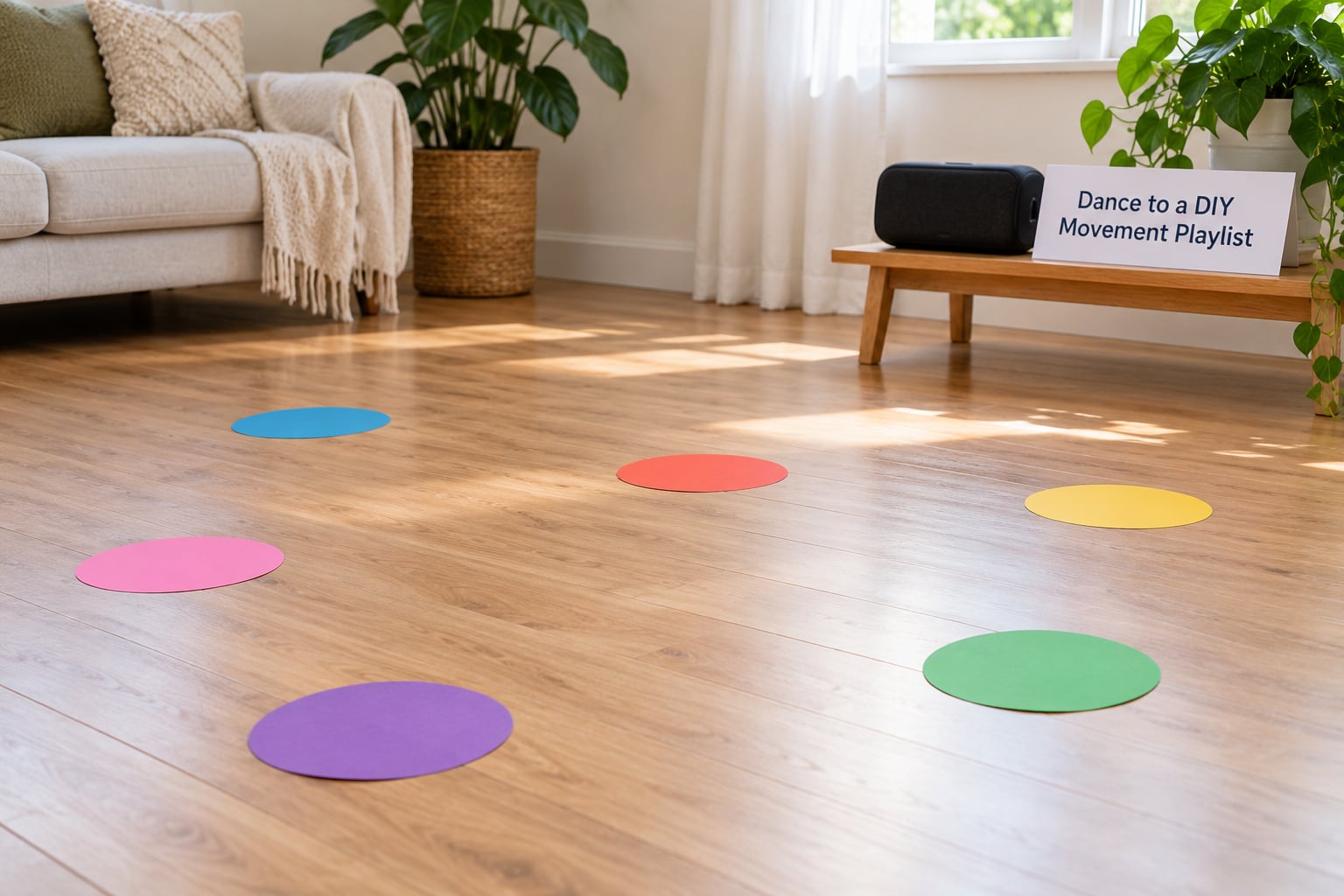
Five themed rounds are enough to burn off a lot of energy without a single prop. Play a few songs per round and change the rule each time.
- Animals: move like a bear, then a crab, then whatever the child invents.
- Traffic: green means run, yellow means slow walk, red means freeze.
- Space: float like an astronaut, stomp like a robot, hop to the moon.
- Counting: clap the number of beats the song or the adult counts out.
- Freeze dance: everyone stops dead when the music stops.
Works for ages 3 and up. Keep it to a clear patch of floor, turn the volume down in a shared apartment, and always include a round where children march or stamp instead of dance. A child who refuses to dance will happily stomp.
8. Create a Stop-Motion Story
Prop a few toys, clay figures or paper cutouts against a plain background and shoot one photo at a time. Move everything a small amount, shoot again, and a strange little film appears by evening.
Plan three events before you film: how the story starts, what goes wrong, and how it ends. Secure every small piece with a dab of tape so nothing flies off between shots, and keep each session short. Ten minutes of shooting is usually plenty before attention drops.
Works for ages 7 and up on the camera itself, younger children can push the toys while an adult works the phone. Follow your own device’s guidance about camera use and keep sessions supervised.
9. Play a No-Materials Storytelling Game
Put four or five ordinary objects in a bowl and have each person draw one, then build a story around all of them. A wooden spoon and a receipt make for a stranger story that surprises everyone.
Two other versions need nothing at all. Take turns adding one sentence to a story about a single character, so nobody can plan ahead. Or pick a character from a book or show already in the house and interview them, with an adult going first so the children know how silly it is allowed to be.
Works for ages 5 and up, and it is the activity to reach for when energy is low and screens are off the table. These indoor activities for kids when its too hot keep everyone seated and talking rather than moving through a hot house.
10. Cook a No-Oven Family Snack
Cooking keeps the kitchen warm, so skip anything that needs the oven. Refrigerator fruit-oats with yogurt and chopped fruit needs no heat at all, and toast faces are a 10-minute job the kids can do themselves.
Two ideas do need another appliance. Frozen yogurt bark has to go in the freezer until firm, and no-cook energy bites need a food processor or very determined hands. Label those two as separate steps so nobody expects instant results.
An adult handles the food safety side. Refrigerate anything with dairy or cut fruit within two hours, and follow USDA guidance for safe handling. Treat this as a small cooking project, not a complete meal, and check allergy needs before anyone starts eating.
11. Hide a Heat-Smart Treasure Hunt
Spread clues through one or two safe rooms so children walk instead of sprint. Each clue points to the next, and the last one names a prize or a turn at the next activity.
Change the theme to match their age. Preschoolers look for objects by color. School-age kids can follow clues that reference a letter, a quantity, an animal sound, or a material. A small object taped inside an obvious spot makes the hunt end quickly when you only have ten minutes.
Works for ages 4 and up. Adjust the number of stops rather than the difficulty, and let everyone finish at their own pace. If siblings compete hard, keep two hunts running in two rooms instead of one race.
12. Make a Quiet Cinema for the Whole Family
Blankets, floor cushions and paper tickets cut from card stock turn the living room into a cinema. Let everyone pick a theme, such as space westerns, underwater stories or rainy day detectives, and announce the house rules before the lights change.
Popcorn on the stove is quick, and air-popped popcorn is easier. Build in breaks: a five-minute drawing intermission, a stretch, a quick game. For a group with a wide age range, run it as three short films rather than one long one.
Works for ages 2 and up, which makes it the most reliable option for mixed families. This version uses no screens. If you do add a film, the tickets, the themed snacks and the intermission game are what make it feel like an event.
Frequently Asked Questions
What are the best indoor activities for kids when it is too hot to go outside?
Movement, water play, building projects and calm seated games cover most of a too-hot day. Alternate an active round with a quiet one, and keep water available. Movements need the coolest room and open floor, water play and cooking keep bodies busy without heat, and building or art projects hold a mixed-age group together.
How can I keep kids busy indoors without buying new supplies?
Most of these u003cstrongu003eindoor activities for kids when its too hotu003c/strongu003e use things you already own: paper, crayons, delivery boxes, painter’s tape, cushions, spoons and pantry staples. Save any buying for one small item, such as a set of washable markers or a roll of tape, then run the rest from the drawer.
What indoor games help children get exercise without much space?
Tape walking lines, a cushion to step over, freeze dance, animal marching, balloon tapping and a living room scavenger hunt with movement challenges all work in a small area. Keep obstacles an arm’s length apart, avoid anything near stairs or hard surfaces, and shorten the course rather than adding jumps.
How can I limit screen time during an extremely hot day?
Set a rough shape for the day instead of a ban: one planned screen block, one movement block and one quiet creative block. Offer specific substitutes such as stop-motion filming, a fort, or a storytelling game, and warn children about the change a few minutes ahead rather than at the moment they object.
What should I do if my child says they are bored or tired of staying indoors?
Boredom on a hot day is a real signal, not a failure. Try asking what they miss most about outside and rebuilding that one thing, such as a taped walking course, a fort or water play in a tub. It is also fine to accept a quiet afternoon, and say plainly that tomorrow is another hot day.
Where to Start on a Too-Hot Day
Start with the cooperative floor mural if you have floor space and more than one child, or pick whichever of these indoor activities for kids when its too hot matches the room you actually have. Then add one movement activity, such as the taped obstacle course or freeze dance, and one quiet task.
Keep the timing loose. Water breaks whenever someone asks, and a child who is tired, bored or uncomfortable gets to stop. On a day this hot, a good afternoon is not a packed one.