To make homemade all purpose cleaner, mix equal parts distilled white vinegar and distilled water in a spray bottle, then add about one teaspoon of dish soap and shake. That takes under two minutes, costs pennies, and handles grease, soap scum and mineral film on most hard surfaces. Skip the vinegar smell and use a peroxide or alcohol base instead.
I keep one of these bottles under the sink and one in the garage, and I have replaced every store-bought spray I used to buy. The version below is the one I hand to friends, because it is forgiving and it does not eat my counters.
Table of Contents
- What You Need
- Step-by-Step: How to Make Homemade All Purpose Cleaner
- Choose Your Cleaner Base
- Mix and Label the Cleaner
- Test Before Cleaning
- Use and Store the Cleaner
- Common Mistakes
- Frequently Asked Questions
- What ingredients do I need to make an effective homemade all purpose cleaner?
- Can I use homemade all purpose cleaner on counters, floors and appliances?
- How should I dilute vinegar cleaner for different cleaning jobs?
- Can I add essential oils or dish soap to homemade all purpose cleaner?
- How long does homemade all purpose cleaner last, and how should I store it?
- What surfaces should I avoid cleaning with vinegar?
- What to Do First
What You Need
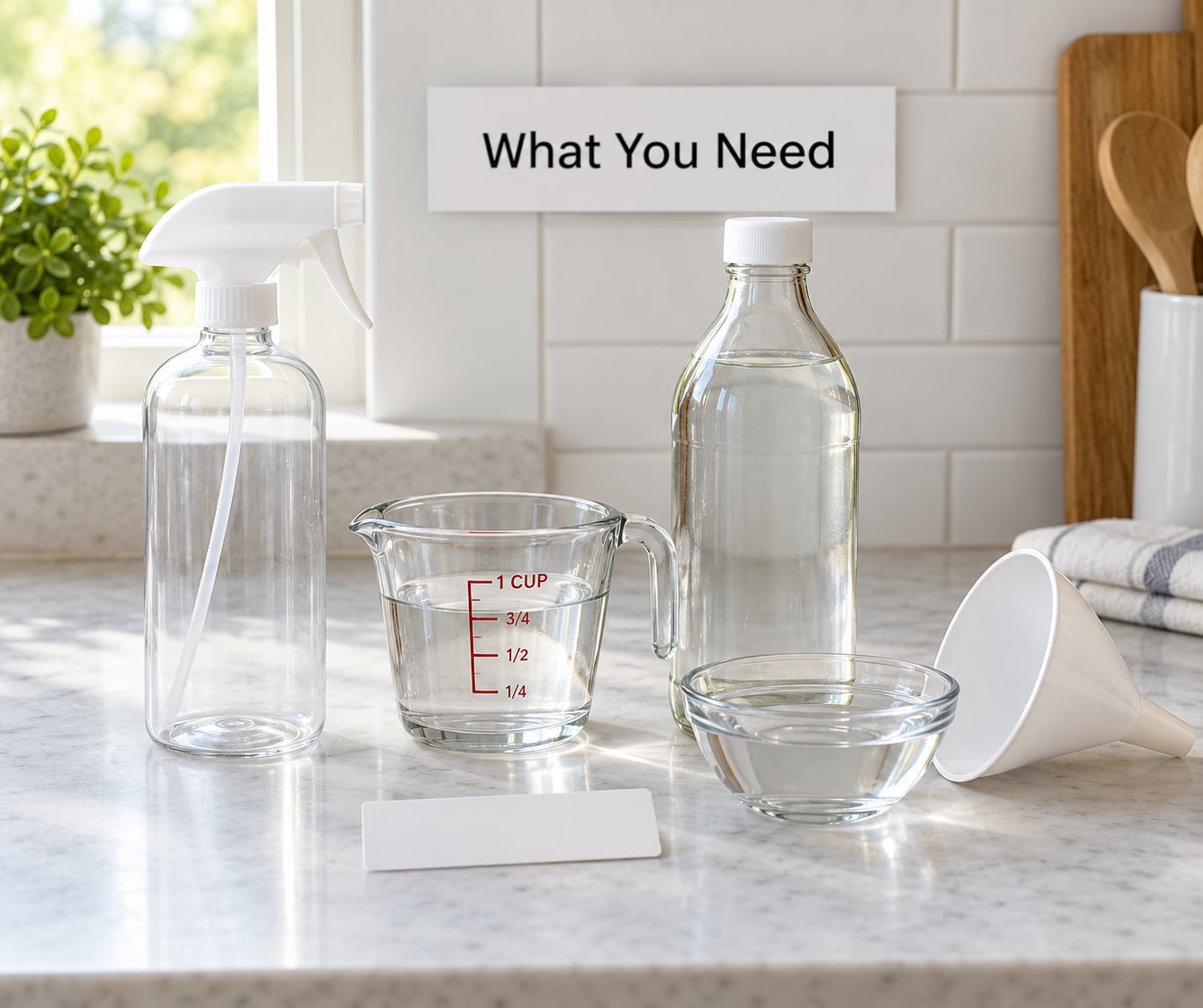
The whole recipe is three ingredients. Everything else is optional, so buy nothing until you have mixed the basic version and decided whether you like it.
- 1 cup distilled white vinegar (5 percent acidity) for the acid that dissolves grease, hard-water deposits and soap scum.
- 1 cup distilled water, which prevents mineral buildup, water spots and streaks. Reverse osmosis or filtered water works too.
- About 1 teaspoon liquid dish soap for the surfactants that lift grease off a surface.
- Optional: 10 to 20 drops essential oil for scent. Ten drops is roughly a quarter teaspoon.
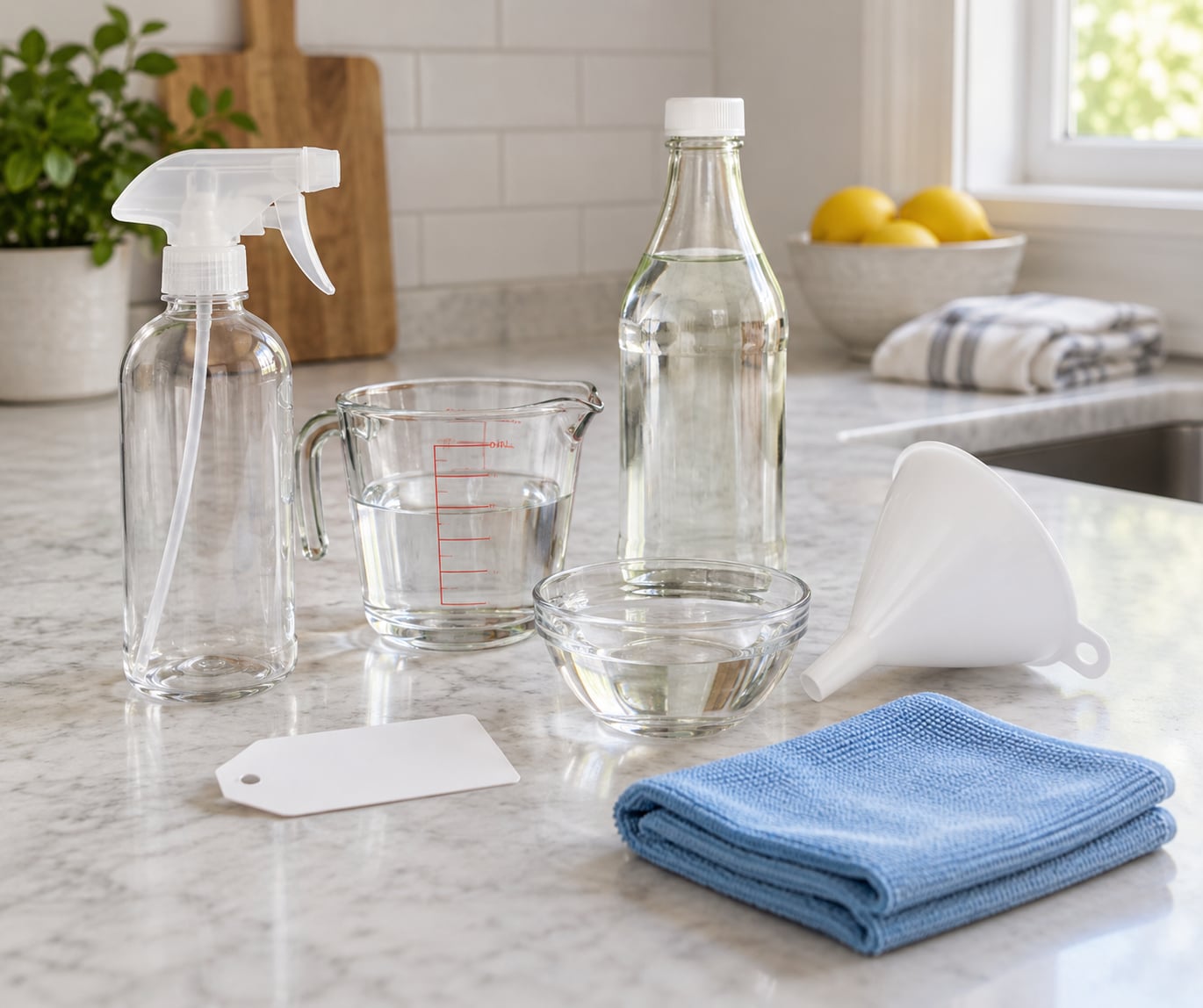
- Equipment: a spray bottle with a secure lid, a funnel, a measuring cup and a label.
Use glass or amber-colored bottles when you add citrus or vinegar essential oils, since those compounds slowly degrade plastic. A plain PET bottle is fine for the plain recipe.
Step-by-Step: How to Make Homemade All Purpose Cleaner
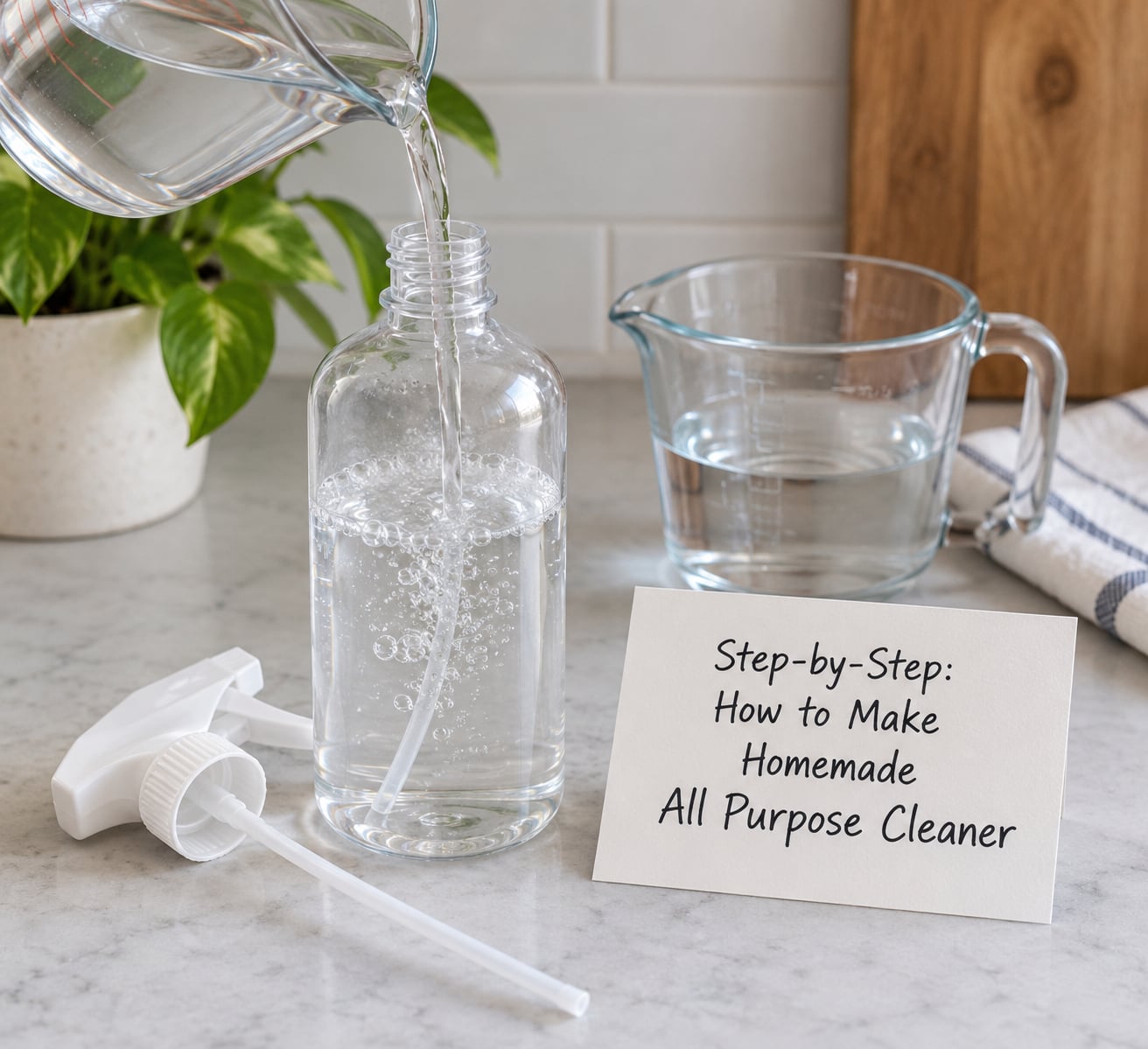
Total time is about two minutes, plus whatever it takes to label the bottle properly. There is no cooking and no heat unless you are using powdered ingredients.
Choose Your Cleaner Base
The vinegar base above is the default and the one I recommend starting with. Four other bases work well, and each one changes what you can clean with it.
- Castile soap base: one cup water, one teaspoon castile soap, one cup vinegar used in separate sprays, never combined, because vinegar turns soap into an oily curd that does no cleaning at all. A vinegar-free castile bottle suits people who dislike the vinegar odor.
- Hydrogen peroxide base: three percent peroxide diluted roughly one to three with water. This is the base that actually disinfects, but it bleaches fabric and can etch light stone. Store it in an opaque bottle.
- Isopropyl alcohol base: 70 percent rubbing alcohol diluted one to one with water. Fast-acting on grease and germs, evaporates clean, and is the safest pick for screens and keyboards.
- Washing soda base: one tablespoon of sodium carbonate dissolved in two cups of hot water, plus a teaspoon of dish soap. No vinegar, no smell, good cutting of grease, and it removes stainless steel streaks better than anything I have bought.
Whatever base you choose, the dish soap or castile measure stays small. Too much soap is the single most common reason a DIY cleaner turns into a streaky film.
Mix and Label the Cleaner
Measure the vinegar first, pour it into the bottle, then add the water. Adding water to an empty bottle and then the vinegar on top is easier and reduces splashing.
- Pour 1 cup white vinegar into a clean spray bottle.
- Add 1 cup distilled water.
- Add 1 teaspoon dish soap. If you are using peroxide or alcohol, swap the dish soap for one to three drops only.
- Add 10 to 20 drops of essential oil if you want scent, and skip it if you have cats or very young children in the house.
- Close the lid and shake for 15 seconds until the mixture turns cloudy and foamy.
- Wait 10 minutes and check that the liquid has cleared. A settled layer of soap means the dish soap was too much; add another quarter cup of water and shake again.
- Label the bottle with the words homemade all purpose cleaner, the date, and the ingredients. Do not reuse the label from a commercial product.
The finished cleaner looks clear and colorless. Any cloudiness that does not clear after shaking has soap that has separated, and it will streak.
Test Before Cleaning
Spray a small patch in a hidden spot, wait 60 seconds and wipe it dry. Marble and honed stone are where a wrong recipe shows up as dull, etched spots that never buff out. On wood, look for any lightening of the finish.
Safe on glass, mirrors, stainless steel, laminate counters, glazed tile, sealed porcelain, painted walls, baseboards, toilet exteriors, shower glass, cutting boards, glass stovetops and most sealed porcelain fixtures.
Avoid natural stone such as granite, marble and travertine unless they are sealed and you test first, because acid dulls the polish and the etching is permanent. Also skip unsealed wood, electronics screens and acrylic, cast iron seasoning, and anything painted with a latex or matte finish. On electronics, spray the cloth, never the screen, and wipe with a damp microfiber.
Use and Store the Cleaner
Spray the surface, let it sit for 30 to 60 seconds so the acid has time to break the film, then wipe with a clean microfiber cloth. For heavy grease on a stovetop, give it a few minutes and scrub with a non-scratch pad.
Rinse counters, cutting boards and anything you eat off if you are sensitive to the smell. On floors, use a much weaker mix, roughly one quarter cup of the cleaner per gallon of water, since full strength leaves a dull residue on some finishes.
Keep the bottle out of reach of children and pets, and do not transfer the mixture into an unlabeled or repurposed commercial spray bottle. A vinegar-and-water mixture keeps for months in a closed bottle. Fresh citrus or herb infusions keep about a month, and lemon juice mixes keep roughly a week.
Common Mistakes
These six errors come up over and over in reader comments on cleaning blogs, and each one has a simple fix.
- Mixing vinegar with castile soap. The acid turns the soap into a curdled mess that cleans nothing. Keep the two in separate bottles, or drop the vinegar. Safety tip: use one base per bottle, and never double up.
- Combining vinegar with hydrogen peroxide or bleach. Vinegar plus bleach releases a toxic gas, and peroxide plus bleach reacts badly as well. Never mix two cleaners of any kind. Safety tip: rinse the surface thoroughly between products and never pour two cleaners into the same bucket.
- Using it on natural stone. Acid etches marble and granite permanently. Buy a pH-neutral stone cleaner for those counters. Safety tip: test in a hidden spot, every time you change the recipe.
- Making it too concentrated. Too much soap or too much vinegar leaves streaks and can dull a finish. Dilute with water rather than throwing the batch away. Safety tip: weak is safer for counters, and concentrated is safer for grease.
- Skipping the label. An unlabeled clear bottle in a home with small children is a real hazard, since nobody knows it holds acid. Label the contents, the date and the ingredients, and keep it in a closed cabinet.
- Pouring powder straight into a cold bottle. Washing soda and borax clog sprayers within weeks because they never fully dissolve. Heat a cup of water almost to boiling, stir in the powder, cool it, then dilute. Safety tip: never heat any cleaner that contains vinegar or alcohol.
Frequently Asked Questions
What ingredients do I need to make an effective homemade all purpose cleaner?
Three ingredients cover almost everything: one cup distilled white vinegar, one cup distilled water and about one teaspoon of liquid dish soap. The vinegar supplies the acid that breaks down grease, hard-water deposits and soap scum, while the soap lifts the loosened grease off the surface. Distilled water matters because tap and well water leave mineral streaks as the solution dries. Ten to twenty drops of essential oil is the only truly optional addition, and households with cats or toddlers are better off leaving it out.
Can I use homemade all purpose cleaner on counters, floors and appliances?
On counters, yes, after a spot test, and the vinegar base works well on laminate, stainless steel, glazed tile and glass. Stainless steel appliance exteriors are a good match too, though a washing soda base cuts grease and streaks even better on them. For floors, dilute the bottle heavily, about a quarter cup per gallon of water, because full strength leaves a dull film on some finishes. Never use it on natural stone such as marble, unsealed granite or unsealed wood.
How should I dilute vinegar cleaner for different cleaning jobs?
Use it straight from the bottle for counters, stovetops, bathroom fixtures and cutting boards, and give it 30 to 60 seconds of dwell time before wiping. For walls, baseboards and floors, mix roughly one quarter cup of cleaner with a gallon of water. For glass and mirrors, cut it further, about one to three parts vinegar to one part water, so residue does not streak as it dries. When you are cleaning with an unknown finish, test the weakest dilution first and work up from there.
Can I add essential oils or dish soap to homemade all purpose cleaner?
Dish soap is part of the standard recipe and works best at about one teaspoon per two cups of liquid. Too much leaves a film, so measure it rather than pouring freely. Essential oils are optional and only for fragrance, around 10 to 20 drops, which is roughly a quarter teaspoon. Citrus and vinegar essential oils slowly break down plastic, so use glass if you add them. Skip essential oils entirely if you have cats, since several are harmful to them.
How long does homemade all purpose cleaner last, and how should I store it?
A vinegar, water and dish soap batch keeps for months in a closed bottle, because vinegar does not spoil. Fresh citrus peel or herb infusions last about a month before the scent fades. Lemon juice mixes are the shortest-lived at roughly a week, so make those in small amounts. Store bottles in a cool, dark cabinet away from sunlight, heat and children or pets, and always keep the lid tight. Label the bottle with the contents and the date you made it.
What surfaces should I avoid cleaning with vinegar?
Vinegar is an acid, so avoid natural stone such as marble, travertine, limestone and honed granite, where it dulls the polish and leaves etching that will not buff out. Skip unsealed wood, unfinished floors, cast iron seasoning and latex or matte paint. Keep it away from electronics screens, since moisture gets under the bezel, and from some acrylic and vinyl surfaces that haze or dull. If a surface is not listed and you are unsure, spot test it in a hidden corner first.
What to Do First
Mix one cup of vinegar, one cup of distilled water and a teaspoon of dish soap tonight, shake it, and label the bottle before you put it away. Then spray it on a hidden corner of your counters and see how it behaves before you trust it with anything you care about.