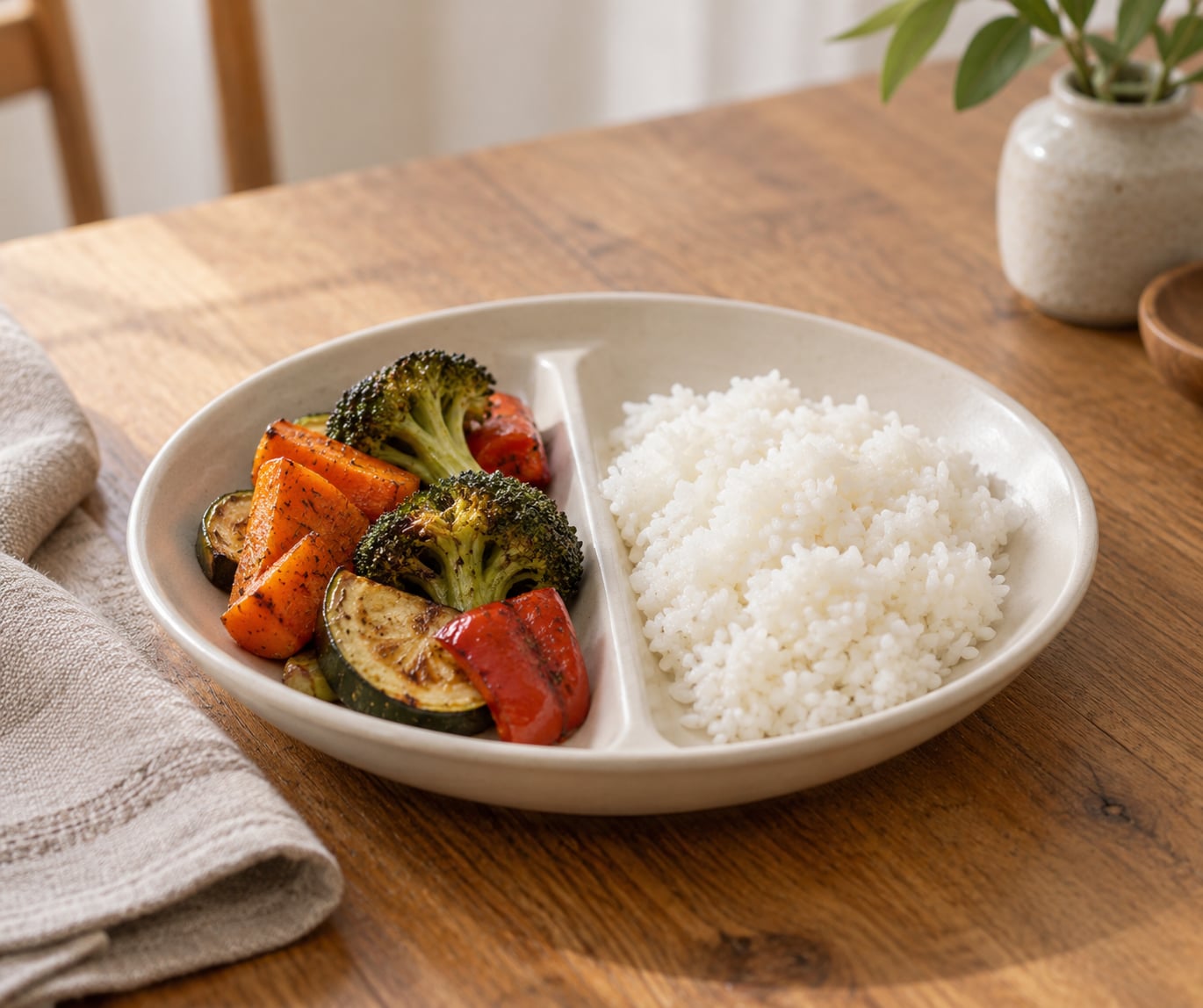
You cannot make a picky eater try a new food, and you do not need to. Put a tiny portion on the plate next to something they already eat, let them touch and smell it without any expectation of a bite, stay calm, and offer it again. Most children need ten or more separate tries before a new food is accepted. That is how to get picky eaters to try new foods: repeat, stay neutral, keep the portion small.
That sounds almost too simple, which is why the advice floating around online rarely works. The strategies that do work are less about what you say and more about what you stop doing: no bargaining, no short-order cooking, no praising only the food that gets eaten.
This guide walks through the process in order, from picking one new food to knowing when a feeding problem deserves a professional’s attention. It is general guidance for parents and caregivers, not medical advice.
Table of Contents
- What You Need
- Step-by-Step
- 1. Choose One New Food at a Time
- 2. Serve the New Food Beside a Familiar Favorite
- 3. Let Your Child Touch, Smell and Examine It
- 4. Offer a Tiny Taste Without Forcing It
- 5. Repeat the Same Food in Different Forms
- 6. Praise Effort and Keep Mealtimes Positive
- 7. Know When to Seek Professional Help
- Common Mistakes
- Frequently Asked Questions
- How many times do I need to offer a new food before my child eats it?
- How long should I wait between introducing new foods?
- Is picky eating a phase or a real feeding problem?
- Should I use rewards to get my child to try new foods?
- What do I do when my child will not even touch a new food?
What You Need
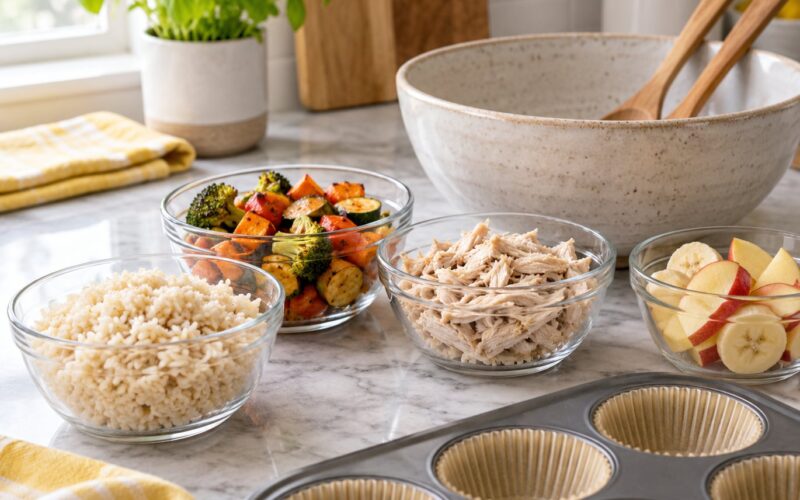
None of this requires special equipment. What it requires is a plan small enough that you can keep it calm.
- One new food. Not three. One unfamiliar item at a time, so you know what actually worked.
- One familiar favorite. The safe food your child reliably eats, served in a normal portion.
- A small plate or shallow bowl. A tiny serving on a big plate reads as a huge amount. Two or three pieces, or a spoonful, is plenty.
- A normal mealtime setting. Everyone sits, the meal takes a reasonable amount of time, and nobody is watching the child like a test subject.
- One way to note what happened. A notebook line, a note on your phone: the food, the date, and whether it was refused, touched, tasted, or eaten. Numbers turn a vague worry into something you can see improving.
Step-by-Step
1. Choose One New Food at a Time
Pick something connected to food your child already likes, not the most foreign item in the fridge. If they eat pasta, try a new pasta shape or a tomato sauce with a new herb in it before you attempt a whole new vegetable.
Introducing several unfamiliar foods at once makes it impossible to tell what worked, and it often ends with the whole meal being rejected. One at a time also keeps the request small enough that your child can handle it.
2. Serve the New Food Beside a Familiar Favorite
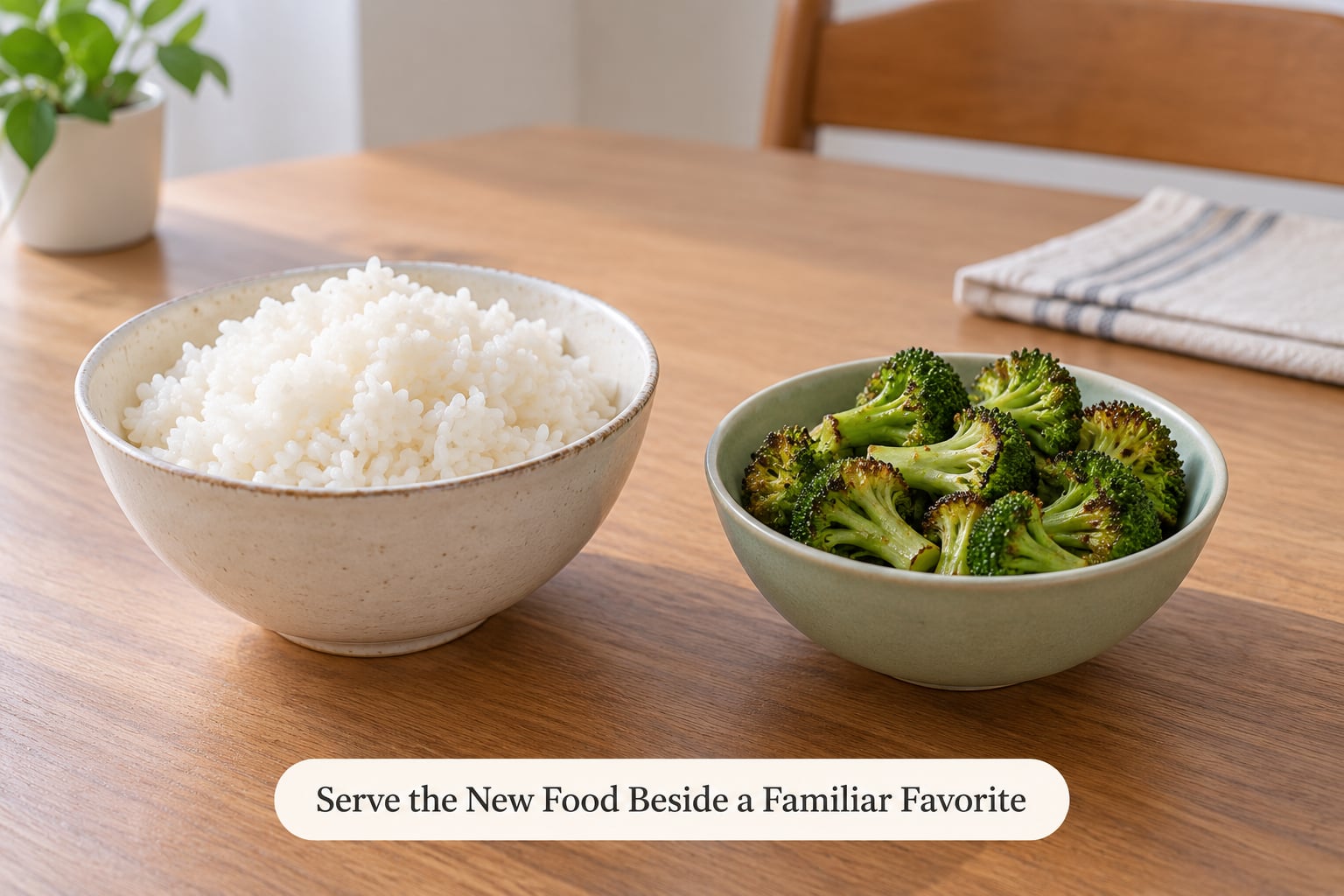
Place the new food next to a food they already eat, not mixed in and not touching. Parents often describe it as a friend of a friend: the new food gets to spend time with something comfortable before it has to be judged on its own.
Keep the portion tiny and let them ignore it. A refused food sitting quietly on the plate is not a failed dinner. In r/Parenting, parents say making dinner family-style and letting kids assemble their own plates is the single biggest win they found, because it removes the negotiation completely.
3. Let Your Child Touch, Smell and Examine It
Permission to handle food without eating it removes most of the pressure. Let your child push peas around the plate, smell a raw pepper, mash a slice of banana with their fingers, or serve themselves a spoonful they will never eat.
Adults stay neutral. No excitement about how good it is, no disappointment about the untouched spoon. You might describe the color or crunch, or where the food comes from, and then move on.
4. Offer a Tiny Taste Without Forcing It
Place one bite-sized portion within reach and let the offer stand without a countdown. If they take it, that counts. So does licking a finger, tasting and spitting it out, or eating a crumb they scraped off the plate.
This is where most parents stall out, so it is worth saying plainly: how to get picky eaters to try new foods comes down to a small offer you make without commentary, then walk away from. Watching them decide is uncomfortable. Looking away is the technique.
The three-bite rule asks a child to take three bites of a new food, with the agreement that it ends there. Many parents use a two-bite version, and for younger toddlers a one-bite rule is plenty. The number matters less than the promise that the meal will end after it, and that nobody will insist on a fourth.
5. Repeat the Same Food in Different Forms
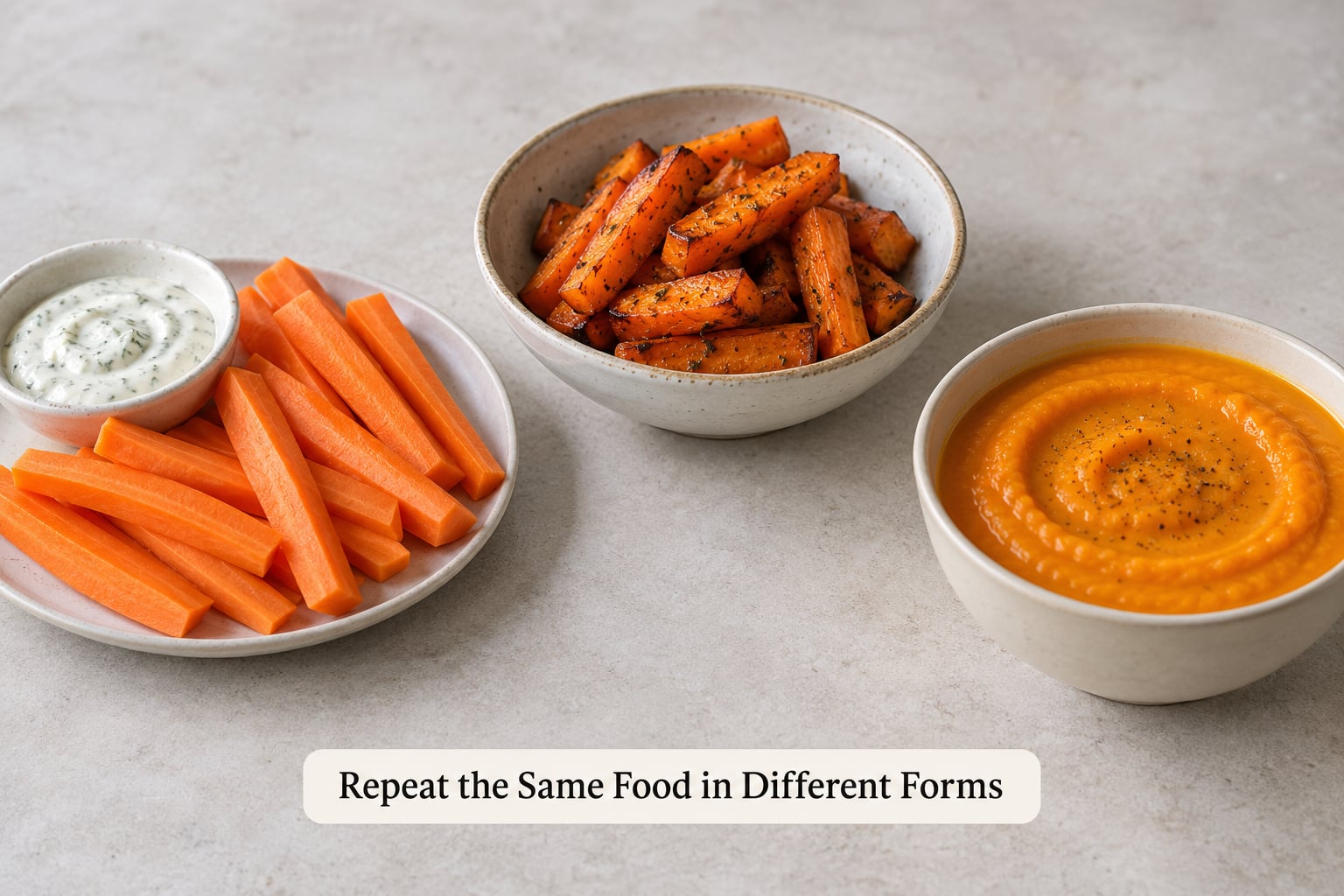
Before you reject a food as one your child hates, change its preparation. Roast instead of steam, serve it cold in a dip, blend it into a sauce, or cut it into a shape they recognize. French fries and roasted potato are the same food to an adult and two different foods to a four-year-old.
Keep offering the same item across several meals before moving on. Re-serving leftovers later in the week is gentler than throwing them out and making it again.
6. Praise Effort and Keep Mealtimes Positive
Try specific praise that names what you saw. You mashed it. You smelled it. You sat with us while we ate. You tried and then spat it out, and that is completely fine. Notice the behavior, not the outcome.
Then eat the same food yourself, without commentary about how much you like it. Adults who cheerfully eat the rejected vegetable do more for a child’s variety than any amount of describing. Plan the meal when everyone is calm, and keep your own frustration off the table.
7. Know When to Seek Professional Help
Most pickiness is a developmental phase. It typically peaks between ages two and three and eases gradually as children reach school age, so what you do in that window matters for variety later on.
Talk to a pediatrician or a registered dietitian if the refusal lasts more than a few months, if your child loses weight or drops across growth curves, if eating causes pain, gagging, or vomiting, or if the child avoids whole categories such as all fruits or all foods with texture. Gagging in response to a new texture is worth describing in detail, because parents often find it more worrying than plain refusal and it is common enough to be discussed rather than ignored.
Some children eat a very small number of foods, and that pattern can point to sensory processing difficulties or avoidant/restrictive food intake disorder rather than preference. Attention issues and ADHD are also mentioned often by parents in connection with narrow eating. None of that is something to diagnose yourself; it is something to raise with a professional who works with feeding.
Common Mistakes
Most dinner-table battles come from a small set of habits, and each has a calm replacement.
- Forcing a bite. Force rarely works and often makes a food more threatening. Offer the same tiny portion again tomorrow.
- Bargaining. One more bite for dessert trains your child that food is currency. Serve dessert on its own terms, not as a trade.
- Praising only eating. If the only good thing that happens at dinner is finishing food, dinner stays a test. Praise the touching, the smelling, the sitting, the trying.
- Huge portions. A mountain of the new food signals a mountain of work. Two pieces looks doable.
- Several new foods at once. You lose the signal and the child gets overwhelmed. One item, several meals.
- Letting your child cook every time. Children who help cook then serve themselves more often, and they often accept a food they picked out at the store. Let them help sometimes, not always.
- Short-order cooking. Making a separate child meal every night doubles your work and removes the reason for a family table. One safe food on the shared plate usually covers this.
- Comments from relatives. Let someone else say the child is so picky. Answer once, calmly, and stop explaining.
Frequently Asked Questions
How many times do I need to offer a new food before my child eats it?
Most children need somewhere around ten to fifteen separate offerings of a new food before they accept it, and many need more. Each offering counts whether they touched it, smelled it, tasted it, or refused it. Keep the portion small, serve it beside a food they already eat, and offer it again at the next meal rather than moving on after two refusals.
How long should I wait between introducing new foods?
Offer the same new food across several meals before adding another one, so you can tell what worked. If your child is comfortable and mealtimes stay calm, offering the same food daily for a week or two is fine. A few days between the first taste and the next attempt is also normal. What matters more than the gap is that pressure stays off.
Is picky eating a phase or a real feeding problem?
For most children it is a normal developmental phase that peaks between ages two and three and eases by school age. It becomes worth a professional opinion when the range of accepted foods stays very narrow for months, when there is weight loss or a drop in growth, when eating causes pain or vomiting, or when whole categories of texture are refused. A pediatrician or registered dietitian can tell the difference.
Should I use rewards to get my child to try new foods?
Rewards tend to backfire, because they make clear that the new food is something being compensated for rather than something worth eating. Praise for effort, such as noticing that your child mashed the food or smelled it, reinforces curiosity without making the bite a transaction. Keeping dessert independent of bites avoids teaching that food is a currency.
What do I do when my child will not even touch a new food?
Give explicit permission to touch, smell, move, or serve it without tasting. Many children will handle and smell a food for days before any bite. Keep it on the plate next to a familiar favorite in a tiny portion, stay neutral, and keep offering. If gagging, vomiting, or distress happens every time, describe it to your pediatrician instead of pushing through.
Start tonight with the smallest version: one new food, two spoonfuls on the plate, beside something familiar, and no comment either way. Keep offering it for a couple of weeks before you judge the method. That single routine, repeated without pressure, is how to get picky eaters to try new foods more often than any trick or deal.
If your child is on a restricted diet for medical reasons, or you are unsure whether a reaction is a preference or an allergy, ask your pediatrician or a registered dietitian before changing the routine.