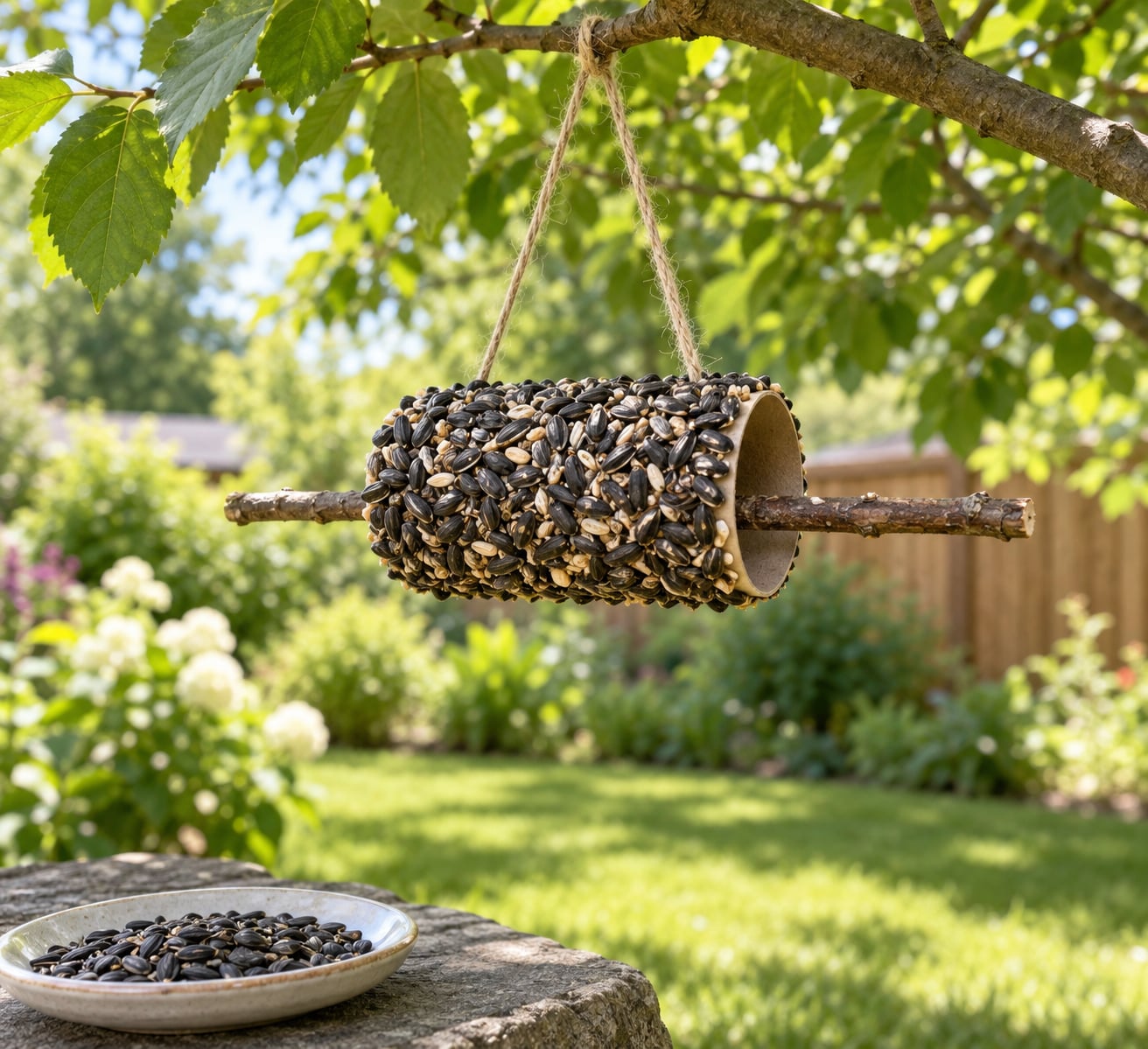
To make a toilet paper roll bird feeder, coat a cardboard tube with peanut butter or a safe substitute like vegetable shortening, roll it in birdseed until the outside is covered, tie twine to the top, and hang it in your yard. The whole build takes about 15 minutes and costs almost nothing but a few spoonfuls of seed.
I make these with my kids every spring because the tube is already in the recycling bin and the whole thing turns into a week of birdwatching from a kitchen window. The trick that separates a feeder that works from one that ends up as a soggy lump on the lawn is the binder. Get that right and everything else is simple.
This guide covers the supplies, the four build steps, and the fixes for the mistakes that trip people up most, including the safety rules worth knowing before you hand a butter knife to a five-year-old.
Table of Contents
- What You Need
- Step-by-Step: How to Make a Toilet Paper Roll Bird Feeder
- 1. Prepare the Toilet Paper Roll
- 2. Cut the Feeding Openings
- 3. Add Seed and a Base
- 4. Hang the Feeder Safely
- Simple Version vs Upgraded Version
- Common Mistakes and How to Fix Them
- Frequently Asked Questions
- What kind of bird seed is best for a toilet paper roll bird feeder?
- Can I make a toilet paper roll bird feeder without cutting it?
- How do I keep the bird feeder from falling apart outside?
- How high should I hang a toilet paper roll bird feeder?
- How often should I clean and refill a DIY bird feeder?
- Is it safe for children to make a toilet paper roll bird feeder?
What You Need
The list is short. Everything else is optional.
- One empty toilet paper roll with no paper left inside. A paper towel roll works too, but cut it in half or the feeder gets heavy and sags.
- About 1 tablespoon of binder per feeder: peanut butter, sunflower seed butter, or vegetable shortening. See the binder notes below.
- About 1/4 cup of birdseed. Black oil sunflower seeds are the best single seed for this feeder.
- About 20 inches of hemp twine, yarn, or string for hanging.
- A butter knife or a table knife for spreading the binder.
- A shallow dish or plate to roll the seed in.
Those six items make the whole feeder. Optional extras cover durability and comfort.
- A popsicle stick, bamboo skewer, or small branch pushed through the tube as a perch. Birds perch on a stick far more often than on a bare tube.
- A craft knife and a metal ruler, for an adult, if you prefer clean rectangular feeding windows over torn paper holes.
- Clear packing tape or a strip of cardboard to patch thin spots or add a base that stops seed pouring out the bottom.
- Paper towels for wiping the tube and for kids’ hands.
- A pencil or washable marker for decorating the tube before you coat it.
On seed, skip the filler-heavy mixes. Seed that birds pick out and drops on the ground beneath the feeder is wasted seed and a squirrel invitation. Black oil sunflower seeds have a thin shell that even small birds can crack, so a single seed pulls in chickadees, nuthatches, titmice, and house sparrows at once.
On binder, the choice depends on the season and who is in the room.
- Peanut butter is the classic. It sticks well and birds love it, but skip it entirely if anyone in the house has a peanut allergy, and never serve it to someone who cannot have it.
- Sunflower seed butter is the allergy-friendly swap and works nearly as well in cold weather.
- Vegetable shortening is the safest and cheapest option for a classroom. Check the label for palm oil, since birds do not digest it well, and use a brand made with canola or soybean oil.
- Lard or coconut oil are fine in cold months but go rancid or soft in heat.
One rule covers all of them: never use honey. It is sticky enough to gum up a small bird’s beak, and honey is not a food birds digest well. Xylitol, the sweetener in some nut butters, is toxic to dogs, so keep the spreading tray away from the yard.
Step-by-Step: How to Make a Toilet Paper Roll Bird Feeder
1. Prepare the Toilet Paper Roll
Clear out the last sheet or two of paper and check the cardboard. Rolls from the recycling bin often have a soft spot where the inner ply separates, and that spot becomes a tear the first time a squirrel grabs it.
Press the tube along its whole length between your hands. Where it feels spongy, wrap a strip of packing tape around the outside or glue a layer of cardboard on. Let any glue dry fully before you coat the tube.
Children can handle wiping the tube clean, marking the decoration, and holding the twine while you tie it. Adults should handle scissors and any craft knife.
You know the tube is ready when you can squeeze the middle gently and feel firm cardboard the whole way around, with no give.
2. Cut the Feeding Openings
Mark two or three small rectangles or ovals along the lower half of the tube, spaced evenly around the circumference. Size matters more than count: each opening should be no bigger than the size of a quarter, big enough for a bird to reach through and pull seed off the inside wall.
Keep every opening at least 2 inches below the top rim, because that is where the twine attaches. A window cut too high weakens the suspension point, and the feeder tears loose the first time it swings.
For the easy version, tear the openings by hand along a pencil line. For cleaner rectangles, an adult can score the line with a craft knife held against a metal ruler, then push the scrap out with the knife tip. Sand or tape any edge that feels sharp to a fingertip.
Check your work by holding the tube up and looking straight through it. You should see daylight through each opening, and the rim at the top should still feel solid all the way around.
3. Add Seed and a Base
Scoop the binder out with a butter knife and spread it in a thin, even layer over the outside of the tube. Thin is the goal. A thick layer sags, slides off as the tube warms up, and gathers dust and droppings faster than birds can eat it.
Then roll the tube in the dish of seed. Turn it slowly and press the seeds on as you go until the surface is covered and no bare cardboard shows. Lift it out, let the loose seeds fall, and tap off the excess.
If you cut feeding windows, add a base before the seed goes in: tape a circle of cardboard over the bottom opening, or a folded strip of card across it, so seed does not pour straight out the first time a bird lands.
If you skipped the windows, leave the bottom open. Birds work the seed off the surface and from inside the tube, and an open end makes cleaning much easier later.
The feeder is ready when the seed layer feels attached rather than loose, and you cannot see cardboard through the gaps.
4. Hang the Feeder Safely
Thread the twine around the top of the tube, below the rim, and tie it in a double knot. Then tie a loop at the other end for the branch. The string sits on the upper third of the tube, which is where birds perch and where your weight hangs.
For the perch, slide a popsicle stick or a short piece of branch through the tube lengthwise so it pokes out on both sides, then tie it in place with a second piece of twine. That stick is what a sparrow or a chickadee actually stands on while it picks seed.
Hang it 5 to 6 feet off the ground and at least 5 feet away from any cover like a fence or a shed. Keep it clear of jump points: a railing, a roof edge, or a tree the feeder hangs under all give squirrels a launch pad. The familiar rule of thumb is the 5-7-9 guidance: about 5 feet of open space in front of the feeder, 7 feet up, and 9 feet from the next feeder. Squirrels also dislike a spinning feeder, so hang it from something that does not sway in the wind.
Before you let go, pick the feeder up with one hand and let it hang for a minute. If the knot slips or the string bites into soft cardboard, reinforce it with tape and tie it again.
Simple Version vs Upgraded Version
The simple version is torn openings, peanut butter or shortening, twine, no perch. It takes 10 minutes and usually lasts a week or two.
The upgraded version adds a craft-knife window, a patched base, a perch stick, and a twist of packing tape over each suspension point. It takes 25 minutes and holds together through fall storms. For a preschool group or a first craft, the simple version is the right call. For a winter feeder you want still working in January, build the upgraded one.
Common Mistakes and How to Fix Them
The tube tears or sags. The cardboard was too thin or already delaminating. Reinforce the whole length with tape before coating, and use a fresh roll rather than one that has been sitting in a garage.
Seed falls on the ground instead of being eaten. Your openings were too large, or the binder layer was thick enough that birds pulled seed away with it. Make the openings quarter-sized and press the seed on more firmly while the binder is fresh.
Nothing spills, but no birds come. Usually placement. Move it away from cover and jump points, out of reach of wind-blown seed on the ground, and try a week at a different branch. Black oil sunflower seeds fix most of this on their own.
The feeder swings and drops. It is hanging too low, from a branch that moves, or the knot was tied below a damaged section of rim. Raise it, pick a stiffer branch, and retie higher up where the cardboard is solid.
The tube goes soggy or grows mold. Rain does this fast, especially once the seed is gone. Bring the feeder in during heavy rain, and take it down at the end of the season. Do not use honey, do not use any butter containing xylitol, and skip shortening brands made with palm oil.
The seed is old or the binder has gone off. Fill with fresh seed only, and never use a binder that has been sitting out for more than a few hours in heat. Scrub the tube with hot soapy water, rinse, and dry it fully before a second round.
Two habits keep a homemade feeder healthy. Refill it when the seed runs low rather than topping up leftovers, and scrub the tube every week or two while it is out, since a thin film of old fat and seed turns into mold fast.
Sprinkling spent coffee grounds in a ring around the base is a common trick. The grounds make the ground cover rougher underfoot, which annoys ants, and the grit helps refresh the soil beneath the feeder. A light scattering is plenty.
Once the season is done, pull the twine, wipe the tube, and put the cardboard in the recycling. A short paper roll with seed and fat on it is compostable or recyclable, but not if it is left in the yard to break down slowly.
Frequently Asked Questions
What kind of bird seed is best for a toilet paper roll bird feeder?
Black oil sunflower seeds are the best single choice because small birds can crack the thin shell, which pulls in chickadees, nuthatches, titmice, and sparrows. Any high-quality mix works too. Skip filler-heavy blends, since birds toss the filler to the ground and it attracts squirrels and rats.
Can I make a toilet paper roll bird feeder without cutting it?
Yes, and it is the easiest version. Skip the feeding windows entirely and just coat the outside of the tube with binder and seed. Birds peck seed off the surface and reach into the open ends. Add a cardboard base only if you want to stop seed from pouring out the bottom.
How do I keep the bird feeder from falling apart outside?
Reinforce the cardboard before you coat it, tie the twine in a double knot below the solid top rim, and add packing tape where the string meets the tube. Hang it from a branch that does not sway. Keeping it out of heavy rain also helps, since wet cardboard loses its strength quickly.
How high should I hang a toilet paper roll bird feeder?
Hang it 5 to 6 feet off the ground and at least 5 feet from any fence, shed, or other cover where a squirrel can wait. The common 5-7-9 rule suggests 5 feet of clear space in front, 7 feet up, and 9 feet from the next feeder. A feeder that spins also keeps squirrels off it.
How often should I clean and refill a DIY bird feeder?
Refill with fresh seed as soon as the old seed is gone rather than topping up leftovers, and scrub the tube with hot soapy water every week or two while it is hanging. Take it down during heavy rain and remove it for the season once the cold months are over.
Is it safe for children to make a toilet paper roll bird feeder?
With an adult nearby, yes. Kids can wipe the tube, decorate it, roll it in seed, and handle the twine. Adults should do any cutting with scissors or a craft knife. Choose vegetable shortening or sunflower seed butter if anyone in the group has a nut allergy.
Start with the no-cut version this weekend. Coat a roll with vegetable shortening, roll it in black oil sunflower seeds, tie it to a branch 5 feet up and away from cover, then check back the next morning. Add the perch stick and the feeding windows once you see birds coming.