Bath paint for kids takes three ingredients and about five minutes: 1/2 cup of gentle baby wash, 1/2 cup of cornstarch, and 2 to 3 drops of food coloring per color cup. The soap makes it spread and rinse away, the cornstarch gives it enough body to cling to the tub wall instead of sliding down, and the coloring supplies the pigment. Learn how to make bath paint for kids below, plus how to keep it off your grout and out of your toddler’s mouth.
Table of Contents
- What You Need
- Step-by-Step
- Step 1: Make the Washable Paint Base
- Step 2: Divide and Color the Paint
- Step 3: Test the Paint on a Safe Surface
- Step 4: Set Up the Bath-Time Art Area
- Step 5: Let Kids Paint and Rinse
- Step 6: Clean Up and Store Leftovers
- Common Mistakes
- Frequently Asked Questions
- Does food coloring stain your bathtub?
- Can you thicken bath paint with cornstarch?
- How can I paint my bathtub at home?
- How do you make paint for a toddler?
- How long does homemade bath paint last?
- What are good non-toxic paints safe for toddlers?
What You Need
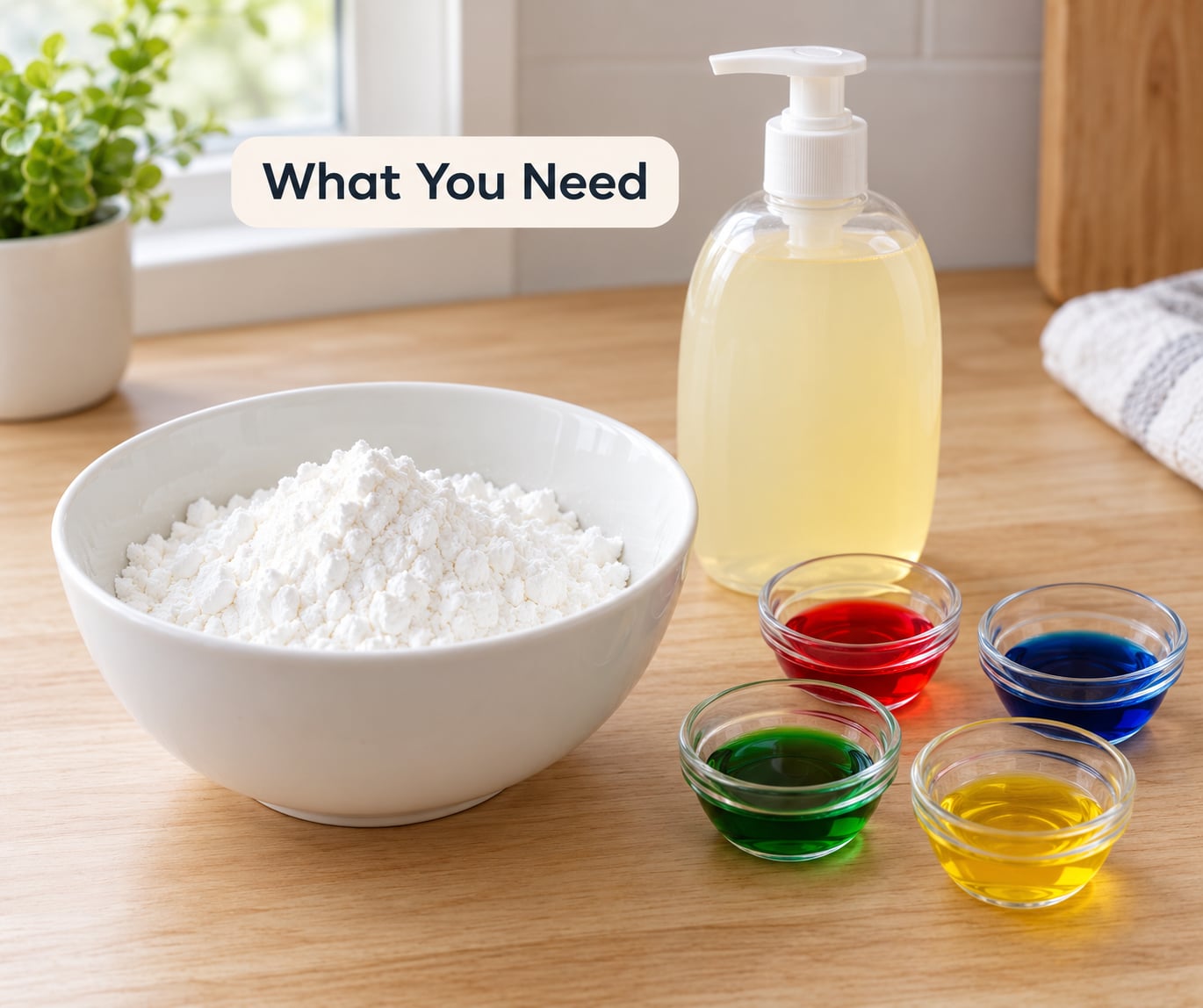
The whole recipe comes out of a kitchen cabinet and a bathroom shelf. Everything in it is an ordinary household ingredient, which is why it costs so little and rinses off so easily.
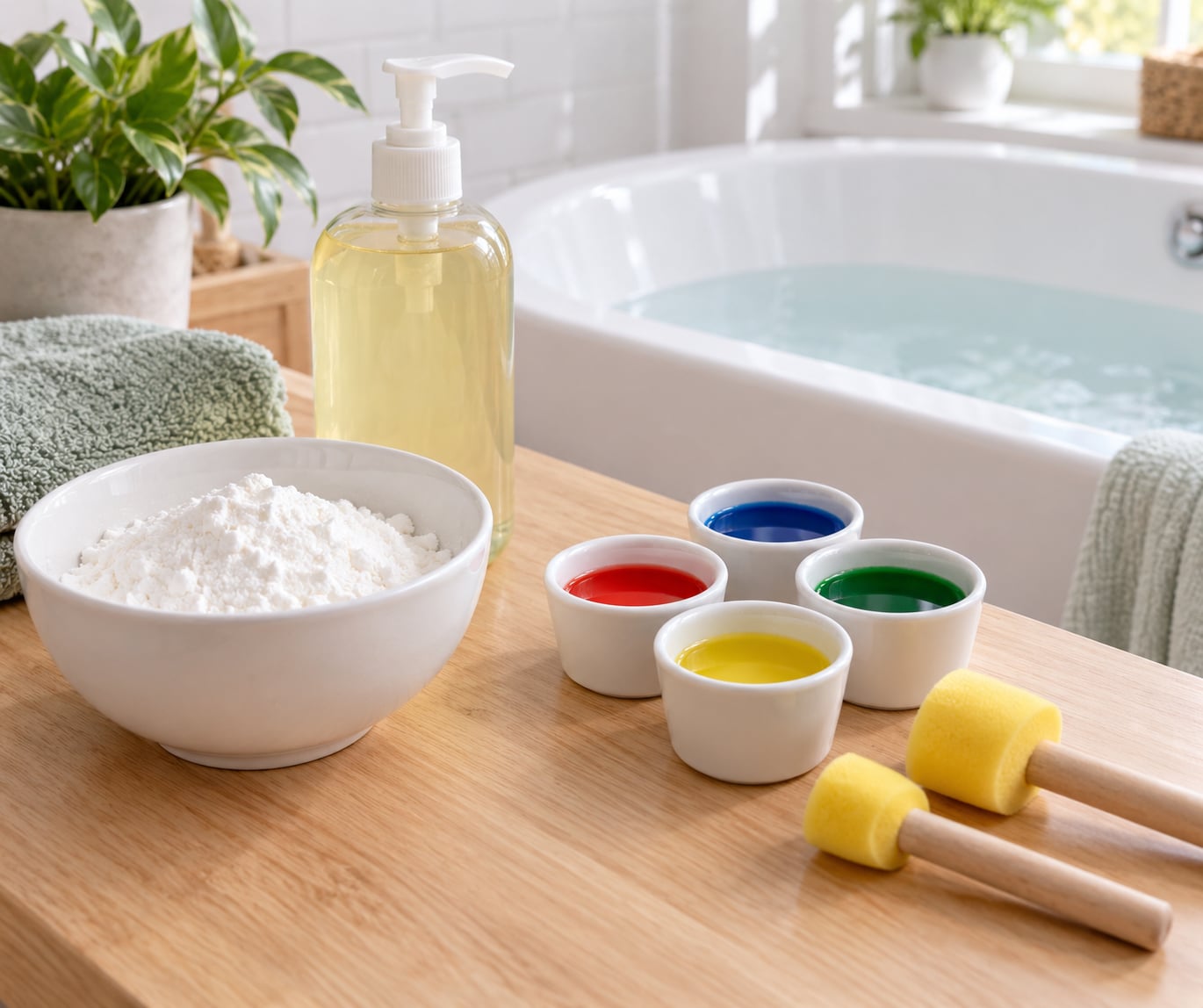
- 1/2 cup gentle baby wash or tear-free shampoo — a no-tear body wash works better than dish soap because it is already mild enough for skin and eyes.
- 1/2 cup cornstarch — this is the thickener. Nothing else in the recipe holds paint on a vertical surface.
- 2 to 3 drops of food coloring per cup, or 1 to 2 teaspoons of liquid tempera-free washable pigment for stronger color.
- Water, 1 to 2 teaspoons — optional, for thinning a batch that turns out too stiff.
For supplies, set out small plastic cups or silicone muffin-tin wells, a few sponge brushes, an old washcloth for wiping, and a towel on the floor of the tub so nobody slips on wet paint. Skip bristle brushes: they hold onto soap and rinse badly.
Water and young children do not mix without an adult within arm’s reach. Paint that goes in the bath water turns the water a muddy color, so keep the pots up on the tub ledge rather than in the water itself.
Step-by-Step
Step 1: Make the Washable Paint Base
Pour 1/2 cup of baby wash into a bowl, then add 1/2 cup of cornstarch on top. Stir with a fork or whisk until the lumps break down and the mixture looks like thin cream with no dry pockets left in the bottom.
If it drags and holds a stiff peak, add a teaspoon of water. If it runs off the spoon like milk, add another tablespoon of cornstarch and stir again. The finished base should coat the back of a spoon and slide off slowly.
Step 2: Divide and Color the Paint
Spoon the base into 3 to 5 small cups — one per color. Add 2 to 3 drops of food coloring to each and stir with a separate stick or the back of a different spoon. Stirring two colors in the same cup turns everything brown, so give each color its own tool.
Kids love watching the drops spread, so let them add the coloring and do the stirring. Wipe the rims of the cups with a paper towel before anyone moves them.
Step 3: Test the Paint on a Safe Surface
Squeeze a small stripe of one color onto the tub floor or a tile wall and let it sit for a minute. Then rinse it with the shower sprayer. If it comes away cleanly, the batch is fine to use on that surface.
Stop and make a fresh batch if the color leaves a mark that survives a rinse, or if a child with sensitive skin reacts after touching it. Glazed tub finishes and silicone caulk soak up dye more than any other surface, so keep paint off the seal lines.
Step 4: Set Up the Bath-Time Art Area
Put the color cups in a tray or a muffin tin on the tub ledge, within reach but out of the water. Add a rinse cup of plain water for cleaning brushes, lay a towel down, and keep electrical items, razors, and small loose accessories out of the tub.
A foam bath mat or a rubber shelf stuck to the tile gives the cups a spot to sit. Everything should be washable, and anything that could lodge in a drain gets picked up first.
Step 5: Let Kids Paint and Rinse
Fill the bath shallow and let them start with the tub wall and floor, then their arms and legs if they want. Sponge brushes work well on tile; bare hands suit sponge stamping best, and a washcloth makes wide swirls.
Fill and drain as usual, then finish with a quick rinse under the sprayer. Staying close to younger children the whole time matters more than how much paint gets used.
Step 6: Clean Up and Store Leftovers
Rinse the tub while the water is still running warm, washing brushes and cups in the same stream. Small leftovers go down the drain with plenty of water. Pour the rest into the toilet rather than the sink if you have a septic system.
A batch used within a few hours is fine in a sealed container on the counter. For longer storage, refrigerate it in a covered container, stir it before reuse, and use it within three or four days; anything that smells off or has film on top gets thrown out. Homemade paint is not food, so do not treat leftovers as edible or reuse a cup a child has licked from.
Common Mistakes
Most problems with making bath paint for kids come down to the ratio, the surface, or a toddler’s curiosity. Each one has a straightforward fix.
The paint is too thick to spread. Add water one teaspoon at a time and stir. Thick paint that clumps in the tub is unpleasant to rinse, so thin it before the bath rather than during.
The paint runs straight down the wall. The base is too runny. Stir in another tablespoon of cornstarch and let the batch sit for five minutes so the powder finishes hydrating.
The colors are dull. Food coloring is transparent, so thin layers look weak on a white tub. Add pigment powder instead of more drops, or lay the color on thicker.
Everything turns muddy brown. One brush is being dipped into several cups. Use a separate brush or sponge per color, and rinse hands between colors.
It stained the tub or grout. Wipe it while it is still wet, then run hot water over it. Dried dye on acrylic or porcelain often needs a paste of baking soda and a little dish soap left on for several minutes before scrubbing; on grout, more baking soda and a soft brush. Test on a hidden spot first, since abrasive cleaners can dull a finish.
A child tries to eat the paint. That is normal, but the mixture is not food-grade. Set the cups up after everyone is in the bath, keep the amounts small, and hand a toothbrush or sponge to a child who wants to taste-test the colors.
A few things have no place in the tub: glitter (it goes down the drain for good), essential oils (not for skin or water a baby is in), and oil-based colorants that will not rinse. Skip water paints for babies under 12 months, who mouth everything, and use a plain soap-and-water smear mixture instead if you want a paint-like texture for them.
Frequently Asked Questions
Does food coloring stain your bathtub?
Sometimes, especially on older tubs, worn glaze, and grout. Food coloring is dye, so the safest approach is to wipe fresh paint with a wet washcloth before it dries, then rinse with hot water. Test a small stripe on a hidden spot first. If a mark stays, a paste of baking soda and dish soap left on the spot for a few minutes usually lifts it. Keep paint off silicone caulk, which holds dye permanently.
Can you thicken bath paint with cornstarch?
Yes, and cornstarch is the standard thickener. Stir the base first, then add cornstarch one tablespoon at a time and wait five minutes so it hydrates before judging the consistency. Too much gives a stiff paste that drags on skin and clogs a drain; too little runs down the tub wall. If a batch thickens while sitting, thin it with water in teaspoon increments.
How can I paint my bathtub at home?
Pour the paint into small cups, set them on a tray on the tub ledge, and hand over sponge brushes or bare hands. Kids can work on the tub walls, the floor, and their own arms while the bath runs shallow. Fill and drain as usual, then rinse the whole tub under the sprayer. Keep an adult within arm’s reach the entire time, and pick up anything small and loose before the water goes on.
How do you make paint for a toddler?
Use a tear-free base rather than dish soap: 4 to 6 pumps of gentle baby wash, 1 tablespoon of cornstarch, and 1 to 2 teaspoons of water make a softer, skin-friendly version that rinses easily. Skip water paints entirely for children under 12 months, who put everything in their mouths. A drop or two of food coloring is fine on a sealed tub wall, but keep the pots out of reach and out of the bath water.
How long does homemade bath paint last?
Use it the same day if you can, since soap and cornstarch are both hospitable to bacteria. A batch kept in a sealed container at room temperature for a few hours is fine. For longer, refrigerate it covered, stir before each use, and get rid of it within three or four days. Throw away anything with an off smell, visible film, or mold. Leftover rinse water goes down the drain or the toilet, not the sink.
What are good non-toxic paints safe for toddlers?
A soap base with cornstarch and food coloring is non-toxic, gentle, and rinses off with plain water, which is why it works better than store-bought tempera paint in a bath. Tempera, glitter, oil-based colorants, and essential oils are the ones to leave out. If your child has eczema or very reactive skin, patch test a dab on an inner forearm and wait a day before using it widely.
Start with the simple version: 1/2 cup gentle baby wash, 1/2 cup of cornstarch, and a few drops of coloring in small cups, tested on a hidden patch of the tub first. Mix a batch before the bath, keep it on the ledge instead of in the water, and rinse the tub while the water is still warm. Once that works, the tear-free and baking-soda versions are easy variations on the same base. Knowing how to make bath paint for kids is less about the recipe than the ratio: half soap, half cornstarch, and coloring dropped in last.