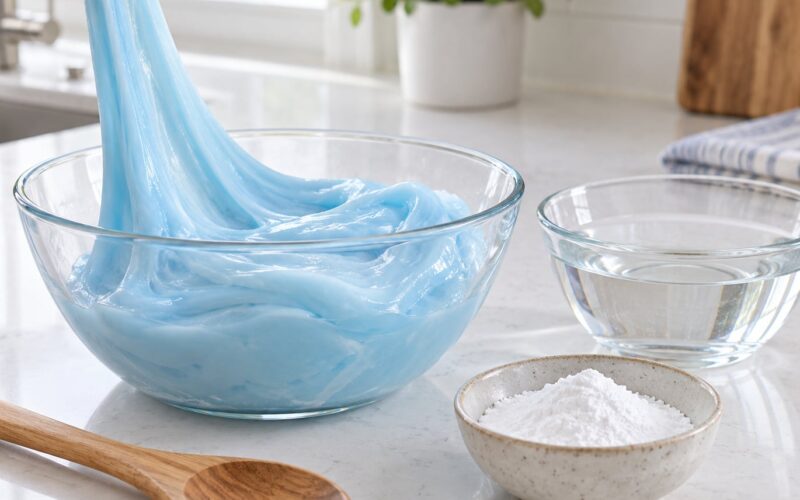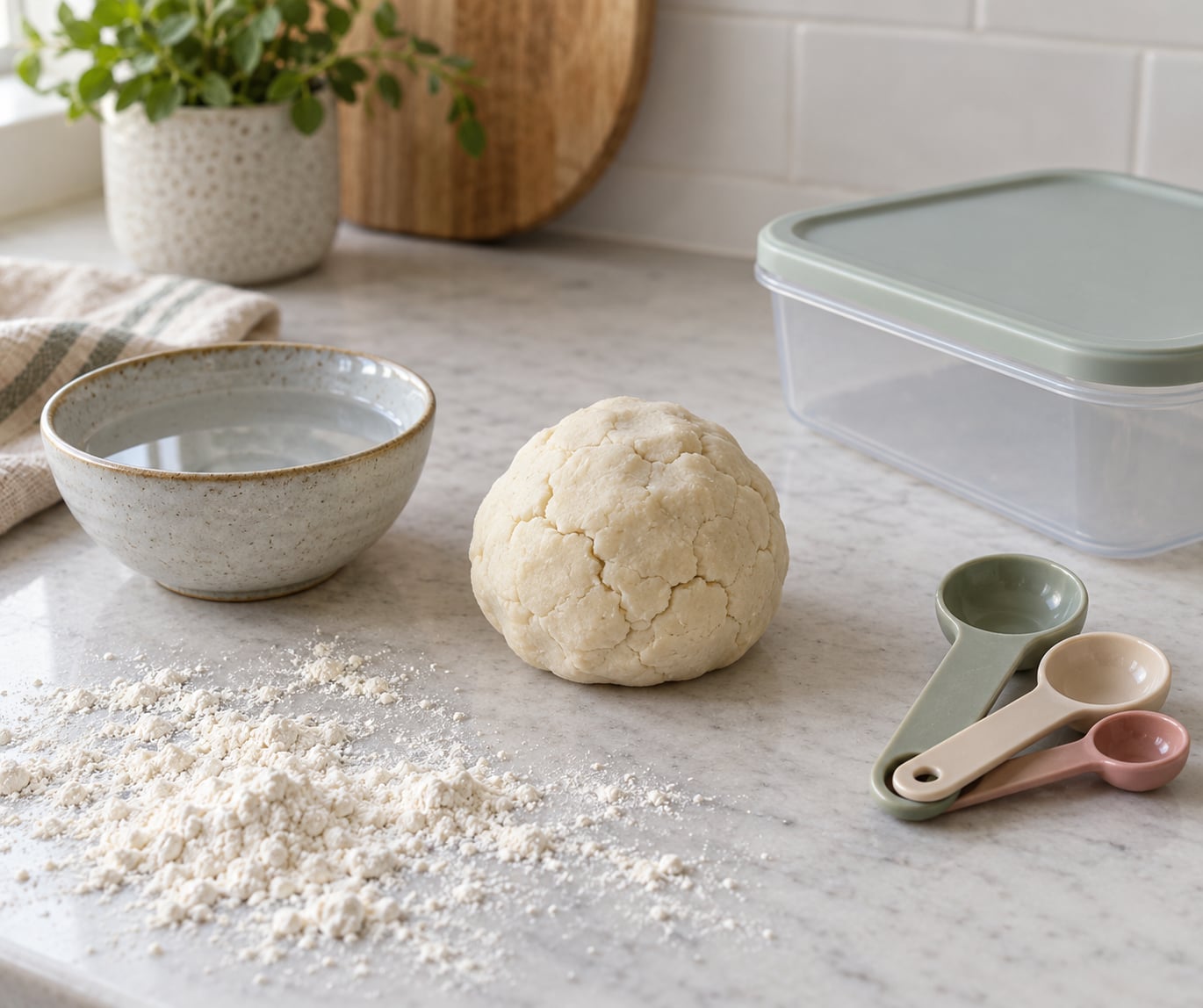
To make playdough soft again, add a few drops of water and knead the dough until the moisture disappears into it. That one-minute fix works on dough that is a bit firm or cracked. Dough that has gone rock hard or crumbly needs a slower treatment, like a damp paper towel sealed overnight or a warm soak. Match the method to the condition and most tubs come back.
I have three kids and a jar of homemade dough on the counter that gets opened daily. It has been revived so many times I stopped counting. The mistake I see most often is dousing the whole lump because it feels hopeless. A teaspoon too much turns soft dough into sticky dough, and then you are fixing a different problem.
This guide walks through the whole decision, from checking the texture to storing the dough so it does not dry again. Slightly dry dough takes about a minute. Rock hard dough takes overnight or a soak. Either way, you are not buying a replacement.
Table of Contents
- What You Need
- Step-by-Step
- Check the Texture and Add the Right Moisture
- Knead Until Smooth and Pliable
- Adjust and Store the Revived Dough
- Common Mistakes
- Frequently Asked Questions
- Can I make old playdough soft again?
- Why is my playdough hard and dry after a few days?
- How much water should I add to soft playdough?
- Can I use warm water to soften playdough?
- How do I fix playdough that is too sticky?
- How should I store homemade playdough so it stays soft?
What You Need
Almost everything comes out of a kitchen drawer. The list is short because the fix is a fix, not a project.
- A small bowl of cool water for kneading, plus a separate bowl if you are working with store-bought dough you want to keep color-stable
- Measuring spoons, so the first water goes in by the half teaspoon rather than by the pour
- A clean work surface you do not mind flouring, since revived dough can be a little messy at first
- Plain flour or cornstarch for the opposite problem, when dough goes sticky instead of hard
- A sealable container, either the original tub or any jar with a tight lid, for the overnight method
- A damp paper towel or a damp cloth if the dough is more than slightly dry
Gloves are worth having if the dough is store-bought Play-Doh. Rehydrated putty holds dye loosely at first, and warm water plus friction will put that color on your hands, your table, and anything the dough touches while it is still wet.
Start by matching what the dough feels like to the method you use, because the amount of water and the wait time both change with the condition.
- Firm, slightly cracked, still pliable: water and knead by hand, 5 to 10 drops added one at a time, about 1 minute of work.
- Rock hard, will not bend: a damp paper towel sealed in the container, or a warm soak. Dampen the towel rather than soaking the tub, then wait overnight, or 10 to 15 minutes in the soak.
- Crumbly, breaking into shards: break the dough into small pieces, seal them in a bag with 2 to 3 drops of water per cup of dough, and knead inside the bag after 20 to 30 minutes.
- Sticky, leaving a smear on your palm: work in flour or cornstarch a spoonful at a time and knead for 2 to 3 minutes. No water at all, unless the dough is only tacky and needs 1 or 2 drops.
Step-by-Step
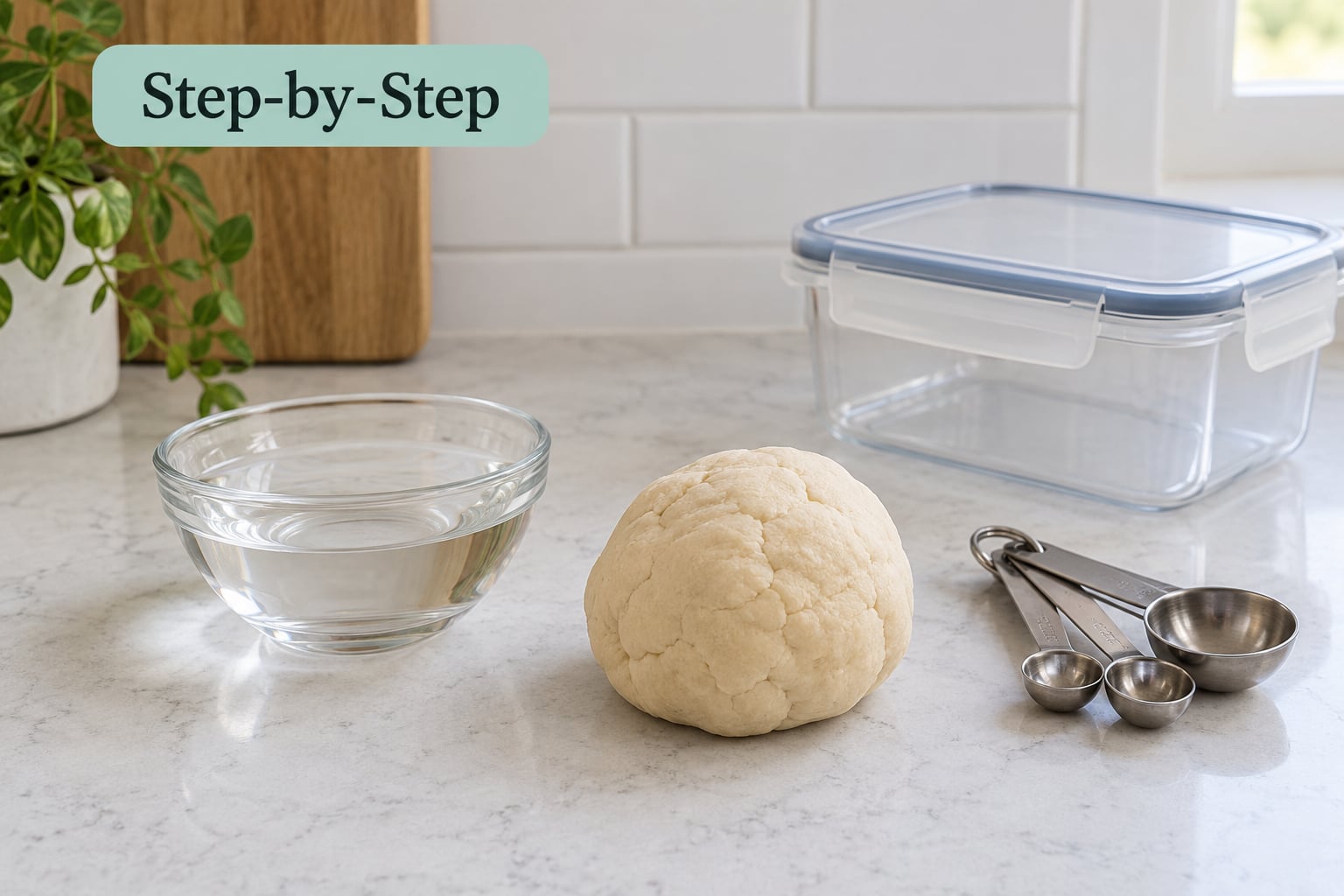
Check the Texture and Add the Right Moisture
Start by pressing a thumb into the dough. What you feel tells you which method to use, and it takes five seconds.
Cracks running across the surface with dough still bending underneath means it is only slightly dry. Flatten it with your palm and go straight to the water and knead method. Dull, chalky crumbs at the edges mean crumbly, so break the dough into pieces first so the water has something to reach. A lump that does not dent under a thumb is rock hard, and no amount of hand kneading will fix it, because your hands cannot generate the pressure needed. That one needs moisture held against it in a sealed container or a soak.
Add water slowly. Squeeze a drop from a spoon or a straw at a time, then knead until the drop is gone before you add the next one. Water distributes unevenly when it arrives all at once, so you end up with soft patches next to dry ones, and soft patches are what make dough sticky.
Warm water is fine, and it moves faster than cold. For homemade flour dough I use lukewarm tap water. For store-bought putty, cool water keeps the dye from wicking out and staining everything it touches.
Knead Until Smooth and Pliable
Push the dough forward with the heel of your hand, fold it back over itself, and turn it a quarter turn. That is one cycle. Keep the pressure on the heel, not your fingertips, because fingertips make the surface tear and tear is where dry dough stays dry.
Fifteen to twenty seconds of steady kneading is usually enough for store-bought dough. Homemade dough takes longer, one to two minutes, because the flour needs time to rehydrate and drink the water back in. If you are working crumbly dough, the pieces should clump into a single ball within the first thirty seconds. If they do not, add one more drop and keep going.
For dough that is hard but not rock hard, rolling it out into a thin flat round before you add water speeds everything up. A pancake shape has far more surface than a ball, so the same drop of water reaches more flour in the same time. This is the single trick that turns a slow two-minute knead into a fast one.
You will know it is done when the dough is smooth, no cracks run across the surface, and it bends without tearing. Press a fingertip in and the dent fills back in slowly. A dent that stays is a sign it needs another few drops and another round.
Adjust and Store the Revived Dough
Sometimes you overshoot by a drop or two and the dough turns tacky. Work a tablespoon of plain flour or cornstarch into the sticky spot and knead until it disappears. Repeat in small amounts. Cornstarch gives a lighter feel; plain flour makes it slightly denser and more like classic homemade dough.
If the dough is genuinely over-wet, spread it in a thin layer on a tray and let it sit in a dry room for ten to twenty minutes. The surface water leaves faster than the water locked inside the flour. Fold it up and knead it again afterward, and the texture comes back.
Store the revived dough in an airtight container with the lid pressed down all the way around. Press out the air first, since trapped air is what carries water out through the lid. If the original tub came with a lid, use it; if the seal is loose, put the tub inside a large zip bag and seal that. A cool, dark cupboard beats a warm shelf every time, and it is worth keeping the tub away from a radiator, a hot car, or a garage that heats up in summer.
For a preschool craft bin that gets used every day, I portion the dough into small zip bags or silicone cups and take out one portion at a time. A small amount of dough that dries out is a thirty-second problem. A full batch that dries out is a lost morning.
Common Mistakes
Pouring on too much water at once. This is the number one reason revived dough ends up sticky. Add it a drop at a time and knead between drops. You can always add more water later, but you cannot take it back out without adding flour.
Not kneading long enough. Water sitting on the surface of dough looks absorbed but is not. If the lump still feels gritty or you can see wet patches, keep going. Ninety seconds of real kneading fixes most cases that a splash of water cannot.
Using the wrong flour. Bread flour has more protein and behaves differently in dough. Use plain all-purpose flour for correction, and never add self-raising or wholemeal flour to playdough. Self-raising flour brings its own leavening, which makes the dough puff and then collapse.
Leaving dough exposed to air. An open tub on a warm shelf loses moisture in days. An open tub in a car loses it in a single afternoon. Heat and moving air are the accelerants, so the lid is the whole fix.
Softening dough that has gone bad. Rehydration does not fix spoilage. If the dough smells sour, has a slimy surface, has fuzz in white, green, or black, or has a color that has bled into a muddy brown, throw it out. Water spreads bacteria through the batch. Supervise younger children closely with revived dough and use it the same day you revive it when in doubt.
One more thing worth knowing: lotion, glycerin, and a wet baby wipe all work in a pinch, and parents have had real success with each of them. They are slower and less predictable than water, and they leave the dough a little oily, so reach for them only when the dough is slightly dry and you have no water to hand.
Frequently Asked Questions
Can I make old playdough soft again?
Usually yes, as long as it has not spoiled. Break the dough up, add a few drops of water, and knead it for one to two minutes. If it is rock hard or crumbly, seal the pieces in a bag with a few drops of water and give it 30 minutes, or use the damp paper towel method overnight. Dough that smells sour, is slimy, or has any fuzz on it should be thrown out instead of revived.
Why is my playdough hard and dry after a few days?
Because water is always leaving it. Playdough is a paste of flour, water and salt, or for store-bought putty, mostly water and salt, and any water that reaches the surface evaporates. An open lid, a warm room, a radiator nearby, or a hot car all speed that up. As the water goes, the salt and starch network sets into a firm shell that does not soften on its own.
How much water should I add to soft playdough?
For dough that is only firm, start with 5 to 10 drops added one at a time, kneading between each one. For crumbly dough broken into pieces, use about 2 to 3 drops per cup. If you are unsure, a half teaspoon is a safe first move. More water than you need turns the dough sticky, and sticky dough needs flour or cornstarch to fix, which is more work than adding water slowly.
Can I use warm water to soften playdough?
Yes, and warm water works a little faster than cold. Lukewarm water soaks into the dough in less time, so use less of it. Warm water also loosens color from store-bought putty, so if the dough is already bleeding, use cool water and wear gloves while you knead. A soak in warm water is also the quickest rescue for a rock hard tub: 10 to 15 minutes, then knead.
How do I fix playdough that is too sticky?
Work in flour or cornstarch, one tablespoon at a time, and knead until each addition disappears before adding more. A large amount of dough goes tacky because it lost its structure, usually from too little cream of tartar in the original batch, so more starch is the right correction. If it is only slightly tacky, a drop or two of extra water can loosen it back into place instead.
How should I store homemade playdough so it stays soft?
Put it in an airtight container, press the air out, and close the lid firmly. Keep the container in a cool, dark cupboard rather than a warm shelf, and away from radiators, cars, and garages. For frequent use, portion the dough into small bags or cups and open one at a time, so a single dried piece is a quick fix instead of a dried-out batch.
If you only do one thing, press a thumb into the dough first. Firm but bendable means five drops of water and a minute of kneading. Anything crumbles, does not dent, or has gone stiff as a shell needs the sealed bag or the overnight damp towel instead, and patience is part of the method. Updated for 2026.