To make goop that hardens, you want a mixture that starts soft and sets into a solid you can hold: a baking soda and cornstarch dough pressed into a mold and left to dry, a glue-based slime air-dried on a tray, or a flour and salt dough that firms as the water leaves it. All three use pantry ingredients, take under 15 minutes of actual work, and dry fully within a day or two.
Most recipes called goop never set at all. Cornstarch and water oobleck is the famous exception, but it only thickens when you press it and relaxes back to liquid the moment you stop. Real hardening takes water leaving the mixture, and that is what all three methods below rely on.
Table of Contents
- What You Need
- Step-by-Step
- How to Make Goop That Hardens Into a Solid Shape
- How to Make Goop That Hardens in the Air
- How to Make Goop That Hardens Into a Crunchy Material
- Common Mistakes
- Frequently Asked Questions
- How long does homemade goop take to harden?
- Can I make goop that hardens without glue?
- Is homemade goop safe for toddlers?
- Why is my goop still soft after it dries?
- How do I store goop that hardens?
- Can children eat homemade goop?
- Conclusion
What You Need
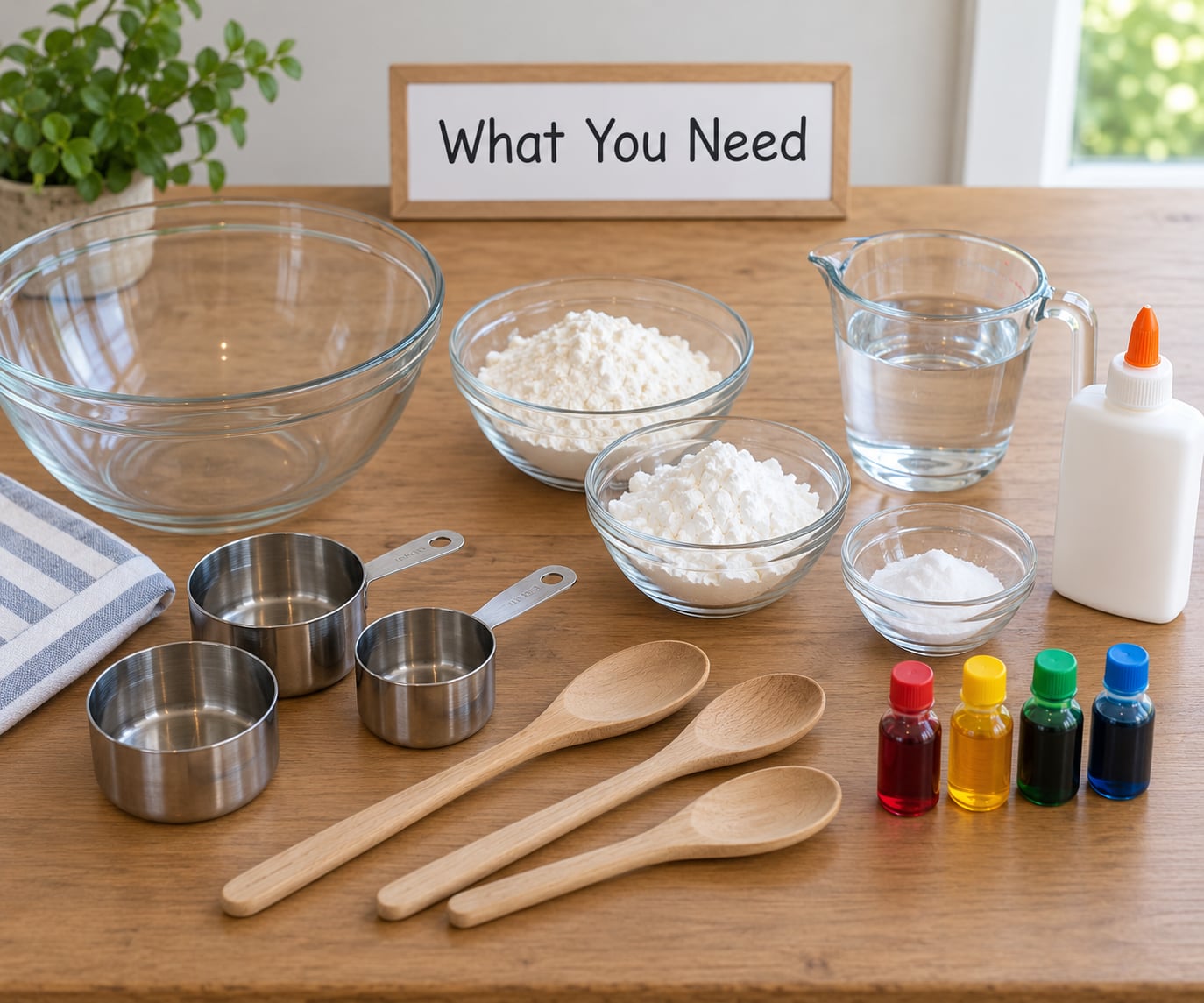
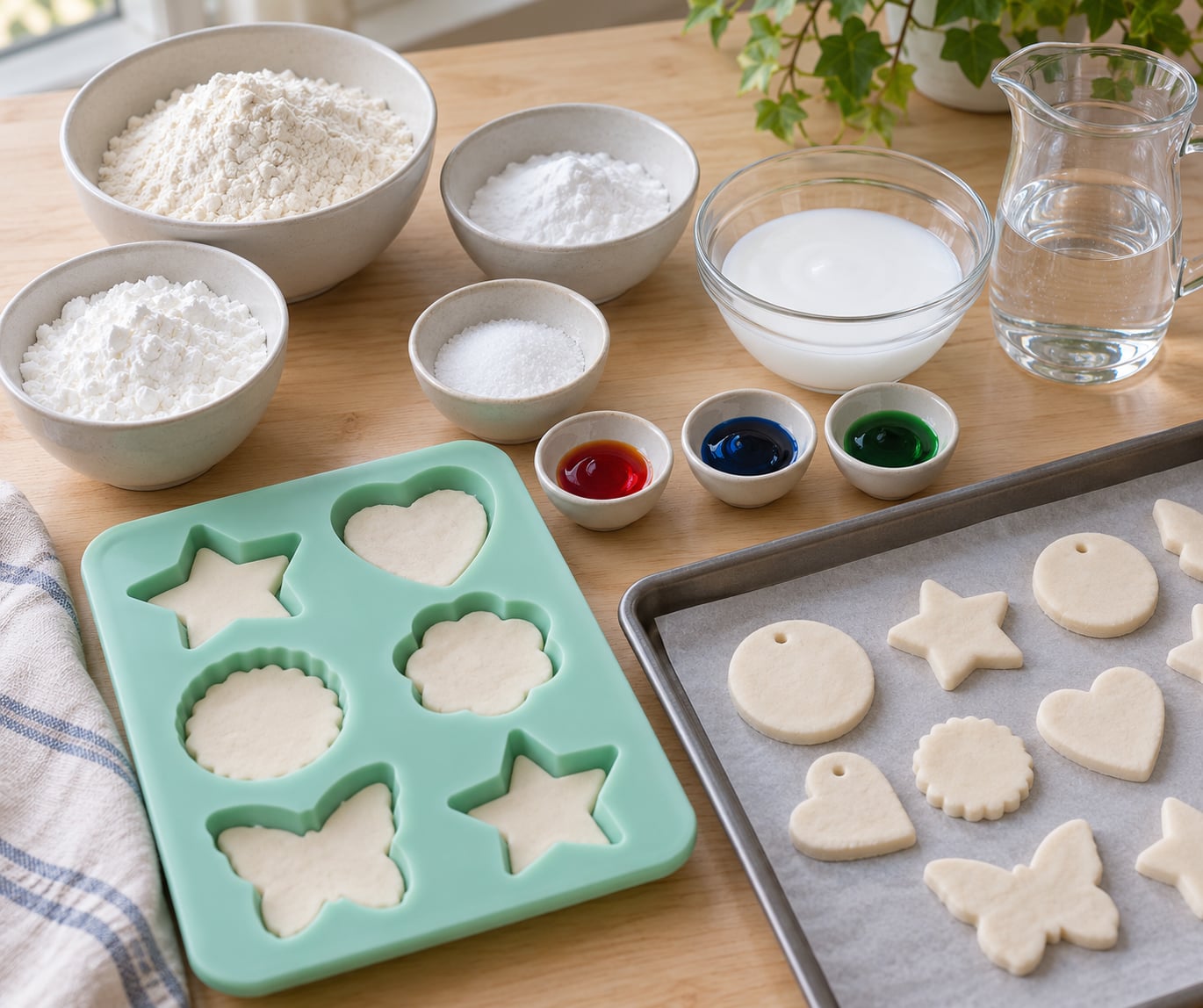
Almost everything here comes out of a cupboard. The full kit is cornstarch, baking soda, plain flour, table salt, white PVA school glue, water, and optional gel food colouring.
You also need one or two mixing bowls, a set of measuring cups and spoons, a wooden spoon or spatula, and a silicone mold or a lined baking tray for the solid-shape method. A silicone craft mat on the table saves you scrubbing dried dough off wood later.
- For the solid-shape dough: 1 cup cornstarch, 1 cup baking soda, 1 cup white school glue, 1 to 2 teaspoons water.
- For the air-dried glue goop: 4 to 5 tablespoons white school glue, 1 teaspoon baking soda, a few drops of water.
- For the crunchy flour dough: 1 cup plain flour, half a cup salt, half a cup water, optional food colouring.
Everything on that list is non-toxic in the amounts used here, but none of these recipes is edible. Baking soda, salt and school glue are not food, and dried dough hardens around fingers, so keep sessions supervised for children under three and skip it entirely if your child mouths everything they touch.
For cleanup, keep a damp cloth and a bowl of warm soapy water beside the tray. Paper towels catch spilled dough before it soaks into a table, and a plastic sheet or old shower curtain underneath the workspace is worth the ten seconds it takes to lay down.
Step-by-Step
How to Make Goop That Hardens Into a Solid Shape
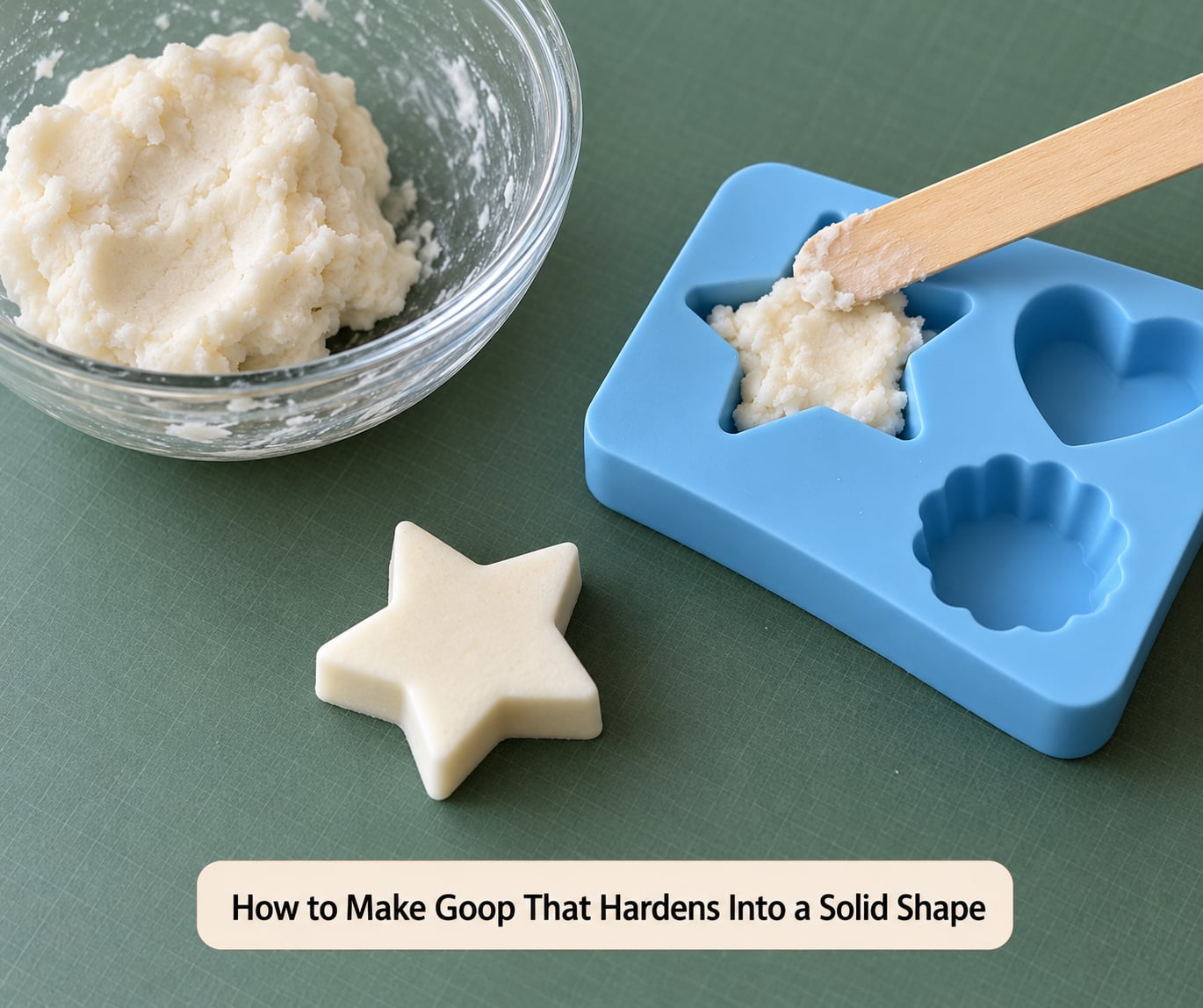
This is the one to start with. It comes out of the bowl already firm, presses cleanly into a mold, and dries to a hard, crackable shell in roughly 24 to 48 hours. The glue does the setting, so this version skips the cornstarch-suspension trick entirely and behaves like soft clay the whole time you are working with it.
- Mix the dry ingredients. Stir 1 cup cornstarch and 1 cup baking soda together in a bowl until there are no streaks of white. Sifting helps, since cornstarch clumps easily and pockets of baking soda make the finished piece gritty.
- Add the glue. Pour in 1 cup white school glue and stir with a spatula. The mixture will look dry and cracked for a moment, like there is not enough liquid.
- Add water one teaspoon at a time. Mix hard after each addition until you get a soft, putty-like dough that holds a fingerprint. Stop there. Too much water gives you a sticky piece that never sets properly.
- Knead for two minutes. Push it away from you with the heel of your hand, fold, turn, repeat. When the surface goes smooth and stops tearing, the dough is ready.
- Press into molds. Pack the dough into silicone molds, cookie cutters, or a greased muffin tin. A half-inch layer dries in roughly 24 hours; a full inch takes closer to 48.
- Leave it undisturbed. Set the molds on a flat shelf away from the radiator and out of reach. Moving it while the surface is still damp causes cracks as it finishes drying.
- Check it at 24 hours. The piece should feel room-temperature, look evenly pale, and sound slightly hollow when you tap it. If it still feels cool or leaves a cool damp patch under your palm, give it another day.
- Pop it out. Flex the silicone mold gently. Dough in a rigid metal tin sometimes needs a knife run around the edge first, with an adult doing the cutting.
Once dry, these shapes hold up well: kids stack them, press patterns into them with leaves or pasta, or crack them with a hammer for a louder sensory moment. Expect white, chalky residue on anything they rub against it, since dried glue dust transfers easily.
How to Make Goop That Hardens in the Air
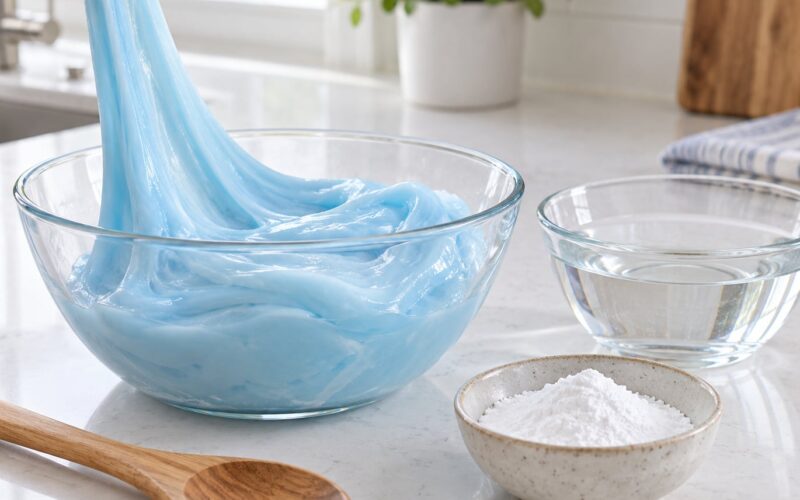
This method is the closest to classic slime chemistry. Glue plus baking soda on its own stays stretchy, but spread it thin and let it sit, and the water migrates out and leaves a rubbery film behind. It never becomes as hard as the cornstarch dough, and the flexibility is the point: children can bend and twist the finished piece instead of just stacking it.
- Spoon 4 to 5 tablespoons glue into a bowl. Any white PVA school glue works. Clear glue gives a cloudier result and tends to get tacky for longer.
- Stir in 1 teaspoon baking soda. The mixture thickens immediately into a stretchy, stringy mass. That change is the sign it is working.
- Add water, a few drops at a time. Two to five drops is enough. Knead it with your fingers until it stops sticking to itself, then knead a few more times.
- Flatten it to about a quarter-inch. Roll it between your palms or press it with a rolling pin. Thinner pieces dry faster and stay flexible; anything thicker stays tacky in the middle for days.
- Spread it on a lined tray. A silicone baking mat or parchment paper stops the finished piece fusing to the tray. Leave at least an inch between pieces.
- Dry for 24 to 72 hours. Turn nothing, cover nothing. The surface should feel dry and slightly matte when it is ready.
- Peel and test. Lift an edge gently. If it stretches without snapping, it is set enough to play with.
Two cautions for this one. Never microwave glue-based goop, hot or cold: microwaved PVA can release fumes and the heated polymer is not something to hand to a child. And keep this batch well away from pets, since dried glue dough is attractive to dogs and toxic if chewed.
How to Make Goop That Hardens Into a Crunchy Material
Flour, salt and water give you a crumbly material that firms rather than sets. There is no chemical reaction here at all, just evaporation, so the texture you get depends entirely on how much water you used and how patient you are.
- Combine 1 cup flour with half a cup salt in a bowl and stir to combine them evenly.
- Add half a cup water and a few drops of food colouring if you want colour.
- Mix with your hands. Squeeze and fold for two to three minutes until it holds a ball and stops feeling pasty. If it crumbles in your palm, add a teaspoon of water; if it is sticky, dust in a little more flour.
- Flatten to half an inch or thinner. Thicker discs take days and dry unevenly, with a damp core in the middle.
- Air-dry on a rack for 2 to 3 days. Turn it once a day. It should feel dry all the way through and no longer cool to the touch.
- Bake for a permanent version, adult job only. Put it on a lined tray at 350°F (175°C) for 30 to 45 minutes, then cool fully. Baked pieces keep for weeks instead of days, but they harden into something close to a biscuit and lose the sensory feel.
Expect a lot of loose salt and flour on the worktop during play. That dust is harmless but it travels, so this is the messiest of the three methods by a wide margin.
Common Mistakes
The mixture is too runny to shape. You have added too much water. Cornstarch dough is nearly impossible to fix once diluted, so add more cornstarch or baking soda a spoonful at a time until it firms, and knead it through.
It looks dry and cracked straight out of the bowl. That is normal for the first minute of this dough. Keep kneading and add water one teaspoon at a time, or the final piece will crumble instead of holding an edge.
Cracks appear while it dries. Thick pieces, moving air, and low humidity all cause it. Thin your layer to half an inch, leave the mold alone, and dry it somewhere with normal room humidity rather than over a radiator.
The surface is sticky days later. Almost always a thick piece drying from the outside in. Peel off what has set, slice the soft middle thinner, and give it another day or two.
Dried goop has welded itself to a surface. Let it dry completely, then peel it or scrape it with a plastic card. If it has already dried hard onto wood or carpet, warm water and a little dish soap usually loosen it, and dried flour dough wipes up or vacuums away easily once it has fully hardened.
Stored goop turned rubbery or clay-like. Water migrates out of any slime in a sealed container over a few days, and the texture changes with it. Knead in a splash of water a teaspoon at a time and it usually comes back. For hardened dough, a wrapped damp cloth against the piece for an hour softens the surface enough to re-shape.
Mould, or something that looks like mould. A fuzzy spot, a smell, or black speckles means the batch is finished, hardened or not. Dryness alone does not cause fuzz. When in doubt, bin the batch and start again, and cap or refrigerate batches you are not using within a couple of days.
Two safety habits are worth repeating. Supervise any child under three, and skip the borate activators entirely for young children, since those are the recipes parents worry about most. You do not need them for anything on this page.
Frequently Asked Questions
How long does homemade goop take to harden?
It depends on the method and the thickness. A half-inch layer of the baking soda and cornstarch dough dries in about 24 hours, and a full inch takes closer to 48. Thin glue goop on a tray sets in 24 to 72 hours. Flour and salt dough needs 2 to 3 days to air-dry, or 30 to 45 minutes in an oven at 350°F to become permanent.
Can I make goop that hardens without glue?
Yes. Cornstarch and water on their own will not permanently harden, but a flour, salt and water dough firms completely as the water leaves, and it crumbles into a crunchy material you can break apart. The solid-shape dough uses glue because it needs to hold fine detail in a mold; the crunchy dough is the reliable glue-free option.
Is homemade goop safe for toddlers?
Supervise closely and skip it under age three, mainly because dried dough hardens around fingers and toddlers tend to put things in their mouths. Use only non-toxic food colouring, keep batches on a tray where they cannot be reached, and wash hands afterwards. The ingredients here are non-toxic in the amounts used, but none of these recipes is edible.
Why is my goop still soft after it dries?
Three things cause this. Thickness is the usual reason, since anything over half an inch dries from the outside in and keeps a damp core. Moving it while the surface is still damp also causes soft spots. Finally, low humidity slows water loss, so drying on a warm shelf rather than over a radiator often fixes it. Slice it thinner and give it another 24 hours.
How do I store goop that hardens?
Store unset goop airtight in a sealed tub at room temperature, and expect it to thicken over a few days. To revive it, knead in a splash of water a teaspoon at a time. Hardened pieces keep indefinitely once fully dry, since there is no water left to spoil. Discard any batch that smells off or shows fuzzy black or green speckles.
Can children eat homemade goop?
No. Every recipe on this page contains baking soda, salt, flour or school glue, none of which are food, and the baking soda and salt quantities are well above anything you would ever eat. If you want an edible sensory material, look for a recipe built only from cooked flour and water, and treat that as food rather than as a hardener.
Conclusion
Pick by the play you want. For shapes children can make and keep, use the baking soda and cornstarch dough. For something bendy that dries overnight with no oven, use the glue and baking soda goop. For cracking and crumbling sensory play, use the flour and salt dough.
Mix a small batch of the baking soda and cornstarch dough first, since it is the most reliable of the three, and press a few shapes into a silicone mold while you are at the kitchen table anyway.