The fastest way to build a family reading habit is to pick one short block of time, put it in the same slot every day, and size it so it survives your worst day rather than your best one. Ten minutes before bed with a book passed around the sofa beats an ambitious hour that never happens twice.
That is the whole method. Seven steps, in the order that works best, take about two weeks to put in place. The rest of this guide is the detail: what to gather first, how to choose books nobody fights over, what to do when a child says they hate reading, and how much time counts as enough at each age.
A family reading habit is a short, predictable block of time, usually 15 to 30 minutes at the same point in the day, when everyone in the house reads together or side by side. It turns reading from homework into an ordinary part of the day, the same as washing up or brushing teeth.
Table of Contents
- What You Need
- Step-by-Step
- Step 1: Start With a Small, Realistic Goal
- Step 2: Build a Book Basket Everyone Can Use
- Step 3: Make Reading Easy and Comfortable
- Step 4: Protect a Daily Reading Moment
- Step 5: Let Children Help Choose What They Read
- Step 6: Add Simple Interactive Reading Activities
- Step 7: Notice Progress and Adjust
- Common Mistakes
- Frequently Asked Questions
- How long should families read each day?
- What is the best age to start a family reading habit?
- How can I get my child to read when they say they hate books?
- Do homeschoolers need a formal reading schedule?
- Are audiobooks and e-books useful for building a reading habit?
What You Need
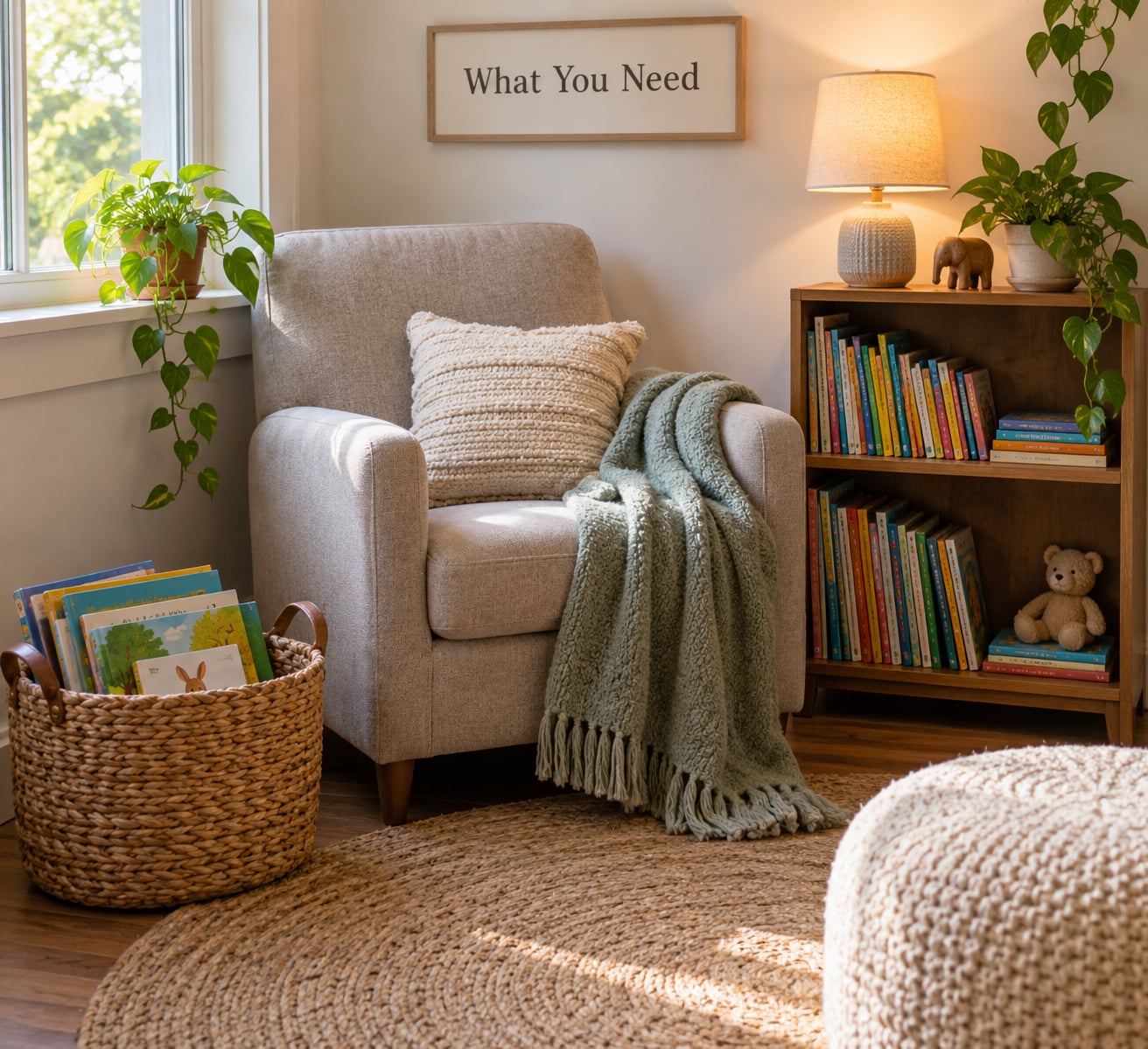
You need almost nothing. That is deliberate, because the habit usually dies from an over-equipped start that takes too long to set up. Here is the full list, with a free stand-in for every item.
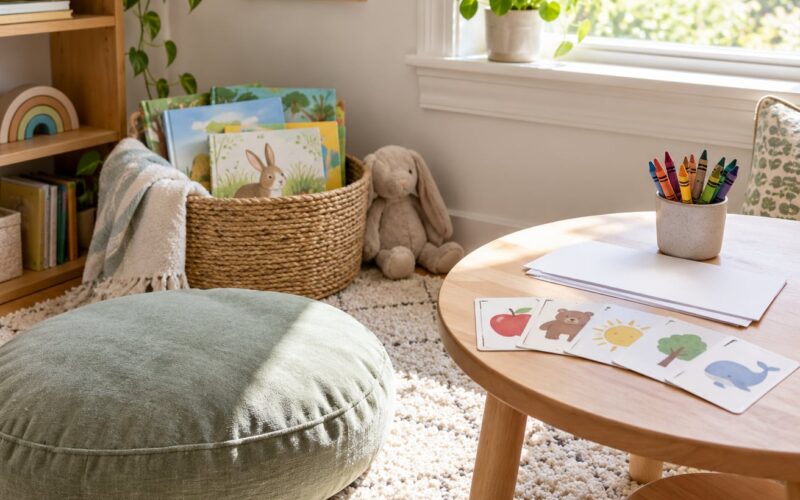
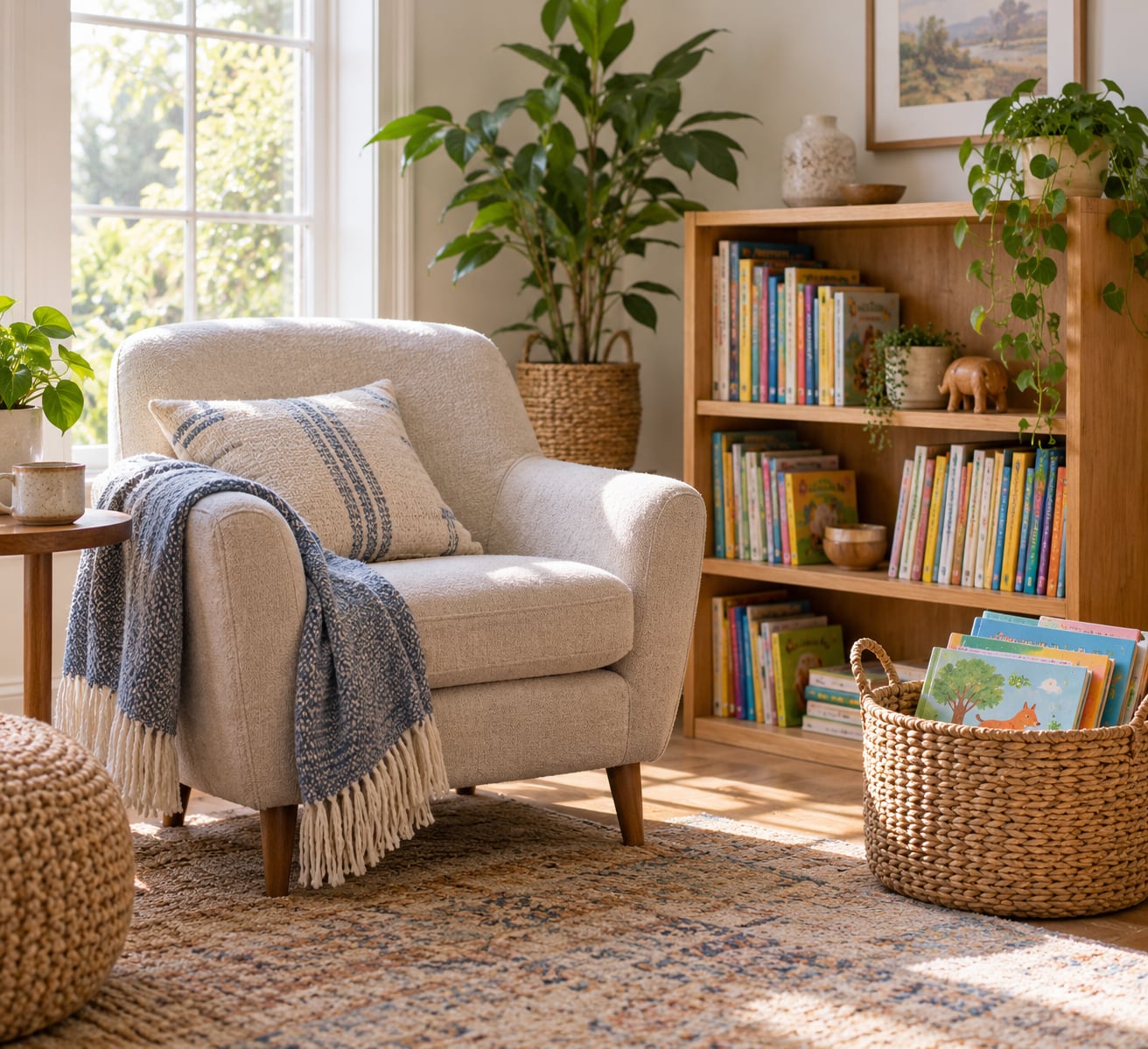
- A comfortable spot. A corner of the sofa, the kitchen table after dishes, or a beanbag in a hallway works. A dedicated reading nook is nice, not required.
- Books in the right range. Picture books and early readers for little ones, chapter books and graphic novels for older kids, plus something an adult actually wants to finish.
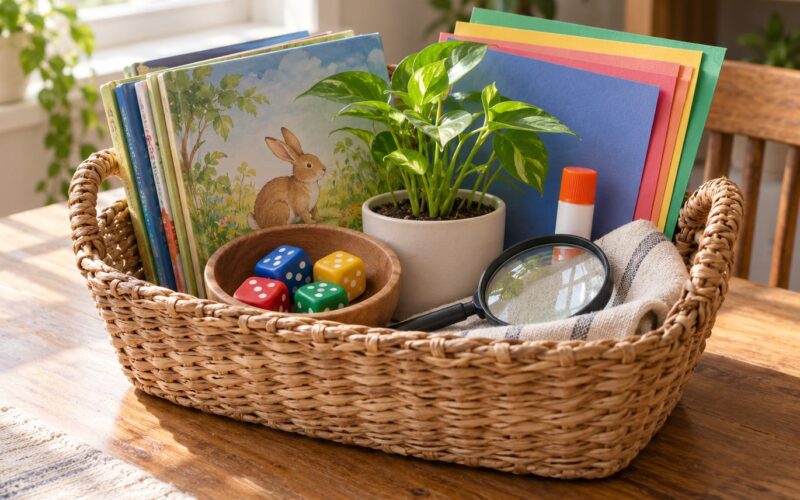
- A basket or shelf within arm’s reach. Low enough that a four-year-old can pull a book out without asking. This one thing does more than any other item on the list.
- A time on the calendar. Ten to twenty minutes, written down, at the same point each day. The calendar entry is what survives a hectic week.
- A shared log, if you like tracking. A notebook on the fridge, a jar with a slip of paper per book finished, or a chart on the door. Entirely optional.
- Library cards. Free, and the single highest-yield item on this list. Most libraries also hand out a children’s card with no parent visit required.
None of this costs money. The free versions are the better versions anyway: borrowed books rotate more often than purchased ones, and a nook made from a thrift-store blanket and two crates of books works exactly as well as a built-in shelf.
Step-by-Step
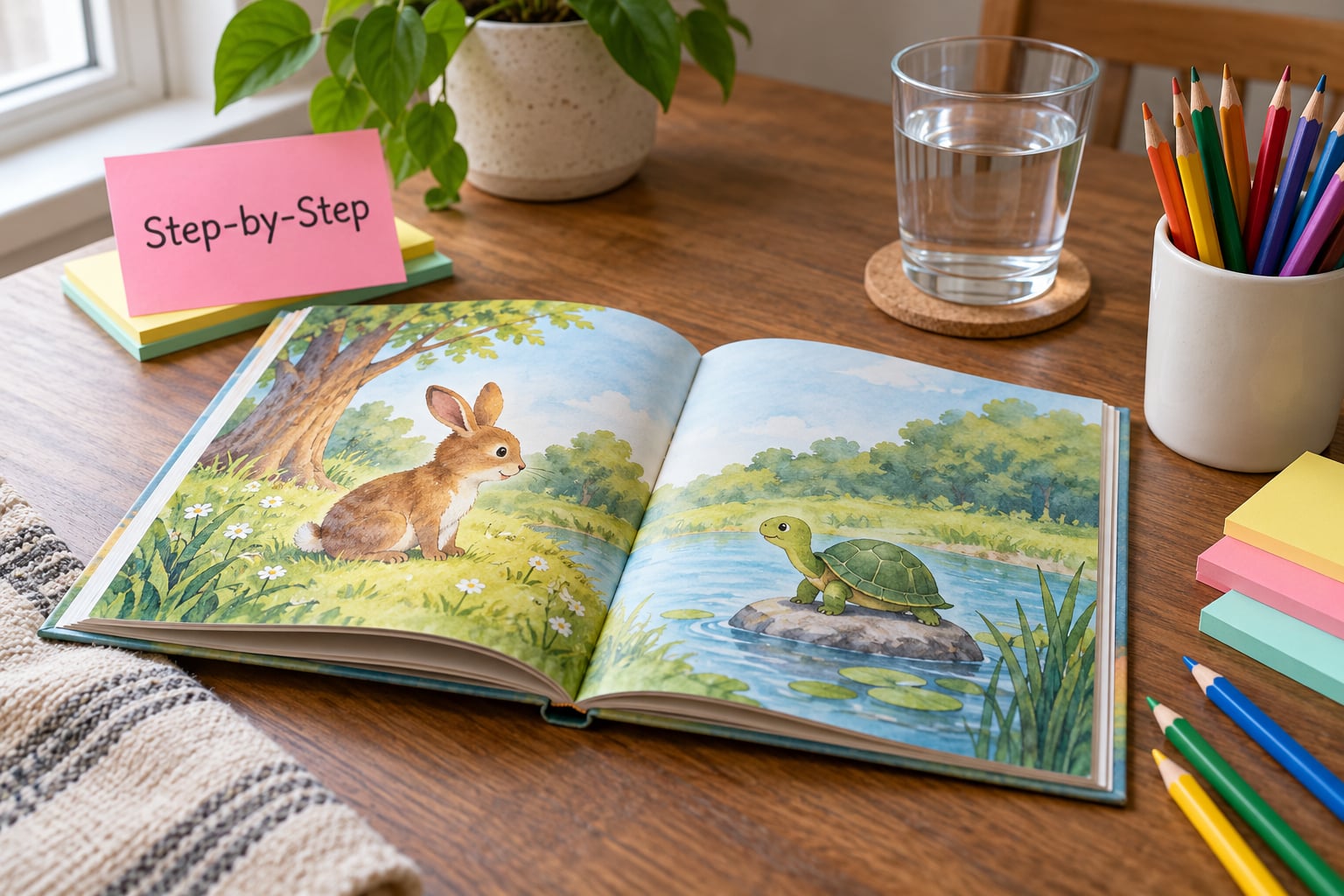
Build these seven steps in order. Each one is cheap to put in place, and each one removes a reason the habit might collapse next month.
Step 1: Start With a Small, Realistic Goal
Set the goal for your worst day, not your best one. Ten minutes before bed, one chapter read aloud, or twenty minutes where everyone reads side by side in their own book. Small and dull beats ambitious and abandoned.
Most families who make this work land on a ten-minute bedtime anchor, because it doubles as a wind-down and it does not fight with dinner, homework, or bath time. If your mornings are steadier than your evenings, move it. The clock matters less than the consistency.
You will know it is working when the routine starts without you announcing it. Kids start putting on socks at the mention of the reading basket, or ask what tonight’s book is at dinner.
Step 2: Build a Book Basket Everyone Can Use
A rotating basket of 15 to 20 books, refreshed monthly, gives everyone something to reach for without a trip to the library. Mix the formats deliberately: fiction, nonfiction, poetry, a comic, a wordless picture book, and two or three titles at easy, just-right, and challenging levels.
What counts as reading changes fast with age. Babies and toddlers handle board books and rhyme. Preschoolers sit through picture books and point at pictures. Early readers handle a page or two of decodable text, or a graphic novel with familiar characters. Independent readers take on chapter books and start picking subjects over difficulty. A mixed-age family is easiest when the basket holds one good pick per band, so nobody has to share a book they are too old or too young for.
Keep the basket fresh without buying new books every week. Swap four titles a month from the library, a book swap at school, or a free little free library box on your street. When a child finishes a book badly, retire it. Worn books in the basket are how a collection dies.
You will know it is working when children start pulling books out on their own, and when they start asking to keep a book in the basket for later.
Step 3: Make Reading Easy and Comfortable
Reading wins by availability, not willpower. Put books where hands land naturally: a basket by the sofa, a shelf in the bathroom, a small tote in the car, a rack at the foot of the bed. Display some covers face out, because a spine tells a child nothing.
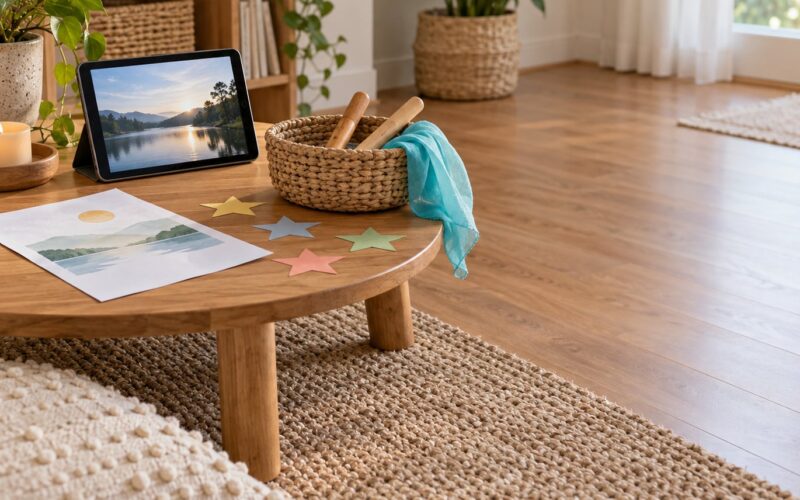
Light matters more than furniture. A lamp behind the shoulder is easier on the eyes than a ceiling fixture, and it signals that this is a reading spot rather than a homework spot. If you use a tablet or e-reader, set it up once with the brightness and night mode turned on so nobody fights settings at bedtime.
For younger children, sit close and share the book so they can see the words and the pictures at the same time. Let them turn the pages, even slowly, even badly. For older children who read alone, nearby company is enough: an adult reading in the same room is the strongest modelling you can offer.
You will know it is working when nobody has to ask where the books are.
Step 4: Protect a Daily Reading Moment
Attach reading to something that already happens, because new habits need an existing trigger. After breakfast, during the quiet half hour after a snack, in the car queue on the way home, or in the ten minutes before lights out. Same cue, same place, same time.
Then adjust the shape of it to your household. Families with toddlers often build the read-aloud into the wind-down and let the adult read a picture book aloud while a second child follows along independently. Families with school-age children can split the block: fifteen minutes of shared read-aloud from a chapter book, then everyone reads alone. Homeschool families can attach the block to a table-time subject, morning basket, or afternoon quiet hour so it feels like part of the curriculum rather than an extra task.
Caregivers with unpredictable hours should aim for a daily minimum rather than a fixed clock. A rotating anchor, the same ten-minute block but moved to whichever part of the day is calm, protects the habit better than a slot that fails four days out of seven.
You will know it is working when the family defends the time without being asked.
Step 5: Let Children Help Choose What They Read
Choice is what separates a reluctant reader from a reader in progress. A book picked by a child is one they will finish, and finishing is where the habit actually grows.
Three simple systems work well. A book jar, where every book gets a slip of paper in a jar and the week is drawn blind. A library trip where each child selects their own checkout and checks it out on their own card. Family voting, where everyone brings one title and the book with the most votes goes in the basket that week, with the runner-up saved for the following week.
When a child will not read independently yet, narrow the choice instead of dropping it. Offer three books rather than a shelf, put them where they will be handed over at the reading time, and read the first page together before letting go. Often the resistance is about starting, not about books.
You will know it is working when children start recommending books to each other, which means they have started caring about what gets read next.
Step 6: Add Simple Interactive Reading Activities
Turn reading into something children do, not something done to them. The activities below work in ten-minute increments and suit any age from about four upward.
- Predict and check. Stop before a page turn and ask what happens next, then read on. Best used sparingly so it never feels like a quiz.
- Retell it in three sentences. A story, the problem, and how it ended. Younger children can do it as a drawing instead.
- Character map. A quick sketch of the main character with a few words about them. Great for a series, since the map can be reused next week.
- Bookmarks. Decorate card stock or print one free template. Cheap, and it gives a child ownership of a reading object.
- Draw the scene. One illustration of a moment that mattered to them, with a caption in their own words.
- Themed craft. Read a book about a place, then build a small model or a paper version of it.
Keep it optional. A child who wants straight reading gets straight reading, and the activities wait for the days when the energy is there.
You will know it is working when children start asking questions about a book before you finish it.
Step 7: Notice Progress and Adjust
Watch for progress without scoring it. Four things are worth tracking: how often the routine actually happens, which formats children pick on their own, how much they talk about books afterwards, and how willing they are to sit down and start.
What you are not tracking: pages read, minutes logged against a target, or any comparison between siblings. Turn it into a chart and it becomes homework, and homework is the thing most families are trying to escape.
Adjust when things change rather than pushing through. A sleep regression, a new baby, summer, a school year with a hard book, a child moving a reading level every few weeks. When interest shifts from dinosaurs to space, the basket follows. When a child has moved past a book, swap it. When the schedule breaks, shrink the block to five minutes and rebuild from there instead of restarting the whole plan.
You will know it is working when children plan their own reading, ask for specific titles, and tell you about a book without being asked.
Common Mistakes
Most families that quit did not fail at reading. They failed at one of these six things, and each has a straightforward fix.
Sessions that run too long. A 45-minute block feels productive and ends badly. Cut to ten minutes for two weeks, then add five. A short session that survives Tuesday is worth more than a long one that gets skipped.
Books that are too difficult. A child who stops every three words and loses the plot will avoid reading. Go easier on level, up on interest. Comic books, graphic novels, magazines, and joke books count as reading and are often the bridge back to longer books.
Treating reading like homework. Quizzes, required logs, and consequences turn a loved activity into a chore. Keep the log for yourself if you keep one at all, and let the reward be choosing tomorrow’s book.
Letting screens be the default. Limits alone tend to fail because the gap fills with nothing. Put a replacement in the gap: a basket by the sofa, a comic on the coffee table, an audiobook queued up for the car. Screen time is easier to shift when the alternative is already sitting there.
Arguing about what counts as reading. Audiobooks, e-books, graphic novels, recipes, instructions, and even subtitles genuinely build vocabulary and comprehension. Agree as a family on a wide definition and stop debating individual titles.
Expecting one routine to fit everyone. A six-year-old and a thirteen-year-old cannot read the same book, and an adult sitting through a picture book for the twentieth time needs their own title. Give every person a turn, and run two or three of them side by side in the same fifteen minutes.
Frequently Asked Questions
How long should families read each day?
Ten to twenty minutes a day is enough to build a habit. For young children, five to ten minutes of shared read-aloud counts, and it grows with them. For independent readers in school, 20 to 30 minutes suits most kids. Consistency matters more than length: a short session every day beats a long one on Sunday, and a ten-minute block you keep on your worst day is worth more than an hour you skip.
What is the best age to start a family reading habit?
Start at birth. Newborns benefit from the sound of a familiar voice and high-contrast black-and-white pictures, and there is no such thing as reading too early. The routine should still be a shared, adult-led session for the first few years rather than independent reading. Around age four or five, many children begin reading simple decodable text on their own, and the shared block can split into read-aloud time plus quiet independent reading.
How can I get my child to read when they say they hate books?
Do not argue with the word hate. Ask what they would rather read instead, then offer that. Comics, graphic novels, magazines, joke books, and audiobooks all count and often rebuild interest in reading. Put books within reach rather than handing them over, and read your own book in the same room so the activity is modelled, not assigned. For a child who says they hate reading, choice and visible access work far better than encouragement or rewards.
Do homeschoolers need a formal reading schedule?
A formal schedule helps, but it does not need to be a worksheet. Attaching a fifteen-minute reading block to an existing part of the day, such as morning basket or afternoon quiet time, is usually enough for most homeschool families. Vary the format rather than the length: a chapter read aloud, an independent read, and a discussion a few times a week. If the routine stays flexible enough to survive a hard day, it keeps working.
Are audiobooks and e-books useful for building a reading habit?
Yes, and most educators treat them as legitimate reading. Audiobooks expose children to vocabulary and story structure and let them follow along while doing something else, which builds stamina for print. E-books work the same way. The main thing to avoid is letting formats compete with each other for status. If a child only listens, count it. Many families start with audiobooks in the car and see independent print reading follow a year or two later.
Start tonight. Put one book everyone can enjoy in the basket, set ten minutes before bed on the calendar, and let each person read their own book while you read yours. That is the whole beginning, and a family reading habit grows from there one ordinary evening at a time.