Fall craft ideas for preschoolers work best when they lean on two things most families already have: a drawer of basic craft supplies and whatever the kids pick up on the walk. These ten projects take under 25 minutes each, use paper, paint, glue and scavenged leaves, and clean up with a damp cloth. Every one includes an age range, a prep time and a cleanup rating so you can pick the right one before the glue goes on the table.
The pattern I keep coming back to is simple. An adult handles cutting and gluing, the child does the making, and the whole thing gets tagged with the one skill it practices. Fine motor skills mean the small hand and finger control that later turns into pencil grip and scissor control, and almost every project on this list rehearses them without feeling like practice.
Table of Contents
- Fall Craft Ideas for Preschoolers at a Glance
- 1. Paper Leaf Collage
- What you need
- How to make it
- What it practices
- 2. Fall Handprint Wreath
- What you need
- How to make it
- What it practices
- 3. Pumpkin Print Art
- What you need
- How to make it
- What it practices
- 4. Paper Plate Turkey Craft
- What you need
- How to make it
- What it practices
- 5. Leaf Rubbings
- What you need
- How to make it
- What it practices
- 6. Fall Suncatcher
- What you need
- How to make it
- What it practices
- 7. Acorn Craft with Printable Template
- What you need
- How to make it
- What it practices
- 8. Fall Tree Painting with Sponges
- What you need
- How to make it
- What it practices
- 9. Corn Husk Dolls and Little People
- What you need
- How to make it
- What it plays on
- 10. Autumn Nature Crown
- What you need
- How to make it
- What it practices
- Frequently Asked Questions
- What supplies do you need for fall crafts for preschoolers?
- Which fall crafts can preschoolers do without adult help?
- What are good fall crafts for toddlers ages 2 to 3?
- How do I keep leaf crafts from molding or crumbling?
- What can I do if my child hates painting and gluing?
- How do I set up fall crafts for a group of 12 preschoolers?
Fall Craft Ideas for Preschoolers at a Glance
| Craft | Best age | Prep time | Cleanup | Skill practiced |
|---|---|---|---|---|
| Paper Leaf Collage | 3-5 | 10 min | Low | Color recognition, pincer grip |
| Fall Handprint Wreath | 2-5 | 10 min | Medium | Color mixing, hand strength |
| Pumpkin Print Art | 2-4 | 5 min | Low | Shape and size recognition |
| Paper Plate Turkey | 3-5 | 15 min | Low | Sequencing, symmetry |
| Leaf Rubbings | 2-5 | 5 min | Low | Observation, pre-writing grip |
| Fall Suncatcher | 3-5 | 20 min | Low | Pattern making, light play |
| Acorn Template Craft | 3-5 | 15 min | Low | Concentration, decorating |
| Sponge Fall Tree | 2-5 | 10 min | Medium | Arm control, color mixing |
| Corn Husk Little People | 4-5 | 20 min | Low | Imaginative play, storytelling |
| Autumn Nature Crown | 3-6 | 15 min | Low | Sorting, nature noticing |
1. Paper Leaf Collage
This is the one to make first out of any list of fall craft ideas for preschoolers, because it works even when the leaves are already dry and curling in the bottom of the junk drawer. Kids tear colored paper into small pieces, drop glue on a paper tree trunk, and build the canopy themselves.
What you need
Green and brown construction paper, orange, red and yellow squares of paper, a glue stick, washable markers, and a sheet of cardstock for the trunk.
How to make it
Cut a trunk shape from brown paper and let the child glue it in the middle. Set out torn paper pieces in three colors and ask them to fill in the canopy, all the way to the edges. Name the colors as they work: that is the free part of the lesson.
What it practices
Tearing paper builds the pincer grip, the small squeeze between thumb and finger that feeds straight into pencil grip later. For a 2-year-old, hand them pre-torn squares instead, since tearing confuses them more than it helps.
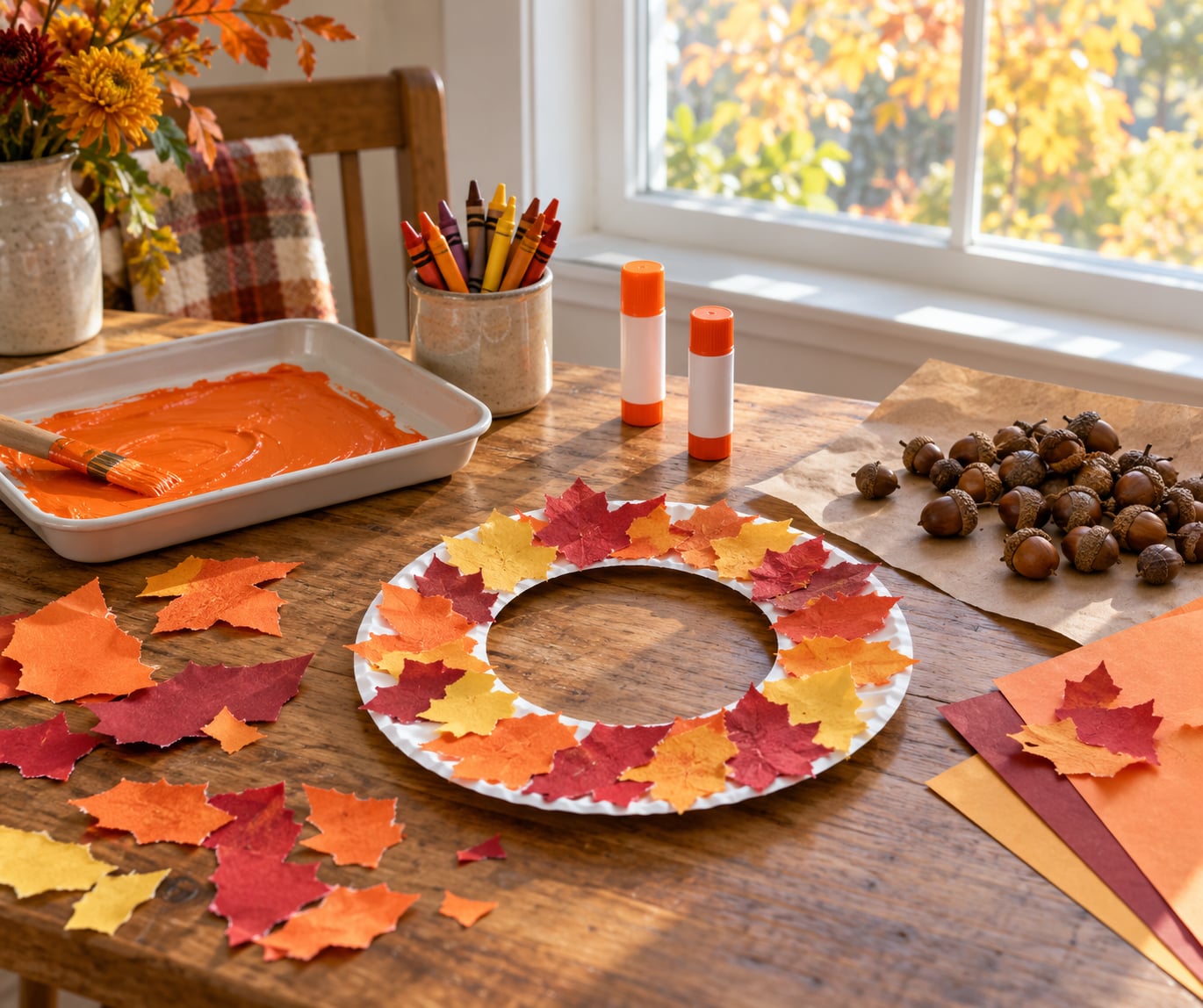
2. Fall Handprint Wreath
A handprint wreath gives you a keepsake that hangs on the door for years, and the paint goes on the child’s hand rather than across the craft, which keeps the actual mess small. It is also the one project here that ends up on the fridge.
What you need
A paper plate, washable tempera or finger paint in two autumn colors, a broad brush, leaf stickers or paper leaves, and a length of ribbon.
How to make it
Have the child paint one hand, press it onto the plate near the edge, and repeat around the outside. Mix a second color on the palette and add another ring of prints for a layered look. Stick paper leaves into the gaps once the paint is dry.
What it practices
Opening and closing a hand against a surface strengthens the small muscles that hold a pencil. It also gives younger kids two words to name at once: the color and the shape they made.
3. Pumpkin Print Art
Skip the classic idea of rolling a real pumpkin through paint. It looks wonderful and it takes a real pumpkin apart, and the whole kitchen smells like orange. A cut pumpkin half does the same job in five minutes.
What you need
Half a pumpkin, a shallow tray, washable orange paint, a kitchen knife for the adult, plain paper, and washable markers.
How to make it
Press the cut side down into the paint, then stamp it onto the paper in rows. Add a marker stem and a few green lines for vines once the paint dries, which turns the prints into actual pumpkins rather than orange circles.
What it practices
Pressing with a flat object teaches pressure control, the same muscle action used in coloring inside the lines. Two-year-olds usually need an adult to do the stamping, then hand them the markers for the decorating part.
4. Paper Plate Turkey Craft
Paper plates are the reason this list costs almost nothing. Every household has a stack somewhere, and the round shape gives you the symmetry a preschooler can actually see and copy.
What you need
A paper plate, brown paper, five or six hand-cut feather shapes in fall colors, glue, a googly eye or a dot of black marker, and an orange paper triangle for the beak.
How to make it
Glue the feathers in a fan across one half of the plate, working from the center outward. Add the head above them, then the eye and beak. Ask your child to arrange the feathers before you glue them down, which is the part that builds sequencing.
What it practices
Fanning shapes out from a center point is early symmetry work, and arranging before gluing forces planning ahead. Skip googly eyes under age three, since small parts and a chewing habit are a bad combination.
5. Leaf Rubbings
Rubbings are the cheapest autumn activity there is, and the one most parents have not tried. Children place a leaf on paper and drag a crayon sideways over it, and the veins come out on their own. It reads more like magic than art, which is half the appeal.
What you need
Freshly fallen leaves, thick crayons or oil pastels, white paper, and masking tape to hold the leaves still.
How to make it
Tape a leaf face down on the paper. Rub with the side of the crayon held low and flat, always in the same direction, until the whole shape and its vein lines appear. Lift the leaf, tape the next one down slightly overlapping, and repeat.
What it practices
Holding a crayon on its side is pre-writing grip practice, and looking closely at a real leaf before copying it is observation, not just art. Expect this one to run longer than five minutes once they start.
6. Fall Suncatcher
A suncatcher hangs in a window and does something no paper craft does: it moves. Light coming through tissue paper is the payoff, and it takes a little more setup than the rest of the list.
What you need
A paper plate, clear contact paper, torn tissue paper in autumn colors, child-safe scissors for the adult, and a single hole punch.
How to make it
Cut the center out of the plate. Cover one side of the clear contact paper with tissue squares, press them down, then trim the edge. Stick the finished sheet onto the plate ring, punch a hole at the top and thread a ribbon through it.
What it practices
Overlapping colored squares is real pattern work, and choosing warm colors over cool ones is color classification. Twenty minutes is realistic, so set it up while you make something else.
7. Acorn Craft with Printable Template
A simple acorn outline on a sheet of paper turns the whole craft into a decorating job, which suits a child who wants an outcome without a long build. Search for a free acorn outline printable and put it in front of them before you hand over the crayons.
What you need
A printable acorn template, brown cardstock or heavy paper, glue, crayons or markers, and real acorns if you collected them.
How to make it
Print the outline and let your child cut out the shape, or cut it yourself first and let them trace it. Then the decorating begins: dots on the nut, stripes on the cap, or a face on the whole thing.
What it practices
Longer uninterrupted concentration, which preschool attention spans struggle with and benefit from. It is also a good project for a child who finds open-ended choices overwhelming, since the outline removes the decisions.
8. Fall Tree Painting with Sponges
Sponges give a texture that brushes never manage, and the dabbing motion is far easier for a small hand than a brush stroke. Draw the trunk once and let the foliage happen.
What you need
Natural sponges cut into squares, washable paint in three autumn colors, a shallow plate palette, and large paper or the flattened side of a cardboard box.
How to make it
Draw a trunk with a brown marker and let it dry. Put one color per sponge, then let your child dab upward and outward from the top of the trunk. Mixing two colors on the sponge as they go produces a lighter shade, which is worth pointing out.
What it practices
Controlled arm movement from a shoulder rather than a wrist, plus color mixing with no instruction needed. Put newspaper or a sheet under the paper and cleanup takes a minute rather than a soak.
9. Corn Husk Dolls and Little People
This one is less about the finished object and more about what happens afterward. Dried corn husks tie into soft dolls in a minute, and then the child names them, dresses them in scraps of fabric and acts out whatever story they invent.
What you need
Dried corn husks, yarn or string, small squares of fabric, buttons or felt for faces, and pipe cleaners for arms.
How to make it
Soften the dry husks in warm water for ten minutes, then pat them dry. Tie bundles of three or four at both ends for a head and a skirt, tie yarn around the middle, and add fabric pieces for clothes. Let the child do the tying with a loose double knot first.
What it plays on
Knotting and tying is genuinely hard at four and worth all the practice. The open-ended play afterward is the real developmental work, and it lasts as long as your child allows it.
10. Autumn Nature Crown
Most fall craft ideas for preschoolers start with a supply list. This one starts with whatever the walk turns up, which makes it the cheapest project here and the one that keeps a four-year-old moving well past the ten-minute mark.
What you need
A strip of brown paper or a plain headband, glue sticks, and the haul: leaves, acorns, small twigs, seed pods, flat stones. Bring a tray or a zip bag so the collection survives the walk home.
How to make it
Measure a strip of paper around your child’s head, cut it, and close it into a ring. Set the collected materials out on a tray and let them sort through it before anything gets glued. Then build the crown wide at the front and sparse at the back.
What it practices
Sorting natural objects by size or color is early classification, and hunting for five good leaves keeps a walk going far longer than an adult’s patience would. Make sure everything collected is bigger than a jar lid before it goes anywhere near a three-year-old.
Frequently Asked Questions
What supplies do you need for fall crafts for preschoolers?
A short list covers nearly everything: washable tempera or finger paint, glue sticks, thick crayons, child-safe scissors, cardstock and construction paper in fall colors, a paper plate or two, brown yarn, and a few sponges cut into squares. Add whatever you collect on a walk: leaves, acorns, twigs, seed pods. Keep an eye on small parts, since acorns and beads are choking hazards for children under three.
Which fall crafts can preschoolers do without adult help?
Leaf rubbings, torn paper collages and sponge stamping are the most independent, because they need no cutting and no glue. Print art and suncatchers need an adult for setup but leave the decorating to the child. Anything involving scissors, hot glue or small parts needs you within arm’s reach the whole time. A useful rule: if the craft has a cutting step, it is a shared craft, not a solo one.
What are good fall crafts for toddlers ages 2 to 3?
Toddlers do best with three or four steps and no cutting. Pumpkin print art, handprint plates and sponge tree painting fit that, and in each case the adult prepares the base while the child stamps, dabs or presses. Skip googly eyes, buttons, acorns and anything small enough to swallow. Expect eight minutes of attention rather than twenty, and be fine with a finished-looking mess as the outcome.
How do I keep leaf crafts from molding or crumbling?
Fresh leaves hold moisture and break apart within days, which is the most common complaint about autumn projects. Press them between two sheets of parchment paper under a heavy book for a week, and they come out flat, dry and much tougher. Once assembled, finish glue work with an off-the-shelf clear sealer sprayed by an adult, and display the finished piece away from damp windowsills.
What can I do if my child hates painting and gluing?
Leaves, acorns, twigs and pinecones need neither. Nature crowns, leaf rubbings with crayons and acorn arranging are all craft projects a child can finish without touching paint or glue. Sticker play on a paper pumpkin works too, since it keeps the autumn theme and removes the two things they avoid. Stacking and sorting collected items counts as a craft at this age, and it is honest work.
How do I set up fall crafts for a group of 12 preschoolers?
With a group of twelve, the setup matters more than the craft itself. Choose one base project for everyone, pre-cut every piece of paper or feather, and put one glue stick per pair on the table so children are not queuing for a single one. Set up three identical supply trays at separate spots, rotate the group every eight minutes, and accept a shared mess on a covered table.
Start with the leaf collage tonight. It costs nothing, it works on any table, and if the child finishes and wants another, the acorn template is your next fifteen minutes. Gather more supplies as the season runs out: play dough recipes and washable paint pair well with projects 3 and 8, and the rest need only paper and whatever the yard gives away. Pick one, put a ten minute timer on it, and let the mess happen where you can wipe it up.