Reusable cleaning wipes are squares of cotton or microfiber cloth soaked in a diluted cleaning solution and kept in an airtight jar, so you can pull one out, wipe a counter, and drop it in the laundry instead of buying another single-use tub. The whole process takes about 15 minutes and costs almost nothing, because most of the cloth can come from T-shirts you already own.
It helps to think of this as a small system rather than a recipe. You pick one fabric, one liquid formula, and one container, and then you keep the cycle going: use, toss, wash, soak again. Get those three pieces right and the wipes stay cheap and effective for months.
Table of Contents
- What You Need
- Which fabric actually works best
- Step-by-Step: How to Make Reusable Cleaning Wipes
- Choose the Cleaning Solution
- Cut and Prepare the Wipes
- Moisten and Store the Wipes
- Use, Wash, and Reuse Them
- Common Mistakes
- Frequently Asked Questions
- How many reusable cleaning wipes do I need?
- What kind of cloth is best for reusable cleaning wipes?
- How long do homemade cleaning wipes last in a jar?
- Can I wash reusable cleaning wipes in the washing machine?
- Are homemade cleaning wipes safe for granite and marble?
- Do I need essential oils in my cleaning wipes?
What You Need
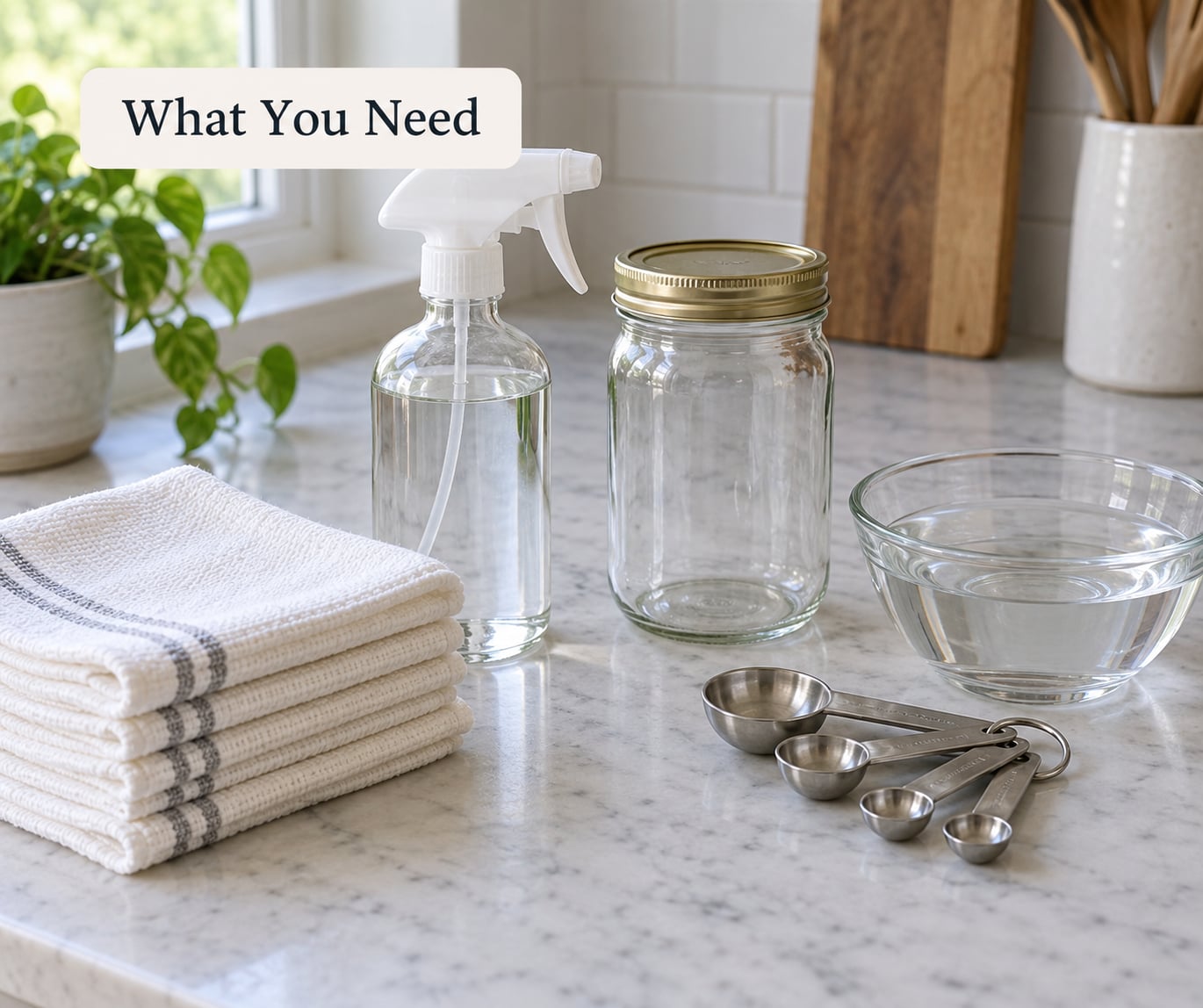
The list is short, and almost nothing on it costs real money. Everything can be assembled before you start cutting.
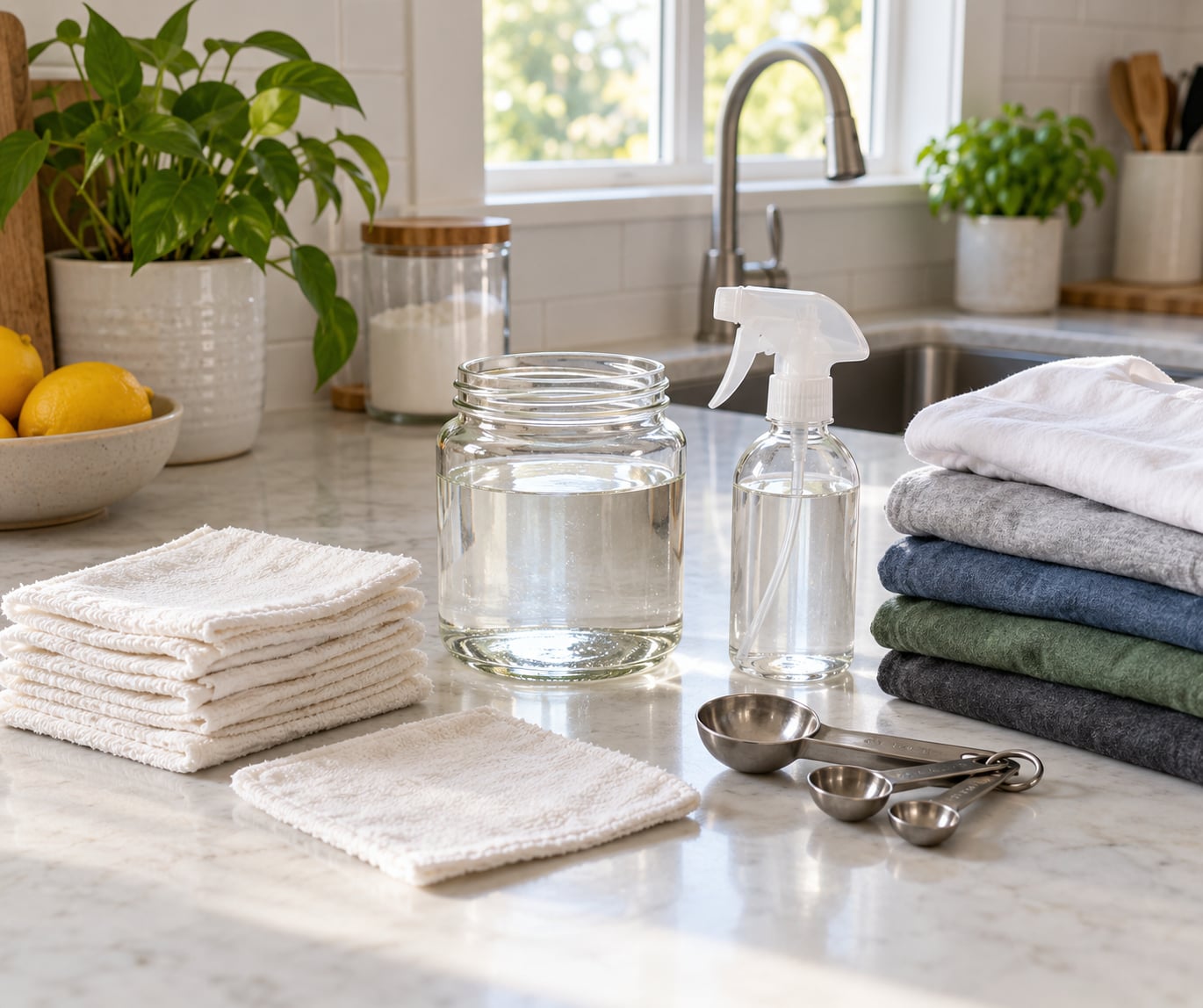
- Cloth — 8 to 12 squares, about 4 by 4 inches. One adult cotton T-shirt yields roughly 12 to 16 usable wipes once you remove the collar, hem and side seams.
- An airtight container — a 16 ounce glass mason jar, a wide-mouth screw lid tub, or the empty tub from a store-bought wipes canister once the label is removed.
- The cleaning solution — 1.5 cups distilled or filtered water, 1 tablespoon liquid castile soap, and 10 to 20 drops essential oil for scent. Or 1 part white vinegar to 1 part water. Or 2 cups 70 percent isopropyl alcohol with 1 teaspoon dish soap.
- Scissors or fabric shears — a sharp pair matters more than an expensive one, since dull blades chew the edges of jersey cotton.
- Measuring tools — a measuring cup and a teaspoon, plus a funnel if your jar opening is narrow.
- Optional — a small spray bottle for spot-treating, a lingerie zip bag to keep used wipes together in the washer, and a piece of masking tape for a handwritten label.
These wipes are for household surfaces only. They are not baby wipes, personal wipes, or anything meant for skin, and they should never go near a face or mouth.
Which fabric actually works best
Fabric choice decides how much liquid a wipe holds and how long it survives the washer. Here is how the common options compare.
| Fabric | Absorbency | Grease pickup | Lint and fraying | Best for |
|---|---|---|---|---|
| Old cotton T-shirt jersey | Good | Good | Minimal if you avoid seams | Everyday counters and spills |
| Flannel | Very good | Fair | Minimal | Bathrooms and dusty surfaces |
| Cotton washcloth | Very good | Good | Hemmed, so no fraying | Sink, tub, and stovetop grime |
| Microfiber | Excellent | Fair | Sheds lint unless cut with sharp shears | Streak-free glass and stainless |
| Muslin | Fair | Weak | Frays easily | Cheap first batches, short life |
Microfiber squares ravel along a cut edge, which is the one complaint that comes up again and again on craft forums. Two options solve it: cut with sharp fabric shears and skip the fuzzy edge entirely, or run a quick zigzag stitch around the square if you already own a sewing machine. Nobody needs a sewing machine for this project, but the zigzag is worth ten minutes if frayed squares bother you.
Airtight matters more than material. Glass is the classic choice because it does not absorb solution and does not stain, and a plastic tub with a true screw lid works just as well if you cannot find one that seals. A lid that clicks shut loosely will dry the batch out within a few days.
Step-by-Step: How to Make Reusable Cleaning Wipes
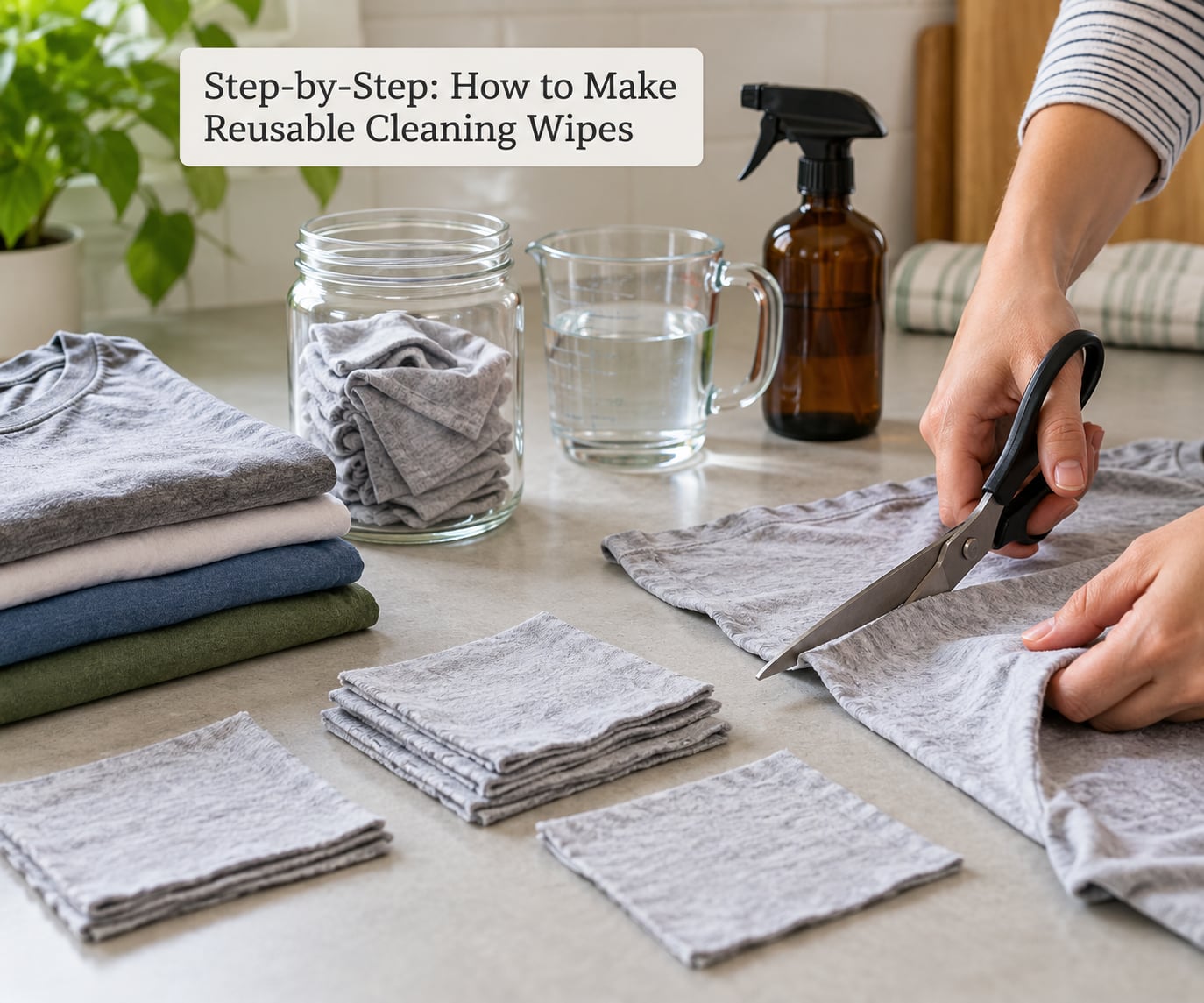
One batch fills a 16 ounce jar with about 12 wipes and takes roughly 15 minutes from cutting to storage. It is an easy project, and the only real decision is which of the three formulas below you want to make.
Choose the Cleaning Solution
Start by picking the job your wipes will do most often. A vinegar mix cuts grease and leaves no residue, castile soap is the gentlest option for households with small children, and alcohol is the only one of the three that genuinely disinfects. Pick one. Stitches from three different blogs rarely mix well together.
| Formula | Mix | Strength | Use it on | Keep it off |
|---|---|---|---|---|
| Water and vinegar | 1 cup water, 1 cup white vinegar, 5 drops lemon essential oil | Cuts grease and light grime | Counters, tables, stovetops, spills | Marble, travertine, natural stone, sealed wood |
| Castile soap | 1.5 cups distilled water, 1 tablespoon castile soap, 10 to 20 drops essential oil | Gentle everyday cleaning | Kid-heavy rooms, toys, painted walls, baseboards | Grease-heavy stovetops on their own |
| Alcohol and dish soap | 2 cups 70 percent isopropyl alcohol, 1 teaspoon dish soap, 5 drops essential oil | Disinfecting after a dwell time | Doorknobs, light switches, bathroom fixtures | Natural stone, painted surfaces, anything child-painted |
Never combine castile soap with vinegar or another acidic ingredient. Soap and acid cancel each other out, and you end up with a weak mix that suds up the jar and cleans nothing. Pick the soap formula or the vinegar formula, not both.
Use distilled or filtered water if you can. Hard tap water leaves a film on the cloth after the jar sits for a week, and that film is what people mistake for the solution going bad. Ventilate the room when you use the alcohol formula, and never mix any of these solutions with bleach, ammonia, or each other. Label the jar with masking tape and a marker so nobody in the house guesses at the contents later.
Cut and Prepare the Wipes
Turn a T-shirt inside out, snip off the collar and hem, and cut straight up the side seams until you have a flat panel with no stitching in it. Then cut that panel into 4-inch squares. A single shirt gives you about 12 to 16 pieces, which is one full jar plus a spare stack for the laundry.
If you are cutting new washcloths or microfiber, cut them smaller, closer to 3 by 3 inches, so eight of them fit the same jar. Fringe the edge of each square once with your fingers and pull off any loose threads. That single habit removes most of the lint problem people complain about.
Prewash the squares if you took them from a worn shirt, and always launder new microfiber before its first soak. Factory sizing and dye can leave a film that interferes with absorption. Skip the prewash for freshly washed cloth.
Moisten and Store the Wipes
Fold each square in half, then in half again, and stand it upright in the jar like a file folder. That arrangement is the reason you can pull one wipe out without unfolding two. Fill the jar until only the top few centimeters of the folds are dry, then close the lid.
The saturation test is simple. Squeeze a wipe over the sink. It should release solution in a slow stream, not a flood and not a single drop. If it floods, tip the excess back into the jar. If it barely dampens, add solution a tablespoon at a time and wait five minutes for the cloth to drink before judging it again.
Wipe the threads and rim of the jar before closing it, because loose cotton plus standing liquid is exactly how a jar starts smelling. Label the lid with the formula and the date.
This matters more with water-based formulas than readers expect: without preservatives, a water mix has no defense against microbes. Treat an open jar as a perishable item. Store it closed, out of sunlight and out of a warm car, and use the whole batch within about a week. If you catch a sour or musty smell, dump the solution, wash the jar, and start over. Only the alcohol formula gets meaningfully longer life, and even then, a month is plenty.
Use, Wash, and Reuse Them
Wipe, drop the cloth into a small bin or a lingerie zip bag, and keep going. Living room and kitchen in one jar, bathroom in another. Do not use the same cloth to clean a toilet and then a kitchen counter, and keep them away from dishes and food prep surfaces.
| Surface | Safe with | Watch out for |
|---|---|---|
| Laminate counters | Vinegar, castile, or alcohol formula | Nothing. Wipe with a dry cloth afterward to avoid streaks |
| Granite and engineered stone | Castile or diluted alcohol formula | Vinegar dulls the seal over time |
| Marble and travertine | Plain soapy water only | Acid etches the surface and leaves a permanent dull mark |
| Sealed wood | Damp cloth, minimal liquid | Standing water swells the grain and lifts the finish |
| Stainless steel | Any of the three formulas | Microfiber leaves fewer streaks than cotton |
| Glass and screens | Alcohol formula, then a dry microfiber pass | Spray the cloth, not the screen, and skip coated displays |
| Painted walls and baseboards | Castile formula, lightly damp | Alcohol lifts latex and oil paint |
On a kitchen stovetop, wipe loose grease first and leave the surface standing damp for a minute before you follow up with a clean cloth. That wet time is what does the work, and skipping it is why some people think their homemade wipes do nothing.
Between uses, the single best habit is to hang used wipes over a rail or the edge of the sink so they dry completely, then drop them in the laundry. Mildew and that sour smell come from fabric that stays damp for hours inside a closed bag, not from the cloth itself. A wet bag works fine too, as long as it is open to air at least once a day.
Washing is unremarkable. Put the wipes in with towels or other sturdy laundry, use your normal detergent at normal amounts, and skip the extra soap that recipe-scale dish soap sometimes encourages. HE washer owners in the forums report no residue problems at recipe quantities. Microfiber needs no fabric softener, since softener coats the fibers and kills absorption.
On lifespan, be realistic. Long-term users report five or more wash cycles per cloth without trouble when washing with towels and skipping extra detergent. Retire a wipe when it thins out, stops holding liquid, develops a smell that survives a wash, or loses its color badly enough that you wonder where it last was used.
Common Mistakes
Soaking the fabric too heavily. Dripping wipes spread solution onto counters and floors. Squeeze out the excess and let the fabric drink the rest for five minutes.
Using the wrong cloth. Muslin and thin jersey absorb almost nothing, and microfiber cut with dull scissors sheds lint across your counter. Pick heavier fabric and sharper tools.
Leaving a water-based batch sealed for weeks. No preservatives means no protection. Write the date on the lid and plan to remake the batch every week or so.
Applying the wrong formula to the surface. Vinegar dulls natural stone, and alcohol lifts paint. Check the surface table before you use a wipe you made for the bathroom on a granite counter.
Reusing a wipe without washing it. That is a damp cloth carrying yesterday’s grime into a closed jar. If the cloth is not going into the laundry right away, spread it flat to dry first.
One habit covers most of these problems: treat the jar as a perishable container, not a permanent dispenser. Empty it on a schedule, wash the jar, and keep a second jar soaking so you never run out mid-week.
Frequently Asked Questions
How many reusable cleaning wipes do I need?
One adult cotton T-shirt yields roughly 12 to 16 four-inch squares, and a 16 ounce jar holds about 12 folded wipes. Most households do fine with two jars, one for kitchen and living areas and one for the bathroom. Buying cloth in bulk or cutting thrift store dish towels gives you more pieces per batch at a lower cost per wipe than new washcloths.
What kind of cloth is best for reusable cleaning wipes?
Cotton washcloths are the easiest starting point because the edges are already hemmed. Old cotton T-shirts work well for everyday counters, and flannel holds the most liquid for bathroom and dusty surfaces. Microfiber gives the streak-free finish on glass and stainless, but cut it with sharp fabric shears or run a zigzag stitch around the edge so it does not fray in the washer.
How long do homemade cleaning wipes last in a jar?
A water-based solution with no preservatives is best used within about a week, especially in a warm room. Keep the jar closed and out of direct sunlight, and dump the batch as soon as you notice a sour or musty smell. An alcohol-based mix keeps longer, but a month is a sensible ceiling. Wash the jar and the fabric before you remake the batch.
Can I wash reusable cleaning wipes in the washing machine?
Yes, and it is the simplest part of the whole routine. Drop the used wipes into a lingerie zip bag or a small bin, then wash them with towels or other sturdy laundry on your normal cycle. Skip fabric softener, since it coats microfiber fibers and reduces absorption. HE washer owners report no residue problems at recipe quantities of soap.
Are homemade cleaning wipes safe for granite and marble?
Granite and engineered stone are fine with a castile soap or diluted alcohol formula, but stay away from vinegar and any acidic mix, which dulls the seal over time. Marble and travertine are a different story. Acid etches the surface and leaves a dull mark that does not come out, so use plain soapy water on natural stone and nothing more aggressive.
Do I need essential oils in my cleaning wipes?
No. Essential oils are there for scent and for a mild antibacterial claim, not for the cleaning itself, and you can leave them out entirely. Vinegar or lemon juice works if you like a citrus smell, and skipping oils costs nothing. If you do add them, keep it to 10 to 20 drops per batch and never ingest them or use the wipes on skin.
Start with the simplest version: cut one T-shirt into squares, mix water with castile soap, and fill a jar you can close tightly. Once that cycle feels normal, add a second jar for the bathroom and try the vinegar formula on your kitchen counters. The habit sticks once the cloth is already sitting by the sink.