Vinegar and baking soda are two of the safest household cleaners you can own, and both work well on their own. The key to cleaning with vinegar and baking soda safely is simple: never combine them in the same container, test every surface first, and keep them stored where children and pets cannot reach them.
Most of the trouble people run into comes from two habits. The first is pouring both ingredients into a spray bottle or a bucket and expecting some kind of superpower. The second is using an acidic mixture on a surface that was never meant to handle acid, which etches marble and dulls waxed floors faster than you would expect.
I go through the same routine in our kitchen and bathroom, and the whole thing takes about ten minutes per surface. This guide covers what to gather, the order of operations, the surfaces to skip, and what to reach for instead. It is reviewed for 2026 and written for households where the surfaces have to survive real life, including small hands and curious pets.
Table of Contents
- What You Need
- Step-by-Step: How to Clean With Vinegar and Baking Soda Safely
- Step 1: Test the Surface First
- Step 2: Use Vinegar and Baking Soda Safely, One at a Time
- Step 3: Mix and Apply the Cleaner
- Step 4: Scrub, Rinse, and Dry
- Step 5: Store the Cleaners Safely
- Common Mistakes and Safer Alternatives
- Frequently Asked Questions
- Is it safe to mix vinegar and baking soda?
- What surfaces should I avoid cleaning with vinegar?
- Can I use baking soda on a nonstick pan?
- Is the smell of vinegar harmful to children or pets?
- Do vinegar and baking soda disinfect a surface?
- What should I do if someone drinks or splashes the cleaning solution?
- Start With the Surface, Not the Cleaner
What You Need
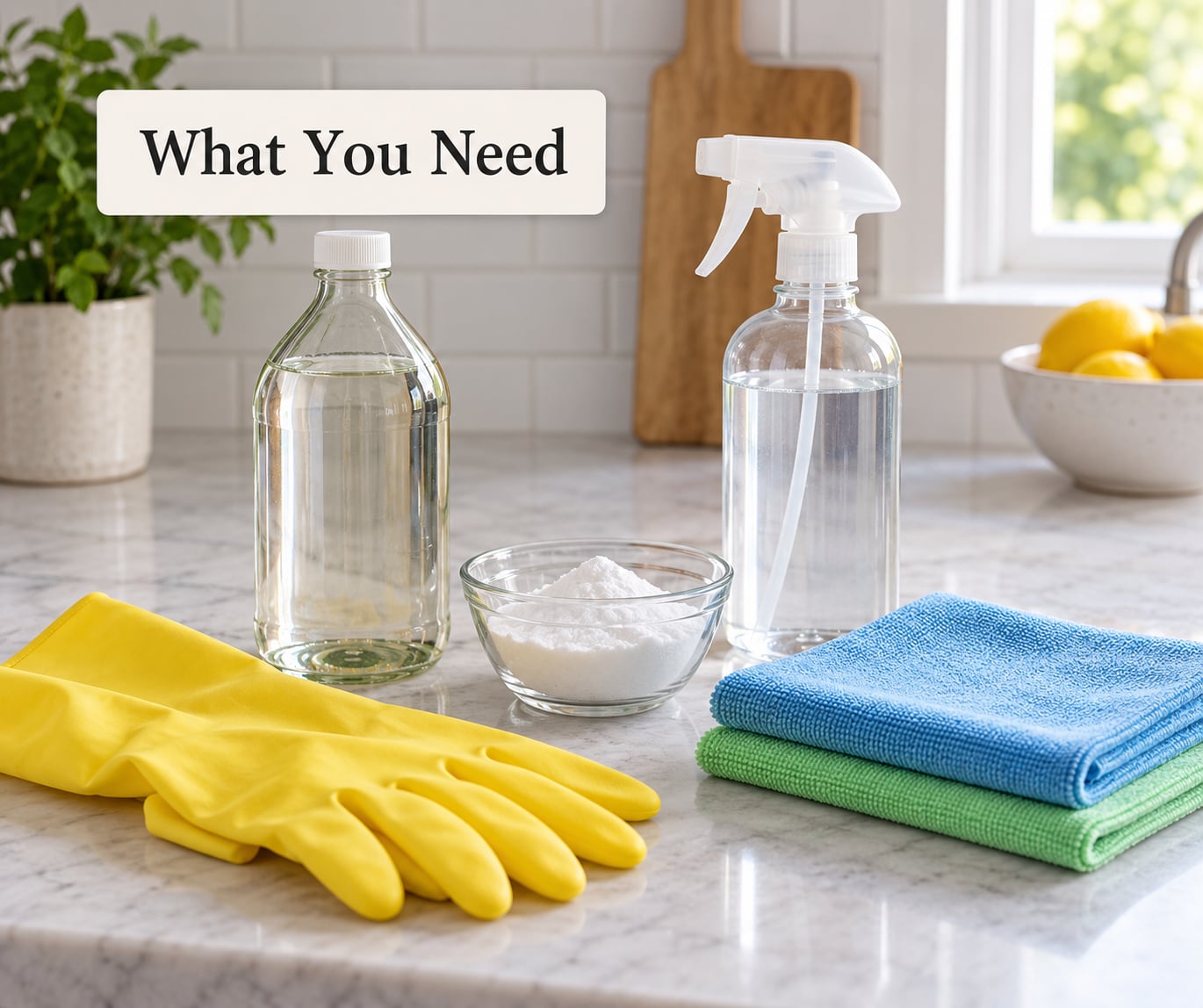
Gather your supplies before you start. It makes the process faster and, more importantly, it keeps you from improvising with a cleaner that was already on the counter.
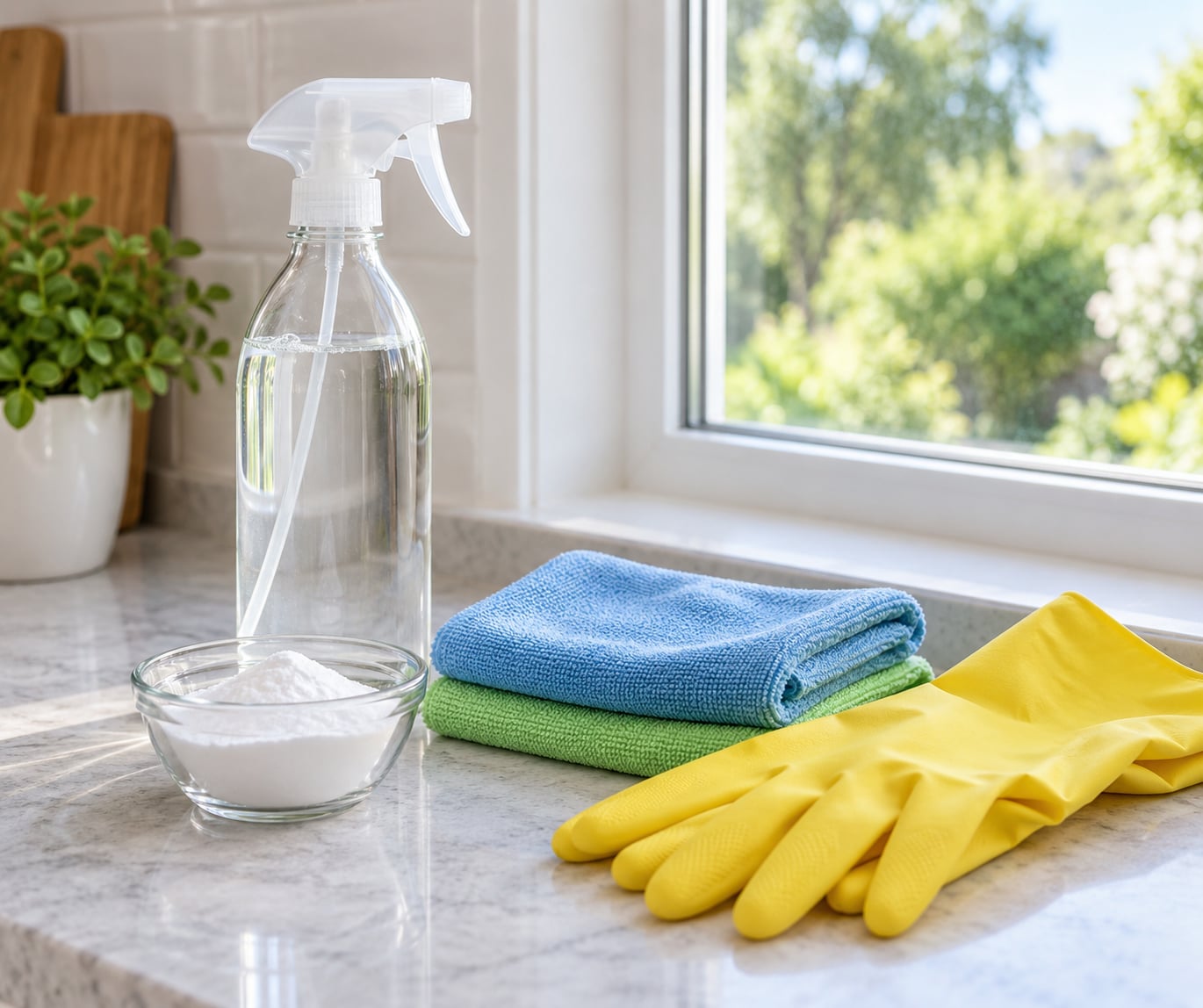
- White vinegar. Look for 5% or 6% acetic acid on the label. Distilled white vinegar is the one to buy for cleaning because it leaves no flavor or color behind on food surfaces.
- Baking soda. Plain sodium bicarbonate, the same one in the pantry. A new box opens fresh and dry, and dry soda abrades better than a box that has absorbed kitchen moisture.
- A spray bottle. Use one you reserve for cleaning, and label it on tape. Never reuse a bottle that held a household chemical.
- A small bowl and a spoon or whisk for making a damp paste rather than a wet slurry.
- Microfiber cloths. Two or three, so you are not spreading grime back over a clean patch.
- Rubber or nitrile gloves. Not because vinegar is dangerous to skin, but because repeated wet work dries out your hands and the acid can irritate cracked skin.
- A ventilated room. Open a window first. You want the vinegar odor to leave, not stay.
- A hidden test spot behind the appliance, under a cabinet lip, or in a corner you already know.
Skip the scented vinegar and the baking soda with added fragrance and dye. There is no performance gain, and on a surface near food you want the plainest ingredient you can get.
Step-by-Step: How to Clean With Vinegar and Baking Soda Safely
Step 1: Test the Surface First
Identify what the surface is made of before you touch it with anything. Look up the care instructions for the material or the appliance if you have them, because most manufacturers list exactly which cleaners are off limits.
Then treat a small hidden area and wait. Give it the full contact time you plan to use, then look for dull spots, etching, color change or a sticky film. Marble, travertine, limestone and slate are the big ones to avoid, since acid reacts with the calcium in natural stone and leaves a dull patch that does not wipe off.
Use vinegar on glass, stainless steel, most ceramic tile, sealed counters, laminate, and chrome fixtures. Use baking soda on enamel, porcelain, vinyl, sealed wood, and most stone tile. Skip both on unfinished or waxed hardwood, natural stone, aluminum cookware, cast iron seasoning, painted surfaces, and anything electronic.
Step 2: Use Vinegar and Baking Soda Safely, One at a Time
When vinegar and baking soda meet, the acetic acid and the sodium bicarbonate neutralize each other. The result is carbon dioxide gas, water, and a mild salt called sodium acetate, which is not a cleaner. You end up with expensive salt water and a lot of fizz.
The reaction is not dangerous, so you will not hurt anyone if you mix them accidentally. It just wastes both ingredients. That is the entire reason to use them separately, and it is the single most misunderstood point in DIY cleaning.
A simple routine that works: spray vinegar on glass and wipe it down. Spread a damp baking soda paste over a greasy stovetop, let it sit, then wipe with a damp cloth. Two different tools, two different jobs, no fizz wasted.
Step 3: Mix and Apply the Cleaner
For most glass, counters and fixtures, dilute one part white vinegar with two or three parts water in your spray bottle. That 1:2 or 1:3 ratio is strong enough for everyday messes and mild enough for routine use. Full-strength vinegar is for stubborn limescale, and even then you only leave it on for a few minutes.
For baking soda, add just enough water to make a thick paste you can hold on a spoon. A runny mix slides off the surface and does nothing. Spread it with a spoon or a gloved finger in a thin layer, thicker in the corners where grime collects.
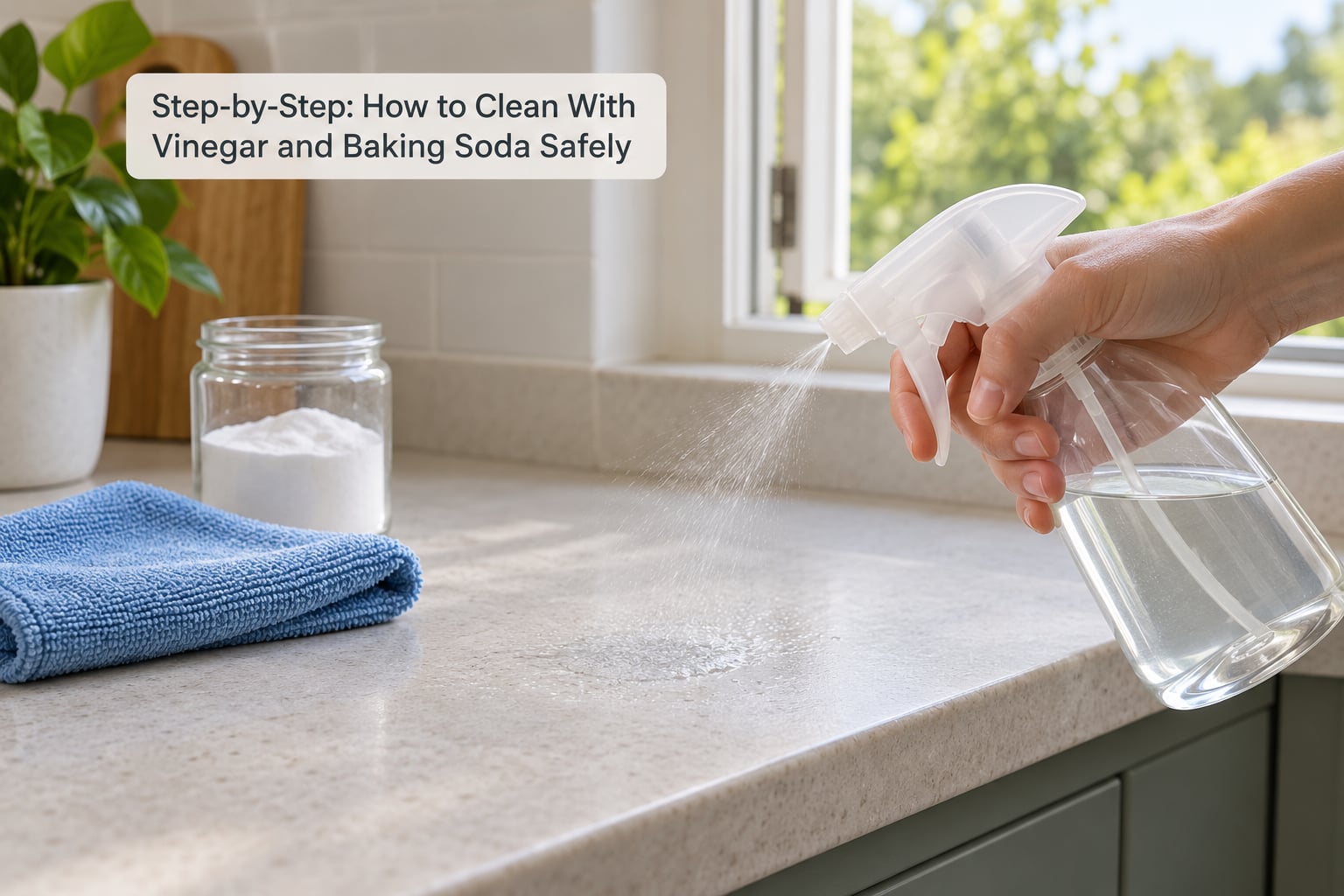
Spray away from children and pets, and never put a vinegar mixture into a spray bottle where someone might mistake it for a drink. Use it on a cloth instead if you have small kids around the house. This is the part of safe vinegar and baking soda cleaning that gets skipped most often.
Never mix vinegar with bleach, ammonia, or any other cleaning product. Vinegar and bleach together release chlorine gas. Vinegar and ammonia create a mixture that irritates lungs and eyes. Keep them physically separated in the cabinet, not just mentally separated.
Step 4: Scrub, Rinse, and Dry
Give the cleaner time to do the work. Vinegar on mineral deposits needs five to ten minutes, and a baking soda paste on grease needs about the same. Spraying and immediately wiping removes the cleaner before it has done anything.
Loosen the grime with a soft cloth, sponge or nylon brush. Aggressive pads and stiff wire brushes scratch the very surfaces you were trying to protect, and baking soda is already a mild abrasive, so the paste does not need help.
Rinse food-contact surfaces with clean water, even if the vinegar was diluted. A faint acid film on a cutting board or counter can taste sour later, and it leaves a dull spot on some finishes. Wipe again with plain water and a clean cloth if you see any haze.
Dry everything. Moisture lingering on grout, wood or a countertop seam encourages mildew and can warp sealed wood. Let bathroom surfaces air dry with the window open for a few minutes. A wet floor nobody sees is how a slip happens.
You know it worked when the surface looks clear under angled light and rubbing a finger across it feels smooth rather than gritty.
Step 5: Store the Cleaners Safely
Store both in closed, clearly labeled containers on a high shelf or in a locked cabinet. Labeling matters more than people think, because a spray bottle of clear liquid on a counter edge is a hazard waiting for a curious kid.
Do not keep either ingredient in the food container it came in. A box of baking soda that sat next to the flour for two years has absorbed moisture, odors and whatever else drifted through the pantry, and it will no longer abrade well. Decant fresh soda into a sealed jar with a tight lid and a label that says baking soda.
Diluted vinegar is the bigger concern. A bottle of 1:2 vinegar water sitting on the counter for a week is an inviting drink for a child and no longer a reliable cleaner. Mix only what you will use in one session, or keep the concentrate in its original container and dilute at the sink.
Discard anything that has been contaminated with a used cloth, left open for more than a day, or that shows a cloudy or filmy look. Baking soda is cheap enough that replacing it is always the right call.
Common Mistakes and Safer Alternatives
Almost every cleaning injury I have seen traces back to one of these. Each one has a straightforward fix.
Mixing vinegar with bleach or ammonia. The combination releases toxic gas and has sent people to emergency rooms. Fix: keep bleach in a separate cabinet from vinegar, and if you need both, do the bleach first, rinse thoroughly, and only then use vinegar. Never in the same session on the same surface.
Believing one mixed solution does double duty. Once neutralized, you are holding salt water. Fix: scrub with a baking soda paste first, wipe it away, then follow with vinegar on a separate cloth for the acid-friendly surfaces.
Using baking soda on scratched or coated surfaces. It will abrade a damaged finish and dull wax, sealer and nonstick coating. Fix: use a soft cloth and dish soap diluted in warm water, or a cleaner chosen for the coating.
Skipping ventilation. The vinegar smell is mostly acetic acid vapor, and it lingers in a closed room. Fix: open a window before you spray, and give the room ten minutes afterward. Persistent odor in a room with pets or babies is a good reason to switch to dish soap for that job.
Leaving a white film behind. Undiluted vinegar dries to a haze, and undissolved baking soda leaves a gritty film. Fix: rinse food-contact surfaces, and for nonstick pans use a damp baking soda paste with a soft sponge rather than a powder straight from the box.
Spraying over a child or pet. Fix: spray the cloth, not the air. It gives you the same coverage with none of the mist.
For surfaces that cannot take vinegar, castile soap diluted in warm water handles counters and floors gently. For natural stone, use a cleaner that is explicitly labeled pH neutral for stone, or a small amount of castile soap and water. For mineral-heavy limescale on a surface acid would etch, an enzyme or mineral-acid descaler made for that fixture is the right tool. Check the material first, then the label.
Frequently Asked Questions
Is it safe to mix vinegar and baking soda?
Mixing them is physically safe, since the reaction only produces carbon dioxide gas, water and a mild salt. It is just not useful, because the acid and base neutralize each other and you are left with salt water that does not cut grease or dissolve limescale. Use each one separately, and use them in sequence rather than in the same container.
What surfaces should I avoid cleaning with vinegar?
Avoid vinegar on natural stone such as marble, travertine, limestone and slate, because acid etches the surface and leaves a dull spot that does not wipe away. Skip it on unfinished or waxed hardwood, aluminum cookware, painted surfaces and electronics. Vinegar works well on glass, sealed counters, ceramic tile, laminate and chrome fixtures.
Can I use baking soda on a nonstick pan?
Yes, baking soda is one of the safer choices for a nonstick pan. Make it into a damp paste rather than using dry powder, use a soft sponge or nylon brush, and stay away from the coated edge. Skip the baking soda entirely on a scratched or flaking coating, and give the pan a light coat of cooking oil after cleaning bare metal.
Is the smell of vinegar harmful to children or pets?
The sharp smell is acetic acid vapor, and it is unpleasant and irritating in a closed room rather than dangerous at normal exposure. Ventilate before you spray, spray the cloth instead of the air, and move pets and children to another room until the odor fades. If a pet chews a vinegar bottle or a concentrated solution is swallowed, call a veterinarian or poison control right away.
Do vinegar and baking soda disinfect a surface?
Not reliably. Vinegar at household strength is an acid that can reduce some bacteria on a surface, but it is not a registered disinfectant and should not be treated as one. Baking soda does essentially nothing to kill germs. For a surface where germs matter, such as a bathroom fixture or a countertop after raw meat, use a product registered as a disinfectant and follow its label.
What should I do if someone drinks or splashes the cleaning solution?
For a splash, move the person to fresh air, rinse skin or eyes with running water for about 15 minutes, and remove any contaminated clothing. For a small sip of diluted vinegar, offer water and call poison control if they are a child or have symptoms. Never induce vomiting, and never neutralize a swallowed product with another cleaner, since the reaction produces gas that can make things worse.
Start With the Surface, Not the Cleaner
Pick your cleaner based on what the surface is made of, not on what you have in the cupboard. Vinegar for mineral deposits on glass and sealed counters, a damp baking soda paste for grease and odor on enamel and porcelain, and a product labeled for the material whenever the surface is stone, sealed wood, or a coated pan.
Keep them apart, use one at a time, and let each one sit for a few minutes before you wipe. That single habit is the whole trick to cleaning with vinegar and baking soda safely, and it costs you nothing but a little patience.