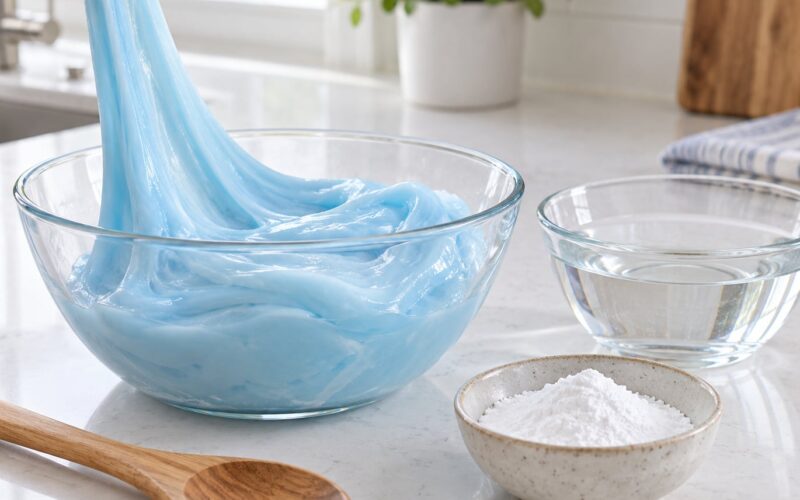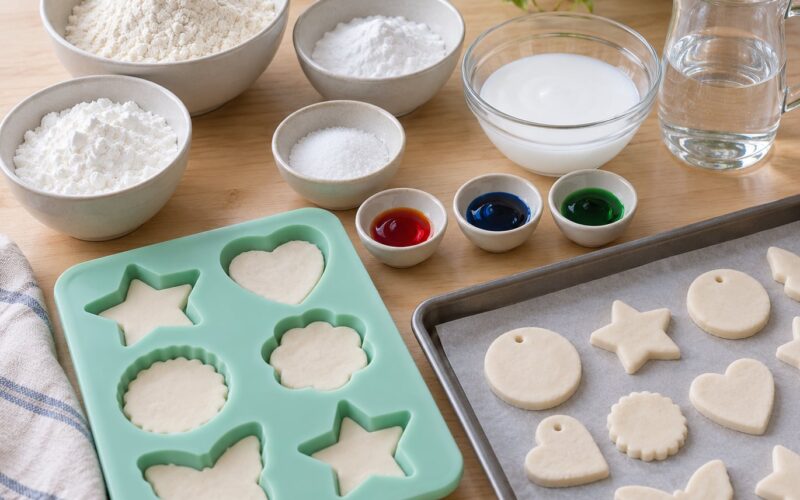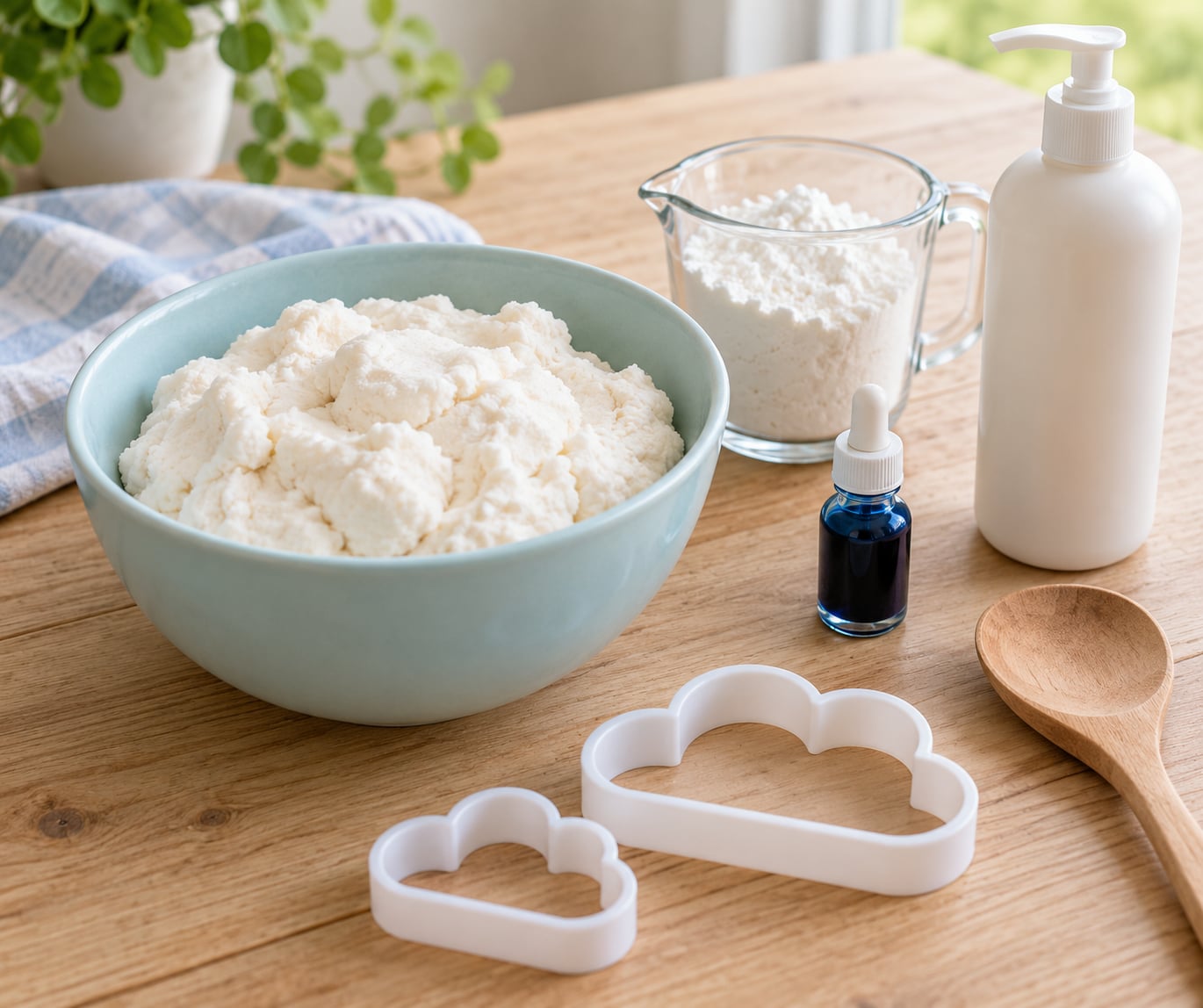
Cloud dough is soft, squishy, moldable play dough made from two pantry staples: cornstarch and hair conditioner, combined at 2 parts cornstarch to 1 part conditioner. A drop of food coloring makes three. Five minutes of mixing gives you a batch that holds a ball, flattens under a palm and pokes back, and it costs almost nothing to make. This is my favorite rainy-afternoon activity, and honestly the one my kids ask for when they have been indoors too long.
The whole thing comes down to the ratio and the kneading. Get those right and the dough behaves; skip either one and you get the sticky, gluey mess that puts parents off homemade play dough for good. Anyone learning how to make cloud dough for the first time avoids that mess by measuring carefully before the first stir. I have fixed more batches with a tablespoon of cornstarch than I care to admit.
Table of Contents
- What You Need for Cloud Dough
- Step-by-Step: How to Make Cloud Dough
- How to Make Cloud Dough: Mix the Dry and Wet Ingredients
- Knead Until the Dough Is Cloud-Soft
- Add Color or Scent, If Desired
- Set Up the Play Activity
- Store or Dispose of the Dough Safely
- Common Cloud Dough Mistakes and How to Fix Them
- The dough sticks to everything
- The dough is dry and crumbly
- Lumps and watery patches
- The dough goes hard in the bin
- Mess on clothes, carpet and tables
- Frequently Asked Questions
- Can I make cloud dough without flour?
- How long does homemade cloud dough stay good?
- What can I add to make cloud dough smell good?
- Is cloud dough safe for babies and toddlers?
- How do I keep cloud dough from drying out?
- Can I use cloud dough for drawing or painting?
- How to Make Cloud Dough: Where to Start Tonight
What You Need for Cloud Dough

- 2 cups cornstarch
- 1 cup inexpensive hair conditioner (plain white works best)
- 4 to 6 drops liquid or gel food coloring, optional
- A large mixing bowl, a spoon for stirring, and a spatula or your hands for kneading
That is the whole recipe. The conditioner is doing two jobs at once: it supplies the fat and moisture that make the mixture moldable instead of crumbly, while the cornstarch thickens it. Cheap, plain, unscented conditioner is genuinely the right call here. Parents in the groups I follow say the expensive scented bottles waste money and, oddly, sometimes make the dough a little stickier.
On allergens: the basic version is wheat free, but check your cornstarch label because some brands are processed in facilities that also handle wheat. Cornstarch itself is gluten free, so this recipe suits a gluten-free household better than flour-based moon dough. It is not edible, and nothing in it is food grade for eating.
Swapping the liquid is another way to change how to make cloud dough when you have no conditioner. Baby lotion works and gives a slightly softer, less stretchy dough. Plain yogurt makes a wetter, shorter-lived dough that needs refrigeration. Dish soap produces a slicker, more slippery dough that is fun in a bin but weakens quickly on a table.
Some searches for cloud dough land on a completely different recipe: flour plus oil, usually 8 cups of flour to 1 cup of oil. That is moon dough, an older cousin with a sand-like texture. It is a legitimate and lovely dough, but it contains wheat and crumbles rather than stretching. If a child in your house reacts to gluten, make the cornstarch version.
Step-by-Step: How to Make Cloud Dough
How to Make Cloud Dough: Mix the Dry and Wet Ingredients
Put the 2 cups of cornstarch in a large bowl, then pour the 1 cup of conditioner straight over the top. Stir with a spoon first, scraping the bottom, until there is no dry powder left sitting loose.
Mixing in stages matters. If you dump everything in and go straight to hands, you get a powdery core with wet edges. Spoon-mixing for about a minute is how to make cloud dough without lumps, and it saves you fighting them later.
Knead Until the Dough Is Cloud-Soft
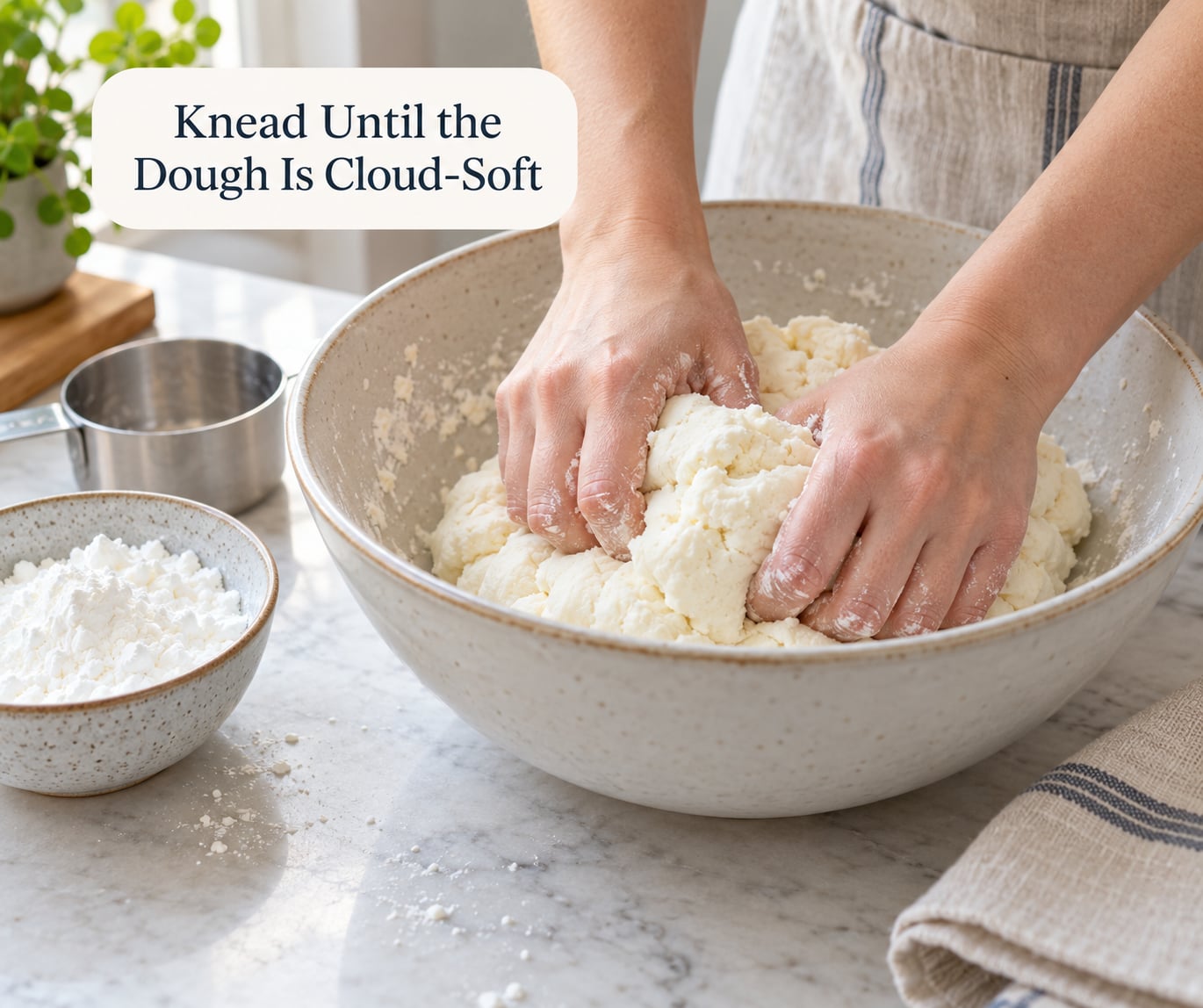
Knead the dough with clean hands for one to two minutes. This is the step beginners skip, and it is the step that fixes dough that looks mixed but still feels wrong. Press it down, fold it over, push it away with the heel of your hand, and repeat.
You are looking for a texture that is silky and holds a shape without cracking. Test it by pinching off a piece and rolling it into a ball: it should come together cleanly and keep its round shape when you set it down. Press a finger in and the dent fills in slowly. That is ready.
If it sticks to your palms instead of feeling slick, add cornstarch one tablespoon at a time and knead again. Resist the urge to add a big scoop; it is very easy to overshoot into crumbly territory.
Add Color or Scent, If Desired
Work the coloring in during the kneading, a few drops at a time, until the color is even. Gel coloring gives a stronger, more even shade in far fewer drops, and it stains less than liquid drops. If you only have liquid, expect two or three times as much and put a sheet of newspaper or a plastic sheet under the play surface.
For scent, a few drops of vanilla or almond extract stirred in at the end works well. Essential oils are attractive for a calming sensory activity, but many are not safe for close skin contact or for small children, so I skip them entirely and use food-grade extracts instead.
One warning worth knowing: color looks stronger when you add it and fades noticeably as you add more cornstarch to fix the texture. Color early rather than late.
Set Up the Play Activity
Put a plastic sheet, a cookie sheet or a fitted tablecloth down first, because the conditioner leaves a faint oily film on anything absorbent. A shallow tray or sensory bin keeps the dough contained and makes cleanup fast.
Then add props. Cookie cutters, a small rolling pin, a plastic fork, a butter knife, cookie scoops, a funnel and a handful of small plastic animals turn the same dough into a different activity each time. For a bin, fill the bottom with dry rice or coarse salt and let them dig, which also hides the crumbs.
Clouds, snow drifts, cupcakes, puddles and birthday cakes are all easy shapes to roll and cut. A small rolling pin gives kids the wrist movement that preschool worksheets try to build, and the pushing and squeezing of the dough itself is a strong fine motor workout.
Store or Dispose of the Dough Safely
Put the finished dough in an airtight container and keep it at room temperature, out of direct sun. Expect it to stay usable for two to three weeks. If the surface dries out between sessions, knead in a teaspoon of water or conditioner until it comes back.
Discard the batch if it develops an off smell, if it turns grey or yellowish after a month or so, or if it has been handled by a child with a cold or an open cut. When in doubt, throw it out. A fresh batch takes five minutes.
Bin the dough rather than rinsing it down the sink. Large amounts of starch swell in water and can block older plumbing, and the conditioner coats the pipe walls.
Common Cloud Dough Mistakes and How to Fix Them
The dough sticks to everything
This is the single most common problem, and it is nearly always too much liquid for the amount of cornstarch. Add 1 to 2 tablespoons of cornstarch, knead it in fully, and wait a minute before judging. A dough that leaves a slight sheen on your palm is right; a dough that pulls the hair off your hand is not.
Sleeves and hair are harder problems than surfaces. Keep dough off sleeves by rolling them up to the elbow first, and check heads and collars before play rather than after.
The dough is dry and crumbly
Crumbly dough means the balance has gone the other way, usually from adding too much cornstarch while chasing stickiness. Add 1 tablespoon of conditioner and knead. The crumbly bits press back together within a minute or two.
If it is crumbly at the very first mixing stage, you probably measured loosely. Scoop-and-level flour and cornstarch measure very differently from spooned-in ones, and cornstarch in particular packs down hard.
Lumps and watery patches
Both come from adding liquid too fast. Let any pooled liquid sit and absorb for a minute before stirring, then use a whisk or a fork to break up the small lumps rather than pressing them down with the spoon.
Large hardened lumps mean the mixture sat partially mixed. There is no shortcut for those: cut the bowl in half, add a tablespoon of conditioner, and knead each half separately until the lumps soften.
The dough goes hard in the bin
Air is the enemy. Store the dough in an airtight container or a sealed zip bag rather than leaving it in an open sensory bin, and press the surface flat before sealing so no large air pocket sits on top. If it has already hardened, a teaspoon of warm water worked into the dough restores it, and it needs a longer knead than you expect.
Mess on clothes, carpet and tables
Conditioner transfers onto fabric and is miserable to get out of carpet, so prevention is the whole game. Use a sheeted play surface, keep the dough in a tub or on a tray, and hand over a damp cloth to wipe hands before they touch anything else. Dried dough brushes off fabric easily; wet conditioner does not.
Colored dough is worse. Test a drop of the coloring you plan to use on the underside of a table edge first. If it bleeds, use less color and keep the dough farther from fabric.
Frequently Asked Questions
Can I make cloud dough without flour?
The standard cloud dough recipe contains no flour at all, only cornstarch and conditioner, so it suits gluten-free households. Flour plus oil is a separate dough called moon dough, and it is sandier and less stretchy. If you want a wheat-free dough that is even softer and airier, add a tablespoon of baby lotion in place of part of the conditioner.
How long does homemade cloud dough stay good?
Stored airtight at room temperature, a batch usually stays workable for two to three weeks. Conditioner-based dough does not grow mould the way a water-based yogurt dough does, which is why it keeps so long. Throw it out if it smells off, has been sitting for over a month, or has been handled by a child who is unwell. Making a fresh batch takes five minutes.
What can I add to make cloud dough smell good?
A teaspoon of food-grade vanilla or almond extract stirred in at the end of kneading gives a pleasant scent that lasts for weeks. Essential oils are tempting for a calming activity, but many are not meant for skin contact and can irritate small children and pets. Scented conditioner also works, though it tends to fade faster than extract.
Is cloud dough safe for babies and toddlers?
Cloud dough is not edible, and any dough that goes in a mouth should be treated as swallowing something unsafe. It contains no choking-sized parts, but cornstarch and conditioner are not food. For children under three, sit within arm’s reach, keep it out of reach at the end of the session, and have everyone wash hands with soap before eating. A baby who mouths everything is better served with a bowl of safe dough.
How do I keep cloud dough from drying out?
Air is what makes it harden, so seal it properly. Press the surface flat, put it in an airtight tub or a sealed zip bag, and keep it away from radiators and sunny windows. Open containers in a sensory bin are the usual reason dough turns hard after a few days. If it has already dried, a teaspoon of warm water worked in and a longer knead brings it back.
Can I use cloud dough for drawing or painting?
Yes, though you will be painting with a thick paste rather than a washable colour. Press a finger into the dough and draw directly with it, or flatten a piece and run a small toy car or a plastic fork through it to make tracks. Finger painting with the dough on a tray works well. For drawing on paper, use a separate batch so the paper does not soak through.
How to Make Cloud Dough: Where to Start Tonight
Measure 2 cups of cornstarch and 1 cup of cheap plain conditioner, stir it in a big bowl for a minute, then knead with your hands for another minute or two. That is the entire method, and it is the version that reliably holds a shape instead of sticking to everything in the room.
Do one thing beyond the recipe: put the dough away airtight when you are done. Two to three weeks of shelf life turns a five-minute activity into something you can pull out on any bad afternoon, and it is the difference between cloud dough you actually use and a hardened lump in the back of a cupboard.