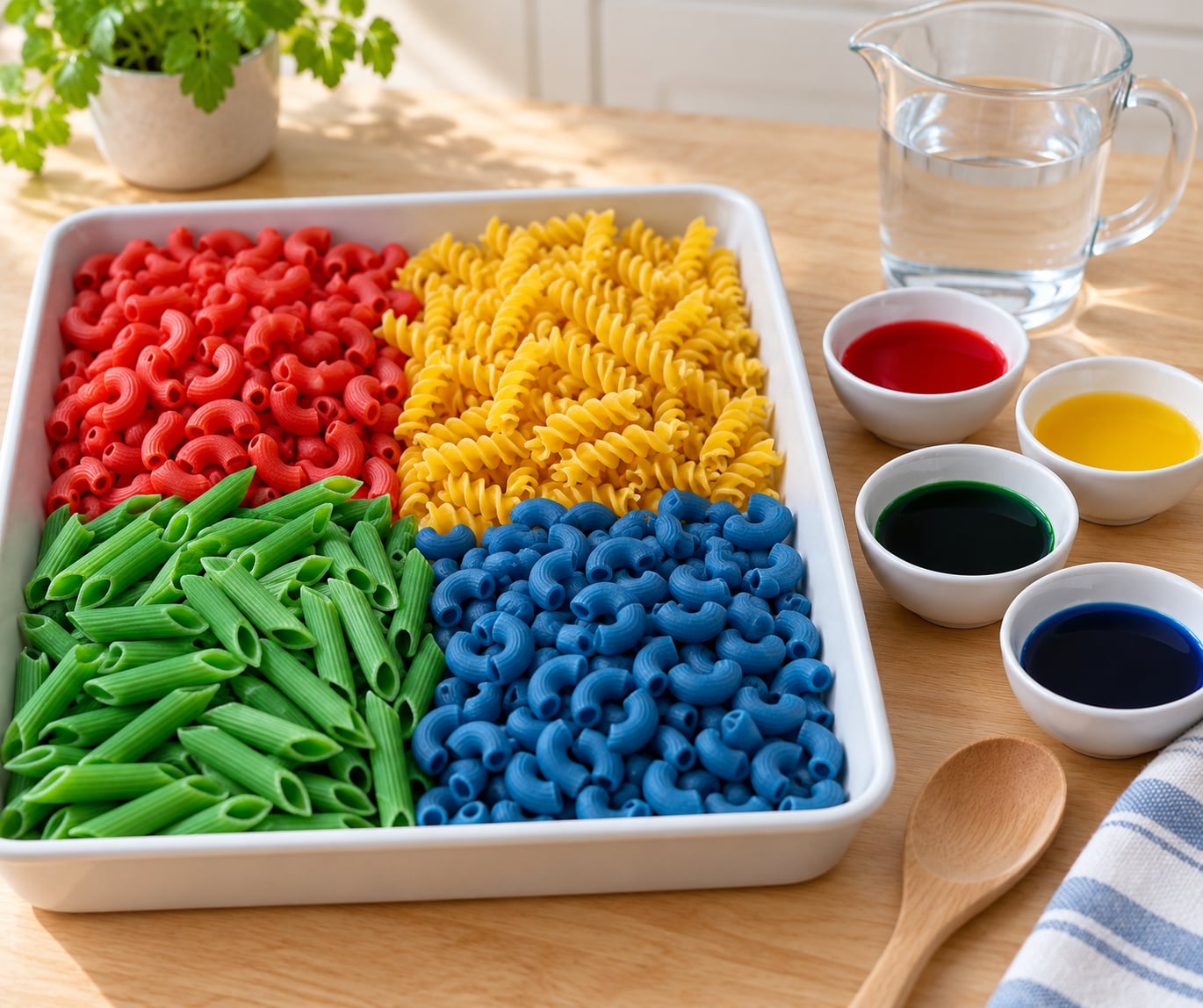
To color pasta for sensory play, cook 1 cup of short pasta, add 15 to 20 drops of food coloring to the water, stir gently, then drain and spread the pieces in a single layer on parchment paper until they are completely dry. The dry, crunchy result becomes a bright sensory bin filler that stores for days and never needs reheating.
Coloring pasta is one of those activities that costs almost nothing and lasts the whole week, and knowing how to color pasta for sensory play well is mostly about two things: enough coloring to get a real color, and enough drying time so the color stops rubbing onto everything your child touches.
Regular dry pasta from the cupboard works. It is not a special ingredient, and the finished colored pasta is for tactile exploration rather than eating.
Table of Contents
- What You Need
- Step-by-Step: How to Color Pasta for Sensory Play
- Choose the Color Method
- Color the Pasta
- Drain and Spread the Pasta
- Dry the Colored Pasta
- Set Up the Sensory Play
- Common Mistakes
- Frequently Asked Questions
- What is the best food coloring for coloring pasta?
- How long does colored pasta need to dry?
- Can I use liquid food coloring instead of gel food coloring?
- How do I keep colored pasta from sticking together?
- Is naturally colored pasta safe for sensory play?
- Can children eat pasta after using it in a sensory bin?
- Conclusion
What You Need
- 1 cup dry pasta — short shapes such as rotini, farfalle, elbow macaroni, or small penne. Curved and twisted shapes scoop better than straight tubes and give more fine motor practice.
- 15 to 20 drops liquid food coloring, or a pea-sized dab of gel coloring per cup of pasta.
- A splash of water saved from the cooking pot, which is what carries the color across every piece.
- A large resealable bag or a bowl and spoon for shaking or stirring.
- A colander, a clean towel, and a baking sheet lined with parchment paper for draining and spreading.
- A cool, well-ventilated spot or your oven for drying.
Optional bin tools: a small tray or tub, funnels, a plastic scoop, tongs or tweezers, and a handful of hidden objects for a treasure hunt.
Step-by-Step: How to Color Pasta for Sensory Play
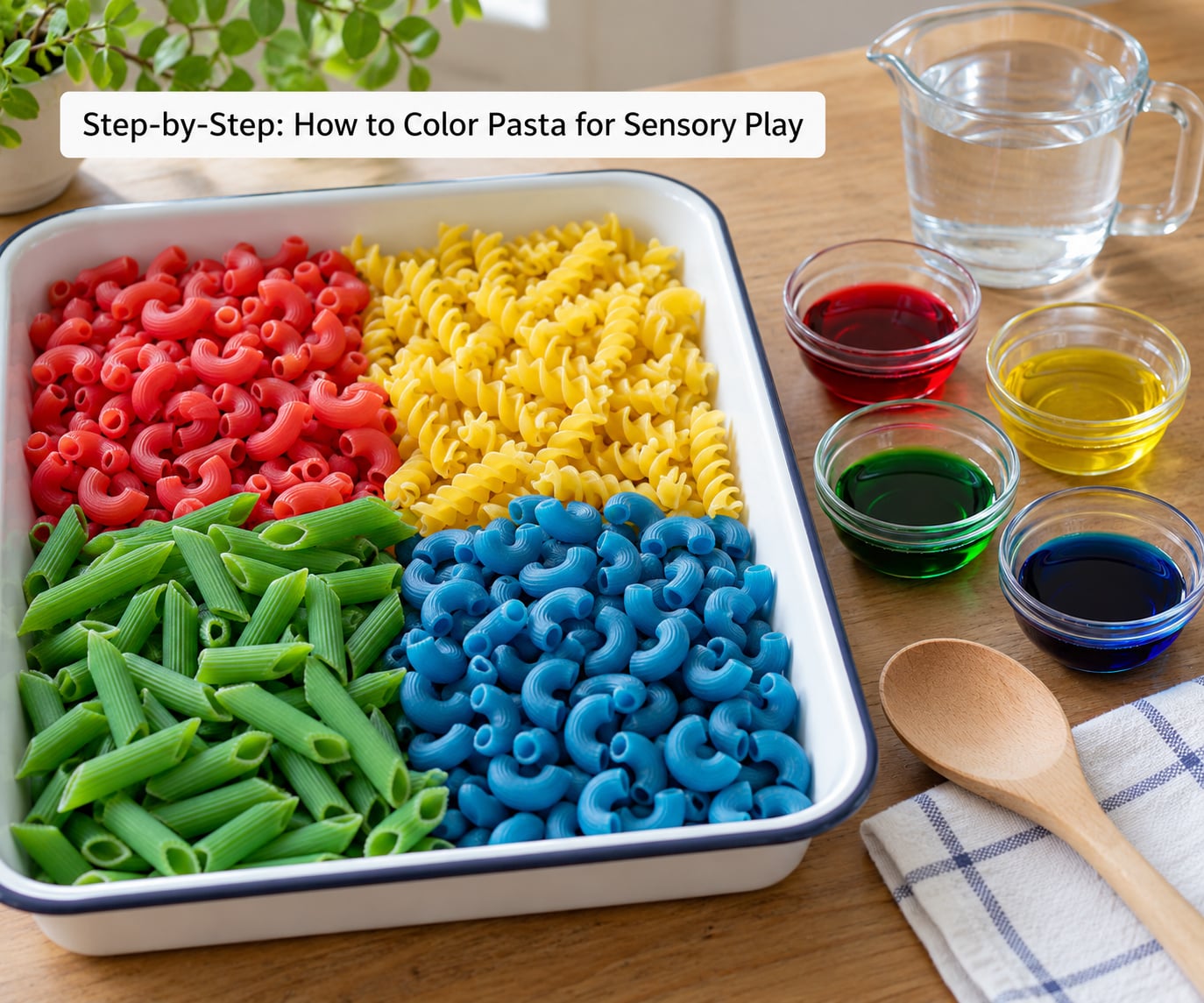
The whole process takes about ten minutes of active work plus drying time. Do a small test batch first if it is your first time, because the drops needed change with the shape and size of the pasta.
Choose the Color Method
Liquid food coloring gives the most even, easy-to-distribute color, and gel coloring gives the most saturated color per drop. Start with liquid coloring at the quantity above, then add a second small dose if the color looks pale against the pasta rather than on it.
Gel coloring is more economical but patches easily if it lands in one spot, so stir it into a teaspoon of water first. A naturally colored option, such as water strained from cooked beets or berries, is mild and taste-safe but produces a softer, earthier shade that toddlers sometimes eat rather than play with.
Color the Pasta
Cook the pasta in well-salted water until it is just tender, usually 8 to 10 minutes. Scoop out about half a cup of the starchy cooking water before draining, then put the pasta in a bowl or bag with the coloring and enough of that water to coat every piece.
Stir gently until the water turns a strong, even shade and no white streaks remain on the pasta. If a few pieces stay pale, let the pasta sit in the colored water for another minute and stir again.
Drain and Spread the Pasta
Drain the pasta in a colander and shake it hard, then pat it with a clean towel. That towel step is what removes the surface starch, which is the main reason colored pasta clumps and goes sticky in a bin.
Spread the pieces in a single layer on the lined baking sheet with none of them touching. Pieces that touch while wet will fuse together and dry into one solid lump.
Dry the Colored Pasta
Air drying works well: leave the tray in a cool, dry, well-ventilated spot for 6 to 12 hours, or overnight. If you need it the same day, bake the tray at 200 degrees until the pasta is dry and firm, about 10 to 15 minutes, then cool it on a rack.
Test one piece between two fingers. It should feel hard and slightly rough, and no color should come off on your fingertip. The tray comes out of the oven hot, so move it somewhere out of reach of small hands before it cools.
Set Up the Sensory Play
Pour two to three cups of the dried colored pasta into a tray or tub on a towel, then add a scoop, a funnel, and tongs or tweezers. Hide a handful of small objects in the filler for a search game, or drop in laminated letters and numbers to fish out with the tongs.
Stay within arm’s reach the whole time. Dry pasta is a choking hazard for babies and toddlers under three, and dyed pasta should be treated as a play material rather than a snack.
Common Mistakes
- Patchy color: use more drops rather than heavier ones, and shake or stir longer than feels necessary. Two smaller additions color more evenly than one large one.
- Pasta sticking in clumps: pat the drained pasta dry before spreading, and give each piece its own space on the tray.
- Mushy, bendable pieces: these are under-dried. Give them another few hours, or another short bake, before the pasta goes in the bin.
- Color bleeding onto hands and surfaces: the color must be fully dry and sealed before play starts. Once it has cured, most food coloring does not transfer.
- A bin that turns sticky: food coloring leaves a residue on the tray. Line the bin with a wipeable mat and rinse the tray with warm water straight after the session.
- Color that rubs off into a dusty mess: food coloring is a dye, not a paint. If the shade matters more than edibility, washable tempera paint colors harder, but then nothing in that bin goes near a mouth.
Two habits fix most problems. Choose short, textured shapes instead of long spaghetti, which is harder to scoop and dries in tangled nests. And check the color on one piece before it goes in the bin rather than after a disappointing ten minutes of play.
Store the finished pasta in an airtight container or sealed bag, somewhere cool and dry, and pull out only the portion you need for each session. Airtight storage is what keeps mold away, and it is also the single thing parents most often skip.
Frequently Asked Questions
What is the best food coloring for coloring pasta?
Liquid food coloring is the easiest choice for a first batch, because it spreads through the starchy cooking water and colors every piece evenly. Use 15 to 20 drops per cup of pasta. Gel coloring gives a richer color per drop and is cheaper, but mix it with a teaspoon of water first so it does not patch. Save gel for colors that need to look bold from across the room.
How long does colored pasta need to dry?
Air drying on parchment paper takes 6 to 12 hours, or overnight if the pasta is thick. For a same-day batch, bake the tray at 200 degrees for about 10 to 15 minutes, then let it cool on a rack. It is ready when a piece feels hard and dry between your fingers and no color rubs off. Under-dried pasta will feel soft and stain the bin.
Can I use liquid food coloring instead of gel food coloring?
Yes. Liquid coloring spreads more easily and gives an even, softer result, but you need more of it to get the same depth of color. Gel coloring is more concentrated, so it is worth using for a primary color or a themed bin. Whichever you choose, add the color in two smaller amounts rather than one pour, and stir until the water is evenly shaded.
How do I keep colored pasta from sticking together?
Pat the drained pasta with a clean towel to remove surface starch, then spread the pieces on parchment paper with none of them touching. Touching pieces fuse into one lump as they dry. If you are storing the dried pasta, a light dusting of cornstarch keeps pieces from sticking to each other in the container, and an airtight container keeps air and moisture out.
Is naturally colored pasta safe for sensory play?
Pasta colored with strained beet, berry, or spinach water is fine for sensory play and is mild enough that a mouthing toddler is not exposed to added dye. The colors are softer and earthier, so they read as very edible, which means kids tend to eat more of it during play. Whatever the coloring method, treat the batch as a play material and offer plain pasta as the snack.
Can children eat pasta after using it in a sensory bin?
Treat colored pasta as play material, not food. It has been handled on floors and tables, the color is a dye rather than an intended ingredient, and any batch made with tempera or acrylic paint should never be eaten at all. If your child has a gluten or egg allergy, choose pasta they can safely handle and check with your pediatrician about their own child. Offer a separate plate of plain pasta for eating.
Conclusion
Start with one small cup, add 15 to 20 drops, and spread the pieces the moment they are drained so nothing touches. Let it dry fully, test one piece between your fingers, and the color will hold through weeks of bin time.
From there, scoop, sort, thread, and search. The activity costs a few pantry staples, cleans up with a wipeable mat, and gives a toddler the same fine motor and color work that keeps a bin busy for a whole afternoon.