The short answer: washable water-based tempera or washable finger paint is the safest default for toddlers, because it rinses off skin, rinses out of laundry, and carries an ASTM D-4236 label with a toxicity warning and safety data instead of a marketing slogan. Everything else — finish, thickness, color count, surface — is a second decision made after that one. This guide was last reviewed in 2026, and formulas do change, so read the bottle in front of you rather than trusting a list online.
I have watched the same thing happen in every family I know: a grown-up opens a cupboard, grabs whatever bottle is in front, and a toddler ends up with stiff, scented, oil-based craft paint that will not rinse off. Ten minutes of reading labels prevents that. Here is how to choose paint for toddler art projects in six steps, plus the mistakes that trip up nearly everyone.
Table of Contents
- What You Need to Choose Paint for Toddler Art Projects
- Step-by-Step
- Step 1: Match the Paint to the Child’s Age
- Step 2: Check the Label Before You Choose Paint for Toddler Art Projects
- Step 3: Decide How Much Cleanup You Want
- Step 4: Choose the Right Finish and Texture
- Step 5: Test It on the Intended Surface
- Step 6: Set Up for a Successful Art Experience
- Common Mistakes
- Frequently Asked Questions
- What type of paint is safest for toddler art projects?
- Is washable toddler paint easy to remove from clothes?
- Does non-toxic paint mean it is safe to eat?
- Should I use tempera paint or washable craft paint for toddlers?
- How can I stop toddler paint from bleeding through paper?
- What should I check before letting my toddler try a new paint?
- Conclusion
What You Need to Choose Paint for Toddler Art Projects
Before comparing bottles, pin down four variables. The child’s age decides how much handling the paint tolerates, the surface decides what will adhere, and your tolerance for laundry decides how washable it needs to be.
The fourth variable is the medium itself. These are the four formats you will actually encounter in a toddler’s reach, and how they behave.
| Paint type | Rinses off skin | How it behaves | Best fit |
|---|---|---|---|
| Washable tempera | Yes, quickly | Thick, matte, quick-drying, holds color on paper | The default for ages 2 and up |
| Washable finger paint | Yes | Runnier, slick, meant for hands and bodies | Finger painting and handprints |
| Tempera sticks | Yes | Dry twist-up stick, no water needed, almost no mess | Under 2 and travel |
| Kids acrylic | Not reliably | Water-based but polymer film forms on skin and dries stiff | Ages 4 and up |
Now work through this six-point checklist before you buy anything:
- Certified safety mark. ASTM D-4236 in the US, or the ACMI AP seal, which means a toxicologist has reviewed the formula and found it safe for children.
- Water-based. No solvents. If the odour fills the room, put it back.
- Washes out of laundry. Not just skin. Skin tolerance and laundry tolerance are separate tests.
- Thick enough to stay put. Thin paint runs off the page and onto everything else.
- Dries within minutes. Wet paint ends up on hands and sleeves while it is still wet.
- Unscented and leak-proof. Scent usually means fragrance chemicals, and screw lids matter more than parents expect.
If a paint fails two or three of those six, it is not toddler paint no matter what the front of the bottle says.
Step-by-Step
Step 1: Match the Paint to the Child’s Age
Toddlers do not have the fine motor control to hold a brush neatly, so age fit is less about skill and more about contact time. A 15-month-old will put a brush in their mouth. A three-year-old will not, but will drag it across an arm.
| Age | What they are doing | Medium that fits |
|---|---|---|
| 12-18 months | Scribbling, mouthing everything, short attention span | Tempera sticks, dot paint stampers, thick tempera in shallow cups |
| 18-24 months | Controlled scribbles, beginning pincer grasp | Thick washable tempera, dot stampers, very short brush strokes |
| 2-3 years | Shapes, color mixing attempts, handprints | Washable tempera and washable finger paint |
| 3-4 years | Intentional pictures, brushing and dragging | Washable tempera, washable finger paint, simple watercolor cakes |
Dry watercolor cakes usually wait until five. They need a steady hand to hold a wet brush and to reload from a small pan, and the reward for that effort comes minutes later, which is a long wait for a two-year-old. Finger painting fits the age better because the reward is immediate and the arm does the work.
Always follow the manufacturer’s stated age range over any general rule of thumb, and supervise the whole session. Parents on Mumsnet and Netmums repeat the same default almost word for word: washable tempera, because it rinses out of skin and survives a laundry cycle.
Step 2: Check the Label Before You Choose Paint for Toddler Art Projects
Turn the bottle over. On US art supplies you are looking for ASTM D-4236, a US federal standard requiring a toxicity warning, the ingredients or a statement that they are withheld as a trade secret, and the manufacturer’s phone number. ASTM compliant does not mean certified safe; it means the label tells you what is inside and how urgent a problem would be.
The ACMI AP seal is a stronger claim. It means an independent toxicologist reviewed the formula and judged it safe for children, which is why parents in preschool communities reach for AP-certified tempera first. A bare “non-toxic” or “non-poisonous” phrase on the front of the bottle means far less, since neither term is defined by law.
Regular acrylic is the other one that misleads parents. It is technically water-based and often labelled non-toxic, so it looks like a safe choice. But acrylic dries into a continuous plastic film rather than a friable pigment layer, so it sits on skin like a film of plastic, resists rinsing, and gets picked off in flakes or stays as a stain. On a finished canvas that durability is the whole point; on a toddler’s forearm it is the problem.
Three things to skip without hesitation: oil-based or solvent-based paint, aerosol spray paint, and powdered paint. Powders are a breathing hazard even when the pigment itself is food-grade, so they should never be mixed while a toddler is in the room. Scented paint is worth skipping too, since fragrance is added for a reason and phthalates have been the usual reason.
Here is the honest answer to the question parents ask most: certified water-based paint is not designed to be eaten, but the amounts a mouthing toddler gets are small compared with the doses regulators test against. Keep it out of reach anyway, and hand over a crayon when the hand goes toward the mouth.
Step 3: Decide How Much Cleanup You Want
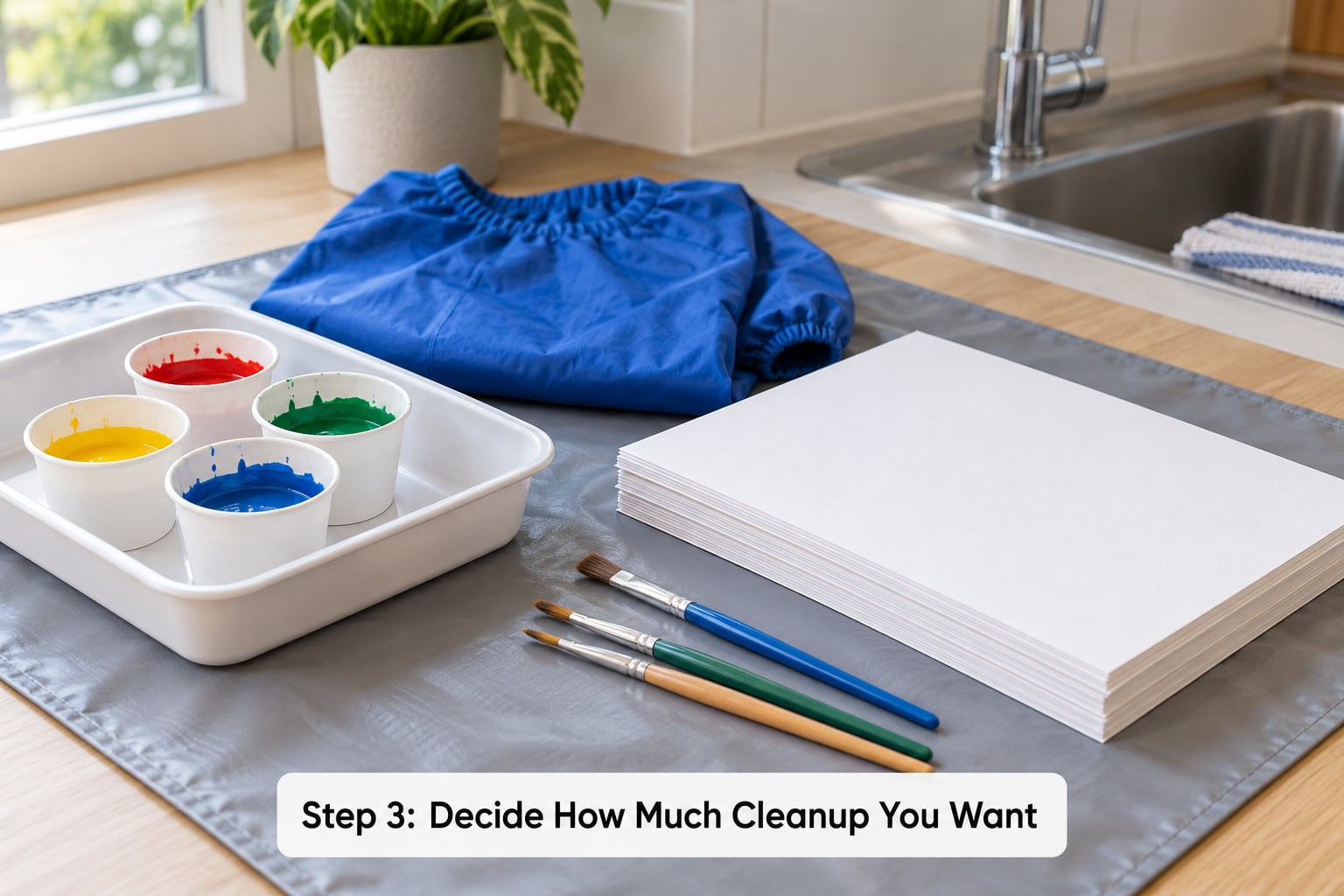
Washable is not one thing. It is three separate claims, and parents only ever test the first. Paint that rinses off skin may still sit in a cotton fiber for a week. Paint that rinses off plastic will not rinse out of a white cotton tablecloth.
Tempera behaves best here because it is a water-based pigment suspended in a binder that stays friable rather than forming a plastic film. Kids acrylic forms that film, which is exactly why it survives on a finished canvas and also survives on a toddler’s forearm until bath time wears it away.
Stain rescue, when it does happen, in the order I would try it:
- Scrape or lift dried paint off while it is still a solid chunk, before soaking anything.
- Flush with cold water from the back of the fabric, then work a little liquid detergent into the stain with your fingers.
- Wash the item on a cold cycle and air it dry. Heat sets a stain that would have come out.
- For a hard surface, warm water and a soft cloth, then a magic-eraser-type pad on stubborn spots after a patch test in a hidden corner.
- For upholstery or carpet, blot from the outside in. Rubbing pushes pigment deeper.
Oil, turpentine and paint thinner will shift a tempera stain and cost you the fabric or the finish. Water and detergent are the only two tools you need.
Step 4: Choose the Right Finish and Texture
Finish changes what the paint feels like under the brush and how forgiving the surface is. Matte tempera looks like chalk once dry and hides brush strokes, which most toddlers prefer. Gloss finishes show every wobble, and for a two-year-old that reads as a mistake rather than a style.
Opacity decides whether the paper underneath shows through. Low-opacity tints look weak on kraft cardboard and work well on white paper. Thick, high-coverage paint is what makes handprints and footprint prints read clearly, since a faint handprint on canvas looks like a smudge.
Metallic, neon and pearlescent finishes add glitter particles that end up on hands, floors and mouths. Save those for a project when your child is old enough to sit still and you have already won the cleanup argument.
Thickness is the one variable parents most often misread. Thick paint is not automatically the toxic one. A thick, water-based, certified tempera is easier to control and less likely to spread than a thin paint that runs, so texture is a handling decision rather than a safety signal.
Brush feel matters more than most labels suggest. Paint that feels sticky under a brush holds a stroke without the child pressing hard, which is what makes a wobbly grip survive. Paint that feels slick slides off the bristles and ends up under the nail instead of on the paper. If the toddler is scrubbing at the brush rather than dragging it, the paint is usually too slick or the brush too large.
Brushing thick paint too heavily is its own problem. Excess water and excess drag both make a film that dries stiff and cracks, sometimes cracking the sheet itself if the paper is thin. Two lighter passes beat one heavy one, and letting each dry before the next keeps the color clean.
If you want a quick homemade option for a one-off session, you can stir a little water into a dash of food pigment such as turmeric, beetroot or berry purée. Treat it as play dough-grade paint rather than certified paint: it stains, it will not wash out of fabric, and some food colorings are acidic enough to leave a mark on a wooden table. Keep it to paper and washable trays, and keep an eye on the same hand-to-mouth behavior you would watch with any paint.
Step 5: Test It on the Intended Surface
Paint behaves differently on every surface, and the difference is usually the answer to whether your art survives the drying stage. Spend two minutes on a patch of the exact material before a project depends on it.
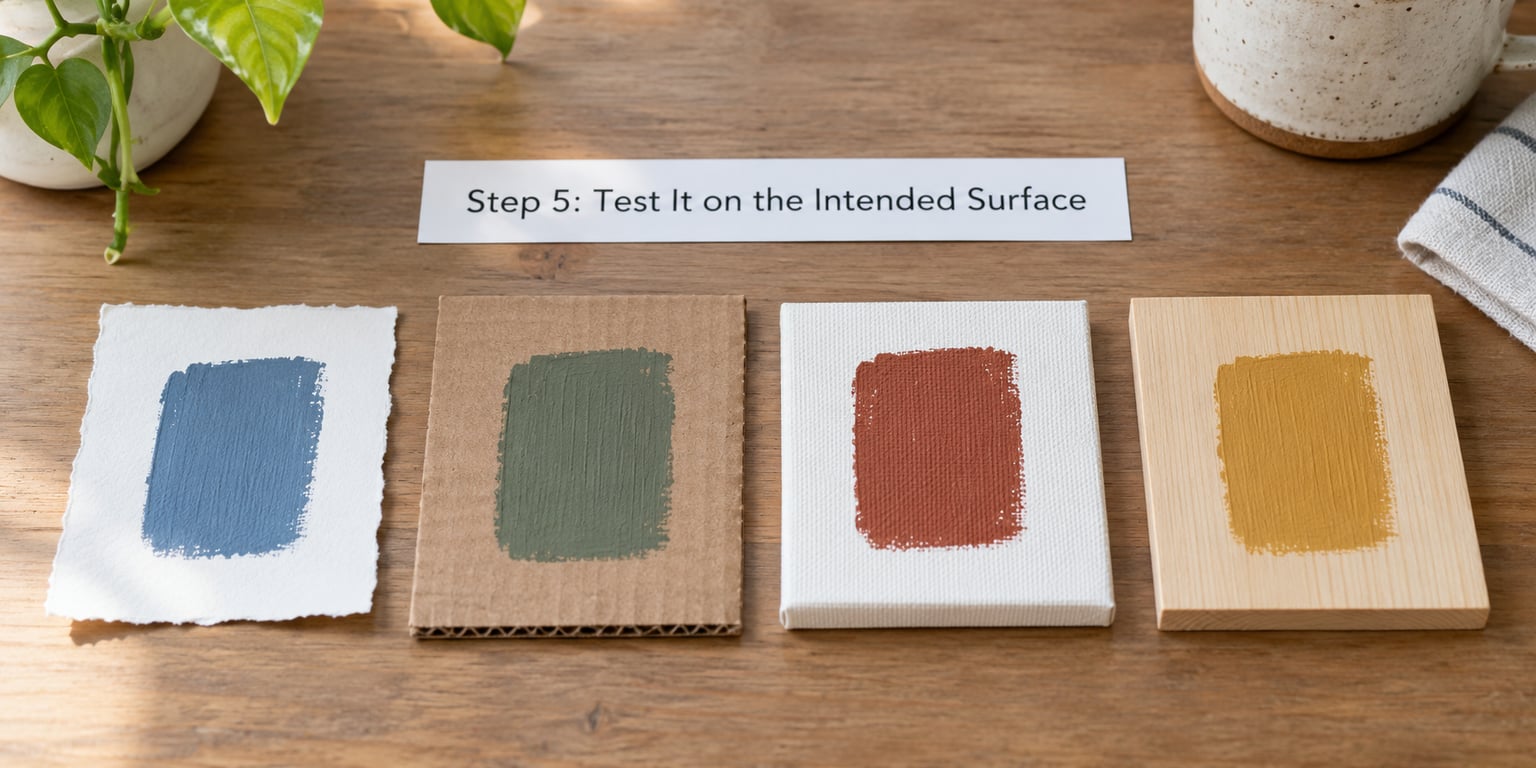
| Surface | What to watch for | Prep that helps |
|---|---|---|
| Paper | Bleed-through and wrinkling | Use cardstock weight or tape the edges to the table |
| Cardboard | Absorption and buckling | Tape down, or use the printed side |
| Canvas | Stiffness, cracking if brushed thickly | Unprimed canvas absorbs; primed takes color more evenly |
| Wood | Adhesion on bare versus sealed wood | Sealed or painted wood wipes clean |
| Fabric | Stiffening and cracking after drying | Use a fabric medium mix if the piece will be washed |
| Walls | Permanent staining on drywall | Use a designated wall or panel, never the paint you would miss |
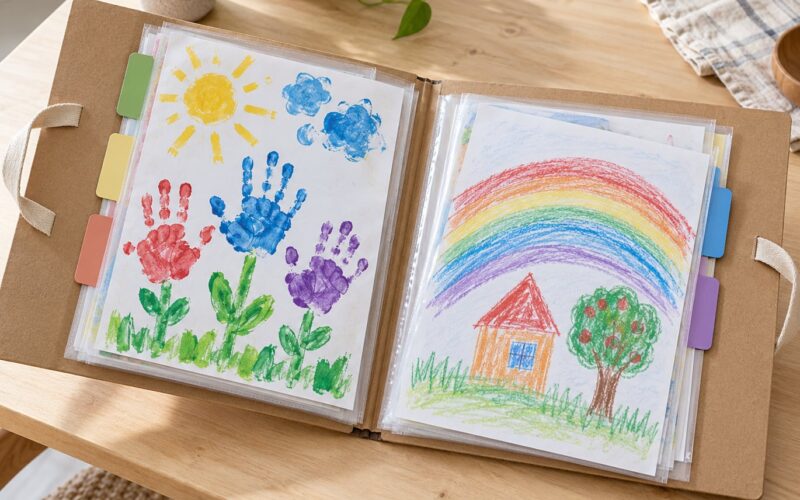
For baby handprints and footprints on canvas, the two things that decide whether it works are consistency and coverage. Thin finger paint fades into the weave; thick paint keeps the ridge detail. Both washable tempera and washable finger paint work here, as long as you press rather than drag.
Step 6: Set Up for a Successful Art Experience
Setup does more for your evening than the paint choice does. Preschool teachers on Reddit and other forums portion paint into condiment squeeze bottles and cap the palette down to three or four colors, because a 36-color set is more than a toddler can choose between and the choosing is what derails the session.
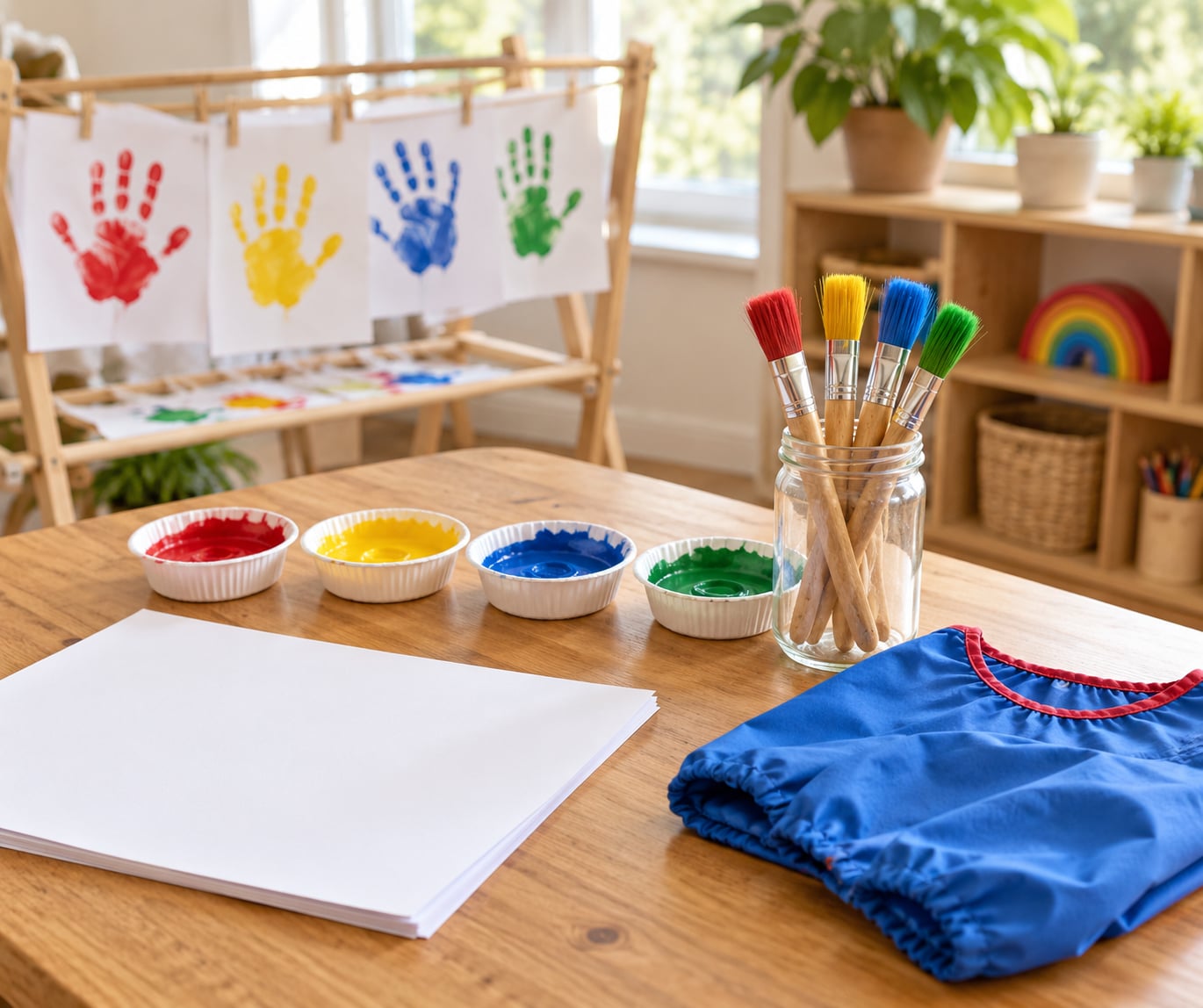
A workable station has shallow cups for hands-on work, squeeze bottles for brush work, two or three thick brushes rather than a full set, an apron or smock, a floor covering you do not love, and a table you can wash. Put it within reach of a sink or a shower.
One simple trick goes a long way: leave out one primary color. With every primary in front of them, a toddler picks at random. Remove one and they have to mix to get it, which is the actual skill hiding inside the activity.
Keep sessions short and let the paint dry before you call it a disaster. Most tempera that looks alarming wet has come off in ten minutes once it is fully dry and flaked.
Two habits cut down on how much paint ends up in the air and on hands. Ventilate the room you are painting in, especially if the paint smells faintly at all, and run water over hands and forearms at the sink right afterwards rather than wiping them on a towel. Children in this age group put their hands in their mouths for ordinary reasons, so removing residue before that happens matters more than the residue itself.
On quantities: buy one or two colors rather than a large set, and expect to use less than you think over a year. Opened water-based tempera keeps for months if you close the lid and store it upright, but the lid is what decides that. Paint left open in a jar dries into a skin that has to be scraped off before the next session.
Common Mistakes
Choosing by brand name alone. A familiar name tells you nothing about the specific bottle in your hand, since product lines change. Read the label on the bottle you are buying today, not the reputation of the company.
Ignoring the surface. Paint that looks great on paper can bead on canvas and soak straight through thin paper. Test on the real material before the project.
Assuming all washable paint comes out of clothes. Skin tolerance and laundry tolerance are different tests, and a lot of paint passes the first and fails the second.
Going too thin. Runny paint bleeds, drips and spreads to surfaces you never painted. Thick water-based tempera is easier to control, not harder.
Skipping the certification check. Non-toxic is not the same as AP-certified, and ASTM D-4236 compliance means the label has safety information, not that the paint is safe to eat.
Adding glitter and specialty additives early. Metallic and neon finishes add loose particles that end up everywhere, and scented paint adds fragrance chemicals for no developmental benefit.
Buying powdered paint. Powders are a fine-particle inhalation risk during mixing, no matter how safe the pigment itself is. Mix them away from the child or do not use them.
My last tip is the one that saves the most laundry: buy less, portion more. Small amounts refilled into cups beat large bottles that stay open on the table for an hour.
Frequently Asked Questions
What type of paint is safest for toddler art projects?
Washable water-based tempera or washable finger paint carrying the ACMI AP seal is the safest common choice for toddlers. Water-based means no solvents, and AP certification means an independent toxicologist reviewed the formula. Keep the paint out of reach and supervised, because certified is not the same as edible.
Is washable toddler paint easy to remove from clothes?
Usually, but only if you act early and skip heat. Lift or scrape the dried paint while it is still a solid piece, flush the fabric from the back with cold water, work in a little liquid detergent, then wash cold and air dry. Hot water and the dryer set what would have come out. Skin tolerance and laundry tolerance are separate tests, so patch test a new paint on an old shirt first.
Does non-toxic paint mean it is safe to eat?
No. Non-toxic means the product is not expected to cause harm in normal or reasonable exposure, which is a much lower bar than edible. Certified water-based tempera is fine in the tiny amounts a mouthing toddler gets, but it is not designed as food. Watch for the hand going to the mouth and offer something else, like a chunky crayon.
Should I use tempera paint or washable craft paint for toddlers?
Tempera is the better default for toddlers because it rinses off skin, rinses out of laundry, dries matte in a couple of minutes, and stays thick enough to hold a brush stroke. Washable craft paint works well on paper and cardboard. Avoid ordinary acrylic for under-fours, since its polymer film dries stiff on skin and does not rinse out reliably.
How can I stop toddler paint from bleeding through paper?
Use thicker paper than you think you need, tape the sheet down at the edges so it cannot shift, and lay the paper flat on a level surface rather than tilting it. Thicker paint bleeds less than thin paint, so avoid watery finger paint on paper. Painting the back of a sheet first blocks the bleed and gives you a dry surface to flip over.
What should I check before letting my toddler try a new paint?
Check three things on the bottle: the stated age range, the ASTM D-4236 compliance statement with its safety information, and the ACMI AP seal if it has one. Then check the odour. A strong smell means solvents, so put it back. Last, patch test a small amount on the exact surface you plan to paint and let it dry fully before the real session.
Conclusion
Start with the bottle, not the brand. Read the age guidance and the safety mark on the back, pick a washable water-based paint thick enough to stay on the surface, and patch test a small amount on the exact paper or canvas before your toddler gets the full jar. That is the whole process, and it takes about ten minutes the first time.