To get crayon off walls, start with a soft cloth and warm soapy water, then move up to a baking soda paste, a damp magic eraser, and plain white non-gel toothpaste. Wax that has already soaked into drywall needs more than water, so the order you work in matters more than how hard you scrub.
Crayon is mostly paraffin wax, and wax simply does not mix with water. That is why a damp cloth alone leaves you with a grey smear instead of a clean wall, and why the methods that actually work all do one of three things: dissolve the wax, melt it, or scrub it away as a mild abrasive.
Most marks come up in about ten minutes of gentle work. The cases that take longer are the ones involving semi-gloss paint, wallpaper, or wax that has been on the wall for months.
Table of Contents
- What You Need to Get Crayon Off Walls
- Step-by-Step: How to Get Crayon Off Walls
- 1. Wipe the Mark with Warm, Soapy Water
- 2. Use a Baking Soda Paste for Stubborn Marks
- 3. Toothpaste: How to Get Crayon Off Walls with a Mild Abrasive
- 4. Use Rubbing Alcohol on Hard, Nonporous Surfaces
- 5. Lift Remaining Wax Carefully
- Common Mistakes
- Frequently Asked Questions
- Does crayon come off drywall?
- Can you remove crayon from wallpaper without peeling it?
- What is the safest way to remove crayon from a painted wall?
- How do you get fresh crayon off a wall before it sets?
- What should I do if removing crayon leaves a scuff or hole?
- Conclusion
What You Need to Get Crayon Off Walls
You probably already own everything below, which is the nice part of this job.
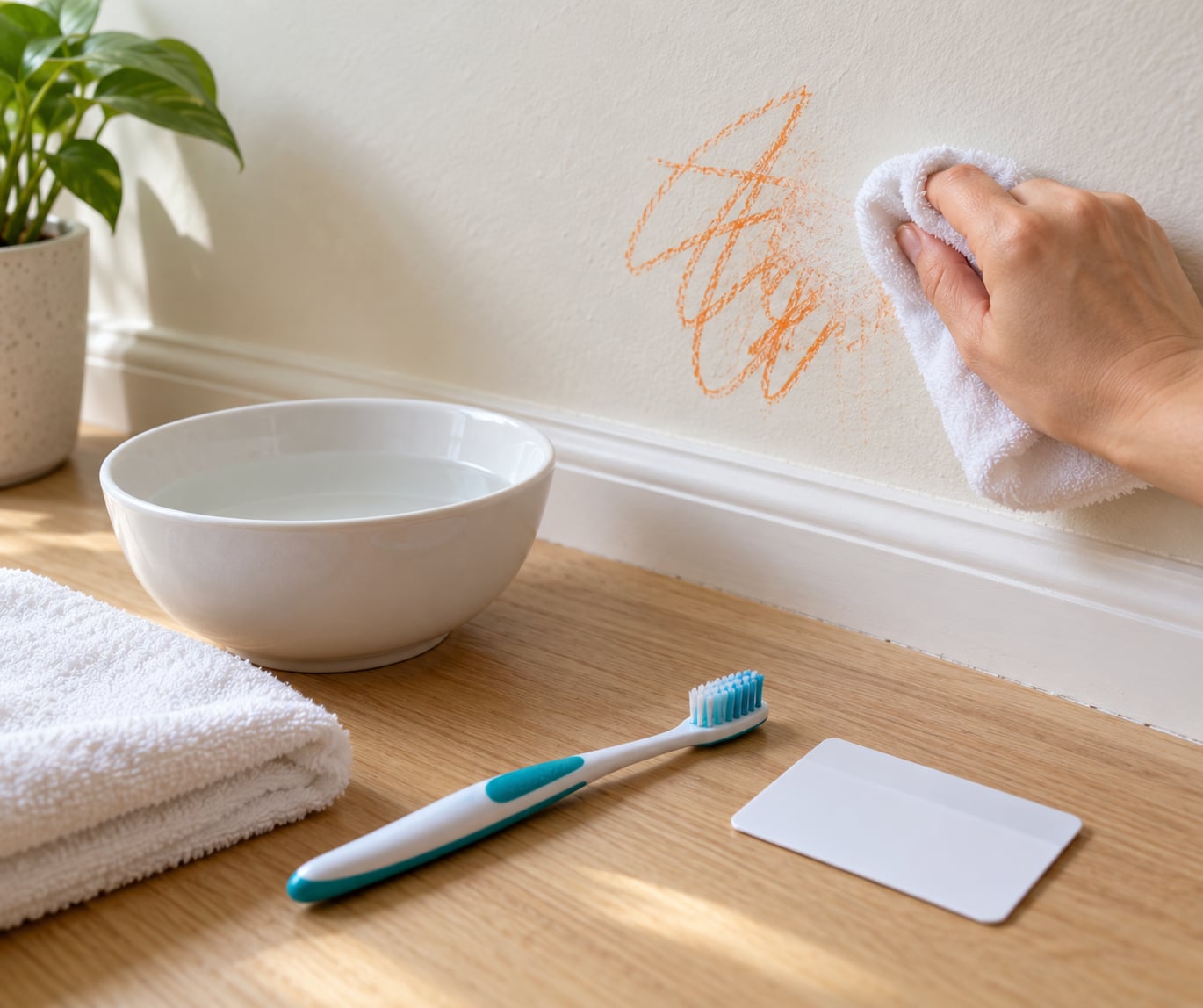
- Warm water and a small amount of dish soap
- Two or three clean, soft cloths or microfiber cloths
- Baking soda and a bowl for mixing a paste
- An old toothbrush for tight lines and textured walls
- A magic eraser or a plain melamine sponge
- Plain white non-gel toothpaste
- Rubbing alcohol for tile, glass, metal and sealed trim
- Rubber gloves if you are using alcohol or working above a toddler
One rule matters more than the rest of the list: no metal tools. Metal scrapers, razor blades and metal scouring pads cut into latex paint and drywall paper, and the repair costs far more time than the cleaning did. Use a plastic card instead.
Patch test anything unfamiliar in a spot nobody looks at, such as behind a door or behind the toilet. Wait a full hour, then look for dullness or a colour change before you touch the mark itself.
Step-by-Step: How to Get Crayon Off Walls
1. Wipe the Mark with Warm, Soapy Water
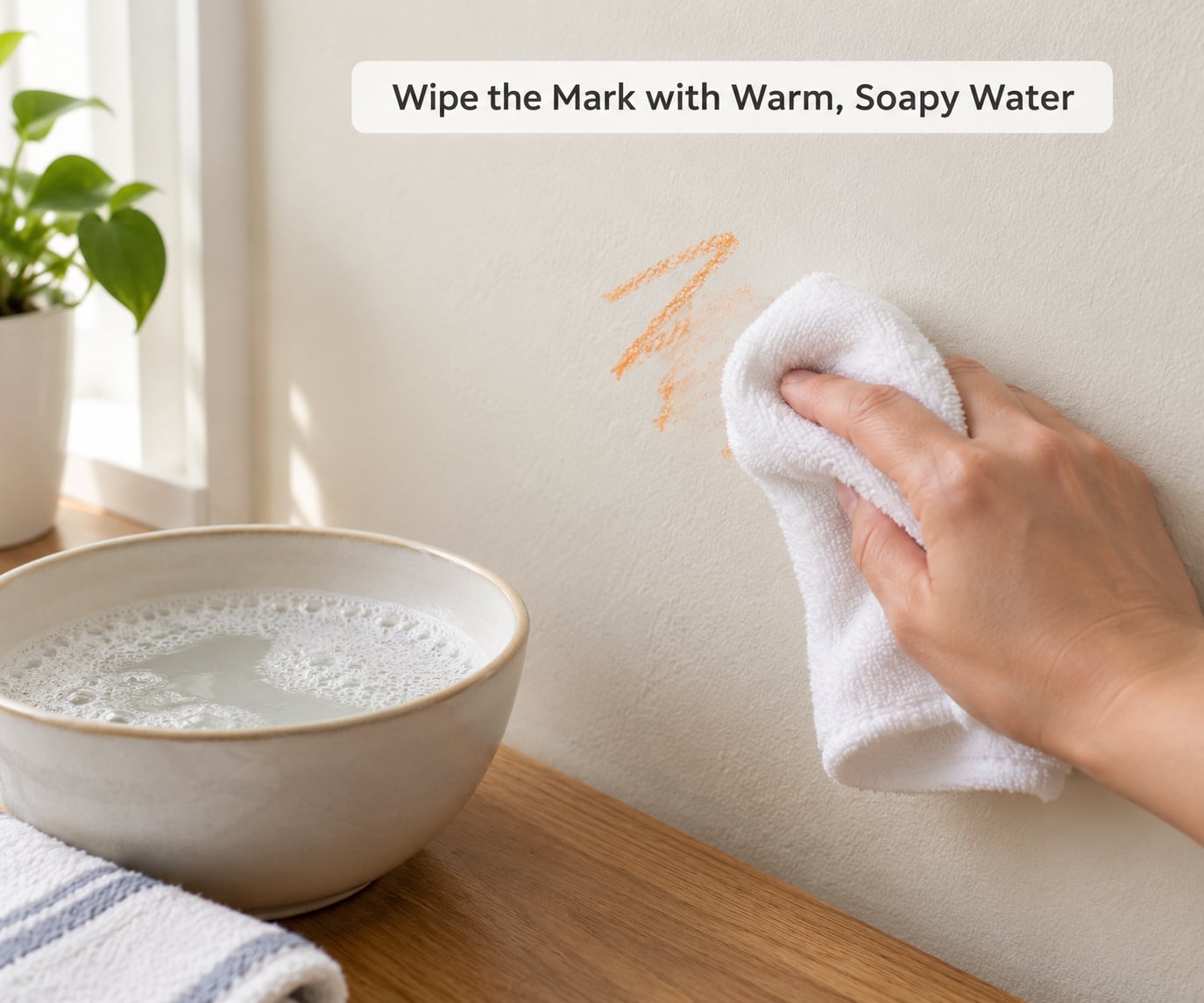
Mix a teaspoon of dish soap into a bowl of warm water. Dip a soft cloth in it, wring it out so it is damp rather than dripping, and work from the outside edge of the mark inward.
Wiping from the edge inward matters. Pushing wax toward the middle spreads it across a wider area, and you end up chasing your own smear for another twenty minutes.
Follow with a clean cloth dampened with plain water to lift soap residue, then dry the area with a soft towel. On flat or matte latex this handles a fresh mark in a couple of minutes. If the mark changes from colored to hazy grey rather than disappearing, the wax is still in the surface and you are done with water.
2. Use a Baking Soda Paste for Stubborn Marks
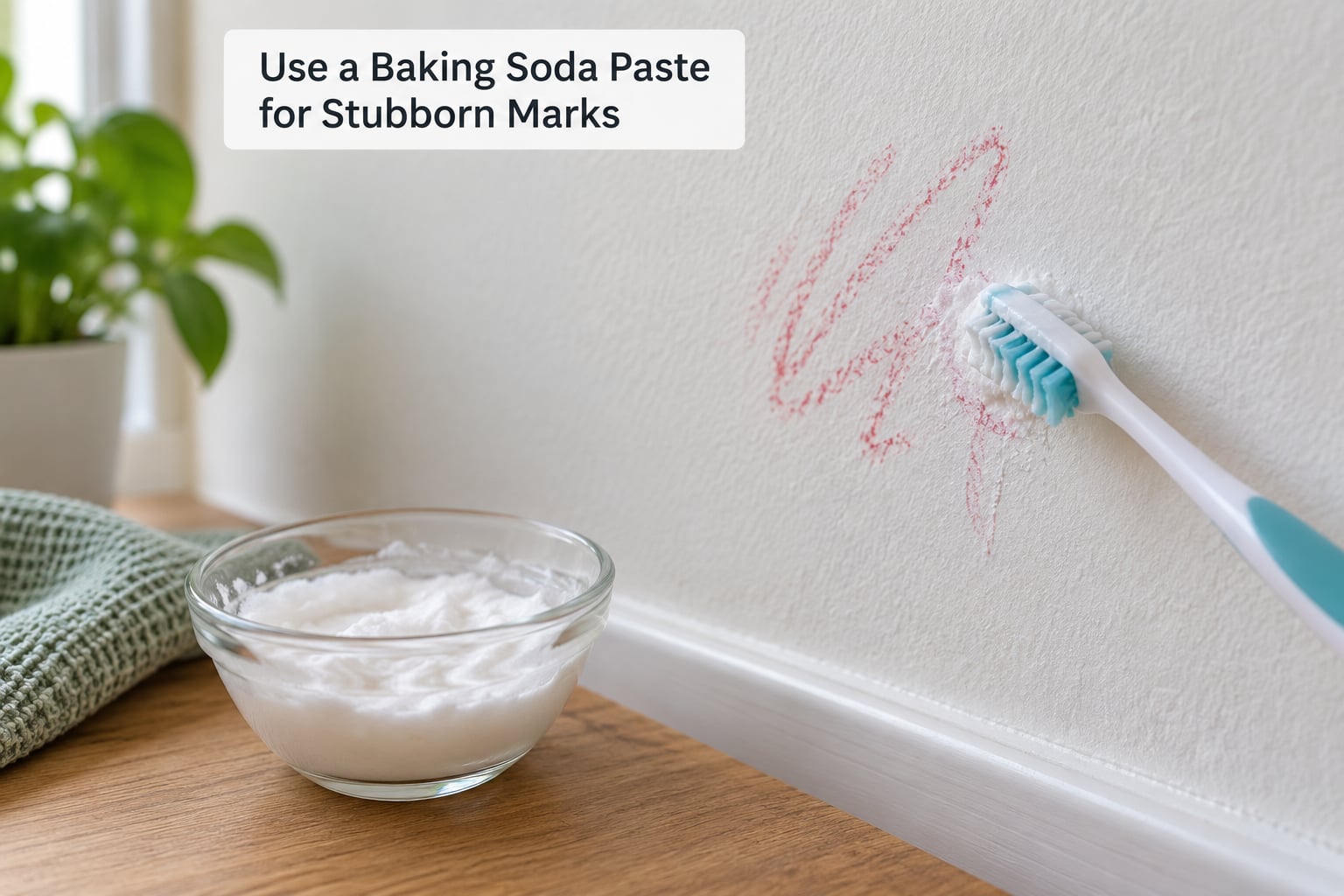
Stir baking soda with just enough water to make a thick, spreadable paste. It should hold its shape on the cloth, not run off.
Dab the paste onto the mark rather than rubbing it in first, give it about a minute to sit, then work in small circles with a soft cloth or an old toothbrush. Keep the pressure light and count to about twenty before you check.
The paste lifts the pigment and a little of the wax film at the same time, which is why it works on set-in marks that soapy water cannot touch. Wipe with a damp cloth when the wax turns grey and pasty, then repeat once if the colour is still strong.
Baking soda is mildly abrasive, so it can dull a glossy or specialty finish. Test it first on matte and eggshell walls, and use it more sparingly on satin and semi-gloss.
3. Toothpaste: How to Get Crayon Off Walls with a Mild Abrasive
Ordinary white toothpaste, the non-gel kind, works as a gentle scouring paste. Gel and whitening formulas often contain ingredients that leave a film, so skip them.
Put a small amount on a soft cloth and test it on a hidden patch first. Then scrub in light circles over the mark until you see wax lifting into a soft coloured smear, then wipe it away and rinse the area with a clean damp cloth.
Toothpaste works well on flat, eggshell and satin latex. It is too abrasive for wallpaper, which tears and fuzzes, and it can scratch gloss paint.
4. Use Rubbing Alcohol on Hard, Nonporous Surfaces
Isopropyl alcohol dissolves wax quickly, which makes it the right choice for tile, glass, metal, sealed wood trim, painted doors and whiteboards. Put a small amount on a cotton pad and dab rather than soak.
Test first, ventilate the room, and wear gloves if small hands are nearby. Alcohol lifts colour from some fabric and can dull a satin finish if you leave it sitting.
Skip it entirely on wallpaper, on unfinished wood, on fabric upholstery, and on anything the paint or wallpaper manufacturer warns about. Wipe the surface with a clean damp cloth afterwards so no solvent film remains where a toddler might touch it.
5. Lift Remaining Wax Carefully
After the colour is gone, a thin wax film often remains and keeps re-wicking dust into the same grey shadow. This is the stage where people think the job failed, when in fact the wax is simply still in the surface.
Warm the area with a hairdryer on the lowest setting held about a foot away, moving constantly. The wax softens and you lift it gently with a plastic card or an old cotton cloth. Never use a heat gun, and never press a clothes iron straight onto painted drywall; an iron belongs against a towel barrier at low heat, and only if you are comfortable supervising it.
Once the wax lifts, return to method 2 or 3 for the film that remains. Stop as soon as the colour lifts. If the paint is starting to dull under your cloth, you have removed everything you can without taking the finish with it, and the honest next step is a touch-up with matching paint rather than more scrubbing.
Common Mistakes
Scrubbing too hard. Aggressive scrubbing takes flat and matte paint off along with the wax. Use light pressure and short passes, and check every twenty seconds.
Soaking the wall. Water seeps into drywall paper and can stain or bubble the paint. Damp cloth, never a dripping one.
Using hot water. It helps the soap but encourages the wax to smear deeper. Lukewarm is enough.
Scraping with metal. Razor blades gouge the finish and leave scratches that need repainting. Use a plastic card.
Trying alcohol or abrasive toothpaste on an unknown finish. Both can strip gloss or wallpaper. Patch test first, every time.
Cleaning a fresh mark before you find its source. Young children move a mark around while you clean it. Take the crayons away, then start.
Leaving wax in place. Wax that stays on a porous wall keeps re-wicking and traps dust, so the mark gets duller over time rather than fading.
To stop it happening again, switch to washable crayons for anything that might touch a wall. Keep drawing paper and a low table in the room instead of treating the wall as the surface. If you rent, taking the mark down promptly is usually cheaper than losing part of a deposit to a scuff.
Frequently Asked Questions
Does crayon come off drywall?
Usually yes, though the drywall underneath absorbs some wax permanently. On painted drywall, a soft cloth with warm soapy water takes off fresh marks, and a baking soda paste handles marks that have set in. Expect a faint dull patch to remain after the colour lifts, because the wax has soaked into the porous surface. That patch usually disappears under a light touch-up with matching paint, but patching compound is the fix if the paper is torn.
Can you remove crayon from wallpaper without peeling it?
Sometimes, and only with the gentlest methods. Wallpaper has a printed or vinyl face that scrubs off under any abrasive, so avoid baking soda paste, toothpaste, and magic erasers there. Warm soapy water works on fresh marks, and a hairdryer on the lowest setting softens wax you can then lift with a plastic card. If the wallpaper bubbles, lifts at a seam, or feels soft, stop and touch up or replace that panel instead.
What is the safest way to remove crayon from a painted wall?
Warm water with a little dish soap on a soft cloth, starting at the edge of the mark and working inward. It is the least aggressive option and the one least likely to dull the finish, which makes it the right first choice in a child’s bedroom. Follow with a clean damp cloth to remove soap residue. Move to a baking soda paste only if the wax stays, and always patch test on a hidden spot first.
How do you get fresh crayon off a wall before it sets?
Act in the first hour if you can. A fresh mark lifts with warm soapy water and a soft cloth, and sometimes a damp cloth and a little dish soap is all it takes. Take the crayons out of the room first so the mark does not get smeared around while you work. Wipe toward the middle rather than away from it, and dry the spot afterwards so no damp patch remains against the wall overnight.
What should I do if removing crayon leaves a scuff or hole?
A dull grey shadow after the colour lifts is normal and means wax stayed in the drywall, not that the method failed. Wipe it with a barely damp cloth and let the wall dry overnight; it often blends back in. If the scuff remains, spot-sand it lightly with fine grit and apply a matching touch-up coat. If the paper is torn or gouged, patch with setting compound, sand smooth once dry, and repaint that section.
Conclusion
Identify the surface first, patch test, then work up from warm soapy water to baking soda paste, toothpaste, alcohol on hard nonporous surfaces, and gentle wax lifting. Avoid soaking the wall or scraping it with anything metal, and stop as soon as the colour is gone.
If a dull scuff survives that, it is wax inside the drywall rather than colour on top of it. Touch up the paint and let it be, instead of scrubbing harder than the wall deserves.