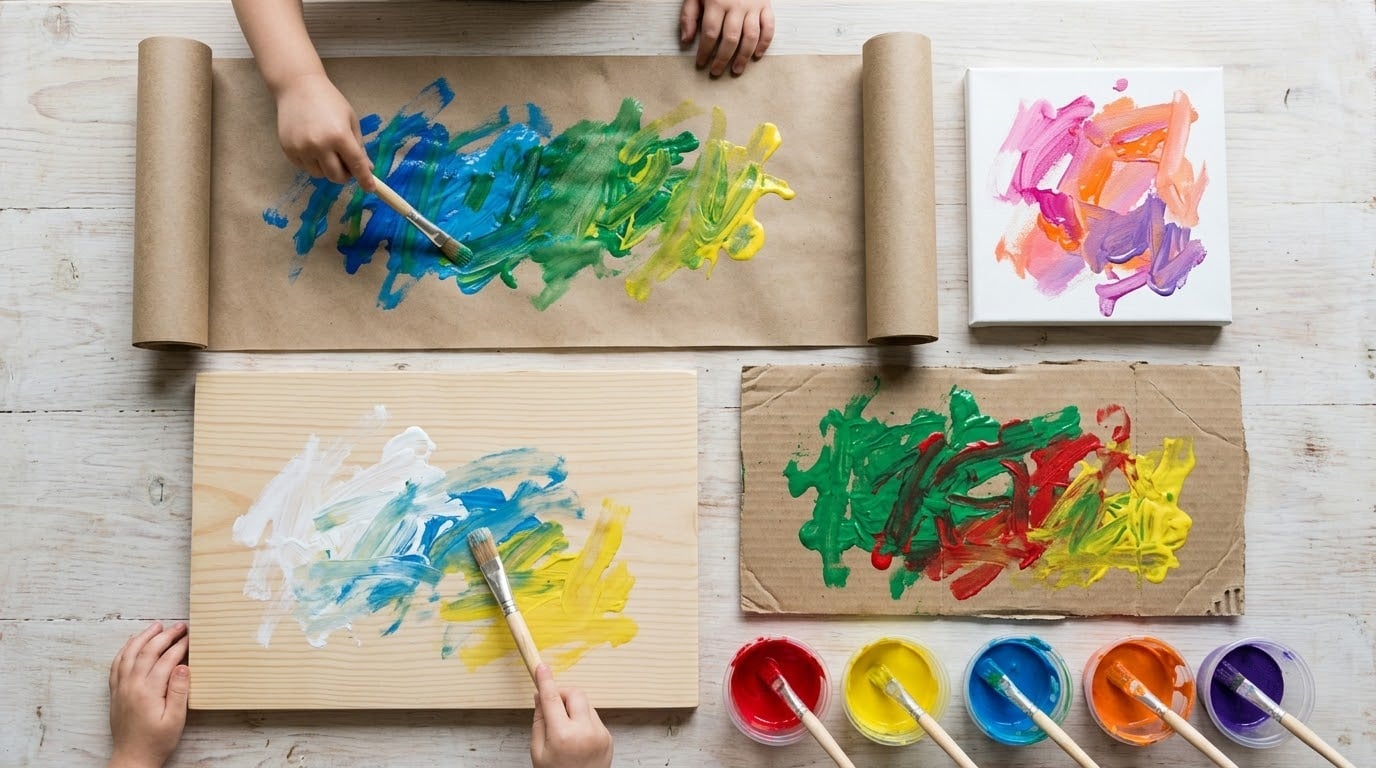
The best surfaces for kids painting at home are large paper rolls or kraft sheets for the cheapest start, cardboard and box lids for toddlers, canvas boards when you want something to hang, and a washable table cover, splash mat or tile-like mat when the cleanup has to be survivable. The right pick depends mostly on your child’s age and how much mess you can handle on a Tuesday evening.
A sheet of printer paper is a fine surface for a two-year-old in a good mood. It’s also why so many parents say no to painting. The child fills it in four strokes, tears it, and asks for more while you’re already holding a wet rag.
This guide compares 12 painting surfaces by mess level, reusability, drying time and age fit, then maps them to real situations like preschool tables, homeschool display walls and low-mess evenings. I updated it for 2026.
Table of Contents
- Best Surfaces for Kids Painting at Home at a Glance
- Paper and Large Sheet Options
- Printer paper for the first attempts
- Heavyweight drawing paper for real paint
- Roll-out paper when sessions run long
- Is a paper roll worth the setup?
- Canvas and Ready-to-Paint Surfaces
- Stretched canvas
- Canvas panels
- Pre-primed wood boards
- Cardboard and Recycled Box Surfaces
- Wood, Tile, and Other Reusable Hard Surfaces
- How Paint Type Changes the Surface You Need
- How to Protect the Painting Surface and the Room
- Which Surface Should You Choose?
- The best surfaces for kids painting at home, by situation
- Frequently Asked Questions
- What is the best surface for toddlers painting at home?
- Can I use a large sheet of paper instead of a canvas?
- What surface works best for washable tempera and finger paint?
- How do I keep cardboard from curling or falling apart when painted?
- Is it safe for kids to paint on a wooden board, tile, or glass?
- How can I paint with kids without making a huge mess?
- Start Here First
Best Surfaces for Kids Painting at Home at a Glance
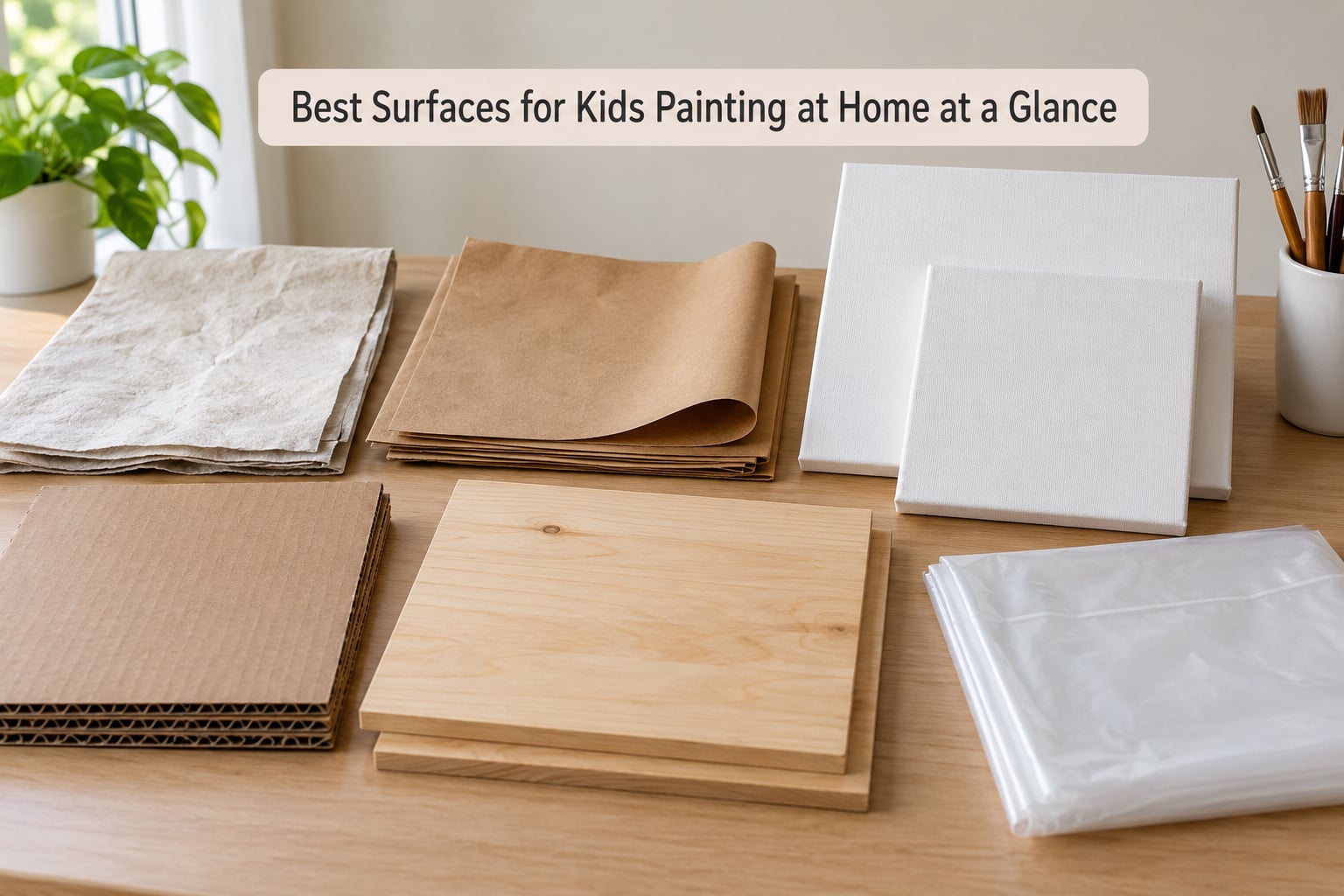
| Surface | Best age | Mess level | Reusable | Main reason to pick it |
|---|---|---|---|---|
| Kraft paper roll | 2-6 | Low | No | Long sessions without changing sheets |
| Heavyweight drawing paper | 3-8 | Low | No | Holds brush and thumb marks without buckling |
| Printer paper | 1-4 | Low | No | Already in the drawer, cheapest first try |
| Cardboard and box lids | 1-4 | Low | Sometimes | Free, huge, takes thick tempera |
| Canvas panel | 4-10 | Medium | One artwork | Artwork worth framing |
| Stretched canvas | 6-10 | Medium | One artwork | Best paint texture and coverage |
| Plywood or pine board | 4-10 | Low | Yes, many times | Endless murals on one surface |
| Table cover or vinyl tablecloth | 1-6 | Very low | Yes | Wipes clean, low cost per session |
| Splash mat or water mat | 1-4 | Very low | Yes | Floor and table painting with nothing to protect |
| Washable dry-erase wall film | 3-10 | Low | Yes | Vertical painting you can wipe off |
| Creamic tile or glass panel | 4-10 | Very low | Yes | Hardest cleanup, heaviest surface |
| Prepainted drywall panel | 3-8 | Low | Refinish later | Makes the real wall optional |
Mess level here means how much paint ends up on the child, the floor and the furniture, not how much paint the child uses. Everything on this list is washable in one sense or another. The difference is whether cleanup takes ten seconds or forty minutes.
Paper and Large Sheet Options
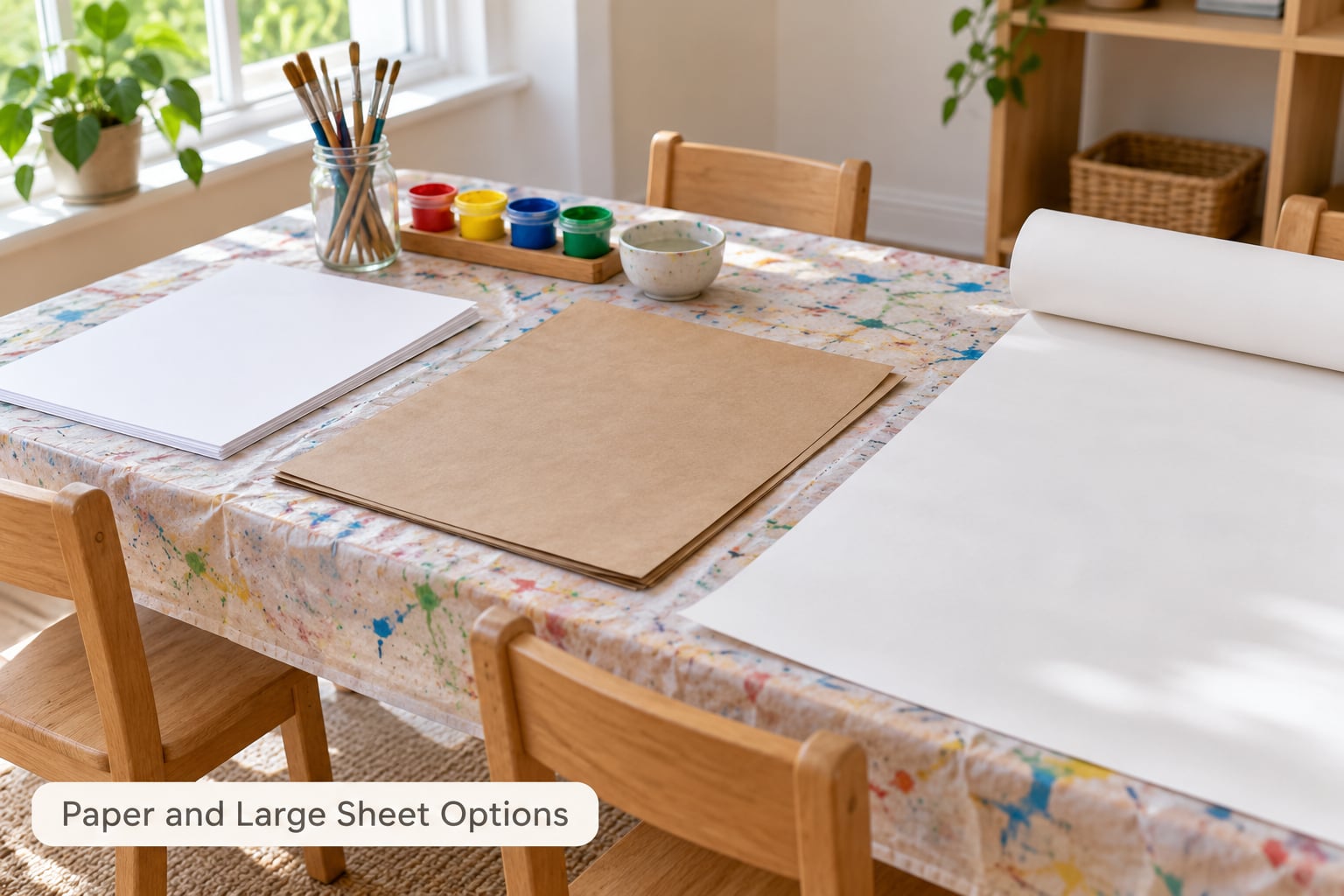
Paper is the cheapest surface and the most forgiving to start with, and it works best when you give the child more of it than you think they need.
Printer paper for the first attempts
Standard copy paper tears and buckles the moment it gets damp. It works well for watercolors and dry brushes, and poorly for anything wet. If you want to keep the cost near zero, cut a stack of sheets and tape them to the table so sliding is less likely.
Heavyweight drawing paper for real paint
Heavier paper holds its shape under tempera and finger paint, and it lets a child drag a brush without the sheet tearing. This is the default pick for preschool tables. Sulfite paper, which is the bright white kind, is bleached and acid-free; construction paper is unbleached, coarser, cheaper and warmer in color. Bright white shows paint colors more accurately, which is why it is the better painting surface.
Roll-out paper when sessions run long
A roll of kraft or freezer paper taped to a table gives you a full yard of continuous surface and costs less per square foot than pads. Cut the roll off after each session and keep the artwork. The trade-off is a setup step, so parents who skip it end up with a wrinkled sheet on the floor.
Is a paper roll worth the setup?
Yes, once a child is old enough to keep going past five minutes. A roll removes the mid-activity interruption of swapping sheets, which is the moment most painting sessions end early. For a child under two, a single board or a wet wipe surface works about the same.
Canvas and Ready-to-Paint Surfaces
Canvas and pre-primed boards are the upgrade for families who want finished pieces that hang on a wall instead of going in the bin.
Stretched canvas
Stretched canvas gives the best paint texture, because the weave gives thick paint somewhere to grip. It also needs priming on the back and edges if you want it to last, and it is the heaviest surface to handle. I would save it for kids who are already finishing pictures on purpose.
Canvas panels
Canvas panels are flat, light and ready to paint immediately. A toddler can hold one in two hands, which is the whole point. They cost less than stretched canvas and take tempera or acrylic without warping, but the artwork is not as sturdy for wall hanging.
Pre-primed wood boards
Pre-primed boards have a sealed, white surface that takes paint cleanly and wipes with a damp cloth. They cost more per sheet than paper and last far longer in a rotation. If a family paints every week, this is the surface that pays for itself.
Cardboard and Recycled Box Surfaces
Cardboard is the cheapest large surface in the house, and it is the one toddlers actually notice. Delivery boxes are often bigger than any art pad.
Flat single-wall cardboard takes finger paint and tempera well and can be washed off after a session. Corrugated cardboard is different: the flutes absorb water, the surface ripples, and heavy paint makes it delaminate. Flatten the panels and tape the seams before a child paints.
To stop curling, weigh the edges down with books or tape the perimeter to the table. Paint on the flattest, least bumpy side you can find. Cereal boxes work too, and the small size suits hands that cannot yet hold a wide sheet steady.
Wood, Tile, and Other Reusable Hard Surfaces
Hard surfaces are the only category where the second session is as easy as the first, and they come with their own trade-offs.
Plywood sheets and pine boards soak up almost nothing, so tempera sits on top and wipes off with a damp cloth. Keep the edges sanded, because splinters are the real hazard, not the paint.
Ceramic tile and glass are the easiest to clean and the hardest to handle. Tile is heavy and drops; tempered glass is heavy and breaks into pieces a small child can reach. Both belong on a table in a room where nobody is running.
Acrylic sheet and melamine panels are the middle ground, light and smooth with a slippery surface that can be a problem for small hands. Washable dry-erase wall film gives the same low-mess benefit vertically, which also gives shoulders a workout while a child works.
How Paint Type Changes the Surface You Need
The paint decides the surface more often than the age does, because absorbency and drying time set how much cleanup you are signing up for.
- Watercolors need almost nothing. Printer paper and any sketchbook work.
- Finger paint is water-heavy and needs a sealed or non-absorbent surface, which is why a splash mat, plastic table cover or tile-like tray beats paper.
- Tempera sits on paper and cardboard well and washes out of most fabrics when it is still wet.
- Acrylic dries permanent in minutes and stains, so it belongs on a board, tile or canvas, not on a wall or a sofa.
- Oil paint is an adult material. It needs ventilation and full hands-on supervision around young children.
Follow the label on the paint you buy. Non-toxic art materials carry the ASTM D-4236 certification and the AP certified art material seal, which is the label to look for in any store.
How to Protect the Painting Surface and the Room
Parents refuse painting over the aftermath, not over the painting itself, so the setup does more work than the surface choice.
- Cover the child first, with a long-sleeved waterproof smock rather than an apron. Paint collects on forearms, not hands.
- Lay a floor runner or sheet before anything else goes out.
- Cover the table with a plastic table cover or an inexpensive vinyl cloth.
- Use no-spill cups and pour paint a small amount at a time.
- Set out a washable, non-toxic paint and keep a damp rag within reach.
- Keep young children supervised the whole time, and follow the paint manufacturer’s instructions.
On the actual wall, parents on Reddit’s Mommit and CleaningTips threads generally lean toward letting the kids paint rather than refusing, but with something underneath. Removable wall film, chalkboard paint and dry-erase coatings are the most common recommendations, with semi-gloss wall paint suggested as more wipeable than flat. If paint does reach drywall, the repeated advice is to dab with rubbing alcohol rather than smear, and to expect patching.
Which Surface Should You Choose?
Match the surface to the situation and the mess budget, not to what looks nicest in a photo.
The best surfaces for kids painting at home, by situation
Babies and toddlers, 12 months to 3 years: a splash mat, plastic table cover or a taped-down box lid. Large, non-absorbent and forgiving when it gets eaten.
Preschool art, 3 to 5 years: heavyweight drawing paper on the table, plus a taped kraft roll underneath for the second round.
Homeschool display projects: canvas panels or pre-primed boards. They photograph well and stack flat between sessions.
Low-mess indoor evenings: washable dry-erase wall film or a tile-like mat. Wipe-down takes seconds and the art is dry by bedtime.
Large group activities: the floor, with a washable mat and a roll of paper. Kids can stand, kneel and move without a chair in the way.
Budget recycled materials: the back of a delivery box and the inside of cereal boxes. Free, and the surface is usually bigger than you expected.
Frequently Asked Questions
What is the best surface for toddlers painting at home?
A sealed, non-absorbent surface such as a plastic table cover, a splash mat or a taped-down cardboard box lid works best, because toddlers use one-handed swipes and a lot of water-based paint. Give them the whole mat rather than a sheet of paper, and a sheet of paper will be finished in under a minute. Follow the paint label and stay within arm’s reach the entire time.
Can I use a large sheet of paper instead of a canvas?
Yes, for almost every home session. A large sheet of kraft or heavyweight drawing paper takes tempera well and costs far less per painting than a canvas panel. You lose the woven texture and the finished artwork will not hang as neatly, but most kids under six are making marks rather than objects. Upgrade to canvas panels only once they are painting something they want to keep.
What surface works best for washable tempera and finger paint?
Anything smooth and non-absorbent: a plastic table cover, a splash mat, ceramic tile, or an acrylic sheet. Paper drinks the paint and buckles, and cardboard absorbs enough water to go soft and warp. Washable tempera is easier to lift from a hard surface while it is still wet than from fabric, which is where most laundry stains come from.
How do I keep cardboard from curling or falling apart when painted?
Flatten corrugated cardboard and tape the seams before painting, then paint the flattest side you can find. Weigh the edges with books or tape the whole perimeter to the table so the corners cannot lift. Keep water-based paint thin, since heavy coats soak through the flutes and the layers separate. Single-wall cardboard handles paint better than corrugated.
Is it safe for kids to paint on a wooden board, tile, or glass?
Painted wood and ceramic tile are fine once rough edges are sanded smooth, and glass is fine only as a secured panel on a table rather than a loose sheet. Use non-toxic paint labeled with the ASTM D-4236 certification and the AP seal, keep the session supervised, and treat falls as the real hazard: tile and glass shatter into pieces a small child can reach.
How can I paint with kids without making a huge mess?
Set up before they start: a smock with long sleeves, a floor runner, a plastic table cover, no-spill cups and paint poured in small amounts. Choose a surface you can wipe rather than one you can throw away, and keep a damp rag within reach so marks get lifted while they are wet. Most of the paint ends up on forearms, so cover those rather than relying on an apron.
Start Here First
If you have a child under three, the best surfaces for kids painting at home are a plastic table cover and a box lid. That pairing costs nothing, wipes clean in a minute, and survives being licked, which is a real part of the first year of painting.
Once sessions stretch past a few minutes, move to a kraft roll taped to the table, then upgrade to pre-primed boards if the artwork is worth keeping. The surface is the easy decision. The setup is what decides whether you say yes next time.