A learning to read routine is a short, predictable block you repeat at about the same time each day: a read-aloud, a letter-sound warm-up, and a few pages of a book your child can mostly read alone. How to make a learning to read routine that actually lasts comes down to three things — pick a time that fits your day, keep the block small, and never let a missed day turn into a missed week.
Most parents I’ve talked to over the years are not looking for a curriculum. They want fifteen minutes that work on a Tuesday when nobody is in a good mood. That is exactly what this plan gives you, plus how to adjust it as your child moves from picture books to independent reading.
Table of Contents
- What You Need
- Step-by-Step
- How to Choose Books That Match the Child’s Reading Level
- How to Set Up a Consistent Reading Time
- How to Practice Letter Sounds and Decoding
- How to Make Reading Interactive Without Overdoing It
- How to Track Progress Without Turning Reading Into a Test
- Common Mistakes
- Frequently Asked Questions
- How old should my child be to start a learning to read routine?
- How many minutes a day should my child read?
- What is the best time of day for reading practice?
- How do I teach phonics at home without buying a curriculum?
- What books should I use to teach my child to read?
- My child memorizes familiar books but cannot decode. Is that a problem?
- Conclusion
What You Need
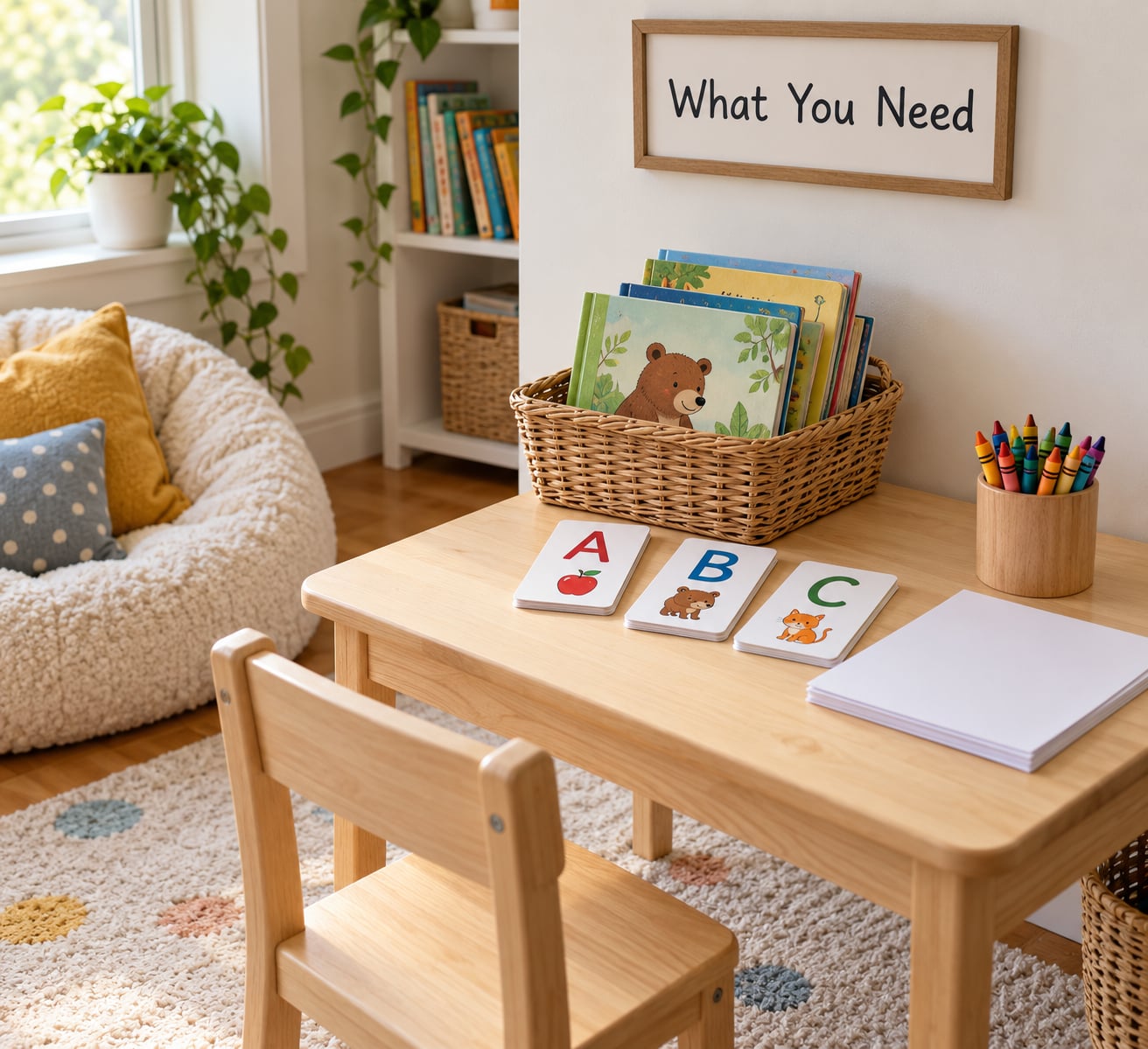
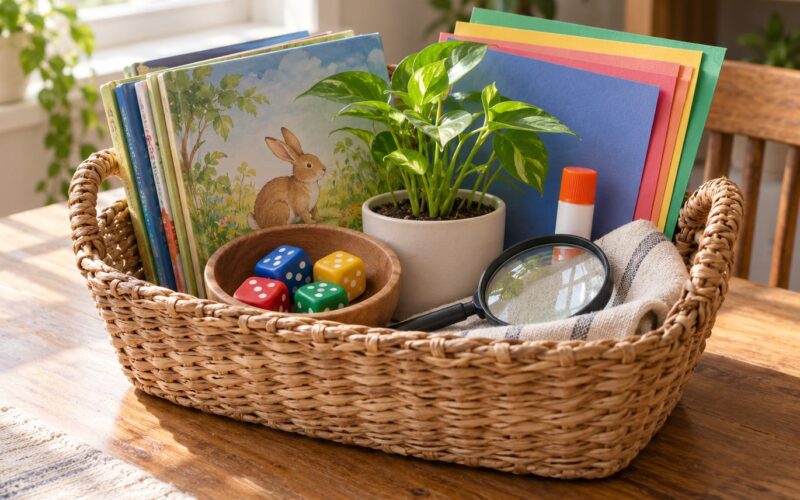
You need very little. A full curriculum is nice when it works for your family, but the routine below runs on a library card, a notebook, and about fifteen minutes.
- Books your child can choose from. Keep six to ten on hand, including two or three that are easy enough to read independently. Library books count, and swaps are free.
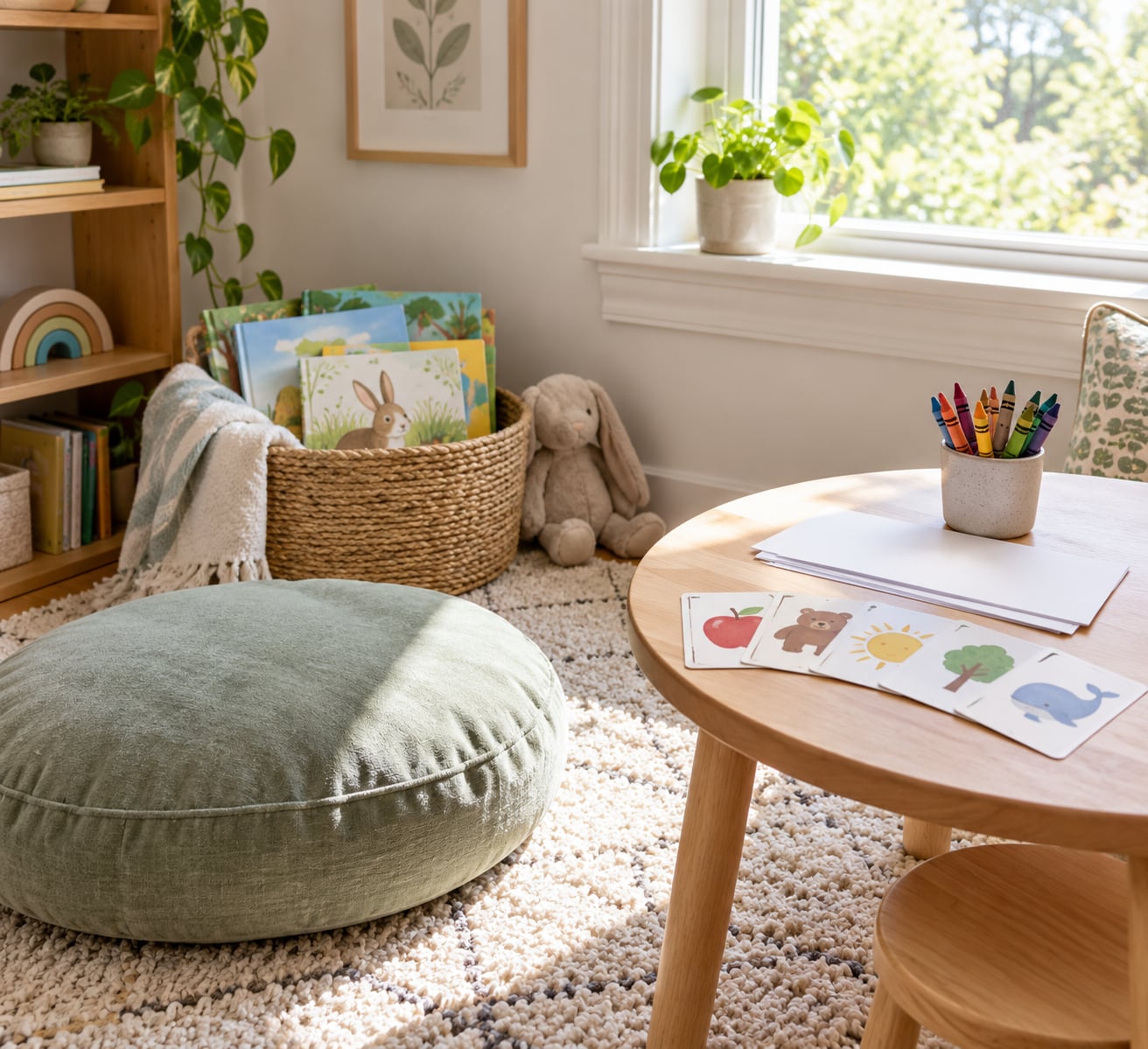
- Letter-sound materials. Index cards, a sandwich bag of craft sticks, or a printout. The point is that you can show a sound in five seconds, not that you own a particular program.
- A dry-erase board or scrap paper and a pencil or crayon. Some children blend sounds by writing, others by moving objects. Both work.
- A one-page tracker. A calendar with boxes you tick is plenty. Tracking belongs to you, not to the child.
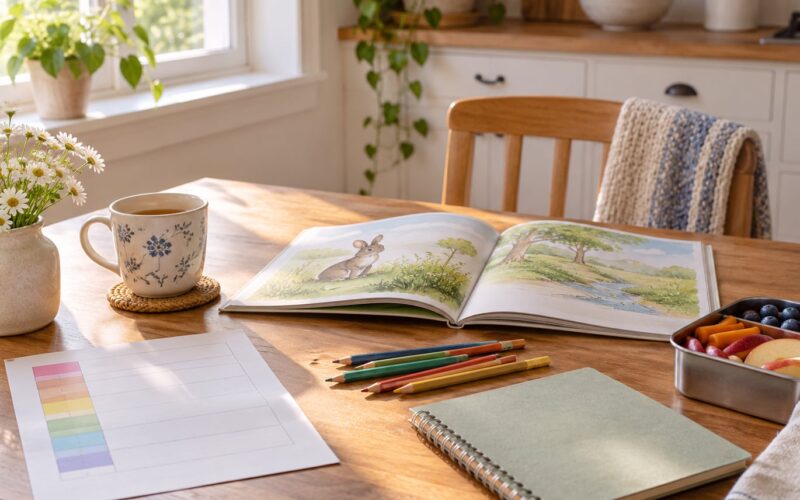
- A quiet spot with a cushion and good light. It does not need to be a corner of the house. A chair by the kitchen table works fine.
One thing worth adding early is an audiobook app from your library. Most public libraries lend titles through an app, and a story playing in the car counts as time spent inside a book, not time away from one.
Step-by-Step
Here is the whole routine in order. Do the same four parts, in the same order, and the order itself becomes the cue your child needs — after the third week most kids walk to the reading spot without being asked.
How to Choose Books That Match the Child’s Reading Level
Books that are a little too hard are the fastest way to kill a new routine. Most children can read a book that is easy when you read it together and a stretch when they are on their own.
Try the five-finger test. Open to any page, start reading aloud, and hold up a finger for each mistake. Fewer than five mistakes on a page and the book is comfortably readable right now. More than five and the words stop being work and start being a guessing game.
Two kinds of books earn a permanent spot in the basket. Decodable readers follow the letter-sound patterns your child has already learned, so almost every word can be worked out rather than guessed. Read-aloud books do not need to be decodable at all — their job is to build vocabulary, comprehension and the plain desire to keep reading.
As your child moves up, the mix changes. Shared reading comes first, with you reading most of the words. Then you split the difference, reading alternate pages in a familiar story. Last comes independent reading, where your child reads a short decodable book to you or to a stuffed animal while you listen nearby.
How to Set Up a Consistent Reading Time
The best time of day is the one your family can repeat. Reading after breakfast works for some homes, and for families with later bedtimes the same half hour moves to after dinner. What matters is that it happens at roughly the same hour most days, not that it happens at a perfect hour.
Attach it to something that already exists. Brushing teeth, pajamas, snack time, or the walk home from the car park all repeat daily, which is exactly what a new habit needs.
| Minutes | What you do | What it builds |
|---|---|---|
| 0–5 | Read-aloud of any book your child loves | Vocabulary, comprehension, the habit of listening closely |
| 5–9 | Letter-sound warm-up with cards or a board | Letter-sound correspondence and blending |
| 9–14 | Child reads a short decodable book | Decoding, accuracy, confidence |
| 14–18 | One or two talk questions about the story | Comprehension and retelling |
| 18–20 | Child chooses tomorrow’s first book | Ownership of the routine |
That is the shape of a session. A two-year-old may only manage the first and last row, and a first-grade struggling reader may spend four days on the warm-up and nothing else. Trimming is fine. Skipping the same block for a week is not.
How to Practice Letter Sounds and Decoding
Decoding practice goes wrong when it turns into a test. Say the sounds, let your child respond, and praise the effort rather than the accuracy. Nobody learns a new skill while being told they are wrong.
Work in four short steps. First, letter names and sounds together, one card at a time — the sound matters more than the name, so push toward the sound. Second, blending: say three sounds slowly and let your child slide them together into a word. Third, read a few words from your decodable book out loud while your child tracks each word with a finger. Fourth, let your child take the turn and read alongside you.
You can run the whole thing with objects. Say three sounds for cup and let your child hand you three objects, then a pretend cup. Say the sounds for sun and have them find something yellow and round in the room.
Success looks like short stretches of accurate reading, not a finished page. If your child guesses wildly, stop and reread the same short phrase together until it clicks, then move on. If that same phrase still defeats them three days later, the material is too hard — go back a step to the sound they are missing rather than pushing harder.
How to Make Reading Interactive Without Overdoing It
The moment reading becomes a quiz, children start avoiding it. Keep questions light and keep the book in charge of the conversation.
A few things work well. Point to pictures and ask your child to name them, which keeps them tracking the page. Pause before a reveal and let them guess what happens next. Have them retell the story to a toy or a grandparent the next day, which exposes what actually stuck. Search a page together for rhyming words, or for words that start with the sound you practised that morning.
Acting out a story works even better than it sounds. A page about a bear losing his hat becomes a two-minute performance with a sock for a hat, and your child practices the words without realizing it.
One or two questions at the end is plenty: what was the funniest part, and what would you have done instead? If every question gets a shrug, drop the questions and go back to reading aloud without stopping.
How to Track Progress Without Turning Reading Into a Test
Track observable behaviour, not grades. A weekly glance at what your child does on their own tells you more than any worksheet.
A simple checklist to look for over the following week: your child picks up a book without being asked, they recognise several letters by sound on their own, they blend a familiar short word, they read a page they have read before with fewer mistakes, or they tell someone else about a story from the basket.
Tick what you see and ignore the rest. Seeing four of five in a good week is real progress. Seeing none of them usually means the routine slipped, not that the child has fallen behind.
Progress is lumpy. A week of solid reading can be followed by a flat one, and that is normal for most children. Keep the same routine for another two weeks before changing anything. If months of consistent practice leave your child unable to blend a single short word, mention it to their teacher or pediatrician and ask about a reading evaluation — that is a conversation about support, not about failure.
Common Mistakes
Making the block too long. Thirty-five good minutes beat an hour that ends in tears. Cut to five minutes for a few days and rebuild from there.
Only worksheets. Printed drills with no story in them train reading as a chore. Keep at least two thirds of the block on books, and let the sound practice happen out loud rather than on paper.
Books that are too difficult. If your child is guessing and picture-walking on most pages, swap the book, not the child. The five-finger test tells you when.
Correcting every mistake. Interruptions teach a child that reading is a performance for you. Read through a small stumble, then go back and reread that phrase with them.
Skipping whenever the day gets packed. Screen time wins by default because it needs nothing from you. Keep a five-minute minimum you can do standing up in the car line, and never miss twice in a row.
Expecting the same pace from every child. Two siblings in the same house will be years apart. Run the same routine, at the same time, and judge each child against where they were last month.
Two habits make the rest sustainable. Put the basket of books where the routine happens so nobody has to go looking, and let your child read in front of you sometimes with no attention at all. Modelling matters more than instructions, and nobody learns to enjoy reading by being told to.
Frequently Asked Questions
How old should my child be to start a learning to read routine?
Start the habit at two or three with read-aloud time, and add letter-sound practice when your child is ready to sit through three or four minutes of it. Most children show readiness around age four, when they can name several letters, hold a book the right way up, and pretend to read a familiar story. A routine that starts earlier with shared reading is never wasted time.
How many minutes a day should my child read?
Fifteen to twenty minutes of focused practice is a solid daily target for a preschooler or kindergartener learning to decode, plus a separate read-aloud whenever you have the energy for one. For a child already reading independently, let reading time be longer and more relaxed. Consistency across weeks matters far more than hitting a number on a single day.
What is the best time of day for reading practice?
Whichever time your family can repeat most days without rushing. Breakfast, the after-school wind-down, and just before bed are the three that work best for most homes. Bedtime is popular because it is already calm, but a busy bedtime gets skipped first, so an earlier anchor often survives longer. Pick a slot, protect it for two weeks, and change it only if it is clearly failing.
How do I teach phonics at home without buying a curriculum?
You can cover the basics with index cards and a decodable book. Write a letter on one side and its sound on the other, say the sound, and have your child blend simple words you already see in the book. Look for a free library program or a printable letter-sound set, and add one new sound at a time. A structured program helps, but a short consistent session with materials you already own does most of the work.
What books should I use to teach my child to read?
Use two kinds side by side. A decodable reader, where nearly every word matches a letter-sound pattern your child already knows, teaches the mechanics of decoding. A read-aloud book, which can be any story you both enjoy, builds vocabulary, comprehension and the love of reading. Keep four or five of each in the basket and rotate them without waiting for a book to be finished before starting a new one.
My child memorizes familiar books but cannot decode. Is that a problem?
It is very common, because a memorized book can be read from memory while decoding is still developing. Test it by jumping to an unfamiliar page or reading the book backwards, and see whether the words still come out. Keep reading those familiar books because they build confidence, but spend most of the skill practice on short decodable text your child has not read before, and tell the teacher what you are seeing.
Conclusion
Start tonight. Pick a time you can actually repeat, put five or six books in a basket, and do one short shared-reading session followed by a single letter-sound activity. That is the whole first step.
A routine that runs for five minutes most days will outgrow a perfect one-hour plan that collapses by Wednesday. Consistency is the part that teaches a child to read.