Learning how to make homemade laundry soap takes about 20 minutes of active work and gives you a gallon of detergent that lasts a month or more in the laundry room. You need three things: a bar of plain soap, washing soda, and water, plus a jar or bottle to keep it in.
There is no need for the store-bought filler that makes a bottle smell loud and cost more than the cleaning is worth. Washing soda and a little soap do the real work. I have been mixing this in my kitchen for years, mostly to keep dye and synthetic fragrance out of the wash, and the version below is the one that stopped separating on the counter.
Updated for 2026. This guide covers the liquid recipe, how to pick a soap, what to do in a high-efficiency washer, and how to fix a batch that goes wrong.
Table of Contents
- What You Need
- Which soap to use
- What not to combine
- Step-by-Step: How to Make Homemade Laundry Soap
- Step 1: Measure the Washing Soda
- Step 2: Add the Liquid Soap
- Step 3: Add Optional Fragrance or Essential Oils
- Step 4: Let the Soap Rest
- Step 5: Store and Use the Laundry Soap
- Common Mistakes
- Frequently Asked Questions
- Can I use Dr. Bronner’s castile soap instead of a bar?
- Do I need washing soda, or is baking soda fine?
- Is homemade laundry soap safe for high-efficiency washers?
- Is it gentle enough for sensitive skin and baby clothes?
- Why did my soap turn into a solid brick?
- How long does a batch last, and how much should I use?
- A Simple Starting Batch
What You Need
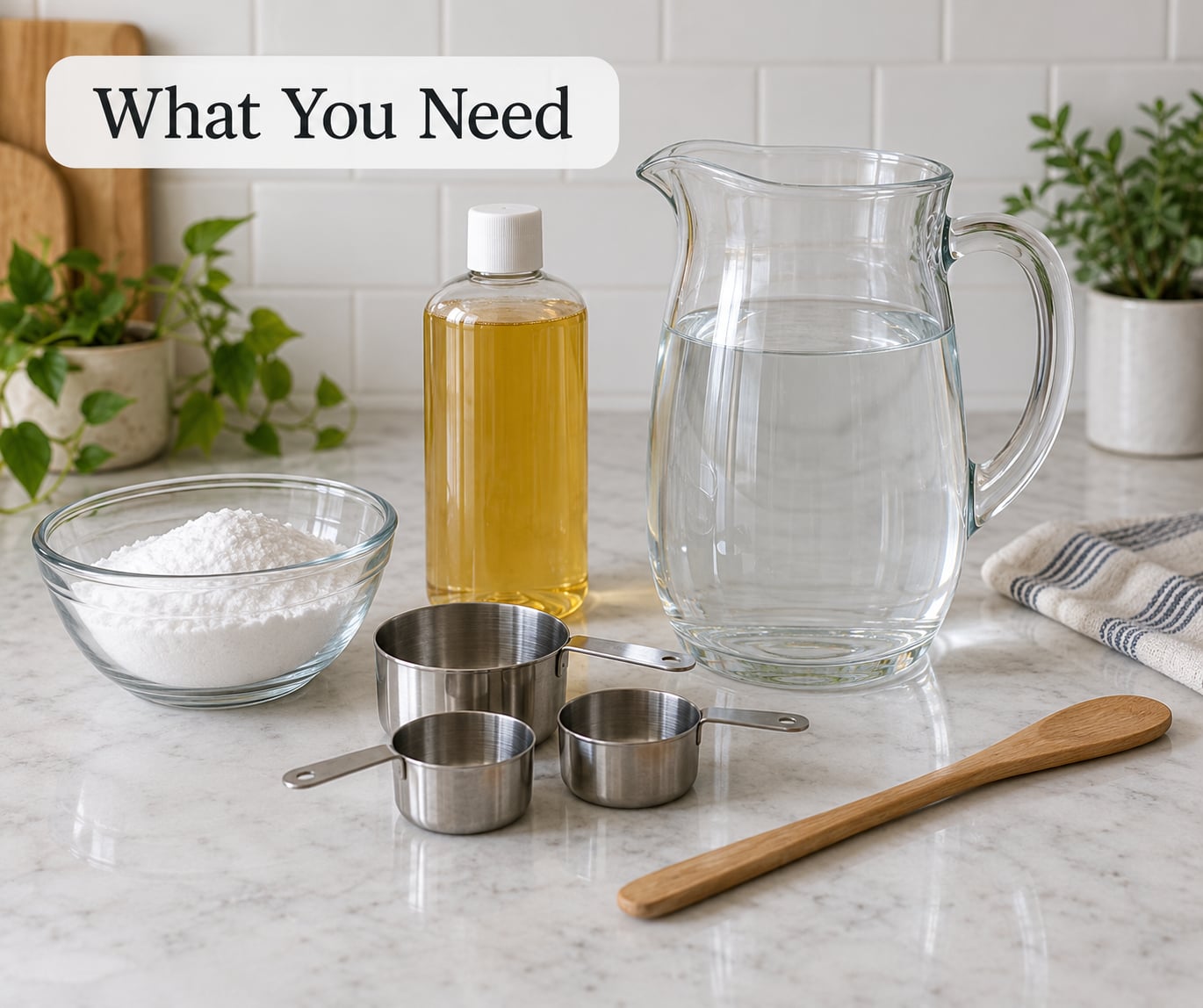
Here is the short version of the formula. One cup of washing soda, one cup of liquid castile soap, about four cups of hot water to melt and dilute, and enough cool water to bring the total to roughly one gallon.
Each ingredient has one job, and none of them overlap:
- Washing soda (sodium carbonate) raises the pH of the wash water so dirt releases from fabric and hard-water deposits soften. One cup per gallon.
- Liquid castile soap is the surfactant. It is the part that actually lifts grease off cloth. One cup per gallon.
- Hot water dissolves both of the above. About four cups, and it only needs to be hot, not boiling.
- Cool water brings the batch up to one gallon. Around one and a half quarts.
- Essential oil (optional) for scent. Ten to fifteen drops, no more.
Which soap to use
Castile is the gentle choice and the one I reach for with baby clothes or a sensitive-skin kid. Fels-Naptha is the old-fashioned workhorse: a harder, less expensive bar that cuts grease well, and it is what most families start with. Zote sits in between and is sold in large bars, which makes it the cheapest per load when you are buying for a big household.
Skip the bargain bin. Fels-Naptha, Zote, and genuine castile from a soapmaker or a natural-products brand are the three reliable options.
What not to combine
Never mix castile-based homemade laundry soap with vinegar in the same wash. Castile is a true soap and vinegar is an acid, and together they can turn the liquid into a curdled mess that settles in the drum. If you want softer towels, use the white vinegar in the rinse cycle on its own, with no soap in the same load, or skip it.
Keep essential oils out of the drum on skin-sensitive loads until you know your own tolerance. A drop of lavender is fine for most adults and a problem for an infant.
Step-by-Step: How to Make Homemade Laundry Soap
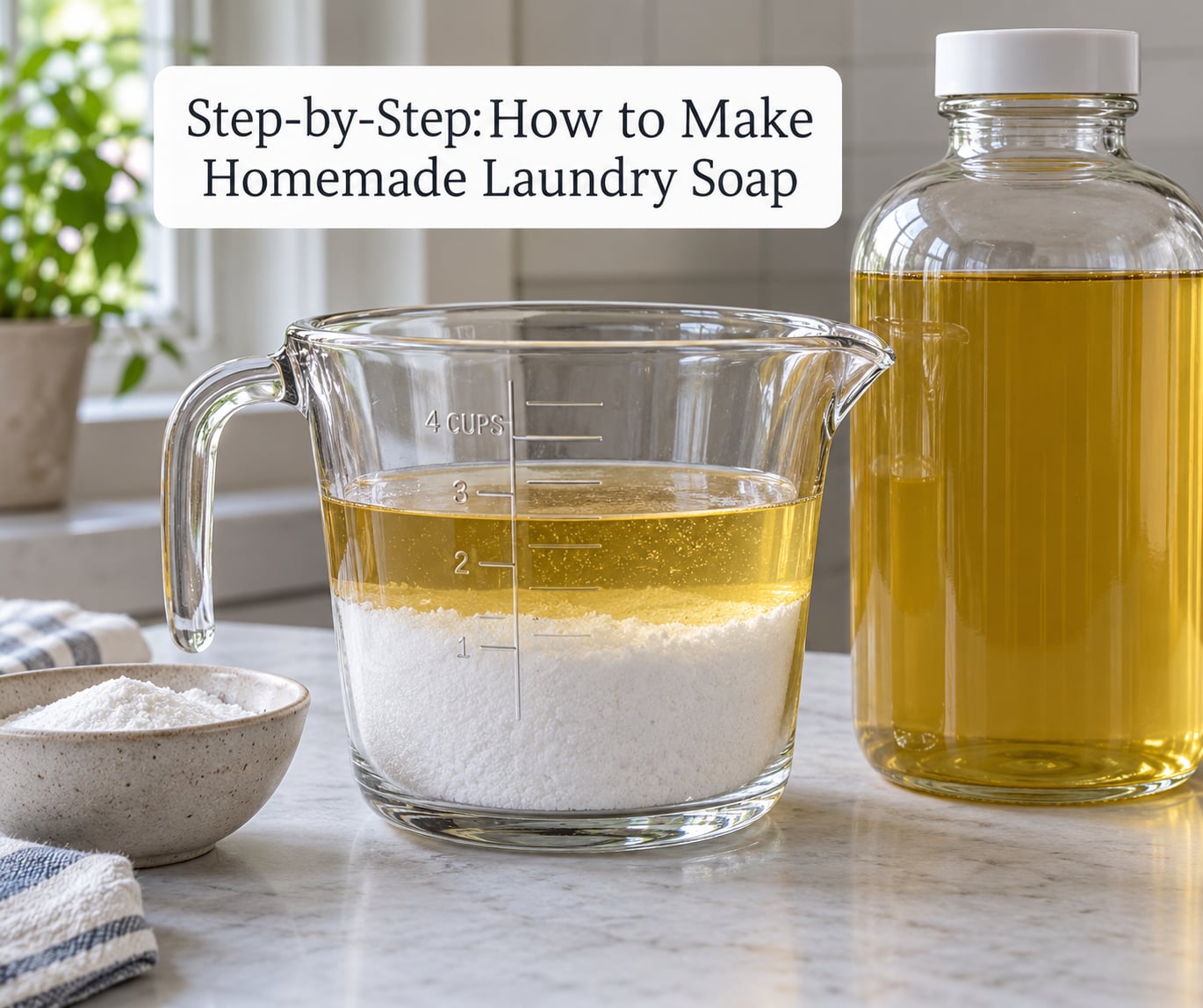
The order matters. Soap and powders first into hot water, stir until everything is truly dissolved, then dilute, then rest.
Step 1: Measure the Washing Soda
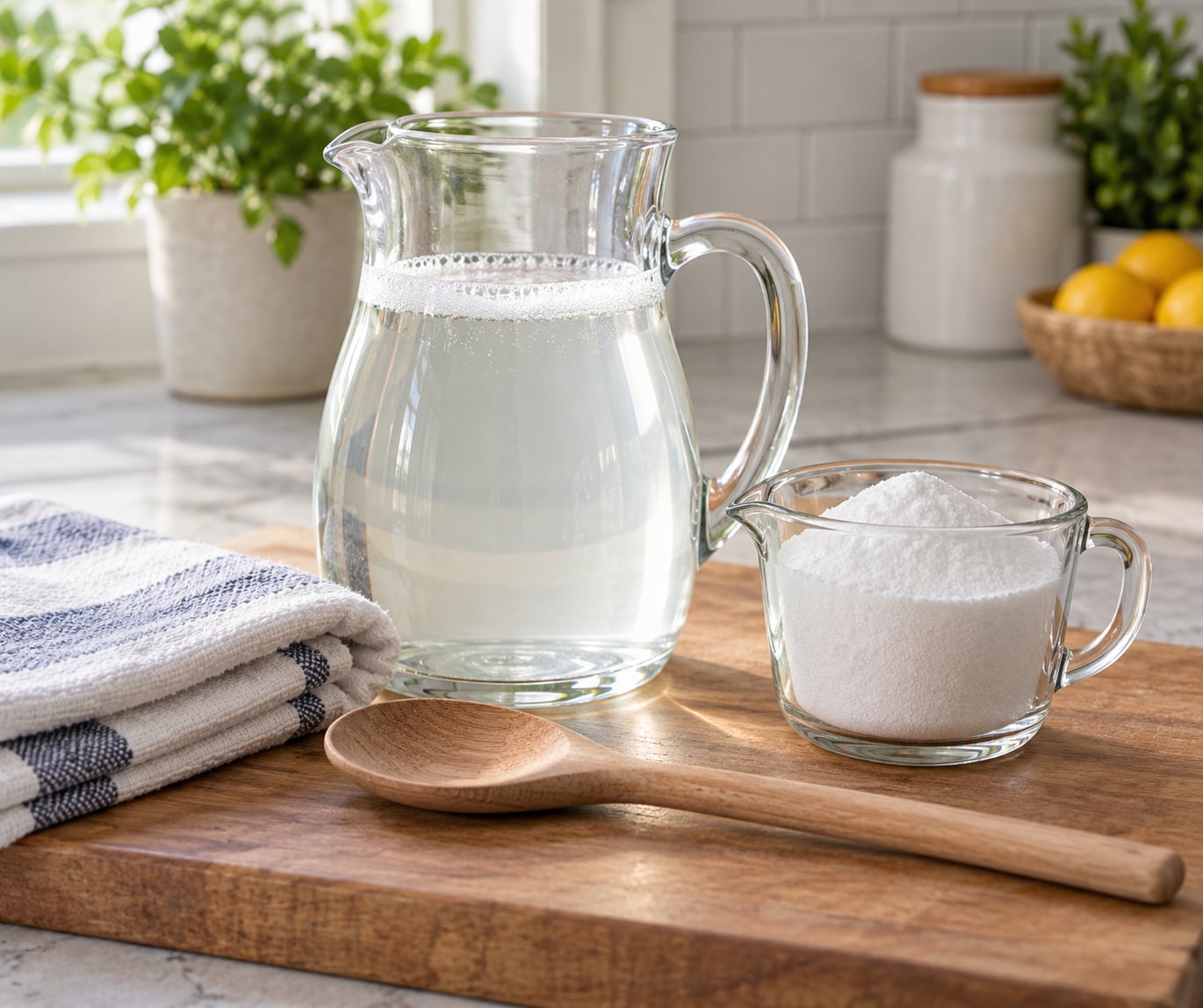
Pour one cup of washing soda into a large pitcher and add about four cups of hot tap water from your kettle. Stir for a full minute.
Do not skim this. Washing soda settles to the bottom of the container, and a concentrated pocket left behind is the single most common reason homemade soap leaves a gritty film. If any powder is still sitting on the bottom, add another half cup of hot water and stir again before moving on.
Step 2: Add the Liquid Soap
Measure one cup of liquid castile soap and pour it into the pitcher while stirring slowly. You want a lazy spiral, not a splatter, and you want the soap going into already-diluted water rather than sitting on the surface of dry powder.
Stir for another two to three minutes. The mixture will look thin and slightly cloudy at this point, and that is exactly right. Thin now means it will not congeal into a brick in your cabinet later.
Step 3: Add Optional Fragrance or Essential Oils
Add ten to fifteen drops of essential oil and stir once more. Any more than that and the scent will not wash out of your clothes, which is the thing most people dislike about store brands.
Patch test first if anyone in the house has eczema or reacts to fragrances, and skip fragrance entirely for baby clothes. Every add-in has to be laundry-safe: no cooking oils, no butters, no homemade cosmetic oils, because they will leave a greasy film on the dryer and a smell in the lint trap.
Step 4: Let the Soap Rest
Cover the pitcher and leave it undisturbed for 12 to 24 hours. During that time the castile thickens into a soft, smooth gel. That is normal and it does not reduce how well it cleans.
When it is ready, the finished liquid should pour slowly, like thin syrup or a soft gel, and look uniform with no water sitting on top. If the batch has separated into layers, set the whole container in a sink of hot water for an hour and swirl it. It usually comes back together. If it does not, pour in an extra cup of hot water and stir, then give it another few hours.
Step 5: Store and Use the Laundry Soap
Pour the finished batch into a labeled jug or a repurposed glass bottle, fill to the top to limit air, and cap it tight. Write the date on masking tape.
For a normal top loader, use about a quarter cup per load. For a heavy or grimy load, half a cup. For a high-efficiency or front loader, start at two tablespoons and never go past a quarter cup, because HE machines use very little water and a heavy dose leaves a film behind. Pour the soap straight into the drum rather than the dispenser drawer, and put it on top of your clothes so it dissolves as the cycle starts.
Judge it by the result, not by habit. If you see a lot of suds, use less. Suds are not a measure of cleaning power, and in a front loader heavy foam is a sign to cut the dose. Expect to adjust once or twice before you find your family’s number, then write it on the label.
Common Mistakes
Almost every problem I have seen with this recipe traces back to one of these.
Grating the bar too coarsely, or not melting it at all. Undissolved soap flakes are the top complaint from people using this in HE washers. If you are grating a bar, melt it first in a wide bowl in the microwave for 60 to 90 seconds, then grate it fine with a cheese grater. The fully liquid castile version above avoids the problem entirely, which is why I use it.
Boiling the water. The recipe wants hot, not boiling. Water at a hard rolling boil can cook castile into a rubbery mass, and the pH of a concentrated boil makes the mixture harder to dilute back into a pourable gel.
Adding all the water before the powders dissolve. Dilute the washing soda and castile in the hot four cups first, then top up with cool water. The reverse order is how you get a gritty batch with settled powder at the bottom.
Overdosing the load. More soap is not more clean. A quarter cup is generous for a normal top loader, and anything above that leaves residue and builds up in the machine over months. People who switch from a heavily scented concentrate often carry over that volume and then blame the recipe.
Too much fragrance or the wrong oil. Essential oils are potent. Ten to fifteen drops per gallon is a scent you notice in the bottle, not a scent that stays on your shirt collar for a week.
Storing it warm or unsealed. Air is what causes a skin on the surface and separation underneath. Fill the container completely, cap it, and keep it somewhere cool and dark rather than next to a hot dryer.
Using it on the wrong load. This is soap, not detergent. There are no enzymes to break down protein and oil stains and no optical brighteners to make faded fabric look new again, so heavy grease, grass, and set-in odors are its weak spots. For a stain, pre-treat the spot with a little undiluted soap and give it time before the wash. For a smelly towel, boil it on its own with a squirt of dish soap.
Using it in an HE dispenser drawer. Pouring a thick gel into a drawer that gets a slow trickle of water is the most reported washer complaint I found. Residue dries in the drawer recess, and over time it can cause the drawer or door to leak. Put it in the drum instead.
Storing a batch longer than it stays good. A water-based liquid like this keeps about three months refrigerated, longer in a cool cabinet. If a batch smells off, looks slimy, or has fuzz in it, toss it. There is nothing worth saving in a jar of soap.
Frequently Asked Questions
Can I use Dr. Bronner’s castile soap instead of a bar?
Yes, and it is the version I use most. One cup of liquid castile per gallon replaces the bar entirely, which removes the grating and melting step and cuts the failure rate for undissolved flakes. Use a plain unscented variety, since the scented ones are heavily fragranced. Some castile is thin enough to double as dish soap, so pour slowly and count the cups rather than eyeballing the bottle.
Do I need washing soda, or is baking soda fine?
Washing soda, if you can get it. The two are different chemicals: washing soda is sodium carbonate, while baking soda is sodium bicarbonate, which is roughly a third as alkaline. Baking soda will not soften hard water and it will not lift the same load of grease, so a batch built on it is much weaker. If you can only find baking soda, spread it on a baking sheet and bake it at 400 degrees for 30 minutes until it has gone to powder, which converts it to washing soda.
Is homemade laundry soap safe for high-efficiency washers?
It is, with two habits. Measure carefully, since HE machines use very little water and a quarter cup per load is usually the ceiling, and pour the soap directly into the drum rather than the dispenser drawer. Dried gel residue in a drawer is the usual cause of the smells and slow leaks people report after months of use. If you see a skin forming on your batch, stir it back in and cap the bottle tighter.
Is it gentle enough for sensitive skin and baby clothes?
Usually, and the difference from store brands is the fragrance and dye load, not the cleaning chemistry. Castile is the gentlest bar to start with. Skip essential oils entirely for infant laundry, and rinse baby clothes and cloth diapers an extra cycle on your own if you see any gummy residue. Cloth diaper users report more problems than baby-clothes users, because the fabric holds more of everything.
Why did my soap turn into a solid brick?
That is gel, and it happens when the soap was too concentrated when it cooled. The usual causes are boiling the water, not diluting to a full gallon, or storing the pitcher in a warm spot. Stand the container in a sink of hot water for an hour and it will soften back into a pourable gel. To avoid it, make sure the batch reaches a full gallon before it cools and keep it stored in a cabinet.
How long does a batch last, and how much should I use?
A gallon batch runs about two months for a family doing five loads a week, so roughly 40 to 60 loads. Use a quarter cup per load in a normal top loader, half a cup for heavy or greasy loads, and two tablespoons in an HE or front loader. Watch the suds rather than the calendar: lots of foam means cut back, no foam on a grimy load means go up one tablespoon.
A Simple Starting Batch
Make one gallon first, not a five-gallon pail. Write the date on the bottle, use a quarter cup on a normal load, and see what your machine does with it.
Then adjust from what you see. Heavy soil or a hard water area means a little more washing soda, an HE washer means less soap and a direct pour into the drum, and a slow child or a newborn means skip the fragrance. Once you have found your number, write it on the label so the next batch is a two-minute job.