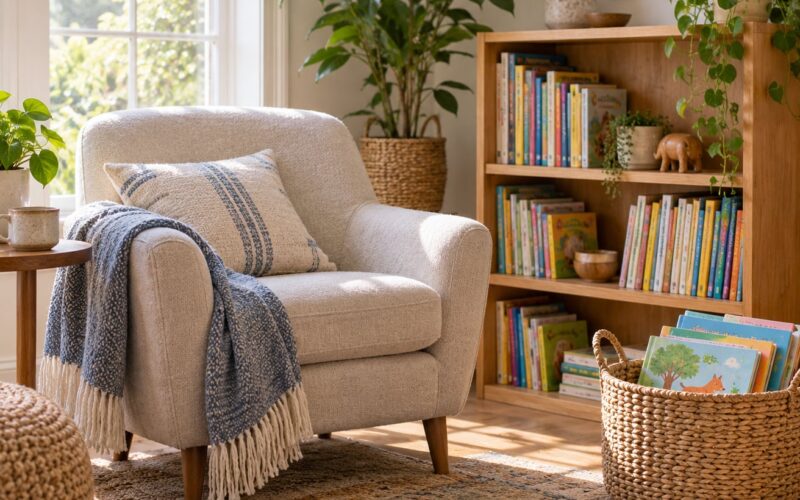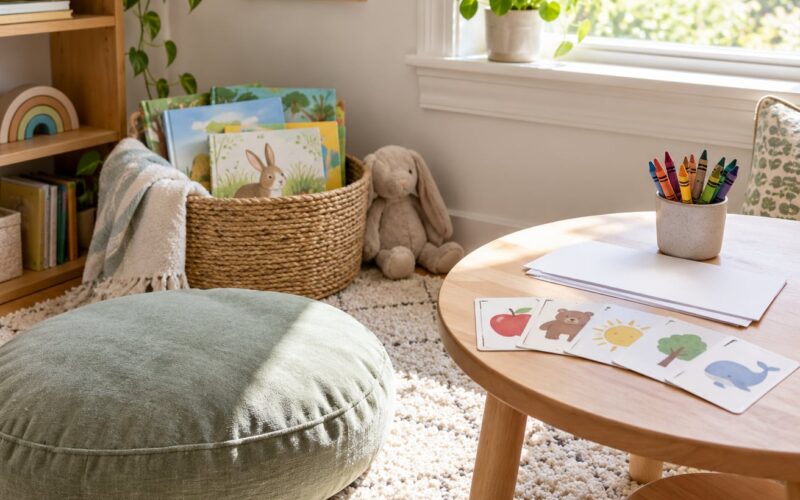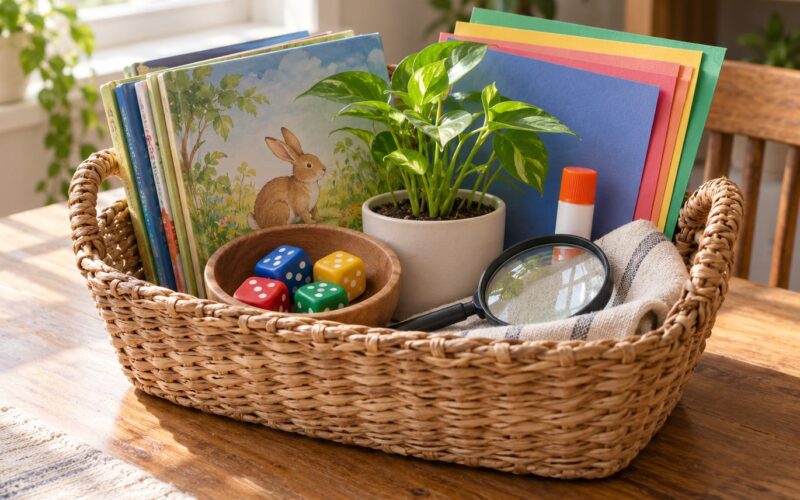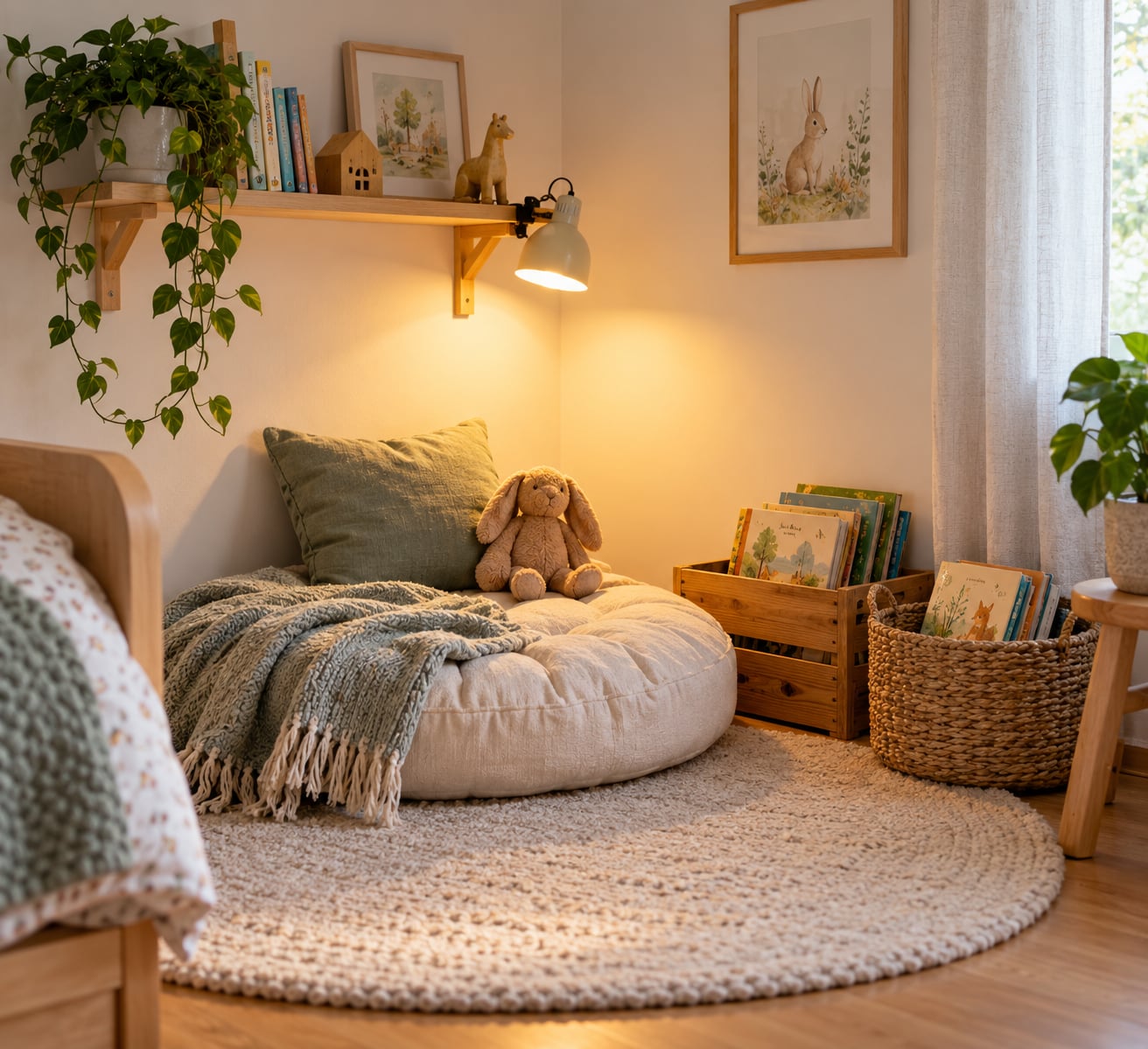
A reading nook is a small, dedicated spot where a child can sit, see books face-out and get quiet with a story. To make a reading nook for kids, all you truly need is somewhere soft to sit, books within arm’s reach, and a warm light you can switch on after dark.
Most nooks take an afternoon and nothing more exotic than a cushion, a crate or two, and a lamp. I’ve built these in a bedroom corner, a closet, and under a loft bed, and the version that actually gets used every day is always the one that took the least fuss to set up.
Table of Contents
- What You Need
- Step-by-Step
- Choose a Safe, Quiet Location
- Define the Nook’s Size and Layout
- Add a Comfortable Seating Area
- Create Easy-to-Reach Book Storage
- Add Lighting and Soft Finishing Touches
- Make It Flexible and Inviting
- Common Mistakes
- Frequently Asked Questions
- How do I make a reading nook in a small bedroom?
- What is the best furniture for a kids’ reading nook?
- How can I make a reading nook without buying new furniture?
- Where should books be stored in a children’s reading nook?
- Is it safe to put a reading nook near a window?
- How do I keep a reading nook tidy and easy for kids to use?
- Start With a Small, Safe Space
What You Need
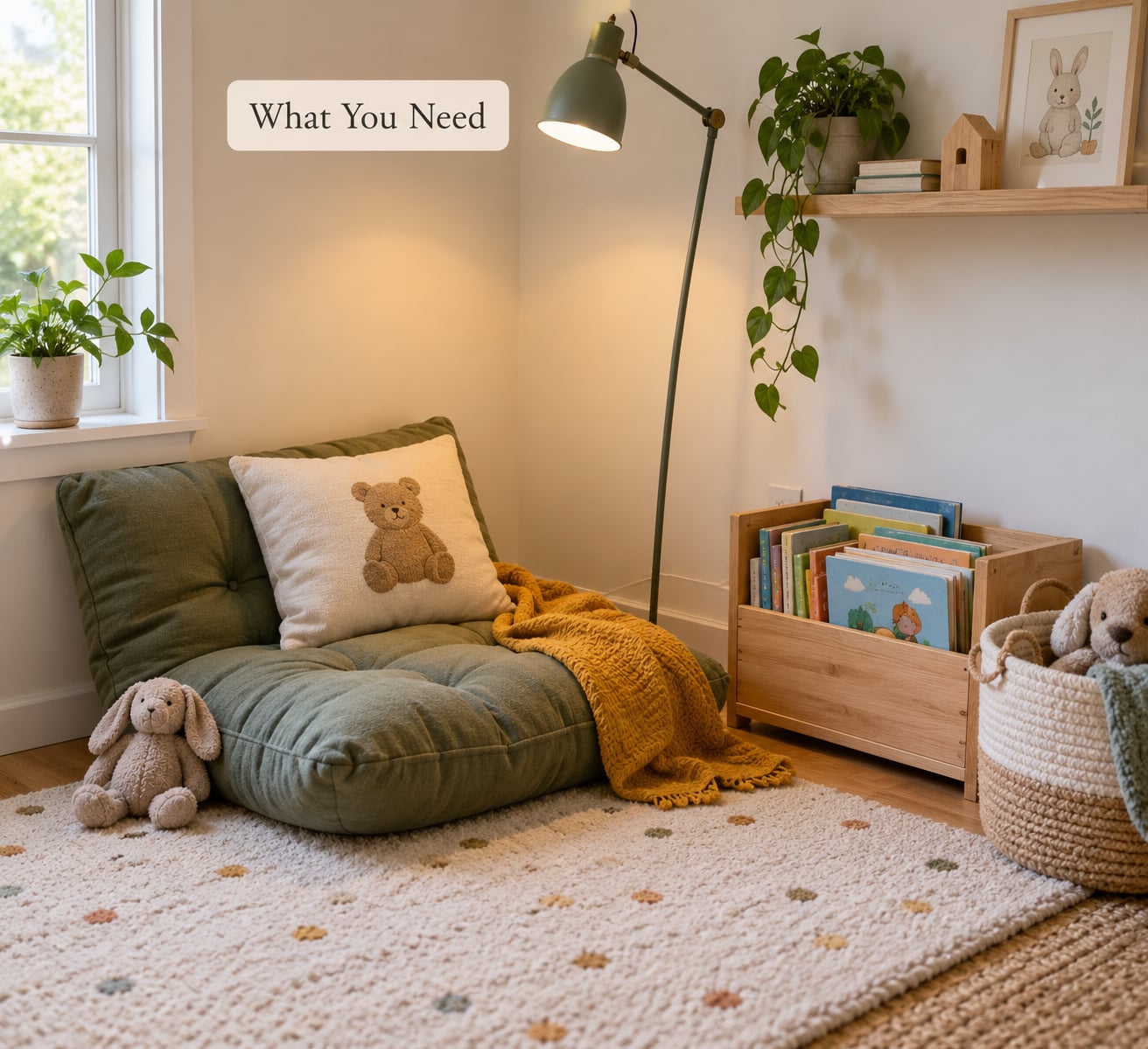
Start by measuring the spot before you buy anything. A tape measure, a pencil, and two minutes of floor planning will save you from buying a bean bag that swallows the whole corner. Mark where the door swings, where people walk past, and where the nearest outlet sits.
Then gather your basics. Most families already own three or four of these items:
- Something soft to sit on: a floor cushion, a small chair, a bench, a bean bag, or pillows from the sofa.
- Low book storage: a wooden crate, a woven basket, a cube shelf, a rain gutter, or a low bookcase.
- One warm light source: a clip-on lamp, a small floor lamp, or a battery-operated light if no outlet is nearby.
- A rug or mat: to define the zone and soften the floor.
- Books, face-out: fewer than you think. Eight to twelve covers your child can actually see is plenty to start.
- Optional cozifying bits: a throw blanket, two or three pillows, a garland, a piece of kid-made wall art.
Cheap substitutes work nearly as well as the tidy version. An upside-down cardboard box with the ends cut down makes a book bin; a thrifted nightstand becomes a book case; a painter’s drop cloth taped to the wall makes a curtain. If you rent and cannot drill, lean entirely on floor solutions, tension rods, and freestanding pieces.
Step-by-Step
Below is the order I work in. Measure first, seating second, books third, then the soft layer last, because that layering only looks right once the furniture is where it belongs.
Choose a Safe, Quiet Location
The best location is the one with a bit of traffic through it but no through-traffic over it. A corner near where your family already gathers beats the prettiest empty wall in the house, because a nook nobody walks past is a nook nobody uses.
For a kids’ nook, run a safety pass before anything else. Keep it clear of windows with climbable furniture beneath them, stairs, cords, space heaters, and anything heavy a toddler could pull on. If you’re putting it under a loft bed or in a closet, check the ceiling and floor surfaces for splinters, exposed nails, and sharp hardware edges before you add anything soft to hide them.
Light matters more than most parents expect. Windowless spots are the hardest to read in, so a closet or under-stairs nook needs a real lamp, not a hope.
Define the Nook’s Size and Layout
Decide the footprint first. A child needs roughly two feet of clear sitting space, plus enough room to walk in without stepping on the cushions. If a rug fits with a hand’s width spare on each side, you’ve got the size right.
Then place the pieces so a child can do three things alone: sit down, pull out a book, and put it back. That means the storage should face the seat, not sit behind it. Keep walkways in the room clear and resist the urge to add a fourth thing just because the space will fit it.
Add a Comfortable Seating Area
Any of these work: a floor cushion, a bean bag, a small chair, a bench, or a pillow pile against the wall. Whichever you pick, keep the seat low enough that a small child can get on and off it without climbing, and add a non-slip pad underneath anything that slides.
Think about adults too. Read-aloud time happens in that chair, and parents keep pointing out the same thing: if only an adult can curl up there, the nook quietly stops getting used. A wider cushion or a small loveseat lets a grown-up sit with a kid rather than perch on the floor beside them.
Test the comfort the honest way. Sit in it for twenty minutes yourself. If your back complains, add a back pillow or a rolled blanket.
Create Easy-to-Reach Book Storage
This is the step most nooks get wrong. If a child cannot reach the books, they cannot put them back, and you will be reshelving the same five titles every evening.
Mount ledges or shelves low enough for your youngest user to handle on their own, and use a forward-facing display so covers are visible from the seat. A rain gutter section screwed to a wall is the classic budget version. Crates stacked like steps are the easiest version. Book baskets on the floor are the version that survives a rental.
A useful rule from Montessori-style setups: one basket per category, so putting a book away means putting it in a named place rather than hunting for a gap on a shelf. Picture labels work early, subject baskets work for older kids.
Add Lighting and Soft Finishing Touches
Give the nook two light sources if you can: whatever daylight the space gets, plus a lamp a child can switch on independently. A clip-on reading lamp on the book ledge is the cheapest upgrade there is, and battery lights solve nooks far from an outlet.
Keep every cord along a wall or under a cord cover, and keep the lamp base out of walking paths. Skip anything fragile on an open shelf: no glass vases, no string lights a toddler can chew, and no hanging canopy over a spot where a baby sleeps unsupervised.
Then add the cozy layer. A rug, a throw, two or three washable pillows, and one piece of art your child made carry most of the effect. Simple wall art taped with painter’s tape makes a clean line if you want an accent wall without repainting the room.
Make It Flexible and Inviting
A nook goes stale fast if nothing changes. Put six to ten books in the nook at a time and swap them every couple of weeks from the rest of the house; teachers running classroom book corners say the rotation is what keeps children coming back and choosing independently.
Let your child pick the cushion colour or make one of the decorations. Handmade details are what turn a corner into a place, and kids notice the difference more than you would think.
One habit does more than any decor trick: read there yourself. Children copy what they see adults doing, and a parent with a cup of tea in the corner is a better sales pitch than any slogan.
Common Mistakes
Most disappointing nooks fail the same way, and each one has a quick fix:
- Too cramped. A full armchair and two shelves eat a small corner. Swap the chair for a floor cushion and cut storage to one crate.
- Shelves too high. Lower them by one shelf height, or add a floor basket the child can manage alone.
- Books out of reach. If they can’t self-return, they won’t. Put storage at the child’s height and shrink the collection to what fits.
- Furniture that can’t be cleaned. Choose washable covers and skip fabric you can’t wipe down in a room where spills happen weekly.
- Blocking a walkway. Rugs without a grip pad and oversized pieces create real trips. Leave a clear path past the nook.
- Unstable or unanchored pieces. Wall shelves go into studs with brackets, tall units get anti-tip straps, and heavy baskets stay on the floor.
- Bad lighting. A dark nook gets abandoned in a fortnight. Add a lamp before you add decor.
- Too many rules. A nook used for homework, drawing and toys stops reading like a nook. Keep it reading-first.
Frequently Asked Questions
How do I make a reading nook in a small bedroom?
Use one corner or the space under a loft bed, and keep the footprint small. A floor cushion plus one book crate covers roughly two feet of space. Skip the armchair, use wall ledges instead of a bookcase, and leave a clear path past the nook so the room still works.
What is the best furniture for a kids’ reading nook?
Low, soft, reachable beats anything fancy. A floor cushion, bean bag or bench paired with a crate or basket at the child’s height is the most reliable setup. Pick seating an adult can share for read-aloud time, and anything with a washable cover.
How can I make a reading nook without buying new furniture?
Repurpose what you own: crates or a cardboard box for books, a thrifted nightstand or low shelf for storage, sofa pillows for seating, and a painter’s drop cloth taped to the wall for a curtain. Freestanding pieces mean you can move the nook between rooms.
Where should books be stored in a children’s reading nook?
Within your child’s reach and facing the seat so covers are visible. One basket per category keeps returns simple, and rotating eight to ten books at a time keeps the display fresh. Anything above shoulder height for your youngest child will come back to you to shelve.
Is it safe to put a reading nook near a window?
It can be, with care. Avoid placing climbable furniture under a window, keep blind cords and pull strings out of reach, and use a cord cover on any lamp. A window nook beats a dark closet only if you can control glare and heat.
How do I keep a reading nook tidy and easy for kids to use?
Limit the book count in the nook and give each category its own basket, so returning a book means one obvious action. A short weekly reset with your child keeps it manageable. If nobody uses it, the fix is usually content, not storage: swap in books on their interests.
Start With a Small, Safe Space
Three actions cover most of it. Pick the spot and clear it, then add soft seating that a child and an adult can both use. After that, set out one small book basket within reach so returning a book takes one motion.
Leave the rest. A rug, a lamp and a handful of rotated books can wait a month, and by then you’ll know which corner of the room your child actually gravitates toward.