Learning how to plan a family field trip on a budget comes down to one thing: decide what the day has to cost before you pick the destination. Set a cap, split it into categories, shortlist a few nearby options, and cost each one honestly including fuel, parking and food. Most families can build a full day out for well under what a weekend trip at the same attraction would run, and the planning takes an evening or two.
I plan these the same way every time. Updated for 2026, this guide gives you a seven-step process, a copyable budget worksheet, free and low-cost destination ideas, a grab-and-go packing list, and a rain plan. It works for a family of three or a family of eight.
Table of Contents
- What You Need
- Step-by-Step: How to Plan a Family Field Trip on a Budget
- 1. Set the budget and define the trip
- 2. Set criteria and compare destinations
- 3. Estimate transportation and parking
- 4. Build a low-cost food plan
- 5. Choose free or low-cost activities for your family field trip on a budget
- 6. Prepare the family and confirm the details
- 7. Review the plan and prepare a backup
- Common Mistakes
- Frequently Asked Questions
- What are good free family field trip ideas?
- How can a family afford a field trip for multiple children?
- Is it cheaper to bring lunch or buy food during a field trip?
- How can families reduce transportation and parking costs?
- What should parents do when a young child gets tired or the weather turns bad?
- Start With the Main Experience
What You Need
You need four things before you look at any destination, and all four take less than an hour.
- A realistic spending limit. Pick a number you have already set aside, not a number you hope to reach. If nothing has been set aside yet, start with what the last two weeks of unplanned spending looked like.
- A short list of family needs. Ages of the kids, any allergies, mobility limits, nap schedules, and how long everyone can be out. A four-hour window changes the destination list completely.
- A simple trip-planning worksheet. A single page with one row per budget category and a cap column. Paper in a kitchen drawer works better than an app you have to open on a phone in the car.
- Access to official information. The venue’s own page for hours and admission, the parks department for parking and trail closures, and the weather forecast the night before. Community lists go stale fast, and parents on forums say over and over that the “free things this weekend” posts they found were already expired.
Add a rough headcount for food and one anchor activity the kids actually want. That anchor is the thing worth paying for; everything else is a candidate for cutting.
Step-by-Step: How to Plan a Family Field Trip on a Budget
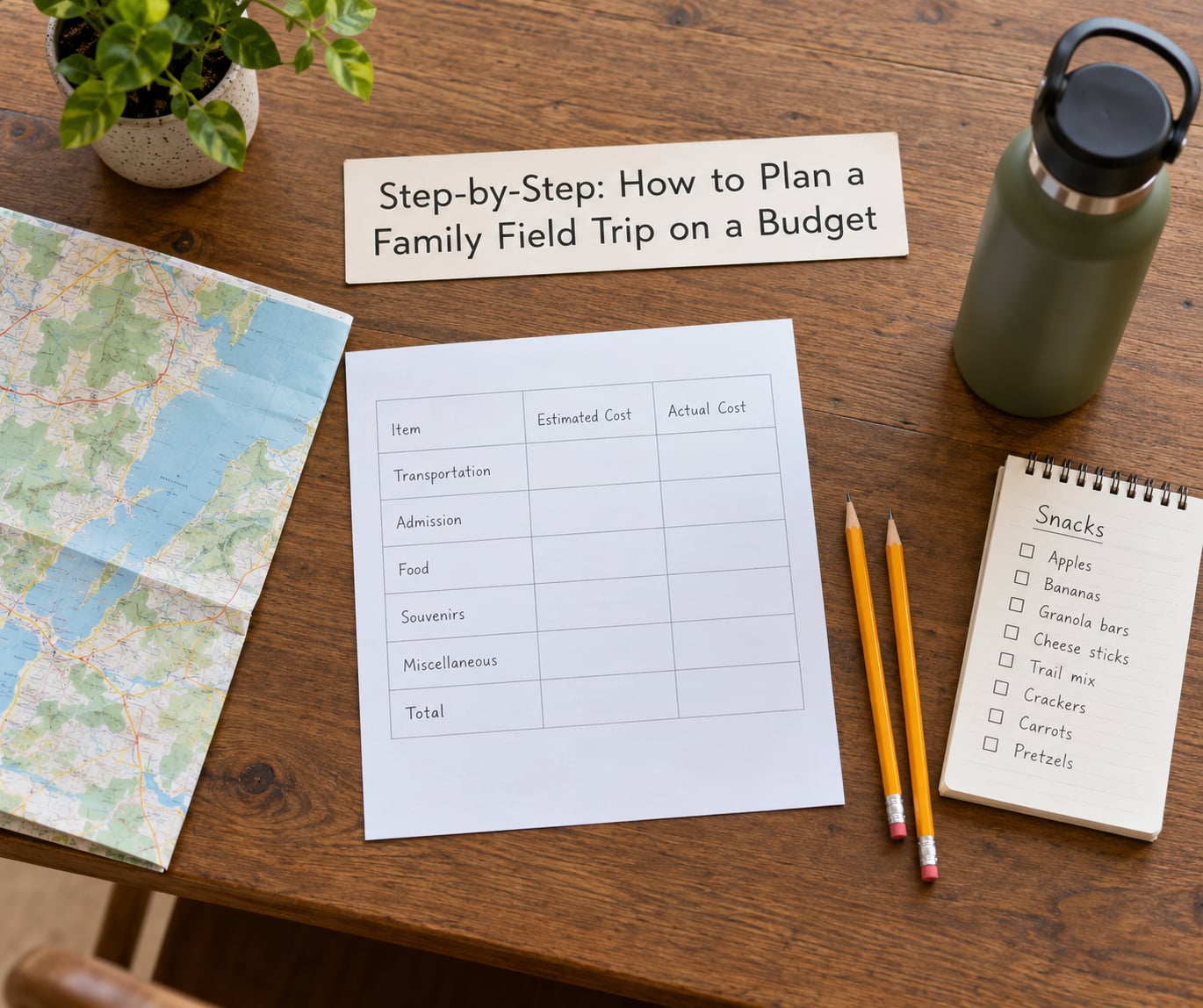
The order matters. Most families overspend because they choose the destination first and cost it afterward, by which point everyone is emotionally committed.
1. Set the budget and define the trip
Write your total cap at the top of the worksheet and divide it into six rows: admission, transportation, parking and fees, food, extras, and a buffer. Most trips land well when admission gets about a quarter of the cap, food about a fifth, and transportation and parking about a quarter, with the rest split between extras and the buffer.
Then define the outing. How long can everyone be out, and what is the one thing the kids want to do? If the answer is a long trail with a swim at the end, your food plan and your parking estimate are already written for you.
2. Set criteria and compare destinations
Build a shortlist of three to five options and score them on the same seven things: drive time, total cost including fuel, whether it suits your kids’ ages, weather exposure, accessibility, food options nearby, and activities beyond the paid part.
Appearance is not a criterion. A place that looks great in photos often has a parking situation, a hilly walk, or a single-bathroom building that quietly eats a whole morning. Check the venue’s own site for hours, admission, parking, accessibility and age rules, and check the parks department for trail and facility closures.
Then price each shortlisted option end to end and see which ones actually clear your cap. Usually two do.
3. Estimate transportation and parking
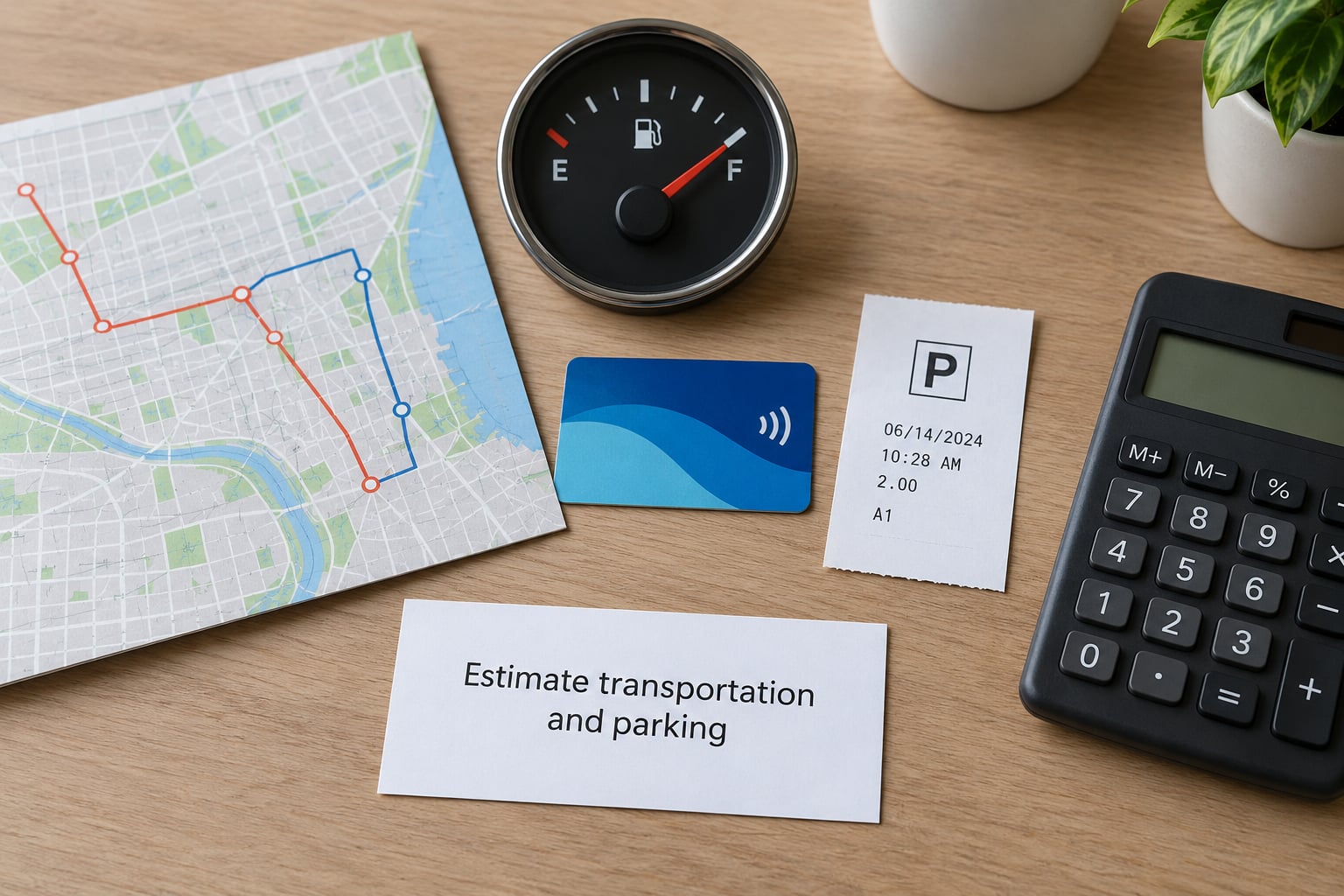
Compare the realistic cost of fuel versus transit, then add parking, tolls and any rideshare you might need at both ends. Do the drive time test yourself on a map at the hour you will actually travel, not the quiet midday number.
Count the transfers, the walk from the car, and the buffer for a delay. If a one-hour drive turns into a three-hour door-to-door trip, factor that into whether the destination is worth it. Free parking at a trailhead beats a nicer destination with a paid lot every time, and going on a weekday morning often removes both the crowd and the parking problem.
4. Build a low-cost food plan
Decide between a packed meal, a picnic, a grocery stop on the way, or inexpensive food near the destination. Packing wins on cost and on allergy control, which is a safety issue, not a preference. Plan by servings, not by people, because the youngest and oldest eat differently.
Include snacks with a timing rule, water in reusable bottles, and storage that keeps cold food cold. Whatever the kids do not eat still went into the budget, so pack familiar items rather than adventurous ones for a first trip.
5. Choose free or low-cost activities for your family field trip on a budget
Pick one paid anchor if the day needs it, then fill the rest with self-guided activity that costs nothing: a nature walk, a scavenger hunt with a list you write at home, sketching, reading on a blanket, or walking a public display or sculpture garden.
Free things to do with kids are usually closer than people think. Public libraries run free story hours, craft programs and movie nights. Parks departments run free nature programs, splash pads, community garden workdays, and holiday festivals. Botanical gardens and downtown water gardens are often free to walk. Many museums have free admission days or pay-what-you-can evenings, and several states and cities offer reciprocity through local library cards or museum memberships.
If you plan three or more park visits in a year, look at the America the Beautiful annual pass for national parks, waterfalls and similar federal sites. That single fee pays for itself quickly and removes admission as a variable entirely.
6. Prepare the family and confirm the details
Put the day on the calendar with times, not just a destination. Assign real jobs: who packs the bag, who holds the snack list, who is in charge of the group, who carries the spare clothes. Tell the kids where the meeting point is if they get separated and what to do first if they cannot find an adult.
Pack only what the plan requires, then reconfirm hours, reservations, admission rules, weather and transportation the day before. This is also a good week to add one small at-home activity beforehand, so the kids arrive curious about what they will see rather than restless.
7. Review the plan and prepare a backup
Add up every line, compare the total to your cap, and trim the optional spending before you leave rather than during the trip. Set a per-person cash limit for the extras row and hand it out at the start. That one habit removes most impulse spending.
Then name a backup: an indoor or free alternative within fifteen minutes, a shortened version of the plan, and an honest exit time. Families who end a trip early remember it as a good day. Families who spend forty minutes in a hot parking lot do not.
Common Mistakes
Most budget blowups come from one of nine habits, and each has a fix.
- Missing a reservation. Many venues cap attendance or stop walk-in entry. Fix: confirm the booking rule in the confirmation email, not from memory.
- A cap built from the destination instead of the money. Fix: start from the number you actually have and let the destination fit inside it.
- Packing for a week. Fix: one bag per adult, one small bag per child, and only items the plan requires.
- Paying for extras nobody planned. Fix: pre-set a per-person cash limit and choose the extras at home.
- Bad timing. Fix: go early in the day and on a weekday where you can. Crowds cost money indirectly, through parking and patience.
- Too few snacks. Fix: pack more than you think, and schedule a snack stop around the same time every day.
- Weather exposure. Fix: keep an indoor fallback and a spare layer per child in the bag.
- Unclear supervision. Fix: name an adult per small group and agree on a meeting point before you leave the car.
- No backup plan. Fix: write the alternative and the exit time down where everyone can see them.
Two habits do most of the remaining work. Cook or assemble food at home instead of buying it out, and treat free days, library programs and park programming as the default rather than the fallback. For safety, check allergies, sunscreen, water intake, and whether the kids can be identified if they get separated.
Frequently Asked Questions
What are good free family field trip ideas?
The best free outings are the ones with a natural end point, so nobody melts down mid-afternoon: walking a nature trail, a scavenger hunt through a park, a splash pad, a library story hour, a farmers market, a community garden workday, geocaching along a trail, sketching at a public sculpture garden, or a waterfront or water garden downtown. Add a free museum day or a pay-what-you-can evening when you want something indoors.
How can a family afford a field trip for multiple children?
Cost per head is the whole trick, because admission scales with children and adults alike. Pick a destination with free or pay-what-you-can admission, cap the number of paid activities at one, share snacks instead of buying individual portions, and give each child a small set amount for the extras row rather than an open budget. Group and annual passes can also flip a per-person cost into a single fixed one.
Is it cheaper to bring lunch or buy food during a field trip?
Packing almost always costs less, and it also handles allergies properly. A packed meal for a family usually costs a fraction of four to six restaurant or cafe meals on site, and you control portions and timing. If you plan to buy food, choose the destination because of a cheap food option nearby, eat before you leave, and pack at least one snack regardless.
How can families reduce transportation and parking costs?
Four moves cover most of it. Choose a destination closer to home, because fuel and time both scale with distance. Go on a weekday morning when parking is easier and sometimes free or cheaper. Look for a destination with a free lot, a trailhead, or a stop within walking distance of transit. And bundle the drive with an errand on the route so the trip counts for something else.
What should parents do when a young child gets tired or the weather turns bad?
Decide the exit time before you leave and treat it as normal, not failure. Build in a fifteen-minute early finish to the plan so cutting it short is already part of the schedule. Keep a spare layer, dry socks and a change of clothes in the bag, and pick a backup that is indoors, free and within fifteen minutes of where you are.
Start With the Main Experience
Write the cap, then decide the one main experience everyone wants. Cost two or three nearby destinations end to end, pick the one that fits, and reserve it before adding anything optional. Everything after that is trimming, not deciding.