To plan a nature walk with a toddler, pick a flat route within a few minutes of home, time it right after a nap, pack water and snacks, and give your child one simple thing to look for. A good toddler nature walk lasts 20 to 45 minutes and ends when your child gets tired, not when you reach the end of a loop.
That is the whole method. There is no distance to hit and no trail to conquer. The planning takes about five minutes the night before, and the walk itself needs no equipment beyond a water bottle and a snack.
I have taken enough of these walks with a determined two year old to know the pattern. The ones that end well are the ones where I gave up control early. If you plan the walk around your toddler rather than around the map, almost everything gets easier.
Table of Contents
- What You Need
- Step-by-Step: How to Plan a Nature Walk With a Toddler
- Step 1: Choose a toddler-friendly route
- Step 2: Check the weather and prepare for the day
- Step 3: Set one simple goal for the walk
- Step 4: Pack a grab-and-go nature bag
- Step 5: Keep the pace slow and let the toddler lead
- Step 6: Finish with a simple reflection
- Common Mistakes
- Frequently Asked Questions
- How long should a toddler nature walk be?
- How far can a typical 2 year old walk?
- What should I pack for a nature walk with a toddler?
- How do I keep my toddler interested while walking?
- What can a toddler safely collect on a nature walk?
- What should I do when my toddler refuses to walk?
- Conclusion
What You Need
You need far less than a hiking kit suggests. The gear is there to support your child, not to turn a twenty-minute stroll into an expedition.
- A close, flat route. Paved or well-packed path, under half a mile, ideally with somewhere to sit halfway along.
- Water and snacks. A filled water bottle for your child and a couple of easy-to-hold foods. Hungry toddlers stop moving.
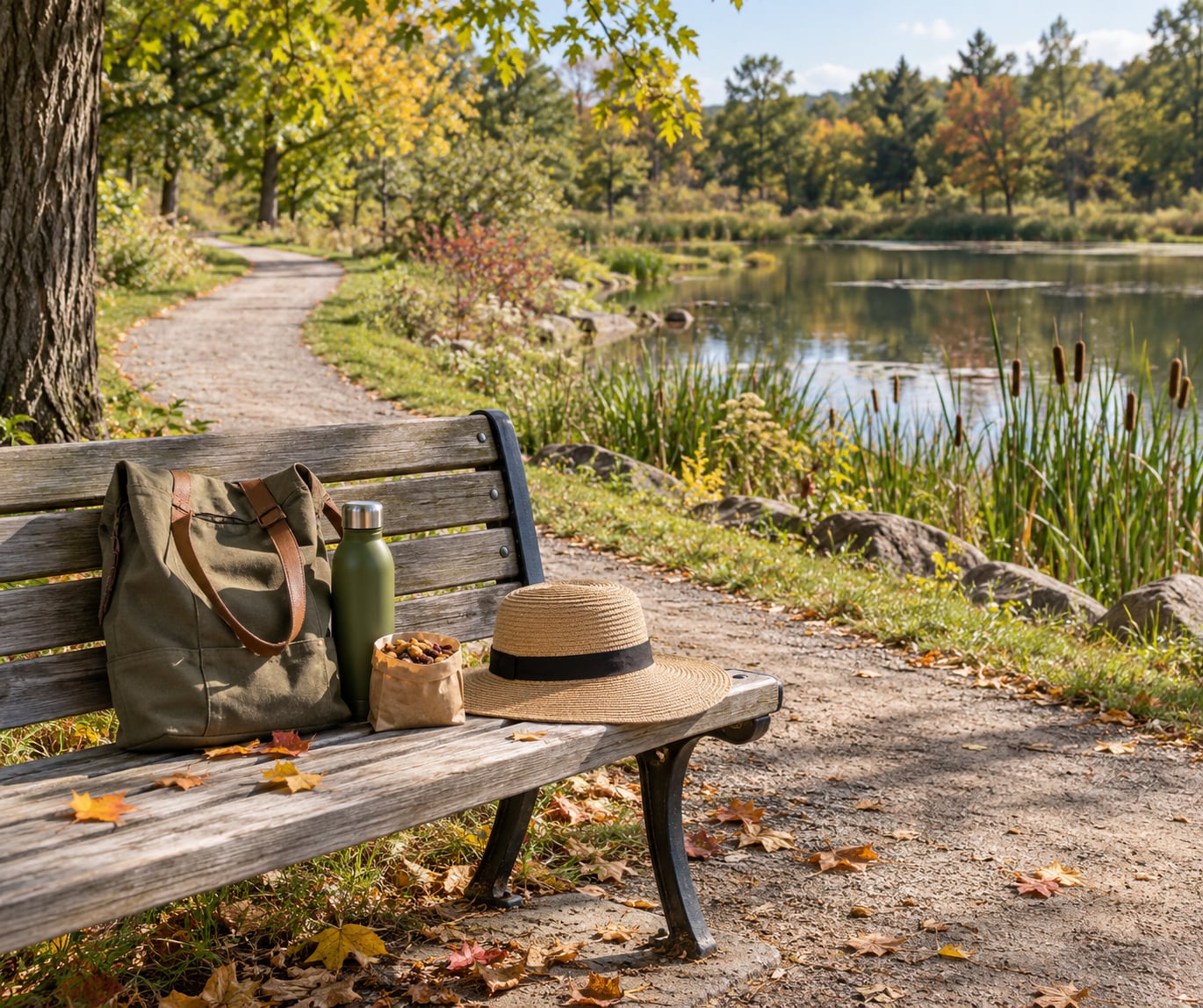
- A small nature bag. A container that opens easily and clips to the stroller, for leaves, sticks and shells only.
- Layers. One extra layer than you expect to need, plus a spare outfit in the bag for anyone who will get wet.
- A backup carrier. A soft structured carrier packed in the day bag. It is the difference between a walk and an early retreat.
- Sun and insect protection. Sunscreen applied before you leave, insect repellent, and a hat for open trails.
- One focus for the walk. A simple mission, and at most one tool such as a magnifying glass or a bird identification app.
- Wipes and a first-aid item. Because outdoor surfaces are sticky and toddlers put hands in their mouths.
Most of this costs nothing. A carrier and a stroller are useful, but plenty of excellent toddler nature walk ideas need nothing bought at all, and the sidewalk outside your house qualifies as a nature walk.
Step-by-Step: How to Plan a Nature Walk With a Toddler
Step 1: Choose a toddler-friendly route
Choose the shortest interesting route you can find, not the best one. A park loop of a quarter mile with a pond, a playground, or a patch of tall grass will hold a toddler far longer than a wooded trail with a view at the end.
Look for four things when you scout a route: a path wide enough to walk side by side, no drop-offs or fast water, somewhere to pause, and one natural feature that catches attention. Water wins every time. Puddles, a shallow creek edge, or a pond with ducks in it will hold a toddler longer than any scavenger hunt, which is why parents on walking forums keep saying to plan the route around water first.
A typical first outing looks like this. Five minutes from the parking area to a path, twenty to forty minutes of wandering with stops, a snack on a bench, and home before anyone is tired enough to argue. That is a successful walk, not a short one.
Here is a realistic range for how far a toddler can walk on a nature trail, based on walking rather than being carried. Every child is different, so treat these as starting points.
| Age | Walking time | Distance | Route notes |
|---|---|---|---|
| 12-18 months | 10-20 minutes | Under a quarter mile | Carrier first, stroller for the route, flat surfaces only |
| 18-24 months | 20-30 minutes | A quarter to half mile | Stops every few minutes; expect frequent sitting |
| 2-3 years | 30-45 minutes | Half to one mile | Loop works better than out-and-back so you can shorten easily |
If you have a baby and a toddler at the same time, the shorter end of that range is your real limit. A second adult changes everything, because one person can keep walking with the toddler while the other manages the baby, and you get the full loop instead of the shortest possible version of it.
Step 2: Check the weather and prepare for the day
Check the forecast the night before and again in the morning. If a storm is due, skip the walk rather than pushing through it, and follow whatever current public health and safety guidance your local authorities publish for heat, cold and air quality.
Dress in layers you can add and remove as you walk. Start slightly cool, because a toddler who is warm will stop moving. Apply sunscreen before you leave, not when you remember halfway down the path, and pack a hat for anywhere without shade.
Decide on transport before you leave. A stroller works on paved paths, boardwalks and flat gravel. A soft structured carrier is better for uneven ground, and it keeps your hands free. Parents with a child who refuses to walk usually carry one and stroller the other, then choose in the moment.
Season changes the plan more than the route does. In summer, go early, aim for shade and water, and stop if your child is flushed, quiet or unusually tired. In winter, cover skin, keep walks short, and accept that a twenty-minute walk in the cold counts as a long one. Spring brings mud and pollen, so pack a change of clothes and skip peak pollen days if your child reacts to it. Autumn is usually the easiest season of all, with soft ground and plenty to pick up.
Step 3: Set one simple goal for the walk
Give your toddler one job. Not five. The job gives the walk a purpose and gives your child something to do with their hands, which is the fastest way to avoid the mid-walk sit-down.
Good goals are low-effort and open-ended:
- Find three things that feel different, such as rough bark, smooth stone and a dry leaf.
- Count birds you can hear, not birds you can see.
- Look for one yellow thing and one green thing.
- Collect fallen leaves in the bag and see how many different shapes you get.
- Find a bug and watch it for thirty seconds before it moves on.
Treat the goal as a suggestion rather than a test. If your child finds a stick and ignores the entire mission, let the stick win. A nature walk with a toddler should stay flexible and playful; nothing is achieved if the child is miserable by the second stop.
Step 4: Pack a grab-and-go nature bag
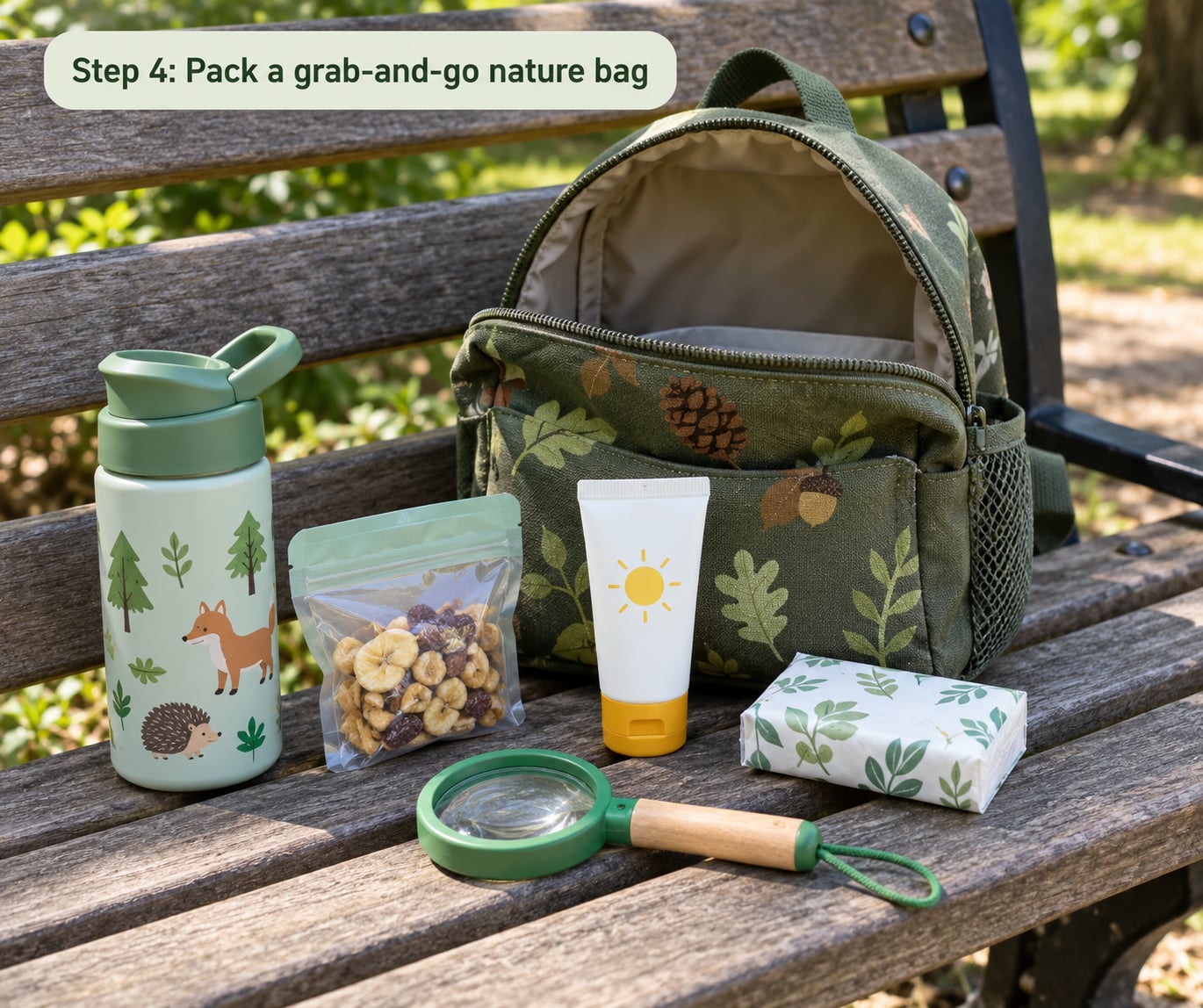
Pack the bag the night before and leave it by the door. Searching for sunscreen at the trailhead is how short walks turn into long ones.
Must-have
- Water bottle your child can hold, filled
- Two or three snacks that do not crumble, such as crackers, sliced banana or a cheese stick
- Wipes and tissues
- Spare outfit, socks included, sealed in a plastic bag
- Sunscreen and insect repellent
- First-aid item such as a bandage pack
- One collection container, child-safe and easy to open
Nice-to-have
- Magnifying glass, the single most useful piece of nature walk kit for a toddler
- A nature journal or a folded sheet of paper for rubbings
- A bird identification app for older toddlers who want a name for everything
- A small pot with a lid for bugs, viewed and released the same day
- Wet wipes for hands before snacks, which prevents most sticky-towel incidents
Leave at home
- Anything breakable or sharp
- Binoculars, which toddlers rarely look through for long
- Full-size collecting tubs, too heavy to carry back
- Anything that turns the walk into a scavenger hunt with points and a winner
You can build the whole bag from things you already own. A freezer bag, a spare shirt and a bottle cover the essentials at no cost, and a craft stick with packing tape wrapped around the top becomes a nature bracelet that gives your child a collecting job with no purchased gear at all.
Step 5: Keep the pace slow and let the toddler lead
Slow down more than feels natural. Toddlers who are rushed stop moving entirely, so the faster you walk, the less distance you cover.
Narrate what you notice out loud in short phrases: smooth, yellow, a hole, a bird. Ask open questions and then wait, because a toddler answering takes a few seconds longer than an adult expects. Leave a lot of room for stopping, touching safe objects, and changing direction without a reason.
When your child gets tired or restless, most of the work happens here. Parents on walking forums describe the same frustration repeatedly: a toddler who walks happily for ten minutes, then sits down and refuses to move. A few tactics work most of the time.
- Offer a snack break on a bench rather than trying to talk them onward.
- Give them a job, such as carrying the collection bag or holding the water bottle.
- Change the destination. A walk with no goal is easier than a walk with an unmet one.
- Switch to the carrier without a big announcement and keep moving.
- Give the walk a clear end. Toddlers handle a promised finish far better than an open-ended one.
- Go with a friend for the first few walks. Company turns a struggle into a walk.
Plan around water when you can. A puddle or a shallow stream gives a tired toddler somewhere to put their feet down without it meaning the walk is over, which usually buys another fifteen minutes.
For children with sensory sensitivities or attention differences, the same plan needs a slower clock. Fewer stops with longer durations, a quieter time of day, and a clear picture of the route beforehand all help. Let your child lead the pace and skip any activity that reads as overwhelming rather than pushing through it.
Step 6: Finish with a simple reflection
Close the walk by naming one or two favourite discoveries out loud. Two things is plenty, and saying them on the walk rather than at home keeps the memory attached to the moment it happened.
Back home, do one small sensory follow-up if your child is still engaged. Press a leaf in a heavy book, make a bark rubbing with a crayon on folded paper, sort the collection by texture, or set the finds on a small nature table that stays out for a week. A nature journal with one drawing or one scribbled note per outing is enough; toddlers are not writing stories yet.
Record the outing only if the family enjoys it. If it becomes homework, drop it.
Before you leave any natural area, check hands and pockets. Nothing living comes home, and nothing protected gets picked. The rule is simple: leaves, sticks, shells and fallen pine cones are fine, and mushrooms, berries, insects, feathers and flowers stay where they are.
Common Mistakes
Planning too much. A schedule with three stops, a picnic and a target distance will always lose to a two year old. Fix: one destination, one mission, and a decided finish time before you leave.
Picking a walk that is too long. Long trails feel like failure when you turn around at the halfway mark. Fix: aim for a distance you would happily walk twice, and treat the turnaround as the plan rather than a compromise.
Forgetting the water and snacks. This is the most common reason walks end early. Fix: bag stays packed by the door, refilled the night before.
Expecting a collection. Telling a toddler to fill a bag means the walk stops every ten feet. Fix: hand over the bag and let collecting be the walk, not a task on it.
Treating the outing as a test. Question after question turns a walk into an exam, and most toddlers opt out. Fix: follow your child’s attention instead of running yours, and ask one or two questions rather than a running list.
Walking on in bad weather. Forcing a walk through a storm, extreme heat or poor air quality teaches your child that walks are unpleasant. Fix: swap it for an indoor nature activity such as a texture hunt through the house, and go outside later.
Two habits make repeat outings easier. First, keep one route that you know and go back to, because familiarity lowers the effort of starting. Second, vary only one thing at a time, so a new route or a new activity never arrives as two surprises at once.
Frequently Asked Questions
How long should a toddler nature walk be?
Most toddler nature walks work best at 20 to 45 minutes, and the age of your child matters more than the distance. A one year old is usually happy with 10 to 20 minutes of walking plus stops. A three year old can manage 30 to 45 minutes on a flat loop. Plan a short walk and then extend it if everyone is still enjoying themselves rather than aiming for a fixed finish time.
How far can a typical 2 year old walk?
Most two year olds walk about a quarter mile to half a mile comfortably in 20 to 30 minutes, including stops to look at things. That is a comfortable distance on a flat path, not a rule. If your child is still happily pointing at things at the turnaround point, turn around and go back for another lap rather than pushing on.
What should I pack for a nature walk with a toddler?
Pack water, two or three snacks, wipes, a spare outfit in a sealed bag, sunscreen, insect repellent, a small first-aid item and one easy-open container for collecting. Add a magnifying glass and a nature journal if you have them. Keep it in a bag by the door so nothing gets left behind, and refill the bottle the night before.
How do I keep my toddler interested while walking?
Give your toddler one job rather than five. Ask them to find three different textures, count birds they can hear, or look for one yellow thing. Narrate what you notice in short phrases and ask an open question, then wait for the answer. Most of all, slow down, because a rushed toddler stops moving entirely.
What can a toddler safely collect on a nature walk?
Fallen leaves, sticks, shells, pine cones and flat stones are generally fine to pick up. Leave mushrooms, berries, flowers, insects, feathers and anything else living or protected in place. Skip unfamiliar plants entirely, since toddlers put things in their mouths faster than you can stop them, and check hands and pockets before leaving the area.
What should I do when my toddler refuses to walk?
Stop arguing and change the plan. Sit down for a snack break, hand over a job like carrying the bag, or switch to a carrier without making a scene. Walk towards water if there is any, because wet feet buys extra minutes. Most importantly, shorten the route and go home happily; a walk that ends calmly teaches your child that walking is good.
Conclusion
Start with the easy part. Pick a short route close to home, pack water and snacks the night before, and offer your toddler one simple thing to notice. The whole plan fits in five minutes and a single bag, and the walk itself can be any length your child has in them.
Keep a carrier by the door, end the walk while it is still fun, and go again next week. The habit matters more than the distance, and a walk that goes nowhere in particular is still a good afternoon out.