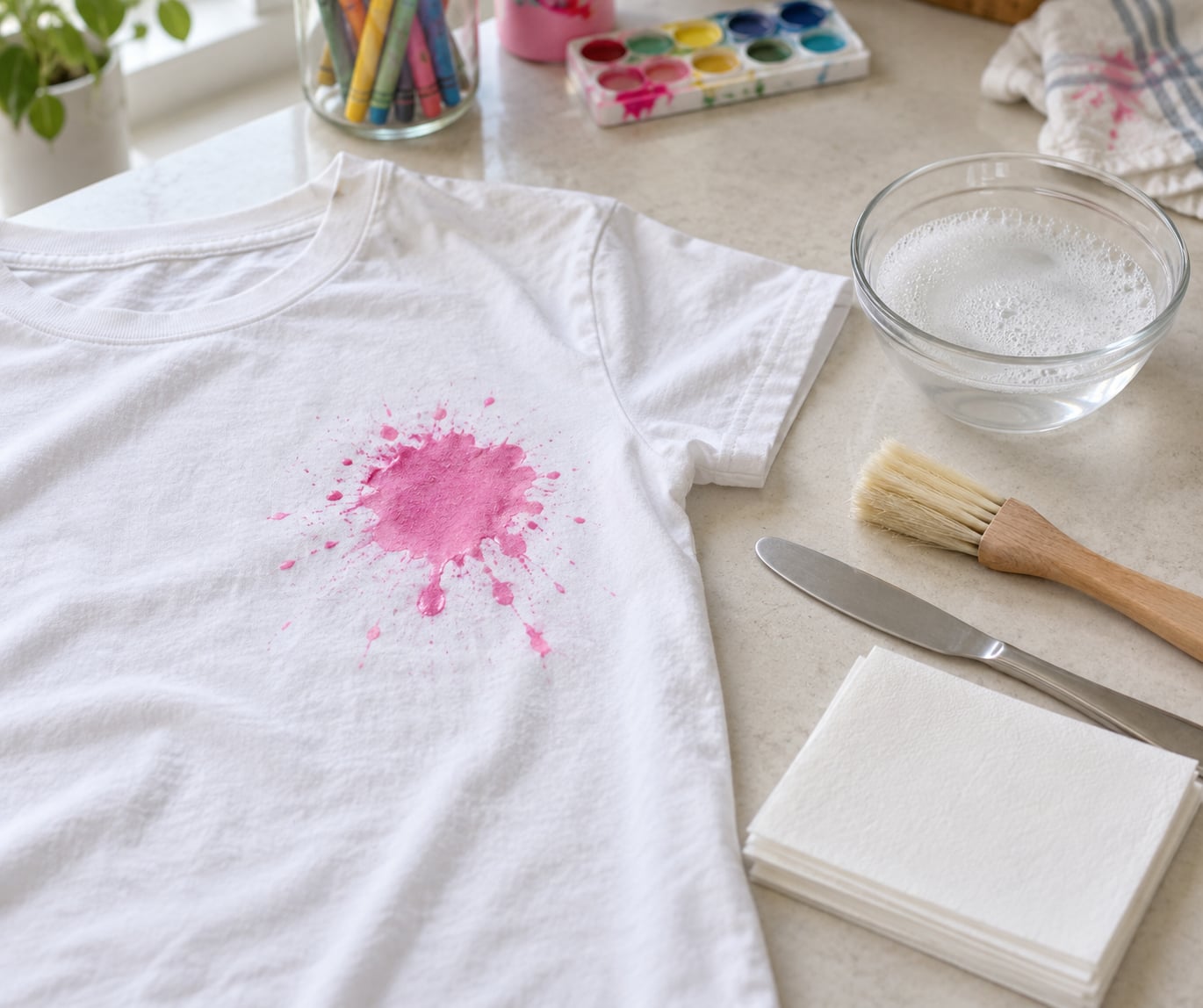
Paint comes out of clothes far more easily in the first few minutes than it does a few hours later, so the whole job is speed plus the right solvent. Scrape off whatever you can, flush the stain from the back of the fabric with water, work dish soap into water-based paint, and use paint thinner or mineral spirits only for oil-based. Then launder and air dry. Never put a paint-stained garment in the dryer until the mark is completely gone, because heat sets what is left into the fibers for good.
I learned that last part the expensive way, with a hoodie that went through a full wash and a tumble dry on the same afternoon. The color was still bright when I opened the door. So below is the process I use now, written out for parents, crafters, and anyone who has just finished a room and found paint on their jeans.
If you have never had to do this, the fastest route is: scrape, flush, soap, wash, air dry. Everything else depends on what kind of paint you are up against and what the garment is made of.
Table of Contents
- What You Need to Clean Paint Out of Clothes
- Water-based or oil-based: which are you dealing with?
- Paint type, method, supplies, and what to expect
- What the fabric changes
- Step-by-Step
- How to Clean Paint Out of Clothes: Wet Latex or Water-Based Paint
- How to Clean Paint Out of Clothes: Oil or Acrylic Paint
- What to do when the paint is already dry
- Common Mistakes
- Frequently Asked Questions
- Can dried paint be removed from clothes?
- What removes paint from clothes without damaging the fabric?
- Should I use hot or cold water to clean paint stains?
- How do I remove paint from baby or children’s clothes?
- When should I take a paint-stained garment to a professional cleaner?
- Conclusion
What You Need to Clean Paint Out of Clothes
Most water-based paint disasters need very little. Dish soap, a soft brush, and cold water handle the majority of them, and you probably already own all three.
- Identification first: the paint can, the tube, or the bottle the paint came out of. If the label says latex, acrylic, emulsion, or tempera, treat it as water-based. If it says enamel, alkyd, or oil-based, you need a solvent.
- A dull butter knife or the back of a spoon for lifting off thick paint without grinding it into the weave.
- Plain blotting material such as paper towels, plain white paper towels with no printed pattern, or clean cotton cloths. Patterned towels leave their own print behind.
- Dishwashing liquid, the thick kind that cuts grease rather than a bottle of scented hand soap.
- Laundry detergent and, if you have one, an enzyme or oxygen-type stain remover for the wash stage.
- A soft-bristled brush, an old toothbrush is ideal, for working soap into the weave of woven fabric.
- A bowl or basin for soaking a small garment, and gloves if you are handling solvent.
- Rubbing alcohol, paint thinner, mineral spirits, or turpentine for oil-based paint and for dried spots. Only buy the thinner if the label or the brush cleanup tells you the paint is oil-based.
Two rules before you start. Read the care tag, and if it says dry clean only, stop and take the garment to a cleaner rather than soaking it. Then test whatever solvent you plan to use on a hidden seam inside the hem and wait a few minutes; if the fabric dulls, smears, or loses color, stop and go gentler.
Water-based or oil-based: which are you dealing with?
Water-based paint dries into the fabric as a film that water and soap can loosen. Oil-based paint is held together by a solvent-borne binder that water cannot touch at all, which is why the same method that rescues a cotton shirt does nothing for the cuff of a child’s jeans that leaned on a freshly painted bench.
If you cannot find the container, run a white cotton ball across the wet mark. Color that comes off onto the ball means the paint is still wet and probably water-based. A mark that stays put, feels slick, and does not transfer at all is likely oil-based or already dried. Another clue: painters clean their brushes in water for latex and in mineral spirits or thinner for oil, so ask whoever painted if you can.
Paint type, method, supplies, and what to expect
| Paint type | Method | Supplies | What to expect |
|---|---|---|---|
| Latex or emulsion house paint, wet | Scrape, flush from the back, dish soap, wash | Butter knife, dish soap, cold water, laundry detergent | Usually gone in one wash if treated within the hour |
| Acrylic craft paint, wet | Flush, dish soap or rubbing alcohol, wash | Cold water, dish soap, old toothbrush | Good odds while it is still damp |
| Tempera or poster paint | Flush, detergent pretreat, wash, repeat | Laundry detergent, warm water | Washes out easily, especially on cotton |
| Spray paint, wet | Blot from the back, solvent dab, wash | Blotting paper, paint thinner, gloves | Hard on synthetics, workable on cotton and denim |
| Oil-based or alkyd enamel | Absorb, thinner or mineral spirits, launder | Mineral spirits or thinner, gloves, blotting paper, detergent | One or two rounds, cotton and denim fare best |
| Any paint, fully dried | Mechanical lift, then alcohol or thinner, then wash | Spoon, rubbing alcohol, oxygen stain remover | Patchy at best; often permanent after a hot dry |
What the fabric changes
Getting paint out of a shirt and getting paint out of a pair of jeans are different jobs, and the reason is how the fiber is built. A tightly woven cotton or denim fabric can be scrubbed and soaked. A polyester blend can melt, and acrylic paint bonds into plastic fibers rather than sitting on them.
| Fabric | Safe to scrub? | Recommended approach |
|---|---|---|
| Cotton t-shirt or blouse | Yes | Dish soap and an old toothbrush, then a normal wash. The easiest fabric to rescue. |
| Denim and jeans | Yes, gently | Scrape first, then flush under cold water for several minutes before soap. Denim holds paint deeper than cotton. |
| Polyester, nylon, or any poly blend | No hot water, no dryer | Cold water and mild soap only. Heat and solvents can melt or glaze the fibers, and acrylic paint on polyester is close to permanent. |
| Wool, cashmere, or a knit | No | Blot, do not rub. Wool felts when you work it. Solvent work belongs to a professional. |
| Silk, rayon, acetate, or triacetate | No | Dry clean only. Acetone and nail polish remover dissolve these fibers outright and the mark turns into a hole. |
| Canvas shoes | Yes | Scrape the dried crust, then scrub with dish soap and a stiff brush. Expect color to fade rather than disappear. |
| Mesh or knit athletic shoes | Yes | No solvent, which eats the glue and the synthetic upper. Use an old toothbrush with dish soap and warm water, and expect a shadow to remain. |
Step-by-Step
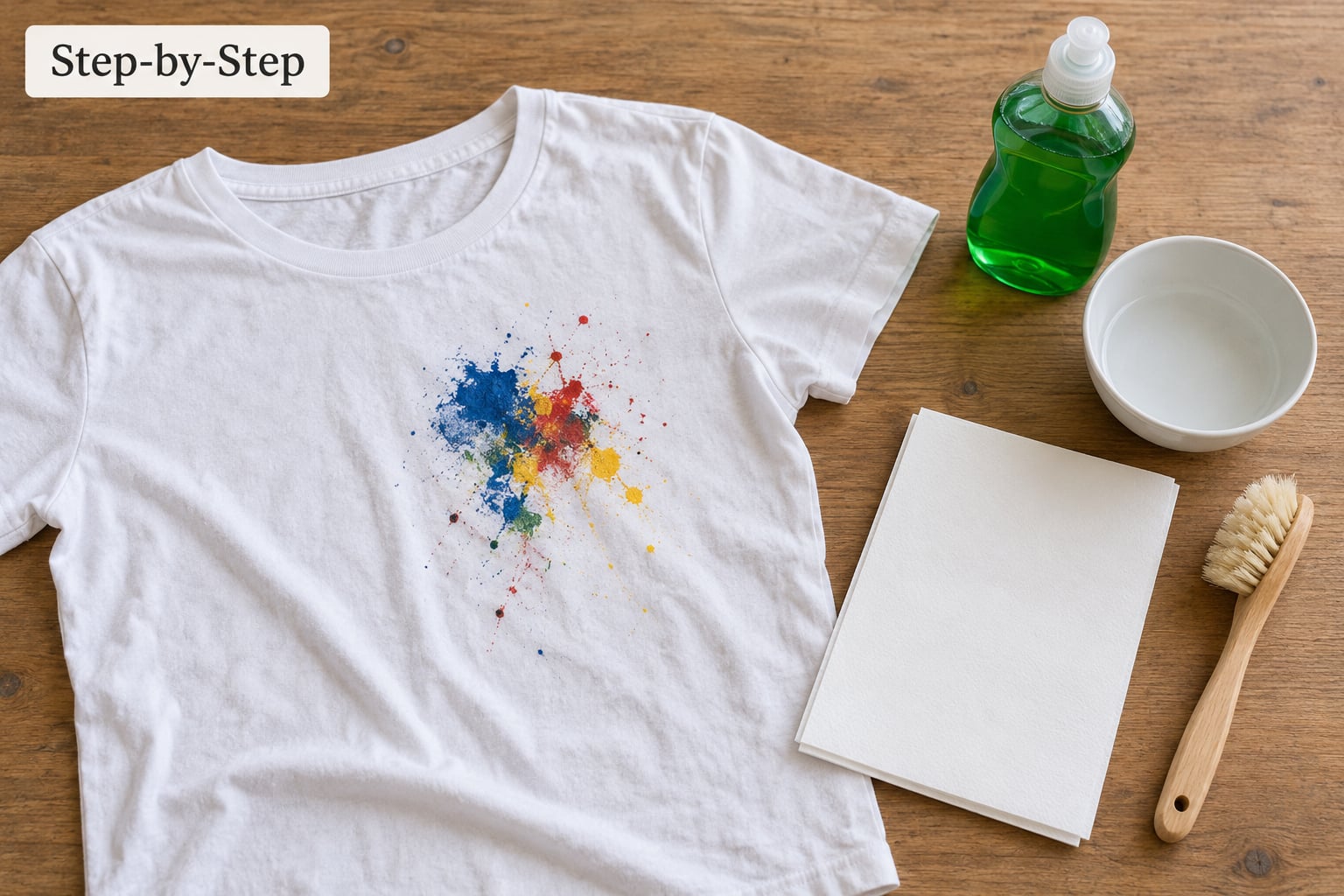
Work through these in order and do not skip ahead to the soaking step. Half the difference between success and a ruined garment comes down to the order of operations in the first five minutes.
How to Clean Paint Out of Clothes: Wet Latex or Water-Based Paint
This is the method for fresh latex, acrylic, tempera, poster paint, and anything else that rinses off your brush with water. It works on cotton and denim in the first few minutes; after that, treat it as dried paint.
- Scrape off the excess. Hold the garment with the wet side up and lift the paint with a dull knife or spoon, moving toward the edge of the stain. Do not press down. You are lifting the film, not sanding it into the weave.
- Flush from the back. Turn the garment inside out and run cold water from behind the stain for several minutes. Pushing paint out with water from the front drives it deeper. Cold water is right here, even though plenty of guides say warm, because heat starts moving pigment into the fiber.
- Work in dish soap. Put a generous drop of dishwashing liquid on the damp spot and rub it in gently with your fingers until it lathers. Then take an old toothbrush and brush the lather through the weave in one direction. Let it sit for five minutes.
- Flush and launder. Rinse the soap out, check the stain in daylight, and repeat once if the color is still there. Then wash it on your machine’s normal cycle with laundry detergent. Wash the stained garment on its own or with similar colors for the first wash.
- Air dry and inspect. Lay it flat or hang it. Once no trace of color is visible and no smell of paint remains, the stain is out.
If the mark is a light shadow after the wash, an oxygen-type stain remover used according to its label, with a cool or warm soak, often takes the rest of it. Hold off on chlorine bleach on colored fabric until you are near the end, because it can bleach both the paint and the garment equally.
How to Clean Paint Out of Clothes: Oil or Acrylic Paint
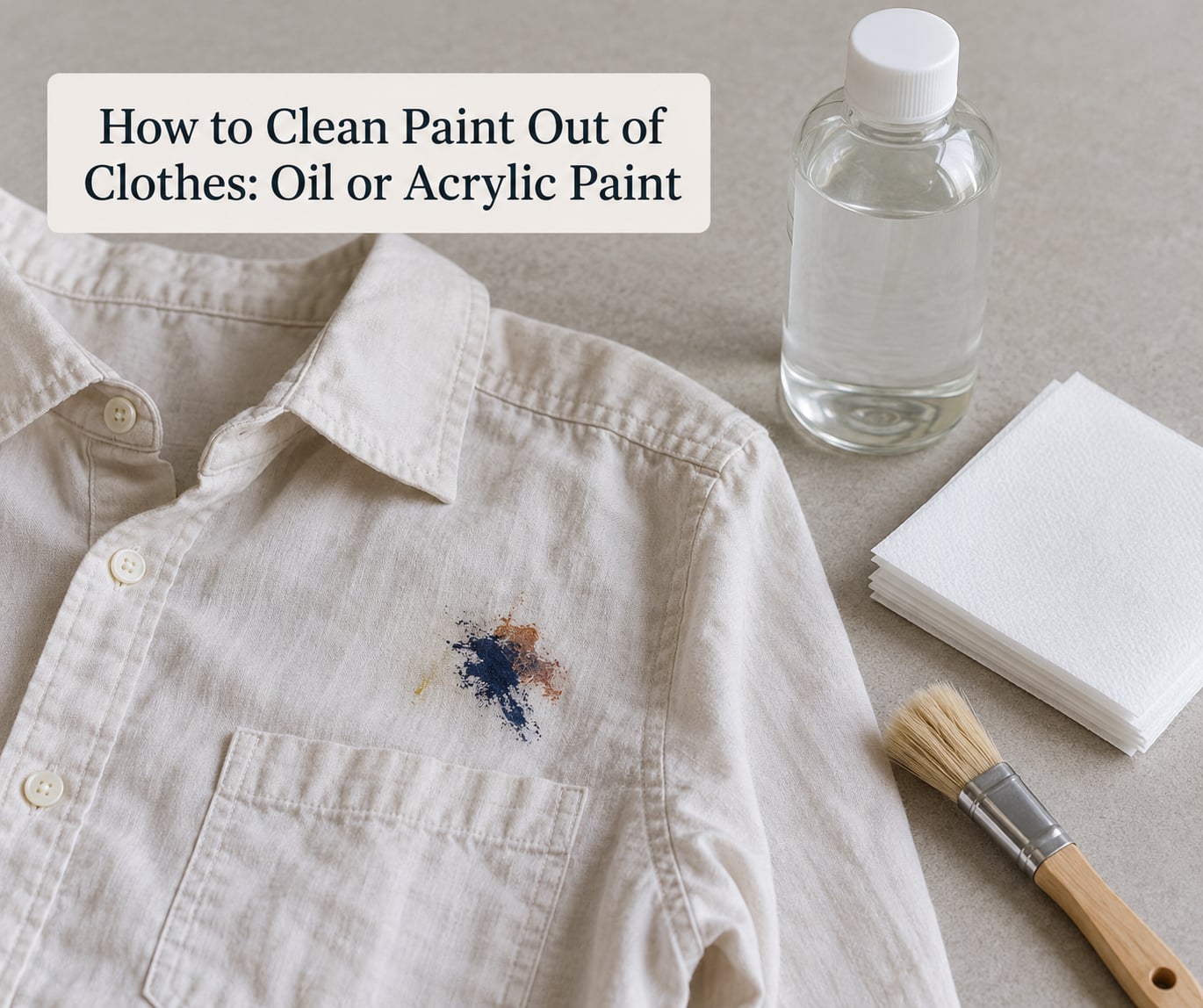
Oil-based paint needs a solvent because water slides straight off the binder. The same is true of heavy-bodied acrylic once it has cured, which is why craft paint that has dried hard behaves more like enamel.
- Absorb what is still wet. Blot from the outside edge toward the center with plain white blotting paper, changing sheets as they pick up color. Blotting pushes paint away from the fabric. Rubbing drives it in.
- Test the solvent on a hidden seam. Dampen a cotton swab with paint thinner, mineral spirits, or turpentine and dab an inside hem. Wait a few minutes. If the color or the hand of the fabric changes, use rubbing alcohol instead and use less of it.
- Dab from the back of the fabric. Lay the garment paint-side up and work the solvent in from the wrong side with a clean cloth or cotton ball, one small area at a time. Keep the cloth moving and never use nail polish remover, which can dissolve polyester, acetate, and rayon.
- Soak in soapy water. Once the color lifts, wash the garment by hand in warm water with dish soap and laundry detergent, then rinse thoroughly. Oil leaves a greasy film even when it stops looking like paint, and that film is what makes a stain reappear later.
- Launder, air dry, and repeat if needed. Wash as usual, air dry, and inspect. A second treatment usually finishes the job. If the mark is still there after two full rounds and the garment is synthetic, stop pushing it.
Work outdoors or in a well-ventilated room with the windows open, and wear gloves for the solvent steps. Open a window in a closed room is not enough ventilation.
Paint that has transferred from a surface works the same way but starts differently. If you leaned against a sun-softened painted bench or brushed a flaking doorframe, the paint is already partly cured, so begin with the spoon and the knife rather than with water. On a picnic-table stain the color often comes off in the first minute of scrubbing, and what remains needs a second pass the next day.
What to do when the paint is already dry
Dried paint is not one problem but three, and they need different tools depending on how long it has been there.
For a thick drop or crust that is still peeling, press the spoon or the back of a butter knife against it and pop the whole piece off in one go. Crushing it or picking at it in pieces just breaks it into smaller pieces deeper in the fabric. Masking tape pressed over a dried fleck and peeled away takes off flecks that have already set without any solvent at all.
For a thin layer that has dried into the weave but never been heated, rubbing alcohol applied with a cotton ball and given a few minutes to soak in will usually dissolve it. Hairspray is mentioned constantly online and does much the same thing, though it leaves a sticky residue that needs a second wash. After the alcohol, work the dish soap step and launder as usual.
For paint that has been washed and dried, be honest with yourself. Heat has driven the pigment into the fiber and there is usually no way back. A soaking overnight in a strong stain remover, or several attempts with a stiff brush, sometimes shifts it from solid to faint. Beyond that the honest answer is that the stain is permanent, and you are better off cutting the garment up for craft projects or cutting your losses.
Common Mistakes
Almost every ruined paint-stained garment I have seen failed because of one of these, and none of them are about the product you used.
Rubbing the stain instead of blotting it. Rubbing grinds pigment into the fiber and spreads it. The fix is blotting from the outer edge toward the center with a fresh cloth each pass.
Reaching for hot water first. Warm water helps lift the soap, but hot water on a fresh stain sets it. Use cold water until the paint is gone; once it is, wash warm as you normally would.
Using the hairdryer to speed up drying so you can see the mark better. That is the single most common way a garment becomes unrecoverable. Air dry flat, out of direct sun, and look at it when it is fully dry.
Putting the garment through the dryer while a trace of color remains. Heat sets stain permanently, and the color you see after one hot cycle is usually the color forever. Fix: air dry until it looks and smells clean, then dry normally.
Applying nail polish remover or acetone. It works well on oil paint and dissolves polyester, acetate, triacetate, and rayon on contact. Fix: use paint thinner or mineral spirits on cotton and denim, and take anything synthetic or silky to a cleaner.
Scrubbing wool, silk, or a knit hard with a brush. Wool felts and the fabric ends up shrunken and fuzzy no matter how well the paint lifts. Fix: blot gently and leave solvent work to a professional.
Machine washing a stained garment with a full load of clean laundry. Paint transfers to everything it touches, and you will be washing the stain onto your towels. Fix: wash it alone or with items that can stand to lose a little color.
Believing the online remedies. Vinegar, baking soda, and hydrogen peroxide are repeated constantly and are far too weak to lift paint. They soften a water-based mark slightly and do nothing at all once it has dried.
A few habits make next time easier. Cover the work surface with a sheet or a cheap tablecloth, put an old apron on whoever is painting, and let the kids stand up rather than kneel on the floor. Keep a squirt bottle of dish soap in the craft box so the treatment starts in the kitchen sink and not an hour later. And when you are painting a room yourself, wear a shirt you would be sad to lose, because paint does find the neck and the cuffs no matter how carefully you aim.
Frequently Asked Questions
Can dried paint be removed from clothes?
Yes, if it dried but never went through a hot dryer. Pop off thick drops with a spoon or the back of a butter knife, dab the thin layer left behind with rubbing alcohol on a cotton ball and give it a few minutes, then work dish soap into the fabric and launder. Air dry to check. Paint that was washed and heat-dried is usually permanent, so expect a ghost or a shadow rather than a clean repair.
What removes paint from clothes without damaging the fabric?
The gentlest thing that works for the type of paint. For water-based paint that is dish soap and an old toothbrush on cotton and denim. For oil-based paint it is a paint solvent dabbed onto the back of the fabric. Test anything stronger on a hidden seam first, and never use nail polish remover or acetone on polyester, acetate, rayon, or silk. Blotting always beats scrubbing.
Should I use hot or cold water to clean paint stains?
Cold water, until the paint is completely gone. Guides disagree on this, and the disagreement comes from treating two different jobs the same way. Cold water flushes fresh paint out of the fiber; hot water helps the soap work once there is no color left. Using heat while pigment is still in the fabric is what drives it deeper and sets it, so save the warm wash for the end.
How do I remove paint from baby or children’s clothes?
Treat it exactly like any other garment and start immediately. Check the care tag first, then flush from the back with cold water, work in a small amount of dish soap, and wash the garment separately from the rest of the load so paint does not transfer. Air dry. If the fabric is acetate or rayon, or the tag says dry clean only, go straight to a cleaner rather than soaking it at home.
When should I take a paint-stained garment to a professional cleaner?
Take it in when the care tag says dry clean only, when the garment is wool, silk, velvet, or a formal piece, and whenever the only thing that would work is a solvent the fabric cannot survive. Dry cleaners can also handle oil-based paint on a good wool coat, which is exactly the case people at home ruin with nail polish remover. If the paint has already been heat-dried, ask first, because many cleaners decline set stains.
Conclusion
The order matters more than the product. Scrape first, flush from the back with cold water, treat with the mildest thing that suits the paint type, and air dry before you ever consider heat. Working on a paint stain is a race, and most of the difference is decided in the first ten minutes.
Test anything stronger on a hidden seam, read the care tag before you soak anything, and if the garment is valuable, delicate, or already heat-dried, take it to a professional cleaner rather than gambling the fabric.