When you are working out how to homeschool with a toddler around, the answer is not a stricter schedule. It is a shorter, more flexible one: a couple of focused lesson blocks for your older child, a rotating basket of independent play for the toddler, and a handful of activities they share at the same table. The toddler’s school is play, reading, chores and life skills, not worksheets. Everything else is built around that.
That is genuinely the whole method. It takes about two weeks to feel natural instead of chaotic, and it costs almost nothing. Here is the setup, the daily rhythm, and the honest list of what gets lowered when both children need you at once.
Table of Contents
- What You Need to Homeschool With a Toddler Around
- A flexible daily rhythm, not a bell schedule
- A toddler-safe learning corner
- Supplies both children can share
- Books the toddler actually wants
- One or two quiet-gathering tools
- A written list of what happens next
- Step-by-Step: Build a Flexible Homeschool Day
- How to Homeschool With a Toddler Around Each Day
- Set Up a Predictable but Flexible Routine
- Choose Activities Both Ages Can Share
- Teach the Older Child With Brief Focused Lessons
- Use Trips, Errands, and Everyday Life as Lessons
- Prepare for Tantrums, Transitions, and Bad Days
- Common Mistakes and Simple Fixes
- Frequently Asked Questions
- How can I homeschool with a toddler around without stopping every lesson?
- What activities can a toddler and an older homeschooled child do together?
- How much time should homeschooled children spend on formal lessons each day?
- Do I need a separate curriculum for my toddler?
- How do I handle a toddler who interrupts lessons all morning?
- Conclusion: Start With One Shared Routine
What You Need to Homeschool With a Toddler Around
You need six things, and none of them are expensive. Families who expect a separate curriculum, a dedicated school room, or a second adult in the room tend to burn out by week three. What actually works is far less dramatic.
A flexible daily rhythm, not a bell schedule
Decide the order of your day once, then let the timing float. A rhythm survives a hard morning. A timetable with times written on it does not.
A toddler-safe learning corner
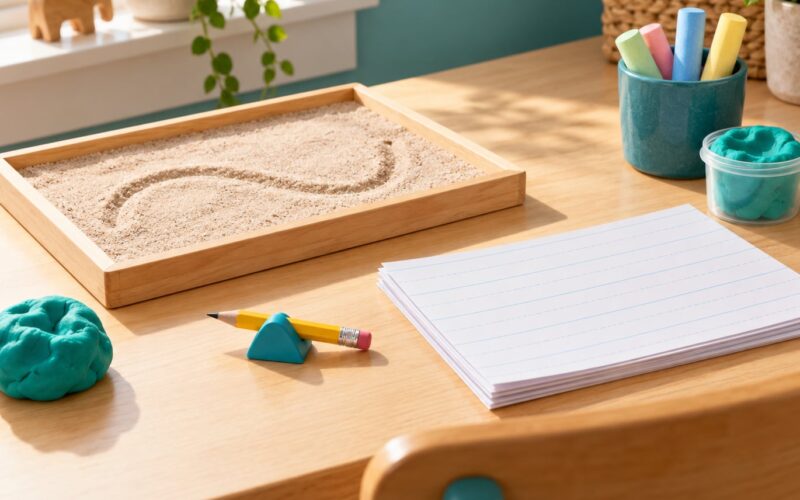
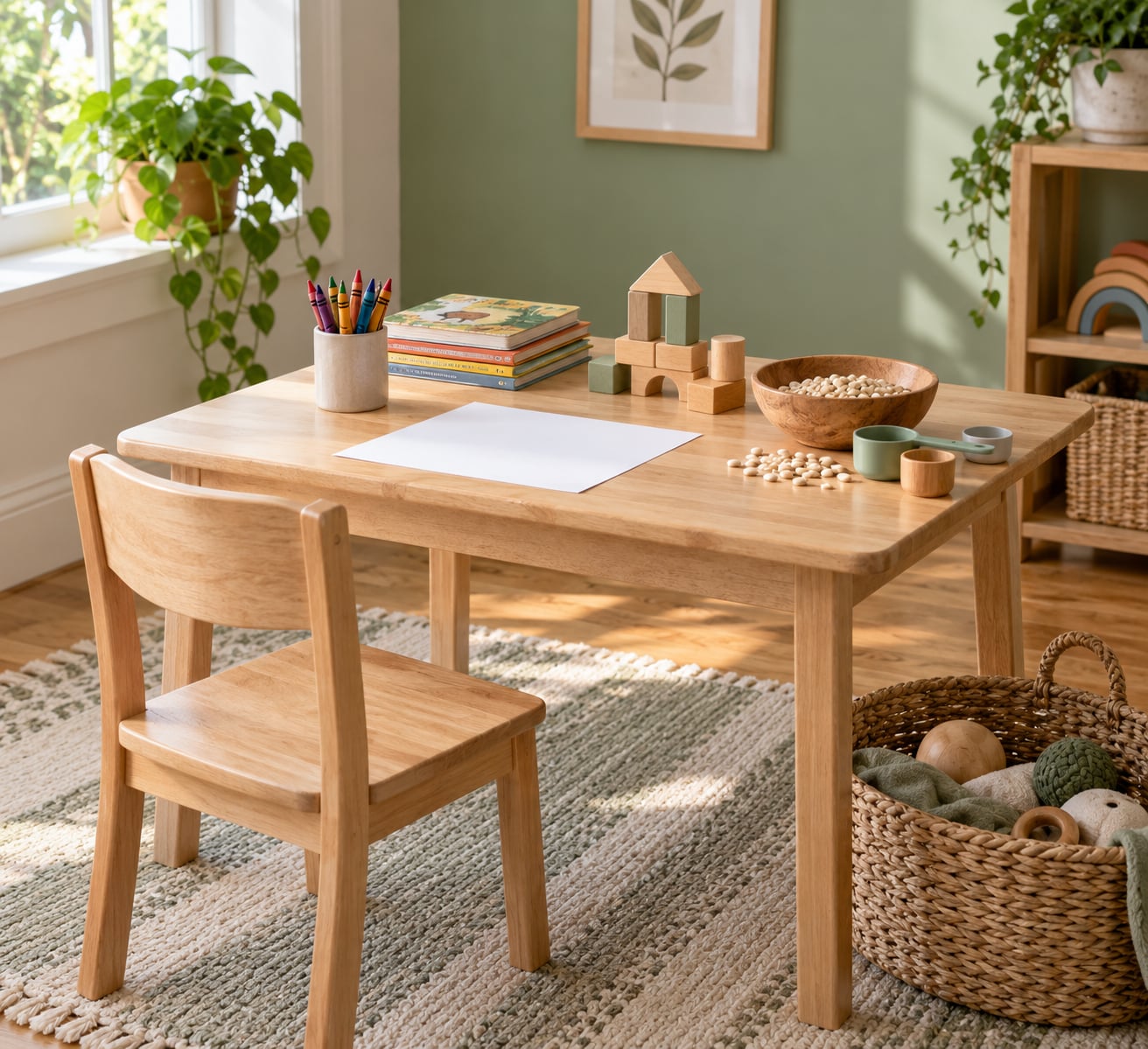
Pick one spot — a corner of the kitchen table works fine — where school happens. Stock it with a few things that are only used there: crayons, a puzzle, a board book, play dough. Children read the room faster than you explain it, and a school spot with its own materials quietly tells a toddler that the table belongs to school right now.
Supplies both children can share
One set of crayons, one set of blocks, one puzzle. Buying duplicates for the toddler so nothing gets fought over sounds practical; in practice it just gives you two things to clean up. Sharing is the lesson.
Books the toddler actually wants
Board books and picture books the child will sit through, plus a small basket of your older child’s current reading kept within toddler reach. A toddler who can pull a book down and look at it independently is doing fine-motor and language work while your older child reads three pages away.
One or two quiet-gathering tools
A playpen, a small fenced area, or even a doorstop gate gives you a safe boundary when a lesson needs your full attention. Combine it with basic childproofing: outlets covered, cords moved, small choking-sized parts out of reach, and nothing within reach of a child who is still putting things in their mouth. Follow whatever safety guidance your own pediatrician’s office gives you, since they know your child.
A written list of what happens next
A single index card in readable chunks is enough. Toddlers respond to a predictable sequence far better than they respond to reward charts, and a visible sequence means you are not negotiating every transition from scratch at 9 a.m.
Skip the toddler curriculum shopping spiral until the routine is running. If you want structure, look at the free preschool options first — plenty of good material is public library material, and a stack of your older child’s curriculum books used a year ahead is usually a better fit than anything toddler-specific.
Step-by-Step: Build a Flexible Homeschool Day
Six steps make up the system, and each one lowers pressure rather than adding to it. The goal is a day that is loose enough to survive contact with a toddler meltdown and structured enough that your older child still finishes their work. If you are figuring out how to homeschool with a toddler around, these six pieces are the whole plan.
How to Homeschool With a Toddler Around Each Day
Picture a twenty-minute reading block. Your older child sits with a decodable text or a chapter book while the toddler sits beside them with a colouring page, some blocks, or a tub of play dough. Nobody is pretending they are doing the same thing. One child is working, the other is playing within arm’s reach of you.
The mechanics that keep it running are small. Sit so you can reach both children. Redirect before the noise starts, not after. If the toddler wants your hands rather than a toy, hand them something specific instead — a book, a puzzle, a spoon and a bowl of dry beans. Expect to move the lesson twice in half an hour, and treat that as normal rather than as a lesson that failed.
Set Up a Predictable but Flexible Routine

Here is a sample morning-to-lunch rhythm. Shift the order if your family’s wake-up time is different; the sequence matters more than the clock.
Before breakfast — 15 minutes of undivided attention. One-on-one time with the toddler. Read, snuggle, let them set the pace. Doing this first means nobody spends the school morning convinced they are second priority, which is the root of a surprising number of mid-morning meltdowns.
Breakfast and quick tidy. The toddler helps put things away, wipes the table, or feeds a pet. Two-minute chores teach more than they cost you.
Block one — the hard subject, 20 to 30 minutes. Math, writing, or anything that needs you thinking. This goes first, while attention is fresh and the toddler has just been satisfied.
Buddy block — 20 minutes. An older sibling reads to or plays with the toddler in the same room. Not a babysitter, just company. Homeschool families often name this as the single change that made the day work, because the toddler gets attention and the older child gets a break from being the one who interrupts.
Independent work while the toddler plays or naps. Reading, handwriting practice, a worksheet, or a short memory verse. This is the block the older child does semi-alone, and it is where the nap window is most valuable. In most homes, nap time is the highest-value stretch of the entire school day, and it is not close.
Late morning — outside, lunch, or both. Movement before lunch usually means a calmer afternoon.
After lunch — quiet time. A container of books and puzzles on the couch. The one-and-a-half-hour post-lunch sleep in many families is the longest uninterrupted work window you will ever get.
Success here is simple: a sequence that works again tomorrow. If the order is wrong, move it. If the toddler naps, protect that window. If the toddler stopped napping at two, assume a short quiet time plus a more adult-led afternoon instead, and adjust.
Choose Activities Both Ages Can Share

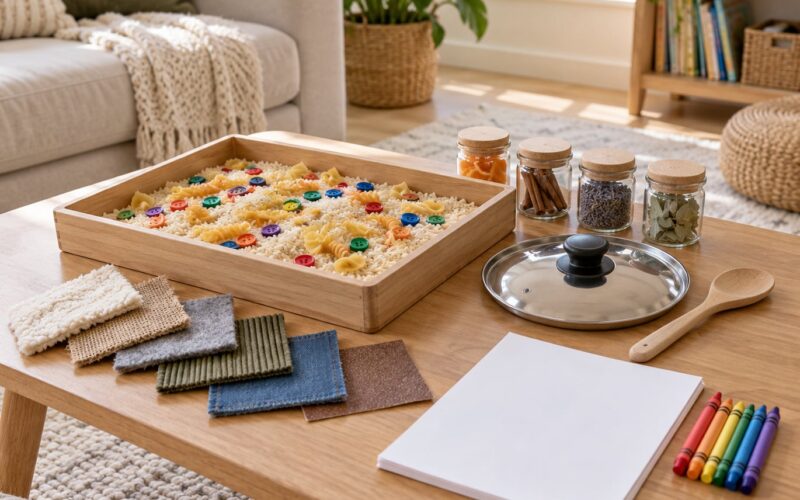
Some activities genuinely hold both children without an adult running a performance. Read-aloud with blocks where the toddler builds the story’s house while the older child answers questions about it. Sorting a grocery haul by colour, with the older child counting each pile. Drawing a family picture on one long sheet of paper. Watering plants with a small can. Making sandwiches together, with the toddler tearing the bread and the older child measuring. Matching shapes to lids, sorting buttons into muffin tins, threading large beads onto a shoelace.
Be honest about which is which. Washing dishes with the toddler while you cook is parallel work, not a lesson, and that is completely fine. Shared activities are a bonus you add two or three times a week. Your daily goal is calm parallel play plus a small amount of genuine sharing.
Teach the Older Child With Brief Focused Lessons
Break the work into 10- to 20-minute blocks with a visible task list nearby. Something they can look at without asking you what comes next is worth more than a complicated homeschool day.
Teach independence in plain terms: get the book, do the first question, come back when the list is finished or when you call. Check understanding the easy way. Ask the child to read the sentence back, or explain the problem in their own words while you wash your hands. Nobody needs a quiz in the middle of a Tuesday morning. A pointed question and a nod does the same job.
Use Trips, Errands, and Everyday Life as Lessons
Half of what a first grader needs is sitting in your normal day. The grocery store has numbers, money, categories, and polite conversation. The library has book returns, a card with a due date, and quiet. The park has weather, distance, and what a wheel does when a stick gets stuck in it. Cooking has measuring, sequencing, and counting that no workbook makes more concrete.
One outing, done properly: a trip to the store where the older child writes the shopping list, you read it out loud together, the toddler hunts for three red things, and the older child counts them when you get to the car. One question, one number, one word. Do that and let the trip be a trip — turning every outing into a worksheet is how homeschool days start feeling like a second shift of school.
Prepare for Tantrums, Transitions, and Bad Days
There will be a morning when a full lesson is not realistic. Plan for it before it arrives so you are not improvising while your toddler screams.
Keep two short backups that take under ten minutes each: a read-aloud on the couch while the toddler plays nearby, or one page of handwriting and a story. That is a real school day. Not a good school day, still a school day.
Set one rule both children follow at every transition. The one that works in most homes: a timer, one warning, then the change happens. Consistent, boring, predictable. Children who argue the routine are usually arguing because the routine kept changing on them.
And give yourself permission to stop mid-lesson when safety or emotional regulation demands it. A calmer house beats a completed page. If the day collapses into one shared read-aloud and a walk, that is still a day your family got through, and tomorrow you start again at the top of the sequence.
Common Mistakes and Simple Fixes
Mistake one: treating the schedule like a school bell. You write 9:15 on the page and then act shocked when the toddler objects at 9:20. Fix: order the sequence, not the minutes. A rhythm is a habit, not an appointment.
Mistake two: making the toddler the older child’s helper. Handing a two-year-old the flashcards and expecting her to drill her brother is lovely in theory and unfair in practice. Fix: the buddy block is for playing, reading, and being company. Teaching belongs to you.
Mistake three: expecting independence too soon. If your older child is six and cannot yet work unsupervised for eight minutes, a 45-minute independent block is not a goal, it is a setup for a fight. Fix: start at ten minutes, end on a success, and add a minute at a time.
Mistake four: no transition cues. Fix: a two-minute warning, a visible card, and one rule that never changes. This is the boring fix that fixes the most.
Mistake five: turning every play activity into a lesson. The moment play becomes performance, it stops being rest for you too. Fix: two shared activities a week, not daily. Protect unstructured time as a real part of the plan.
What to lower the bar on: the tidiness of the room, the number of pages finished, and the idea that both children had a good day. The most useful question about this exact problem is not how to squeeze in more; it is whether the older kid is actually getting school done. The answer is yes, as long as the blocks you protect are short and actually happen. A protected 25-minute writing block, four days a week, is real instruction. A four-hour ideal plan that collapses by 9:30 is not.
Then start smaller than feels respectable. Two shared activities, one focused block, one routine. Swap the basket contents weekly so the toddler’s “school” stays fresh. Give each child their own one-on-one time even if it is only ten minutes, because sibling friction here usually comes from attention scarcity, not from the homeschooling itself. Once a week, look at the week together and change one thing about the sequence. That single change is cheaper than any curriculum decision.
Frequently Asked Questions
How can I homeschool with a toddler around without stopping every lesson?
Put the toddler’s independent play and your older child’s lesson in the same room, side by side, rather than trying to keep them apart. Give the toddler a small basket of activities they can use without you, protect one 20 to 30 minute block early in the morning for the subject that needs you most, and accept that the lesson will be paused a few times. Two short blocks that actually happen beat one long block that never does.
What activities can a toddler and an older homeschooled child do together?
Read-aloud time where the toddler builds with blocks while the older child answers questions, sorting groceries or laundry by colour, drawing one long family picture together, watering plants, cooking a simple meal with the toddler tearing the bread, and matching shapes, colours or lids. Keep it to two or three shared activities a week. Constant shared play takes more of your energy than it gives, and plain parallel play in the same room works fine too.
How much time should homeschooled children spend on formal lessons each day?
For early elementary years, roughly one to two hours of focused work spread across several short blocks is plenty, especially with a toddler in the house. Break it into 10 to 20 minute pieces with a visible task list, and put the hardest subject first while everyone is fresh. Your own state’s or country’s required days and hours are what set the outer limit; the rest is a rhythm you can adjust without anyone falling behind.
Do I need a separate curriculum for my toddler?
Usually not, at least not in the beginning. A toddler’s work is language, counting, sorting, fine motor practice, chores and outdoor time, and most of that comes from read-alouds, an activity basket, and ordinary household routines. If you want structure, start with free library resources and your older child’s curriculum used a year ahead. Buying a toddler program before the routine is stable tends to add work rather than remove it.
How do I handle a toddler who interrupts lessons all morning?
Give the toddler fifteen minutes of your full attention before school starts, keep school materials in one dedicated spot, and set one transition rule that never changes: a two-minute warning, a timer, then the change. Use a consistent calm response rather than negotiation, and keep a two-minute backup activity in reserve for the worst mornings. Interrupting usually means the toddler has nowhere better to be, so move the lesson, shorten it, or stop it rather than fighting.
Conclusion: Start With One Shared Routine
Working out how to homeschool with a toddler around comes down to one repeatable sequence: attention first, then one hard subject, then something the children do together, then a protected nap or quiet-time block. Today, pick two shared activities and choose one short lesson block. Put the rest of the day around meals, movement, and the toddler’s needs, and let the rest of the sequence build itself over the next two weeks.