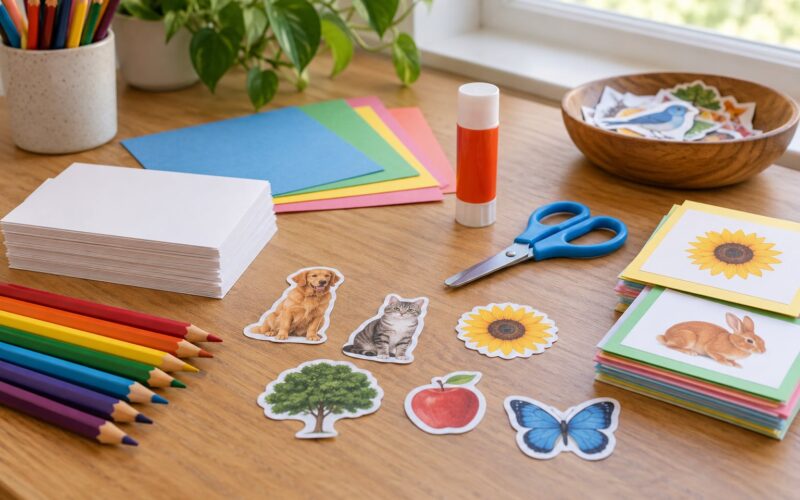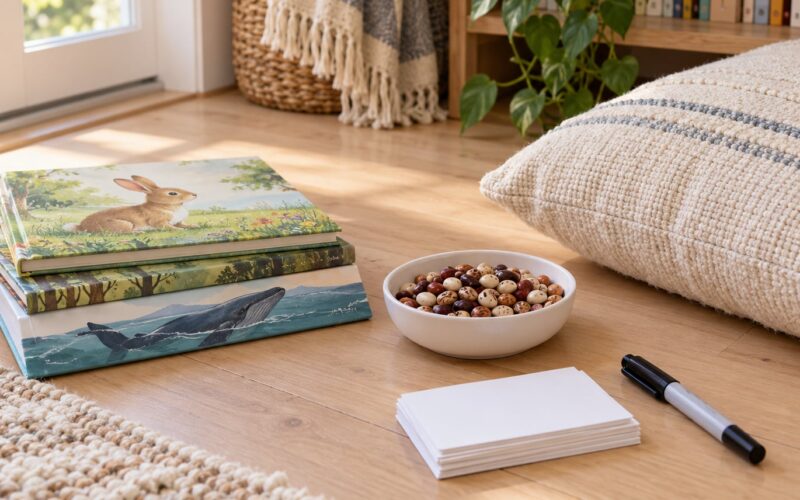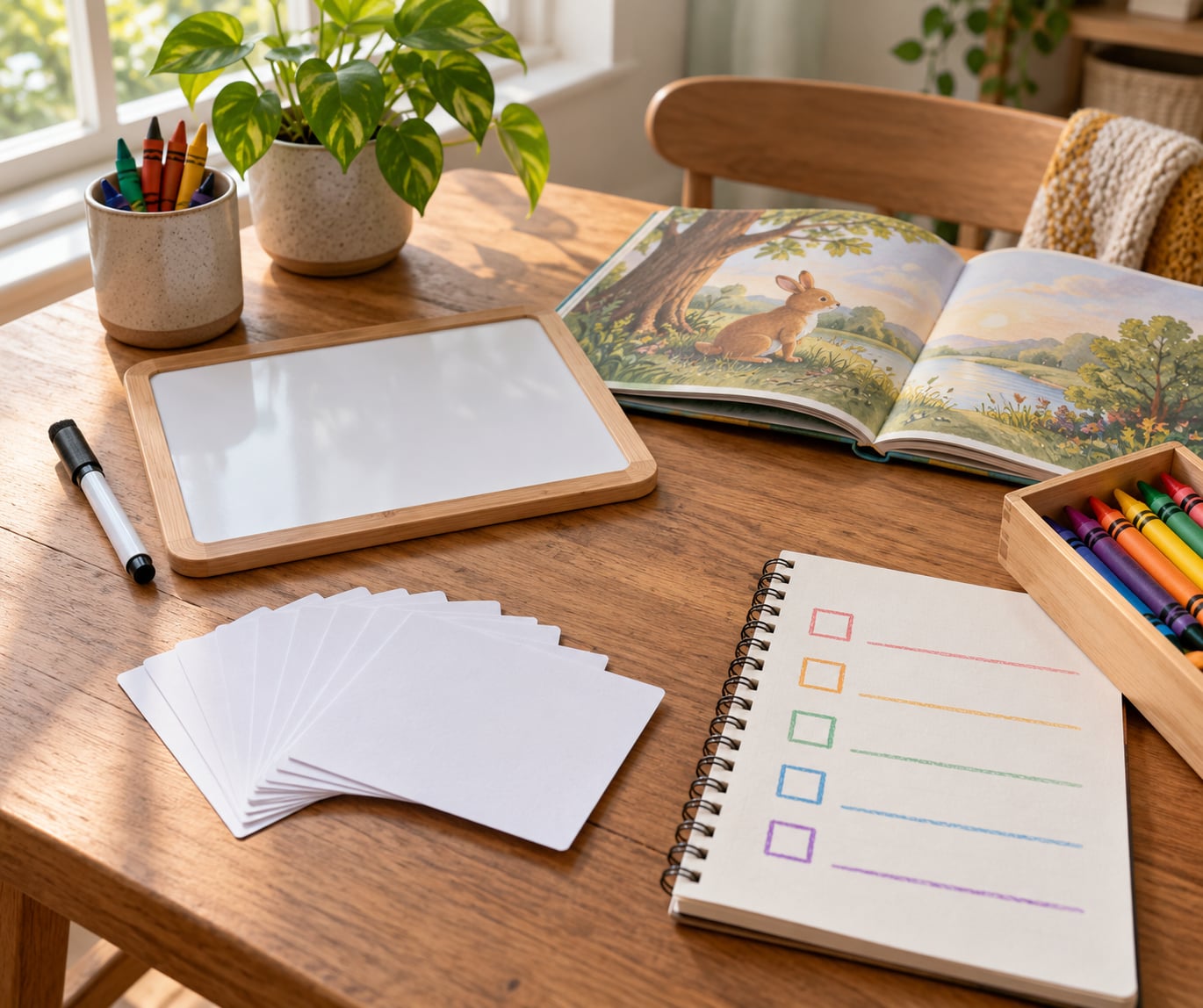
To teach sight words at home, pick five high-frequency words, read them inside a real book, then run a five to ten minute routine that ends with a game. Parents on Reddit’s r/kindergarten and r/homeschool threads say the same thing over and over: short daily practice beats one long session, and words stick when they meet the child in an actual story rather than on a flashcard in isolation.
The reason sight words matter is simple. Words like the, said, was, and you show up so often in printed English that a reader who has to sound them out every time spends all their effort on words that carry no meaning. Free that up, and comprehension has room to breathe.
None of this needs a curriculum, a printer, or a big budget. It needs about ten minutes, a few index cards, and a picture book your child already likes. Here is the routine, step by step.
Table of Contents
- What You Need
- Step-by-Step: How to Teach Sight Words at Home
- 1. Choose a small, useful sight-word list
- 2. Introduce each word in context
- 3. Practice saying and spotting the word
- 4. Add a movement-based activity
- 5. Review with a mixed daily game
- 6. Track recognition and move forward
- Common Mistakes
- Practicing too long
- Drilling isolated words only
- Moving on too early
- Using distracting materials
- Confusing sight words with phonics
- Frequently Asked Questions
- How many sight words should a child learn at a time?
- How long should a child practice sight words each day?
- Can sight words be taught with a dry-erase board or flashcards?
- What if my child can read the word but does not recognize it instantly?
- How can I teach sight words without worksheets?
- Conclusion
What You Need
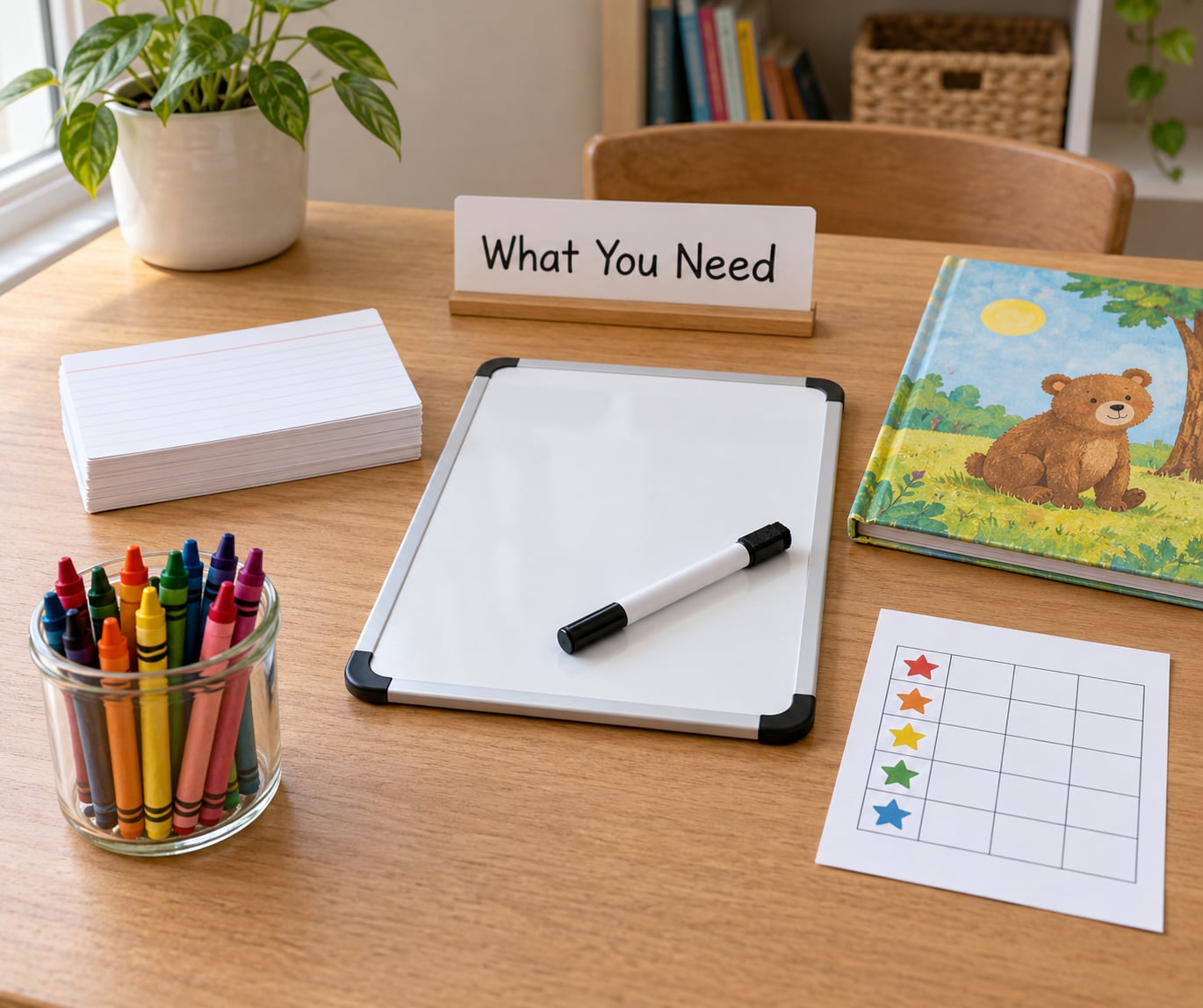
You need five things, and you probably own four of them already.
- A short word list. Five to ten words on one index card or a scrap of paper. A small list is the whole trick, because a manageable set produces far faster recognition than a wall of words.
- Index cards or a word chart. One card per word, in large print, spaced so your child can see them all at once. A chart taped to the fridge gets used without anyone having to remember.
- A picture book or familiar objects. The book matters more than it sounds. Parents report that words learned alongside a real story transfer to reading far better than words drilled in isolation.
- A dry-erase surface. A small whiteboard or a sheet of paper under a transparent sheet protector. It wipes clean, which means no piles of finished worksheets.
- A progress tracker. A notebook, a checklist taped inside a cabinet door, or three columns on a calendar. This is the piece most families skip, and it is the piece that tells you whether the routine is working.
Add crayons or a set of magnetic letters if you have them. They are not required, but they turn a spelling exercise into something a four-year-old will actually ask to do again.
Step-by-Step: How to Teach Sight Words at Home
The routine below moves a word from unfamiliar to automatic in roughly a week of daily contact. Work through the steps in order the first few days, then let the child run steps 3 to 5 with you watching.
1. Choose a small, useful sight-word list
Start with five to ten high-frequency words, chosen for how often they appear rather than for how interesting they look. Words like the, is, and, see, you, we, go, and my cover a surprising share of ordinary picture-book text.
Two rules keep this workable. Never add more than ten words to the active list, and always keep the retired words somewhere visible so review stays mixed. Parents whose child received a 50-word list from school often find that chunking it into groups of ten turns an overwhelming job into a five-minute one.
You’ll know this step worked when your child can name the words on the cards without being asked.
2. Introduce each word in context
Read a short, predictable sentence aloud and let your child see the word doing its job. A line like “I see the red truck” gives see a meaning you can point at, rather than presenting it as a spelling exercise with no context.
The habit that pays off most here is pointing at the word as you read it. Say the sentence, then tap the word gently and say it once more on its own. That single gesture links the sound, the meaning, and the printed shape in one pass.
You’ll know this step worked when your child points at a word in a book and says what it means before you read it.
3. Practice saying and spotting the word
Use a three-part routine: you say the word, your child finds it in a sentence or on the card, then your child says it back to you. That order, say, spot, say, is the whole activity. It takes about a minute per word.
Praise the effort rather than the speed. A child who hunts for a word and finds it in four seconds is doing the work correctly, and telling them so keeps the next attempt relaxed. Parents dealing with test anxiety often find that framing practice as spotting, not testing, removes the freeze response.
You’ll know this step worked when your child spots a word correctly but still has to hunt for it. That is a normal middle stage, not a failure.
4. Add a movement-based activity
Active children who will not sit for flashcards need the practice to move. Two options work well and both take under two minutes.
Lay five word cards on the floor with space between them and have your child hop from card to card, reading each one aloud as they land. The movement gives them a reason to slow down on each card, which is exactly the attention you want.
The other option is a hunt. Hand your child a target word and ask them to find it anywhere in a familiar book. It turns a book into a scavenger hunt, and it forces real reading rather than word-shaped guessing.
You’ll know this step worked when your child asks to do the hopping one again tomorrow. That is the signal you are looking for.
5. Review with a mixed daily game
Daily review should feel like a game, not a test. A simple call-and-response works: flip through the word chart and say a word, and have your child read it back, mixing in words they learned weeks ago with yesterday’s words. Round one, easy words. Round two, the tricky ones.
A scavenger hunt works too. Read a sentence and have your child grab the matching card. Mix the two approaches on different days so review never becomes a routine your child can predict and drift through on autopilot.
You’ll know this step worked when your child starts doing the reviewing for you, grabbing the card and reading it before you’ve asked.
6. Track recognition and move forward
Write down three things for each word: recognized independently, recognized with a prompt, or not yet. Independence is the only measure that counts for moving on, and the difference between the first two columns is exactly where your next five minutes should go.
Retire a word from daily practice when your child reads it independently three days in a row, but keep it in the weekly game. Parents report that forgetting a word the following week is normal and mostly means the word left the active set too early.
You’ll know this step worked when you can answer a simple question without guessing: which words are secure, and which two need another week? Most families find their secure list grows by three to five words a week with this routine.
Common Mistakes
Most sight word problems at home come down to doing too much, or doing the wrong thing in the right amount of time.
Practicing too long
A twenty-minute flashcard session ends with a bored child and no memory of the last five words. Ten minutes with an obvious finish line works better. Stop while the energy is still good, and let the child decide when the last round is played rather than running a fixed number of drills.
Drilling isolated words only
Cards on their own teach recognition without meaning. Read the word in a book the same day you introduce it, every time. If your child recognizes said on a card but trips over it in a story, the card practice needs a book attached to it.
Moving on too early
Words learned one week and forgotten the next is the most common complaint from parents. It usually means a word was retired after one good session instead of three. Track independent recognition over several days before dropping a word from the active list.
Using distracting materials
A workbook with clip-art borders and fifty directions on the page is doing more work than the reading. Keep the materials plain, keep the instruction to one sentence, and let the book carry the interest.
Confusing sight words with phonics
These are different jobs, and a child needs both. Phonics teaches how letters make sounds so new words can be worked out. Sight words are the high-frequency words that do not follow the rules cleanly enough to decode quickly every time, so they get stored whole. If a child can sound out words but stumbles over the and was, that is a sight word job, not a phonics failure.
One last consistency tip: five minutes at roughly the same time each day, even if the words change and the activity is different, beats a longer session twice a week. Attach practice to something already happening, like the after-school snack, and the routine stops depending on your memory.
Frequently Asked Questions
How many sight words should a child learn at a time?
Five to ten new words at a time is the sweet spot for home practice. With a smaller set, each word gets enough repetition to become automatic, and the daily session stays short enough that your child stays willing. Keep older words in the same review game so your child is always mixing new and familiar words. Kindergartners typically reach 100 to 200 recognized words over a school year, but progress varies widely between kids.
How long should a child practice sight words each day?
Five to ten minutes a day is enough for most children. The length matters less than the consistency, so short daily practice beats one long weekly session. If your child is still engaged and asking for more, let them keep going, but stop before the boredom sets in. For older struggling readers, two short sessions of five minutes each can work better than one ten-minute block.
Can sight words be taught with a dry-erase board or flashcards?
Yes, and both work well as long as the words appear in a real book as well as on the writing surface. A dry-erase board or index cards is useful for building orthographic awareness, meaning the connection between the sounds in a word and its letters. Cards alone tend to teach recognition without meaning. Use the cards to say, spot, and say back, then read the same word aloud in a story that day.
What if my child can read the word but does not recognize it instantly?
That gap is the normal middle stage, and closing it is the actual goal. A child who sounds the word out correctly every time is still decoding it rather than recognizing it, which slows reading down. Keep the word in the active list, say it with your child, and point to it in a book until recognition becomes instant across three separate days.
How can I teach sight words without worksheets?
Skip the worksheets entirely. Read the word in a picture book, hunt for it on word cards spread on the floor, hop from card to card while reading aloud, and play a mixed review game at the end. Magnetic letters on the fridge and play-dough spelling work well too. These activities take the same five to ten minutes and get much more cooperation from young children.
Conclusion
Start tonight with five words. Write them on five cards, find one sentence in a book that uses one of them, hop through the cards once, and end with a fast mixed review game. Ten minutes, same time tomorrow, and a notebook column telling you which words are secure.
That is the whole routine. It is small enough to keep and structured enough to work, which is more than most flashcard programs can say.