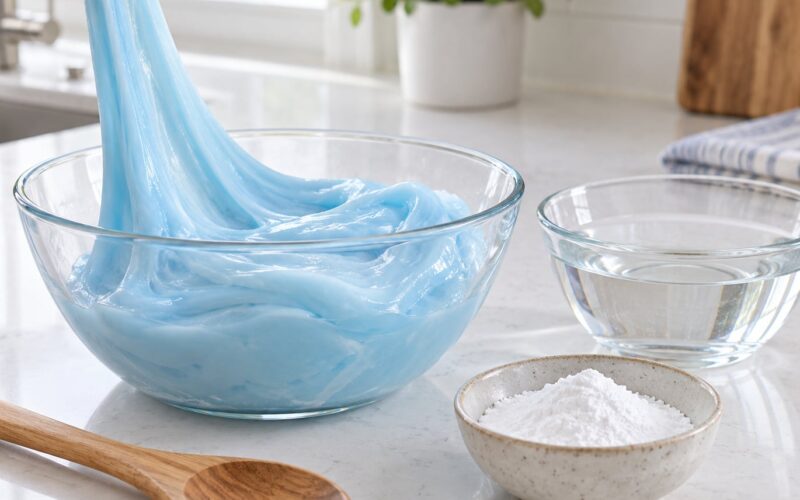
Oobleck is cornstarch mixed with water at a ratio of two parts cornstarch to one part water, and nothing else. Two cups of cornstarch and one cup of water give you a batch that hardens in your palm, flows like a puddle when you stop moving it, and rinses off with plain water. It takes about five minutes to mix, the mess is fully water-soluble, and it doubles as a science demonstration you can explain to a four-year-old.
My kids ask for it on the kitchen table roughly every other weekend, and I keep a spare box of cornstarch in the pantry because of how often the bottom of the bowl goes back to powder overnight. This is the version that works, plus the fixes for the two ways it usually goes wrong.
Table of Contents
- What You Need
- How to Make Oobleck with Cornstarch: Step-by-Step
- Step 1: Combine the Cornstarch and Water
- Step 2: Mix Until the Texture Forms
- Step 3: Test and Adjust the Oobleck
- Why Cornstarch and Water Turn Solid When You Push
- Batch Sizes: Small, Standard, and Large
- Common Mistakes
- Frequently Asked Questions
- How do you make oobleck with 2 ingredients?
- What is the ratio of water to cornstarch in oobleck?
- Do flour and water make oobleck?
- Can you make slime out of oobleck?
- Why does my oobleck turn into a hard lump overnight?
- Conclusion
What You Need
Two ingredients, one optional one, and a bowl big enough that you aren’t tempted to rush the stirring.
- 2 cups cornstarch — plain, unsweetened, no variations with added salt or sugar.
- 1 cup cool water — room temperature works best. Hot water thins the mixture.
- Food coloring (optional) — liquid drops or gel. Add it to the water before the cornstarch so the color spreads evenly.
- A large bowl or deep tub — use something you can lift with one hand. Half-full is manageable, full is a spill waiting to happen.
- A long spoon or spatula — a wooden spoon or silicone spatula. Avoid plastic, which flexes and can snap in thick batches.
- A tray, sheet pan, or the lid of a storage bin — this is your play surface, and it makes cleanup a scrape-and-rinse job.
Before you start, put down the tray and have an old towel handy. Cornstarch dust puffs everywhere the first few seconds of mixing, and it turns any surface you wipe it into a fine white film. An apron helps. Kids in pajamas should not be the ones deciding this.
How to Make Oobleck with Cornstarch: Step-by-Step
Step 1: Combine the Cornstarch and Water
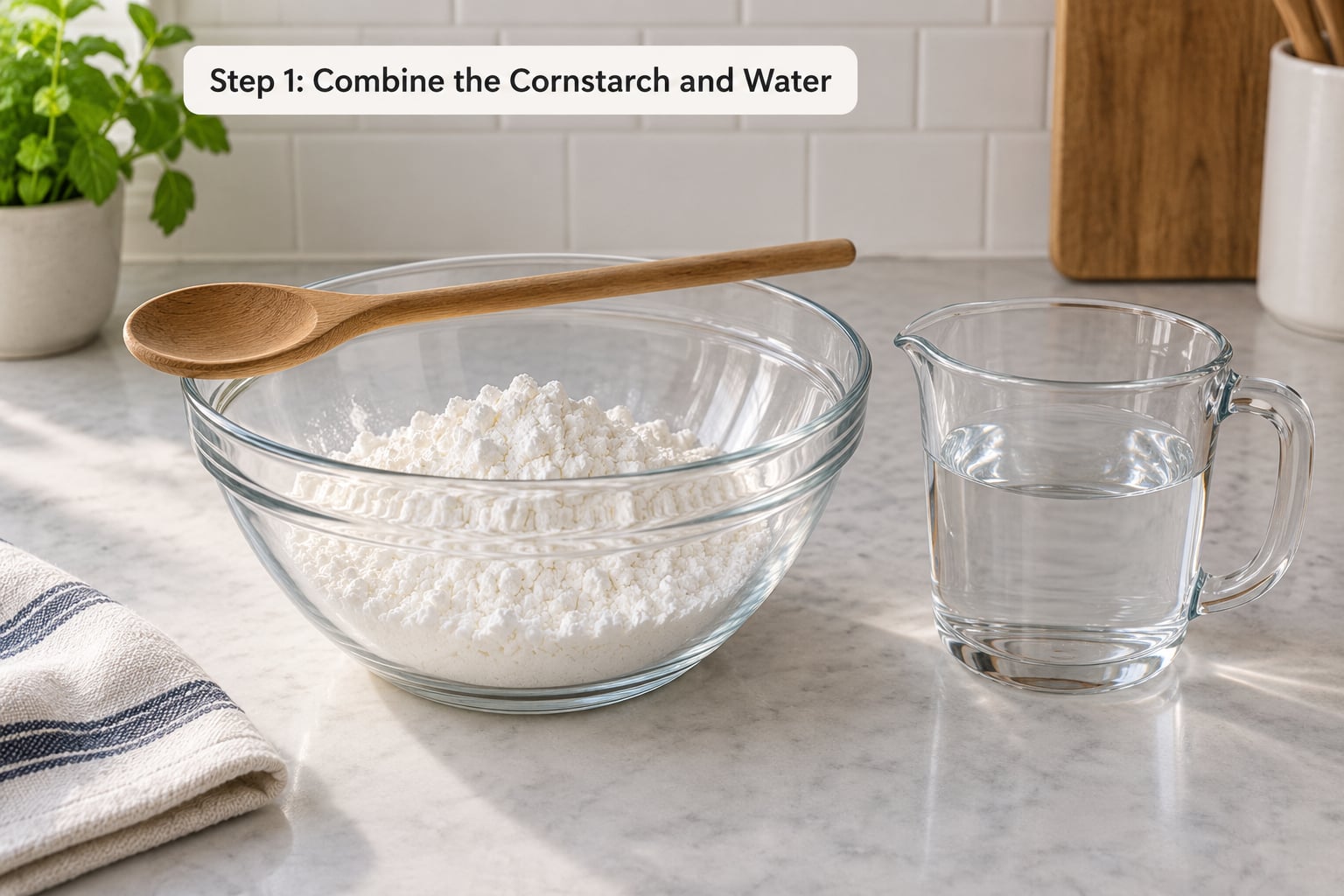
Measure the cornstarch into your bowl first and level it off. Then add the water slowly, in three or four pours, stirring as you go.
If you want color, tint the water in a cup first. Adding dye straight into dry starch leaves speckles that never fully blend.
The mixture will look like thin paint and far too watery. That is correct at this stage. Resist the urge to dump in more cornstarch now, because the transformation happens later and overmixing early is what gives people cement.
Step 2: Mix Until the Texture Forms
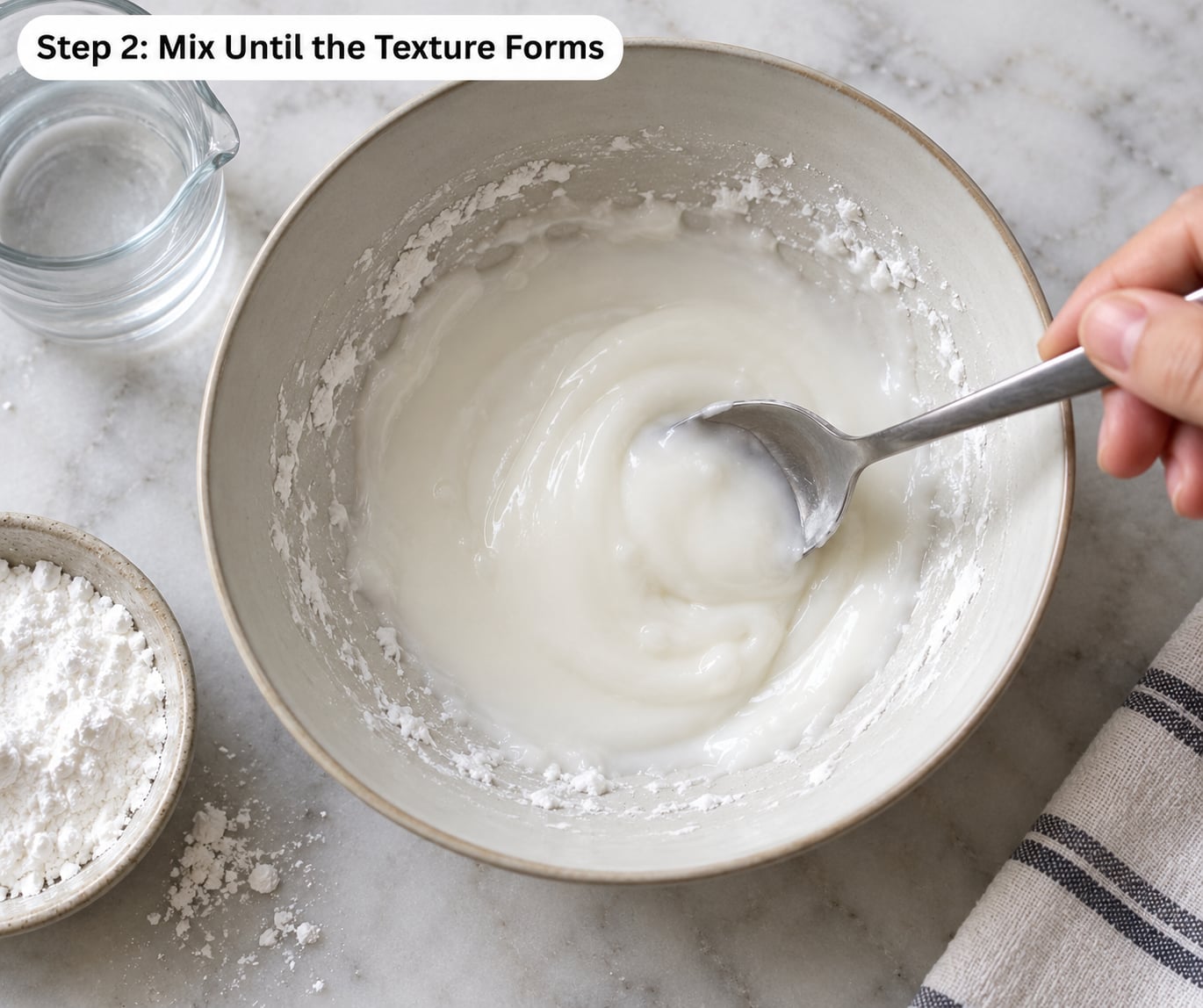
Stir slowly. Slow is the instruction that matters most, and it is the one everyone ignores. As the spoon drags through the mixture it should get harder to move, then briefly stiffen, then loosen again as the starch disperses.
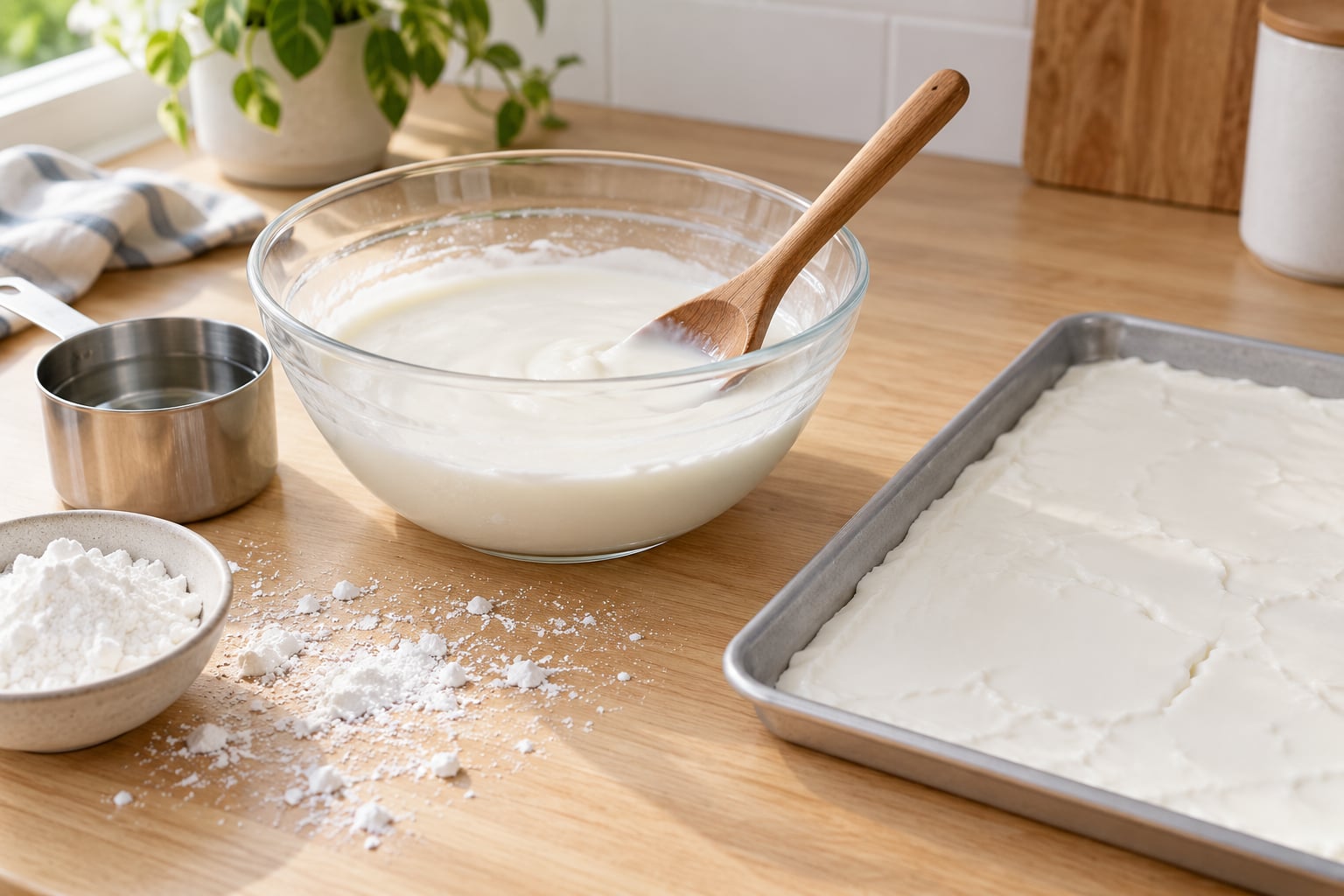
Keep going until you see a pale, smooth, glossy paste with no dry streaks at the bottom of the bowl. Then poke it hard with the spoon. It should resist and break into firm ridges rather than splashing. That resistance is finished oobleck.
If the mixture clumps into a single stiff ball before you are ready, you mixed too aggressively or added too little water. Break the ball up, add a tablespoon of water, and knead it back together. It usually comes right.
Step 3: Test and Adjust the Oobleck
Scoop up a spoonful and squeeze it. A correct batch hardens into a shape in your palm and slumps back into the bowl the moment you open your hand. That squeeze-and-release is the whole test, and it is the same one parents describe on messy play forums.
Too runny and it stays liquid in your hand: add cornstarch one teaspoon at a time, mixing fully between each spoonful. Too stiff and it crumbles or cracks when you squeeze: add water one teaspoon at a time.
Never add more than a teaspoon per adjustment. You can always go thicker again, but a batch that has been over-thinned takes several rounds to bring back and gets a lot of spoon work to break the lumps out.
Pour the finished batch onto your tray, spread it about half an inch deep, and tap the tray on the counter to settle the surface. Run your hand flat across it and it flattens like a solid. That flat, still surface is the best indicator of a good mix.
Why Cornstarch and Water Turn Solid When You Push
Oobleck is a non-Newtonian fluid, which means it does not follow the usual rule that a liquid keeps flowing under any pressure. Water and oil flow at a predictable rate no matter how hard you push them. Oobleck does not.
Cornstarch is made of starch granules, tiny particles that sit loose in water. Push on the mixture and the particles are forced together, water is squeezed out from between them, and the whole batch locks into something that behaves like a solid. Stop pushing and the particles slide apart, water slips back in, and it flows again.
That thickening-under-pressure behavior has a name: it is dilatant, or shear-thickening. Slime and ketchup do the opposite, thinning when you force them, which is why a spoon moves through a glob of slime but stalls in oobleck. It is also why the same batch can feel like wet cement in your hand and like warm milk across the tray two seconds later.
Batch Sizes: Small, Standard, and Large
Roughly two parts cornstarch to one part water by volume, at every size. Use a table if you like.
| Batch | Cornstarch | Water | Good for |
|---|---|---|---|
| Small | 1 cup | 1/2 cup | One child, one tray, about 20 minutes of play |
| Standard | 2 cups | 1 cup | A preschooler and a sibling, a sensory bin, a party table |
| Large | 4 cups | 2 cups | Outdoor play, a group of kids, a full afternoon |
| Sensory bin | 3 cups | 1 1/2 cups | A bin filled halfway with the mixture, tools, and small toys |
Watch the clock, not the cup count. A standard batch at room temperature stays playable for about two hours, longer if you keep adding small amounts of cornstarch as it loosens. Once the tray is flattened, less is more. Kids work harder on a surface that is part solid than one that is fully liquid.
Common Mistakes
Watery oobleck that never thickens. Usually a ratio problem or too much interference. Add cornstarch one teaspoon at a time and let each spoonful mix in fully before checking. If you added all the water at once and it is still runny, you need more than you expect, so measure as you go rather than eyeballing.
Dry, crumbly, hard-to-squeeze oobleck. The water went in short. This happens when you pour fast and stop early, or when you mix so hard that the batch stiffens mid-pour and you assume the recipe is wrong. Add water a teaspoon at a time and knead; dry batches take water more readily than wet ones take cornstarch.
Lumpy dough that will not smooth out. Shear hardening. The mixture seized because it was stirred fast while still too watery. Add a couple of tablespoons of water and squeeze it by hand for a minute, then let it rest. Resting for five minutes lets the starch particles settle and rehydrate, and a lot of lumps disappear on their own.
Oobleck stuck to hands and everything else. Water is the fix and it always works. Wet your hands first before you touch the batch; a dry hand picks up dough instead of shaping it. For sticky surfaces, wipe with a wet cloth rather than dry paper towels, which smear the starch into a film.
Dried oobleck in hair or on carpet. Let it dry completely, then tease out the pieces you can. For carpet and clothing, work a damp cloth into the area to re-wet the starch, then blot toward the center of the patch. A stiff-bristled brush on dry, crusted oobleck lifts most of it before you wet anything.
Disposal. Do not pour oobleck down the sink or a floor drain. It sets inside the pipe the same way it sets under pressure, and the dry starch can block a trap. Let it dry on a tray, scrape it into the trash, and wipe the tray with a wet cloth.
Storage and reviving. Covered in the fridge, a batch lasts a day; by the next day it is often one solid lump. To revive it, break up the lumps, add water one teaspoon at a time, and knead. It comes back within a few minutes. Discard the batch if it smells off or has been sitting out warm for more than a few hours, and make a fresh one instead.
Safety. Both base ingredients are food grade, which is exactly why kids assume it is food. It is not meant to be eaten, and a cornstarch and water mixture is not a substitute for a real edible play dough if you have a baby mouthing things. Plan on ages three and up for the standard recipe, keep it off floors near doorways, and skip the food coloring if dye staining on clothes is not something you want to deal with. It is a water-based mixture, so handwashing ends it; no one needs more than that for skin contact.
Frequently Asked Questions
How do you make oobleck with 2 ingredients?
Mix two parts cornstarch with one part water by volume, which is 2 cups of cornstarch to 1 cup of water for a standard batch. Add the water slowly to the cornstarch and stir gently so the mixture does not seize. It should resist the spoon and hold ridges, then relax when you stop stirring. Five minutes of slow mixing is all it takes.
What is the ratio of water to cornstarch in oobleck?
One part water to two parts cornstarch by volume. That means 1 cup of water for every 2 cups of cornstarch, or 1/2 cup water to 1 cup cornstarch for a small batch. Cornstarch also comes in a light dusting-style powder, which needs less water, so add water gradually and judge the texture rather than the measurement alone.
Do flour and water make oobleck?
No. Flour and water make a plain paste, sometimes glue-like with salt added, but it does not shear-thicken the way cornstarch does, so it will not hold a ball in your palm and collapse when you open your hand. Wheat flour also forms a sticky gluten dough when kneaded. Cornstarch is what gives you the non-Newtonian behavior, so the cornstarch is not optional.
Can you make slime out of oobleck?
Not from the standard cornstarch and water batch. Classic slime needs glue for its stretch and glue-free slime needs a borax or saline solution, which is why oobleck behaves so differently. You can thicken oobleck into a dough-like play clay by adding several extra spoonfuls of cornstarch, but you will not get stringy, pullable slime. Treat it as a sensory dough instead.
Why does my oobleck turn into a hard lump overnight?
The starch absorbs the water it needs and keeps taking it, so a resting batch loses liquid to the starch and sets into a solid mass. Covering it helps but rarely prevents it completely. To bring a batch back, break the lumps apart, add water one teaspoon at a time, and knead until it flows again. If it has been out warm for hours, discard it and mix a new one.
Conclusion
Start with two cups of cornstarch and one cup of water, add the water slowly, and stir patiently until the mixture stops sloshing and starts pushing back. Adjust in single teaspoons from there, pour it onto a tray, and let the squeezing and the science experiment happen on its own. Keep water nearby for cleanup and keep the whole thing off the carpet.