If you want to know how to make playdough without cream of tartar, use lemon juice or white vinegar instead: about 3 tablespoons of either per cup of flour. The acid is what keeps the dough soft and stretchy for weeks, and it takes about fifteen minutes of stirring. Store the finished dough in an airtight container at room temperature, and it stays workable for two weeks or more.
Cream of tartar is tartaric acid, and nobody wants to buy a jar of it for two teaspoons in one recipe. Swapping in a kitchen acid costs almost nothing and does the same job.
A couple of housekeeping notes before you start. This dough is for sensory play, not eating, even though every ingredient is a food ingredient. And whatever you make, plan on doing it with a child rather than for them.
Table of Contents
- What You Need
- What to use instead of cream of tartar
- Step-by-Step: How to Make Playdough Without Cream of Tartar
- The stovetop method (most reliable)
- The no-cook hot water method
- The microwave method
- The two-ingredient version
- How to Adjust the Dough for Different Ages and Textures
- How to Store Playdough and Keep It Soft
- Common Mistakes and Easy Fixes
- Ways to Use Homemade Playdough
- Frequently Asked Questions
- What can I use instead of cream of tartar when making playdough?
- Why is my playdough sticky without cream of tartar?
- How much salt should I use in homemade playdough?
- Can I use food coloring or natural color in playdough?
- How long does homemade playdough last at room temperature?
- Is playdough safe for toddlers to touch and play with?
- Conclusion
What You Need
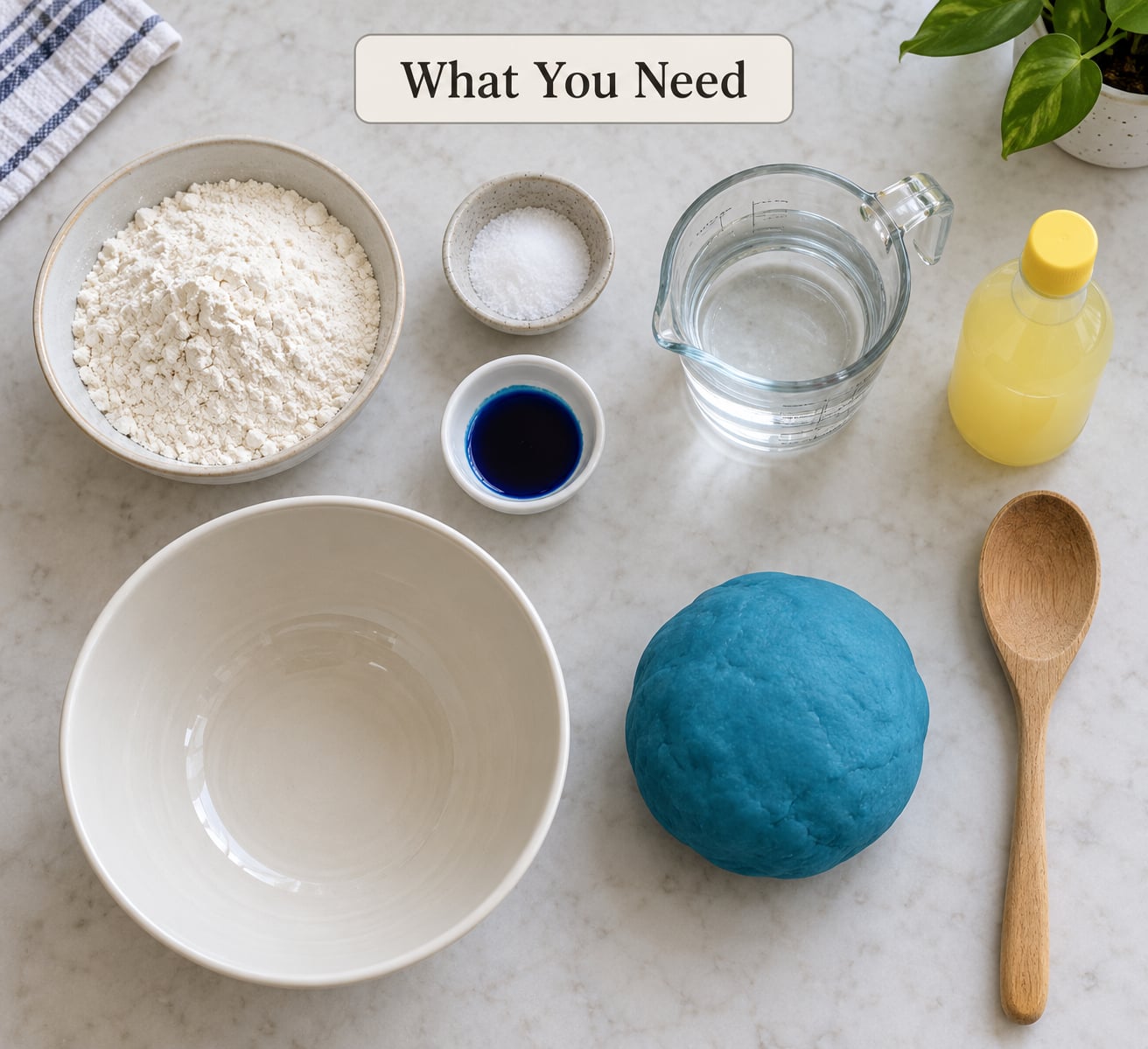
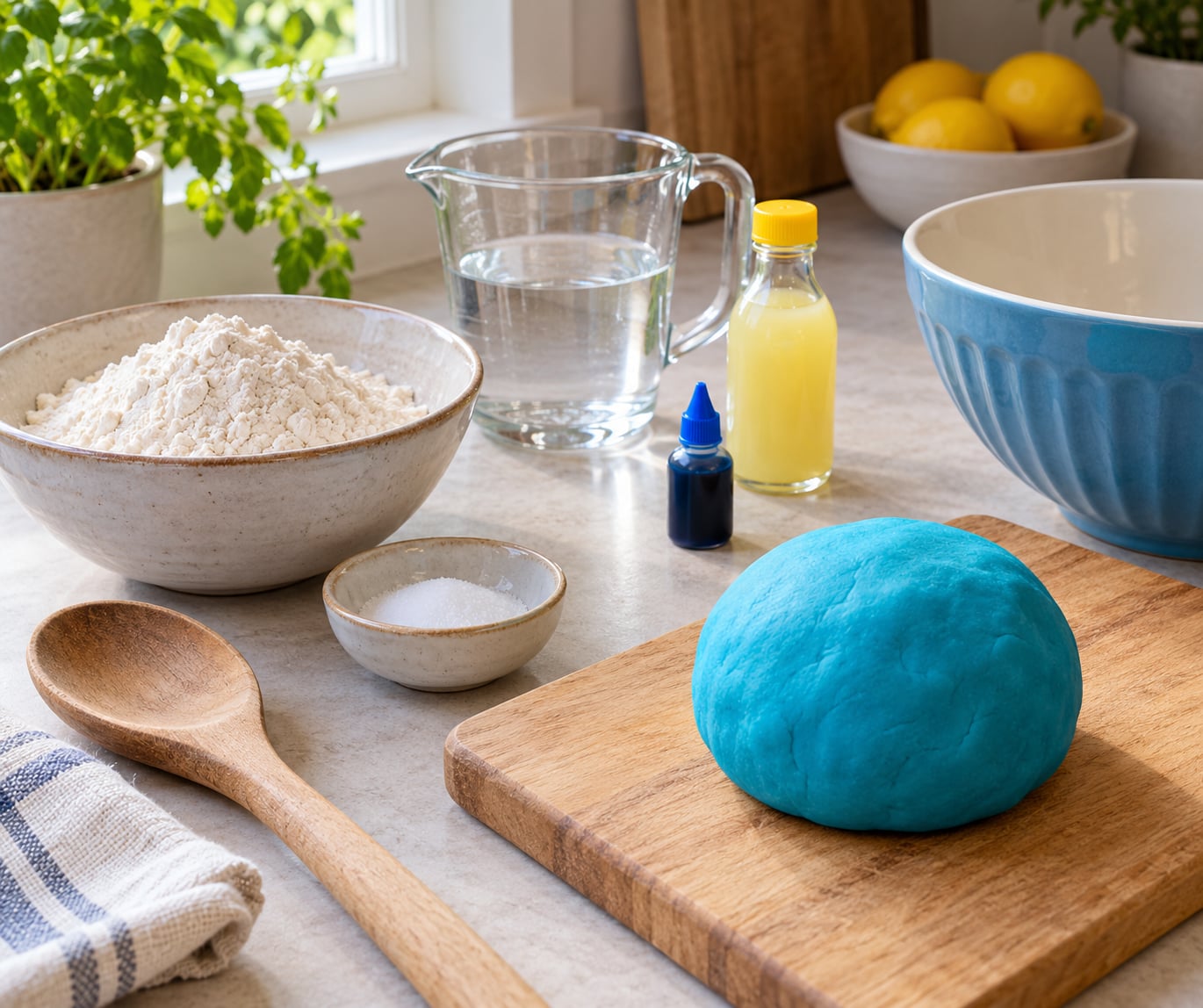
The base recipe is five ingredients in the bowl:
- 2 cups all-purpose flour (about 250 g)
- 1/2 cup table salt (about 60 g)
- 3/4 cup water (about 180 ml), plus a little extra if needed
- 3 tablespoons lemon juice or white vinegar (about 45 ml)
- 1 tablespoon vegetable oil or avocado oil (about 15 ml)
- Food colouring, a few drops, optional
Flour is the body of the dough. Salt keeps it from tasting flat and slows mould, and it works alongside the acid to firm the dough up so it holds a shape instead of slumping. Oil keeps it from cracking when it dries. Water binds it all together.
The acid is the part people leave out, and that is exactly what this guide fixes.
What to use instead of cream of tartar
| Substitute | Amount per cup of flour | Resulting texture | Best for |
|---|---|---|---|
| Lemon juice | 1.5 tablespoons | Soft, slightly springy | The all-round swap; smells pleasant |
| White vinegar | 1.5 tablespoons | Softer, a little tackier | When lemon juice is out |
| Citric acid powder | 1/2 teaspoon | Firm, smooth, less sticky | A cleaner acid with no smell |
| Powdered vitamin C (ascorbic acid) | 1/2 teaspoon | Firm, pale yellow tint | Using what you already own |
| Extra salt, no acid | 3/4 cup salt per 2 cups flour | Grainier, sand-like | Sensory trays and babies’ supervised play |
For colouring, gel food colouring gives the cleanest result. A teaspoon of Kool-Aid powder or a small splash of the drink works too, though the colour is lighter. For natural dyes, mash cooked beetroot, spinach, or freeze-dried berries into a little hot water and strain it.
For scent, add a drop of essential oil after the dough cools, or a spoonful of vanilla extract before mixing. Skip both if your child reacts to strong smells.
Step-by-Step: How to Make Playdough Without Cream of Tartar
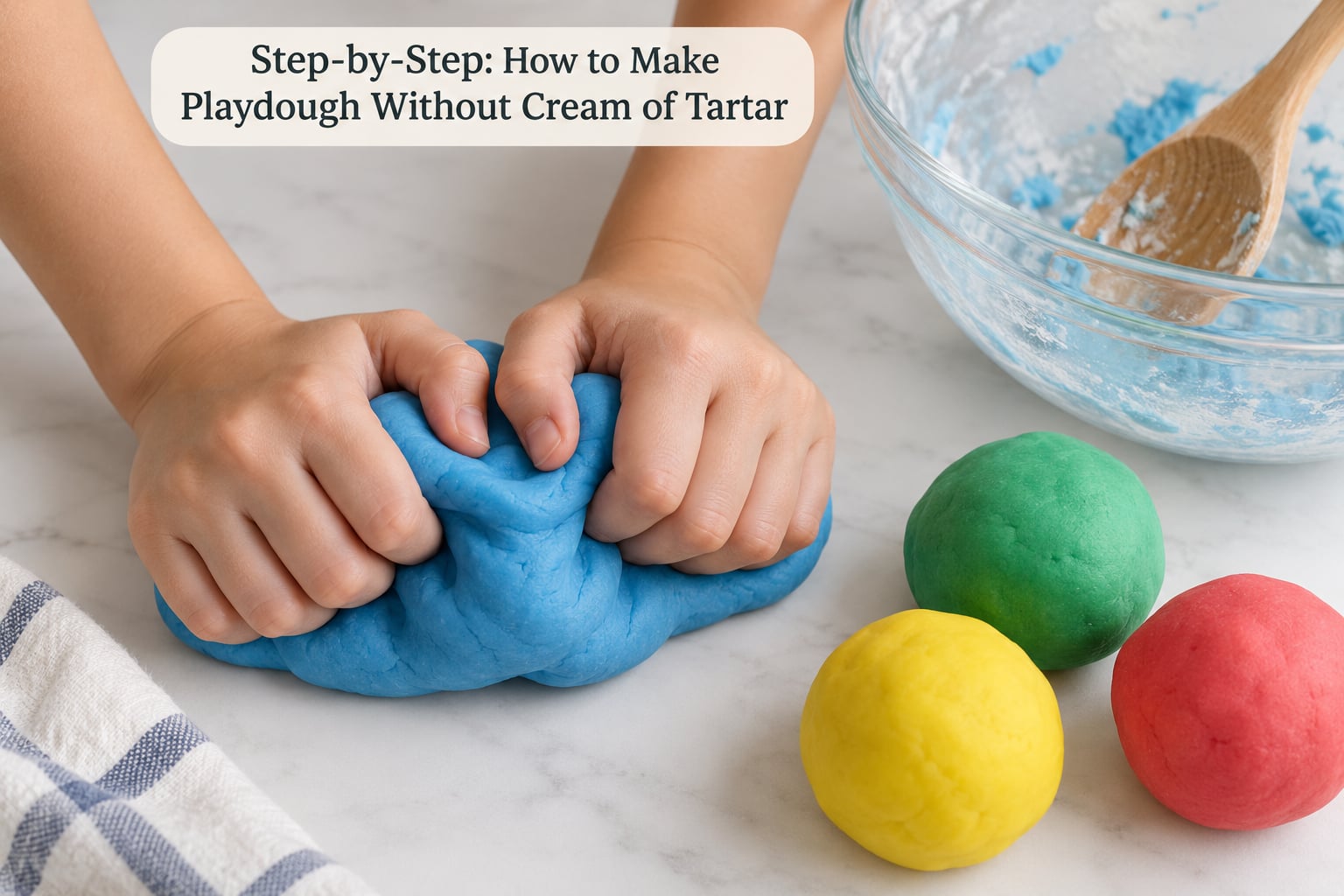
The stovetop method (most reliable)
- Mix 2 cups flour and 1/2 cup salt in a large bowl until no streaks of salt are left.
- Pour in 1 tablespoon of oil and stir through, so the flour clumps into small pieces.
- Add 3/4 cup water and 3 tablespoons lemon juice or vinegar. Stir hard. It will look like wet sand and then come together into a shaggy mass.
- Cook over medium heat, stirring constantly, for 3 to 5 minutes. The dough pulls away from the sides of the pan and stops looking wet.
- Tip it onto a work surface while still warm and knead for 2 minutes. It goes from grainy to smooth under your hands.
- Cool for 20 to 30 minutes before giving it over. It firms as it cools, so pull it off the heat while it still feels slightly tacky rather than waiting for it to look perfect.
You can tell it is ready when it holds a ball shape in your palm without slumping and leaves a clean-ish pan behind. Dough that firms too much once cold is dough you cooked one minute too long, and there is no fixing it except adding more flour and water, which changes the texture.
The no-cook hot water method
Bring 3/4 cup water to a boil, remove it from the heat, then pour it over the flour and salt. Stir for a minute, add the lemon juice or vinegar and the oil, and knead once the dough is cool enough to handle.
This version works because hot water gelatinises the flour starch and binds the dough without a pan. It takes five minutes instead of fifteen, and it will be softer and shorter-lived than the cooked batch.
The microwave method
Put the flour, salt, oil, water and acid in a microwave-safe bowl, cover it loosely with a plate, and microwave on high for two minutes. Knead, then heat again in 30-second bursts until it firms up. Watch it closely: microwave heat is uneven and it goes from done to rubbery fast.
The two-ingredient version
For the salt-only dough that answers “can I make playdough without cream of tartar or lemon juice”, mix 1 cup flour with 1/3 cup salt and add just enough warm water to bring it together. It will be grainy and short-lived, closer to a sensory sand than a modelling dough, and it dries within a few days.
How to Adjust the Dough for Different Ages and Textures
For toddlers, add an extra tablespoon of water and knead it in, or mix in a spoonful of plain yoghurt. Both make the dough softer and slipperier, which suits small hands that grip hard.
For a fluffier, airier batch, double the flour and salt and give the cooked dough a longer knead, then let it rest wrapped for an hour before opening it. The resting is what builds the elasticity, not the mixing.
For a salty, sand-like sensory dough, skip the acid entirely and raise the salt to about 3/4 cup per 2 cups of flour. Children scoop and pour it rather than modelling with it, which keeps little hands busy without stickiness.
For natural colour, replace the water with strained vegetable or berry tea and reduce it by a couple of tablespoons, since dye water concentrates as it cooks.
On safety: supervise throughout, and expect children under three to taste things. This dough contains a lot of salt, so keep it away from the under-threes and away from pets. Skip wheat flour for a gluten-free dough using a wheat-free flour blend plus xanthan gum, added at about 1/4 teaspoon per cup. Wash hands before play and after, and use a clean board every time.
How to Store Playdough and Keep It Soft
Press the dough flat in an airtight container, wrap the surface in cling film or press a layer of oil onto it, and put the lid on. That air gap is what dries it out.
On the refrigerate question, sources contradict each other. Here is the resolution: if you are using the dough within a week, keep it at room temperature in a cupboard, away from the radiator. Refrigeration is the better option past that, because cool, sealed air slows the drying that ruins the texture, and it will sit there happily for a month. Take it out ten minutes before play so it is not rock hard.
The salt-only version is the exception. It goes in the fridge no matter what, since room-temperature salt dough moulds within a couple of days.
If the dough has gone stiff or cracked, drop a teaspoon of water into the bowl and knead. Repeat in small amounts rather than pouring, or you will swing back to sticky. Dry dough comes back more reliably than wet dough comes back dry.
Throw it away if it smells sour or musty, if you see any fuzzy colour, or if it has been handled with unwashed hands near food. Salt slows mould, it does not prevent it.
Common Mistakes and Easy Fixes
- Sticky dough. Cook it two minutes longer, or knead in an extra 2 to 3 tablespoons of flour. Sticky dough is almost always undercooked.
- Watery dough that spreads. Add flour a tablespoon at a time until it holds a ball, then knead it through properly.
- Crumbly dough that breaks at the edges. You are short on liquid or oil. Add warm water a teaspoon at a time and knead.
- Dough that is too salty to handle. Add a second cup of flour and a tablespoon of oil to dilute it.
- Patchy colour. Mix the colouring into the water before it meets the flour, and for Kool-Aid, sift the powder into the dry mix first.
- Dough that dries out in a day. Your kitchen is dry. Cut the water slightly on future batches, seal the container properly, and press the surface flat before the lid goes on.
Measure flour by spoon and level, never by scooping, since that is where most dry batches come from. And knead longer than feels useful: the dough is done when it is smooth and no longer gritty after about two full minutes.
Ways to Use Homemade Playdough
Shape-making is the obvious one, and it is the best fine motor practice in the house: rolling with a pin, cutting cookie-cutter shapes, and threading holes is the work small hands need.
Make it a bakery. Give your child dough, a rolling pin, plastic cups, and pretend order cards. They roll, cut, stack, and name what they made, which turns a craft into a language and sequencing activity.
Print and stamp. Press letter stamps, cookie cutters, or pasta pieces into flattened dough for alphabet and number practice, then regroup the letters into real words once they are old enough.
Run a market stall. Dollops of coloured dough in bowls with toy food, plastic cups and a till. The serving and counting is the point, and it keeps a child occupied for a surprisingly long time.
Make it seasonal: green for a garden, orange and brown for autumn leaves, red and green dough rolled into ropes for a December table decoration.
Use thin rolled ropes as a fine motor challenge. Snapping, knotting and looping short pieces exercises hand strength that stacking blocks does not.
For a party, send kids home with a small ball of dough in a labelled pot with the recipe on a card. It works well as a party favour and costs very little.
Frequently Asked Questions
What can I use instead of cream of tartar when making playdough?
Lemon juice and white vinegar are the two easy swaps, at about 1.5 tablespoons per cup of flour. Citric acid powder or powdered vitamin C also work at roughly half a teaspoon per cup and leave no sour smell. If you have none of these, extra salt at 3/4 cup per 2 cups of flour gives you a grainier sensory dough that works for scooping and pouring rather than modelling.
Why is my playdough sticky without cream of tartar?
Stickiness usually means the dough is undercooked, not that the acid is missing. Flour needs heat to bind, and hot water alone sometimes leaves it loose. Cook it on the stove for another two minutes, or knead in two to three tablespoons of extra flour. If it is sticky after that, add a teaspoon of water at a time instead, since overcorrecting with flour gives you a dry, cracked dough.
How much salt should I use in homemade playdough?
For soft modelling dough, use half a cup of salt per two cups of flour. That is enough to season the dough and slow mould without making it unpleasant to handle. If you are making the salty sensory sand version instead, go up to three quarters of a cup per two cups of flour and skip the acid entirely. Never let a child under three taste it, because the salt content is high.
Can I use food coloring or natural color in playdough?
Both work. Gel food coloring gives the strongest, most even colour, and a teaspoon of Kool-Aid powder mixed into the dry flour gives a good result too, slightly lighter. For natural color, replace some of the water with strained beetroot, spinach, or berry tea and reduce it by a couple of tablespoons. Expect natural shades to fade over a few days of play, which is a fair trade.
How long does homemade playdough last at room temperature?
In an airtight container kept flat, soft dough stays workable for about two weeks at room temperature, and up to a month in the fridge if you take it out ten minutes before play. Press the surface flat and cover it with cling film before the lid goes on, because trapped air is what dries it out. The salt-only sensory dough keeps far less time and should be refrigerated straight away.
Is playdough safe for toddlers to touch and play with?
Supervise the whole time, and expect younger children to put things in their mouths. Because the recipe calls for a lot of salt, keep it away from children under three and away from pets. Wash hands before and after play, use a clean board each session, and discard any batch that smells musty or shows fuzzy colour. Ingredients are food ingredients, but the dough is still for play, not eating.
Conclusion
Start with the simplest version: two cups of flour, half a cup of salt, three quarters of a cup of water, and three tablespoons of lemon juice, cooked on the stove for four minutes and kneaded while warm. That batch alone will cover most of what people search for when they want to know how to make playdough without cream of tartar.
Let it cool fully before it goes near small hands, keep it out of reach of anyone under three, and stay within arm’s reach during play. Once the first batch is made, adjust the water for a softer dough, the salt for a sensory sand, or the acid for a different smell, and the recipe becomes yours.