If your child says they hate art, the fix is rarely a better craft or a new set of supplies. Almost always it is about pressure, mess, criticism, or a medium that feels wrong in their hands. How to encourage a child who hates art comes down to lowering the stakes, offering small choices, and letting the making matter more than the result.
I have watched this play out with kids who announced they were bad at drawing and then spent twenty minutes happily sticking magazine scraps into a shape. Nothing about their skill changed that week. What changed was that nobody was watching for a good result.
Here is a plan that takes about a week to start and costs nothing beyond what is already in a kitchen drawer.
Table of Contents
- What You Need
- The supplies that matter most
- A place that says art is expected
- Step-by-Step: How to Encourage a Child Who Hates Art Without Pressure
- 1. Remove the pressure to make it look good
- 2. Offer a small choice instead of assigning a project
- 3. Start with familiar, low-pressure materials
- 4. Use invitations rather than instructions
- 5. Follow the child’s interest, even briefly
- 6. Make the first session short and successful
- 7. Celebrate effort, experimentation, and personal choices
- 8. Keep art regular but flexible
- Common Mistakes
- Forcing participation
- Correcting technique
- Comparing work
- Too many supplies at once
- Stretching the session too long
- Treating every piece as a display item
- What about when art really is not their thing
- Frequently Asked Questions
- What if my child refuses to do any art activities?
- How young should a child be before trying arts and crafts?
- What art materials are best for a child who does not like getting messy?
- Should I praise my child’s drawing or painting?
- How long should an art activity be for a reluctant child?
- What if my child is naturally gifted at art but still does not want to participate?
- Conclusion
What You Need
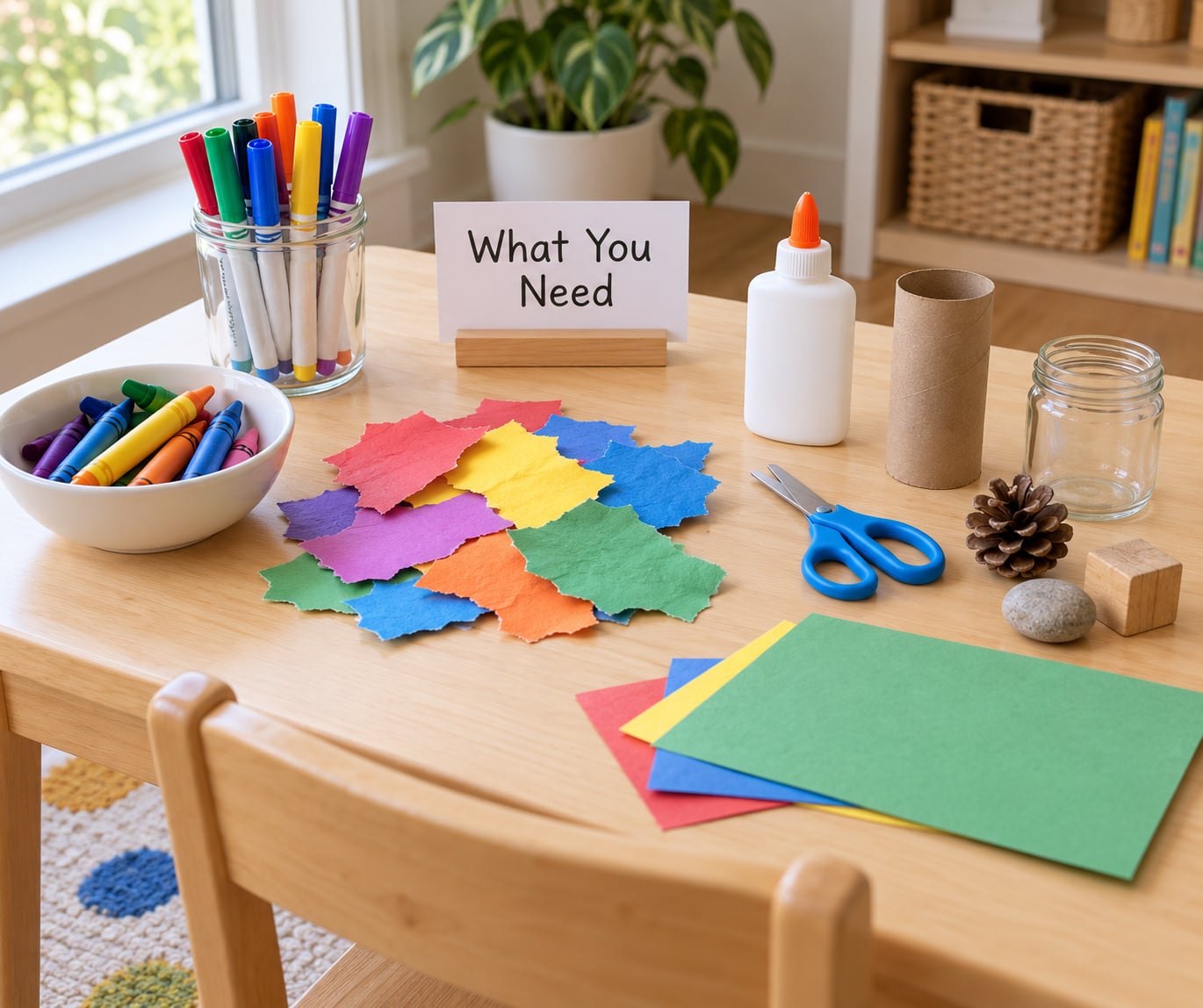
Start by noticing what your child already avoids. If they flinch at sticky paint but will happily peel stickers for ten minutes, that is your entry point, and you can skip straight to step three.
The short answer to why a child says they hate art is that art got associated with being watched, corrected, or cleaned up afterwards. It is a temporary association, not a verdict on talent, and clearing it takes low-pressure repetition rather than persuasion.
The supplies that matter most
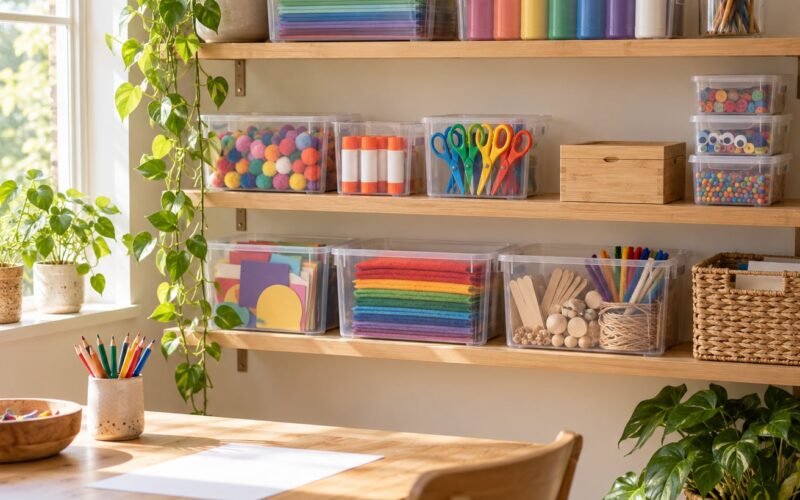
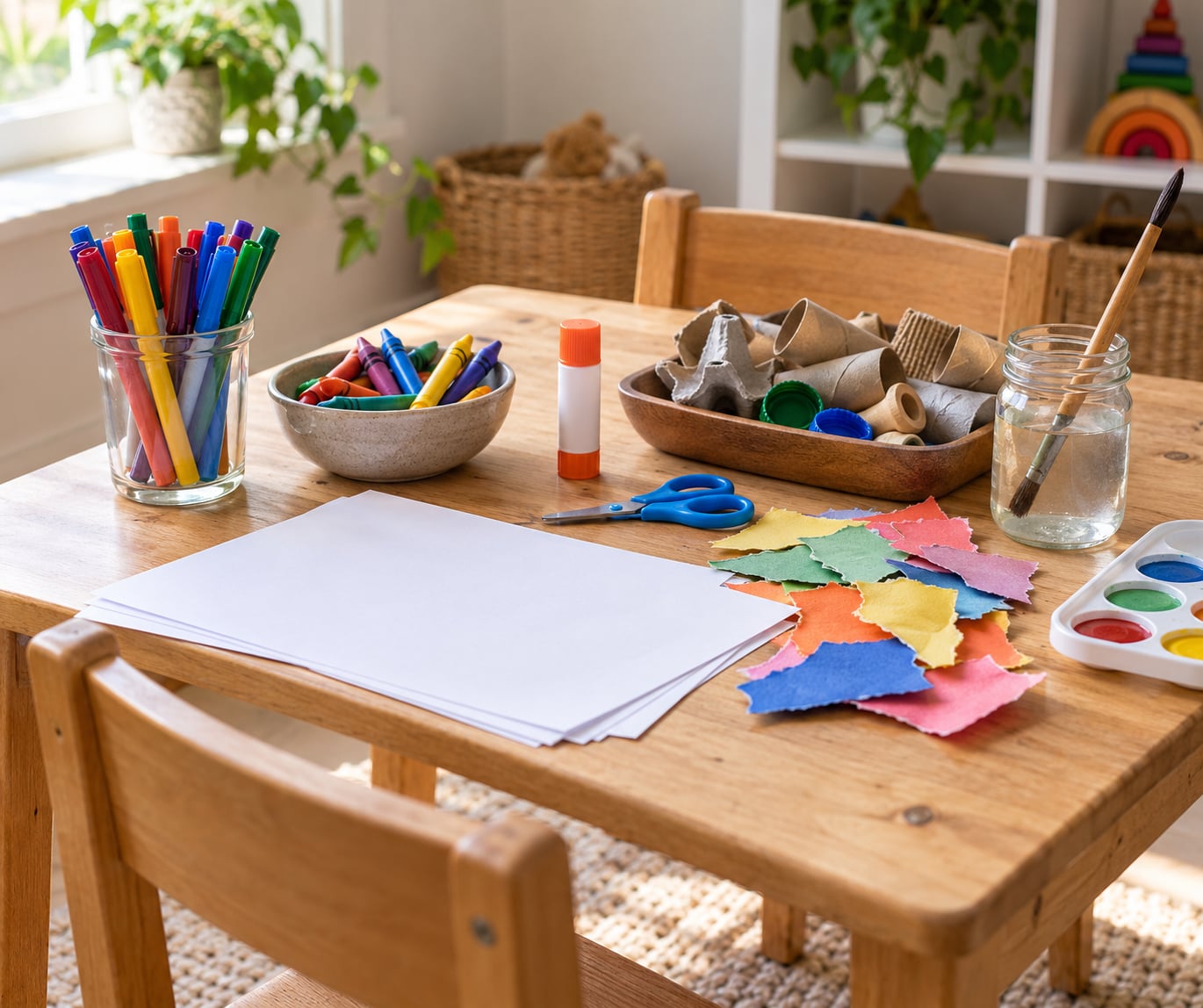
Nothing here needs to be bought new. Washable markers, chunky crayons, a stack of plain paper, glue, safety scissors, and a jar of recycled bits (magazine squares, bottle caps, torn tissue paper) will cover most of this article. Add a craft mat or an old sheet of plastic if the table is a surface you care about.
Keep a rinse brush and a jar of water within reach. A wet brush makes a child who has decided art means “too hard to undo” far more willing to start, because there is always a way back.
A place that says art is expected
A low shelf or a corner of the kitchen table with the materials out and visible does more than any permission you give out loud. Kids who refuse art usually refuse the ceremony around it: setting up, being timed, being watched. Leave the box where it is, closed, until they open it themselves.
Outdoor ground, a bathtub, and a craft mat are your three mess containment options. Choose the location based on the medium: paint outdoors or in the tub, stickers and collage on a mat, drawing anywhere.
Step-by-Step: How to Encourage a Child Who Hates Art Without Pressure
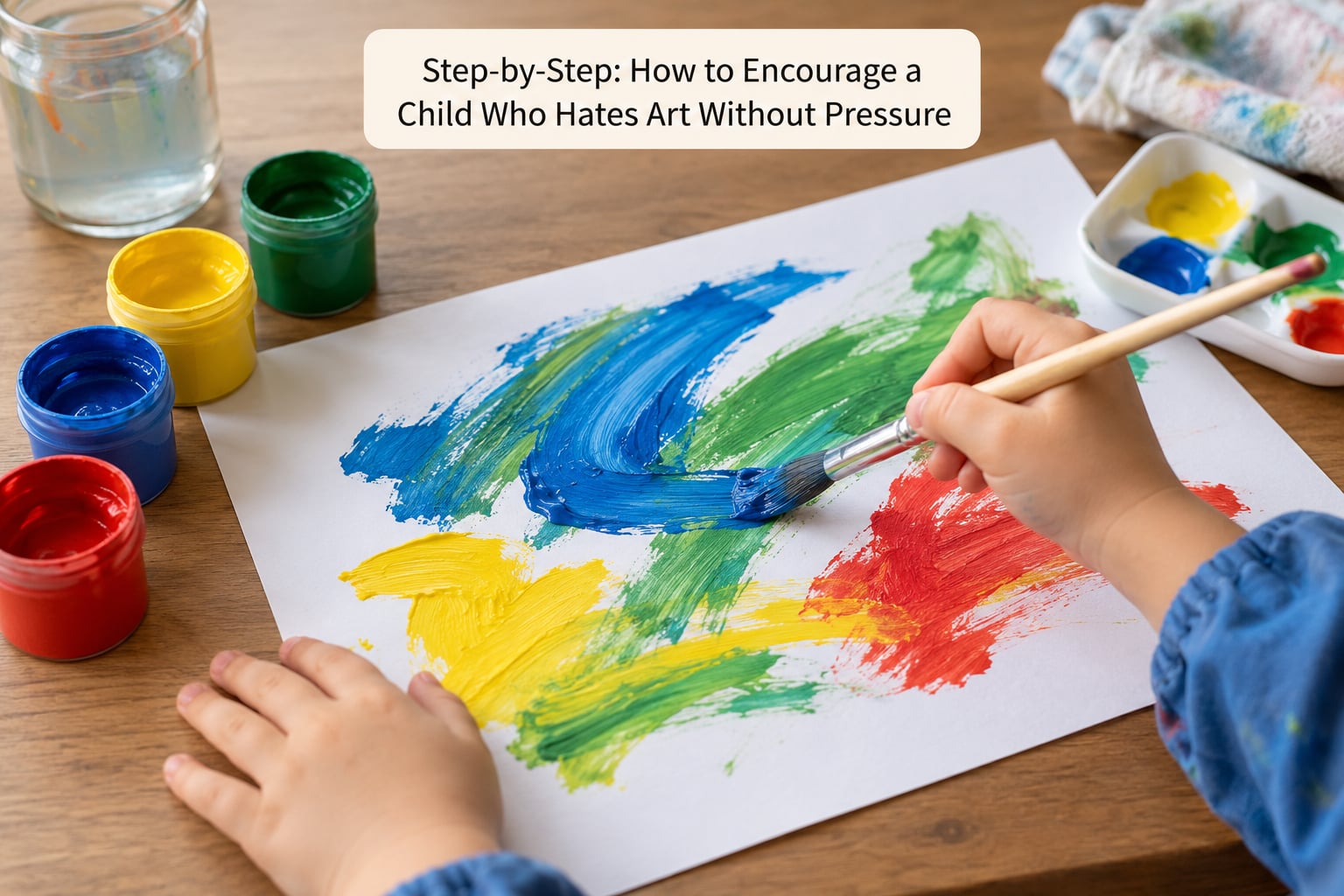
Work through these in order over one to two weeks rather than all at once. The early steps matter more than the activities, because a child who feels cornered will refuse a genuinely fun craft.
1. Remove the pressure to make it look good
Shift the goal from a finished picture to curiosity about the materials. Say “you are not making anything, you are just trying this out” before you hand anything over, because kids believe what adults say about the activity they are about to do.
Replace evaluation with description. “That is a long line” or “you used the whole page” lands better than “nice” and much better than “you could try holding the crayon like this.” If you catch yourself mid-correction, stop talking and go back to quiet company nearby; a parent watching in silence takes all the pressure out of the room.
You know it is working when the child starts making marks without pausing to check your face.
2. Offer a small choice instead of assigning a project
Choices hand control back, and control is usually what is missing. Limit it to two options or it becomes another decision they have to make. Two colors, two materials, or “paper or the whiteboard today” all work.
Choices also tell you something. A child who always picks stickers has told you they want predictability and no cleanup risk. One who picks paint every single time is telling you the sensory part is the appeal, and that is worth knowing before you build a project around it.
3. Start with familiar, low-pressure materials
Crayons, washable markers, play dough, stickers, collage, and stamping ask less of a child than drawing or painting does. Nothing needs to look like anything, and nothing gets ruined if it is a mess.
Match the medium to where the child is right now, not to where you want them to be in a month. Thick chunky crayons suit a child who grips too hard and a child with a developing pencil grip; play dough and stickers work well for children who dislike fine detail. Skip watercolors and thin brushes until the child has decided they like getting their hands wet.
4. Use invitations rather than instructions
Swap step-by-step craft projects for open invitations that leave room to decide everything. “Make some lines,” “fill this whole page with one color,” “make a creature out of three shapes,” “cover this plate with whatever you like.” The prompt is the whole assignment.
An invitation prevents the blank-page freeze that kills most attempts. Your child is never handed nothing to start with, but they are also never told what the answer should look like, which is the part that makes art feel like a test.
5. Follow the child’s interest, even briefly
If they ask for dinosaurs on Tuesday, dinosaurs it is. Attach interest to the activity rather than replacing it: “you can draw the dinosaurs, or you can build them out of blocks and paint the blocks.” Interest is what carries a reluctant child through the first five minutes, and the medium matters far less than getting them started.
Interest does not need to look like a good theme. Fifty feet of masking tape unrolled along a wall is as much art as a painting, even though no one will hang it.
6. Make the first session short and successful
Pick a clear start, one loose activity, and an easy finish, and keep the whole thing under ten minutes. “I’m going to set out the paper and the crayons, and you can stop whenever you want” is a good opener because it announces the exit before they get defensive about it.
End while it is still going well. Stopping at minute eight with paint still wet teaches that art is something you get to do, not something you have to finish. Next session, add a couple of minutes.
Signs of a good first session: they choose to stop themselves, they mention the activity later unprompted, or they ask when the paper is going back out. All three are better signals than a finished piece.
7. Celebrate effort, experimentation, and personal choices
Notice the specific thing they did: which color they picked, that they tried a second way when the first did not work, that they used the whole sheet. Specific praise tells a child you were actually watching, and generic praise (“good job, I love it”) gets ignored after about the third time.
Watch out for praise that turns into a judgment, like “you are so artistic.” That single label makes the next attempt a test of whether they still deserve it, and many children decide quickly that they do not. Skip the talent words entirely and talk about what they did instead.
8. Keep art regular but flexible
A loose rhythm beats a schedule. Three short sessions a week is plenty, and they can be the same activity repeated until it stops feeling like a novelty, which is usually around the third time.
Two things to keep it from turning into a performance: never tie art to a reward or a punishment, and never require the finished work to be shown, photographed, or sent to anyone. A simple week looks like this:
- Monday: five minutes of free drawing or play dough, ends while still going.
- Wednesday: an invitation activity chosen from two options, about ten minutes.
- Saturday: something they pick, outdoors or messy, no time limit.
Revisit whatever they tolerated or enjoyed. Repetition is what turns an activity from an event into a comfort, and comfort is how a child decides art is safe.
Common Mistakes
These six habits turn a mild reluctance into a real refusal. Each one is easy to fix once you notice it.
Forcing participation
Requiring the activity means the child has to win before they start, and most of them would rather walk away. Insistence tends to make the whole thing stranger, not more appealing. Put the materials down and walk away instead.
Correcting technique
Holding the crayon “properly,” outlining in pencil first, showing where the horizon goes. Any of it hands the child a scoreboard. A wobbly line is a wobbly line, and correcting it teaches that the adult is grading.
Comparing work
Any version of “look how nice your sister’s is” ends the session early for the person being compared to, whether or not they react visibly. Sibling comparison is the fastest way to make art a competition, and competitions produce exactly one winner and one child who quits.
Too many supplies at once
Laying out twenty materials looks generous and feels like a decision. Four options maximum, put the rest back in the box. A closed box that a child opens themselves is worth more than an open one you assembled.
Stretching the session too long
Pushing past the point of interest turns ten good minutes into a fight you both remember. Stop early and stay in charge of it: you decided today was a short one, not that they failed to finish.
Treating every piece as a display item
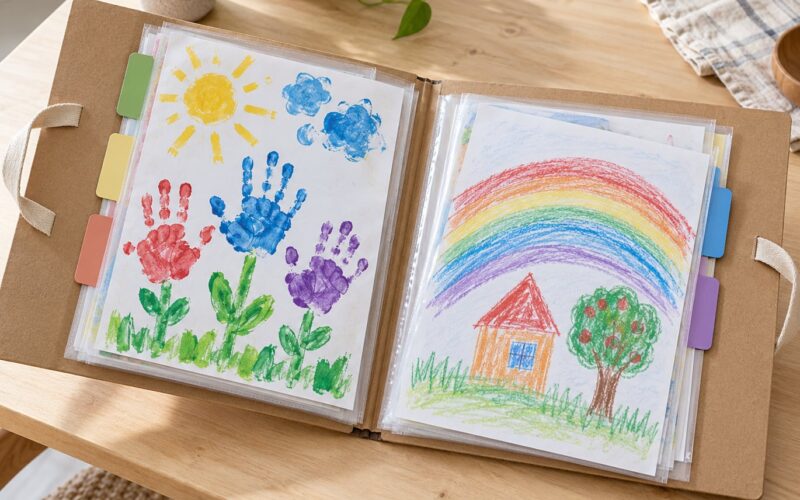
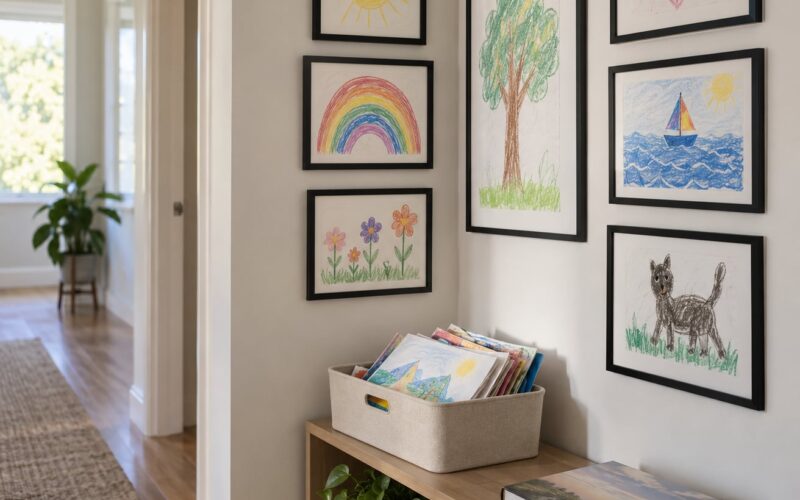
Parents get buried in artwork, and children feel their work judged by an audience. Keep a small rotating display, three or four pieces at most, and photograph the rest before you recycle or store them. No fridge obligation, no note home.
What about when art really is not their thing
Some children are not going to grow into art, and pretending otherwise wastes years. Creative expression is not one skill, it is a family of them: building, music, movement, photography, telling stories, arranging things. A child who never picks up a crayon but rebuilds the same tower for an hour is doing exactly the same underlying work.
One last encouragement: the goal is not a child who loves art. It is a child who has stopped believing they are bad at it. Everything above serves that, and it matters far past art class.
Frequently Asked Questions
What if my child refuses to do any art activities?
Most refusals are about control or a previous bad experience, not a lack of ability. Try one five-minute invitation with two material choices and no instructions, put the supplies out, and step away. Repeat the same activity two or three times before adding anything new. If refusal comes with distress around texture, sound, or getting dirty, mention it to your child’s doctor, who can point you toward a sensory or occupational therapy assessment.
How young should a child be before trying arts and crafts?
There is no correct age, but expectations shift quickly. From about age two, expect scribbling, squeezing play dough, and sticking stickers, with no product at the end. Between four and five, add simple stamping, tearing and gluing. From six up, kids can handle small construction tasks, longer projects, and decisions about what to keep. Follow the child’s stage rather than their birthday when a task is clearly beyond them.
What art materials are best for a child who does not like getting messy?
Start with materials that stay dry: crayons, chunky pencils, washable markers, stickers, tissue paper collage, and block printing with a sponge. A craft mat or a sheet of plastic under the paper protects a table, and markers are worth keeping separate from any supplies kept out of reach. Most children who avoid mess still accept it in a specific place, so try the bathtub or outdoors before assuming they have ruled it out completely.
Should I praise my child’s drawing or painting?
Praise the specific action, not the result and not the talent. Saying that they used the whole page, tried a second way after the first did not work, or chose an unusual color tells them you were paying attention. Avoid labels like you are artistic or you are so creative, because they turn the next attempt into a test of deserving the label. Descriptive comments keep the child making instead of waiting to be judged.
How long should an art activity be for a reluctant child?
Five to ten minutes is the right range to begin with, and finish while the child still wants to continue. Announce the short length before you start so the exit is predictable. Over the next couple of weeks, stretch a minute or two at a time as long as they keep choosing to join in. A child who consistently loses interest at seven minutes has found their limit, and extending it by force only builds resistance.
What if my child is naturally gifted at art but still does not want to participate?
Talent is not the same as interest, and plenty of children draw well without wanting to spend time on it. Keep the pressure off anyway: skipping art class is fine, and you can let them rejoin whenever the pull comes back. If a child has real ability and is avoiding it, it is worth asking whether something else is going on, such as a comparison they feel they cannot live up to or a teacher interaction they have not mentioned.
Conclusion
Start with one short, choice-based activity tonight. Offer two materials, give an invitation instead of instructions, follow whatever they pick, and stop while they still want more.
Then talk about what they did rather than what it looked like, and put the supplies back out in a few days. That is the whole method, and it works because it removes the one thing that made art feel unbearable.