To get slime out of hair, take off the biggest pieces first, work oil or conditioner through the sticky sections, comb gently from the ends upward, then rinse and shampoo until the water runs clear. The whole job usually takes 10 to 20 minutes, most of it spent combing slowly rather than scrubbing.
The part that matters most is doing it before the slime dries. Wet slime slides out; dried slime forms a hard film that grips the hair shaft and usually comes out in one painful clump, or not at all. I have watched this go from a five-minute sink job to a much longer afternoon because someone put the child under the dryer first.
Table of Contents
- What You Need
- Step-by-Step: How to Get Slime Out of Hair
- 1. Remove Loose Slime Before Wet Hair
- 2. Work In Oil to Loosen the Slime
- 3. Rinse and Shampoo Until Clear
- Common Mistakes
- Frequently Asked Questions
- What is the best way to get slime out of hair?
- Does vinegar really remove slime from hair?
- How do I get dried slime out of my child’s hair?
- Is it safe to use dish soap or oil on a child’s scalp?
- How can I remove slime from a wig or synthetic hair?
- Conclusion
What You Need
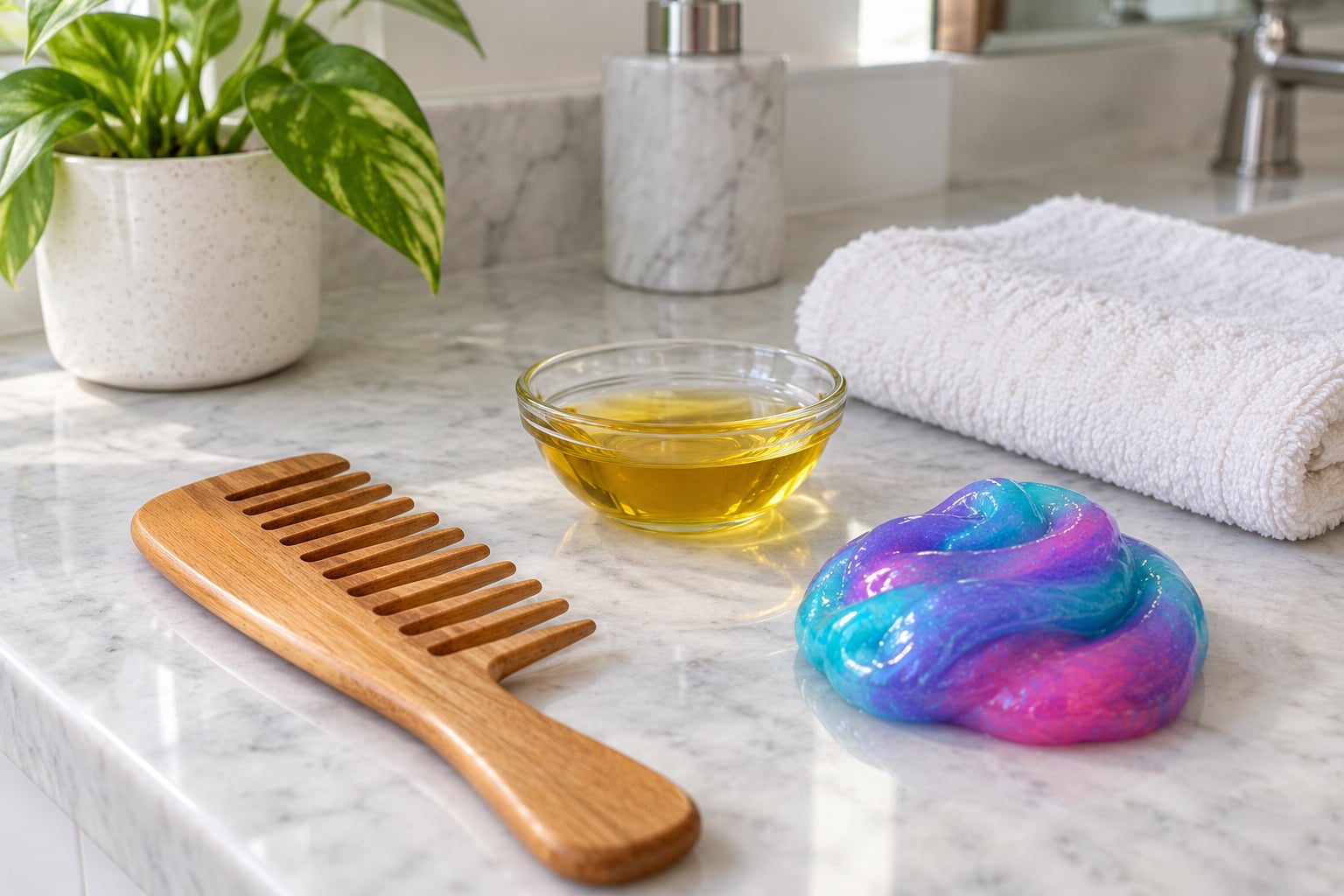
You need very little, and most of it is already in the house. Lay it all out on the counter before you start, because you will want both hands free.
- A wide-tooth comb. Wide teeth spread the load so you are loosening the slime rather than dragging it down the shaft. A normal comb turns a sticky clump into a mat quickly.
- A bowl of lukewarm water. Not hot. Hot water sets some slime types and tightens curly hair.
- A conditioning oil. Coconut oil, olive oil, mineral oil, or a thick leave-in conditioner all work. The conditioner option is the easiest for a child who does not want oil in their hair.
- Mild shampoo or dish soap. Shampoo handles the oily residue. Dish soap handles a heavy, stubborn slime film, and it takes more rinsing out of the hair afterward.
- Gloves and a plastic spoon. Optional, but they make the first stage far less sticky for your hands.
Substitutions are fine as long as they are meant for hair or skin. Skip anything solvent-based, including nail polish remover, paint thinner, WD-40, and adhesive removers. On a child’s scalp those are not worth the trade.
Step-by-Step: How to Get Slime Out of Hair
Before you start, work out what kind of slime you are dealing with, because it decides your approach. Store-bought and homemade borax slime is water-soluble and reacts well to a soak or a rinse. Glue-based and glittery imitation slime is closer to dried school glue, and it resists water, oil, and conditioner until it is physically lifted or cut.
1. Remove Loose Slime Before Wet Hair
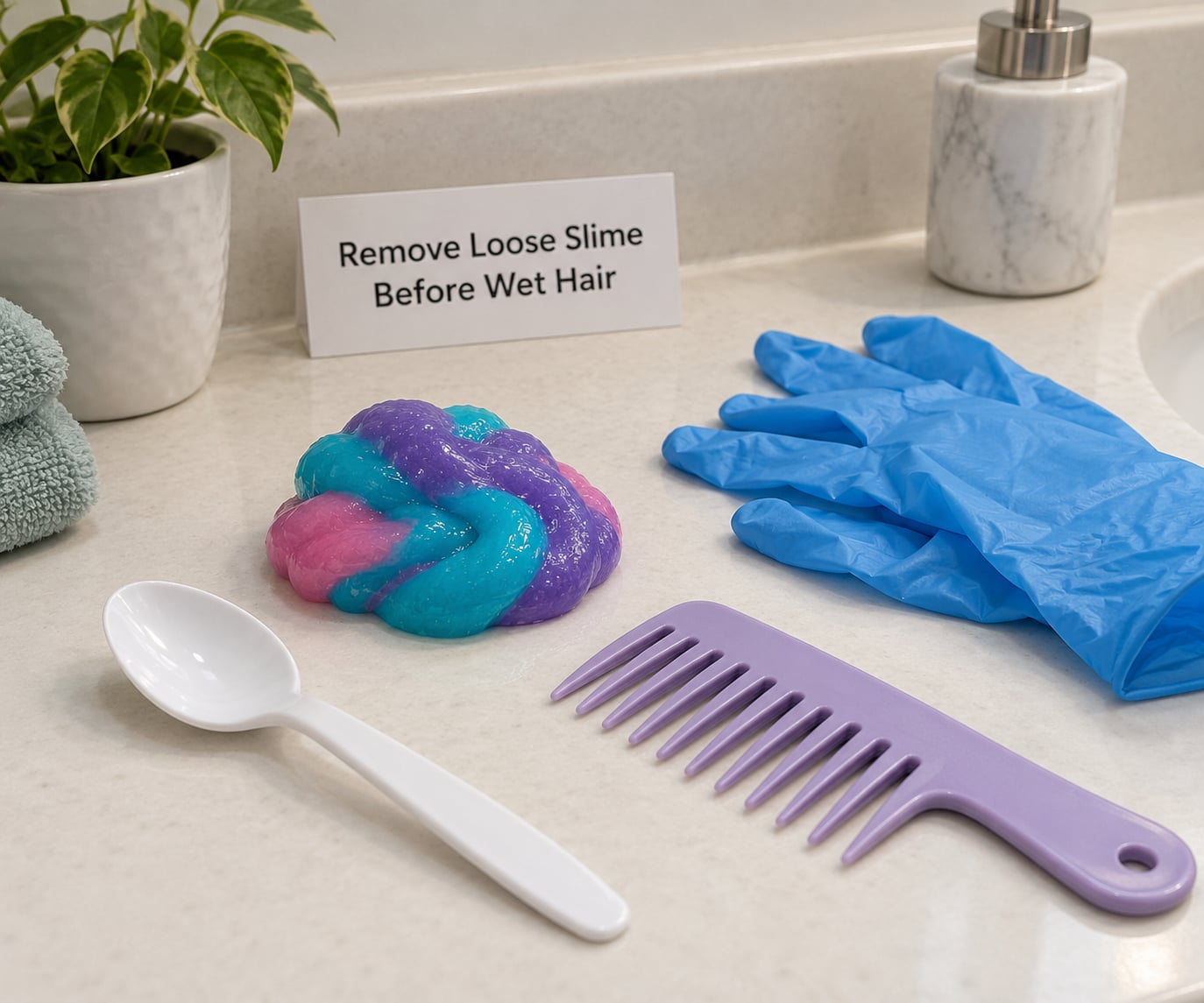
Start dry and start at the surface. Put on gloves, then peel or lift away the largest pieces from the outside inward, working toward the scalp last. Anything you take off now is one you will not be combing through later.
A plastic spoon is genuinely useful here. Hold the hair just above the clump and slide the spoon under it, so you are separating the slime from the hair instead of pulling the two apart. You are looking for the strands to move freely and the slime to feel looser and less rubbery.
Stop if pulling causes pain or the hair snags on itself. Forcing a tight dried knot only tightens it, and a sore scalp turns a simple task into a fight. Break for a minute, add a little more oil to the stubborn spot, and come back to it after the soaking stage.
2. Work In Oil to Loosen the Slime
Oil does not dissolve slime. It slips between the slime and the hair shaft so the two stop gripping, which is what lets a comb move through without dragging.
Apply a small amount from the mid-lengths down to the ends. More is not better here, since excess oil has to be washed back out and oily slime simply spreads. Then divide the hair into sections about the width of your comb, and hold each section above the sticky part rather than at the scalp.
Comb in short strokes from the ends upward, a few centimetres at a time. Work your way up the section slowly rather than starting at the roots, and add a little more oil whenever the comb starts to drag. You will feel the difference when the comb passes through without resistance and the section comes out wet and free of slime.
This is the stage that takes patience rather than force. If you are on step six of a second combing pass, that is normal, not a sign the method is failing.
3. Rinse and Shampoo Until Clear
Rinse with lukewarm water and massage a small amount of mild shampoo into the scalp using the pads of your fingers. No fingernails, no scrubbing, and no pulling the hair upward. Rinse, check, and repeat.
Keep rinsing until the water runs clear and the hair no longer feels slippery or tacky when you run a finger through it. Oily residue usually needs two washes, and the first shampoo lifts it while the second carries it away. If slime is still visible after a wash, apply oil to that spot only and go back to the combing stage rather than soaking the whole head again.
Pause and get advice from a doctor if the scalp is sore, bleeding, or has come loose in patches, and if the hair is matting faster than it is loosening. Matting at the scalp is a sign to stop pulling and let a professional handle the bottom layer.
Common Mistakes
Nearly every difficult slime removal starts with one of these five mistakes, and each one has a simple correction.
Yanking a dried slime knot. A dry knot tightens every time you pull. Saturate it with oil, leave it for five minutes, and work the edges loose with your fingers before a comb ever touches it.
Using hot water. Heat sets some slime and shrinks curls until they spring back into a mat. Lukewarm is enough to activate shampoo and oil.
Scrubbing the scalp. Slime comes off with dwell time, not friction. Massaging a slippery, soapy scalp is how you irritate a child and end up with a red scalp on top of the slime problem.
Using too much oil. A heavy application turns the clump into a greasy wad that smears and re-sticks. Start small and add more only where the comb drags.
Reaching for harsh chemicals. Solvents such as WD-40, acetone, and adhesive removers are regularly suggested online and are a bad idea near a child’s scalp. Vinegar and oil handle ordinary washable slime on their own.
Two prevention habits help more than any of the removals. Tie long hair up before slime comes out, since slime grabs loose hair first and gets knotted in seconds. And agree on slime rules in advance, so it happens on a tray or over the bath rather than on someone’s head.
Afterwards, check the scalp in good light and look for redness, a tender spot, or any slime hiding at the hairline. A small amount of leftover stickiness usually clears with one more shampoo.
Frequently Asked Questions
What is the best way to get slime out of hair?
For ordinary washable slime, the fastest method is oil plus a wide-tooth comb. Apply coconut oil, olive oil, or thick conditioner to the sticky area, wait about five minutes, then comb in short strokes from the ends upward. Sectioning the hair and working slowly takes longer than scrubbing but leaves the hair detangled instead of matted. For water-soluble slime, a bowl of lukewarm water can soften stubborn spots before you apply the oil.
Does vinegar really remove slime from hair?
Vinegar is often suggested, and it is not the first thing I reach for. It can work on some slime, but it smells sharp, it needs a full wash afterward to clear the scent, and it can irritate an already irritated scalp. Parents report mixed results, so if slime is resisting oil, a second oiling pass is usually worth trying before vinegar. If you do use it, dilute it with equal parts water and rinse thoroughly.
How do I get dried slime out of my child’s hair?
Dried slime needs softening before anything else. Work oil into the hard spots and leave it for five minutes, then use your fingers to break the edges apart before reaching for a comb. Comb from the ends upward in short sections. If the slime is glue-based or glittery imitation slime, it may not release at all, and parents have reported having to cut it out in the end. If nothing moves after two full attempts, stop and cut it out rather than pulling.
Is it safe to use dish soap or oil on a child’s scalp?
Yes, both are generally fine. Dish soap is a mild cleanser and washes heavy slime residue out of hair, though it takes two rinses and can leave hair dry, so follow it with conditioner. Oils such as coconut, olive, and mineral oil are safe and are the gentler first choice. Avoid nail polish remover, paint thinner, WD-40, and adhesive removers entirely. Stop if the scalp becomes sore or red, and check with a doctor if that happens.
How can I remove slime from a wig or synthetic hair?
Soak the affected section in lukewarm water, then work a small amount of oil or conditioner into the slime with your fingers and leave it for five minutes. Use a wide-tooth comb from the ends upward, exactly as you would on real hair, because synthetic fibres mat more easily. Rinse with lukewarm water and a little mild shampoo. For a glued-on slime patch on a synthetic wig, warm water and patience usually loosen it without disturbing the glue line.
Conclusion
The first thing to do is take off the bulk of the slime while it is still loose, before anything touches water. Then add oil, comb from the ends upward in short sections, and rinse and shampoo until the water runs clear.
Slow, sectioned work beats forceful pulling every time. If two full attempts with oil have not loosened the clump, cutting it out is the kinder option for your child and for their hair.